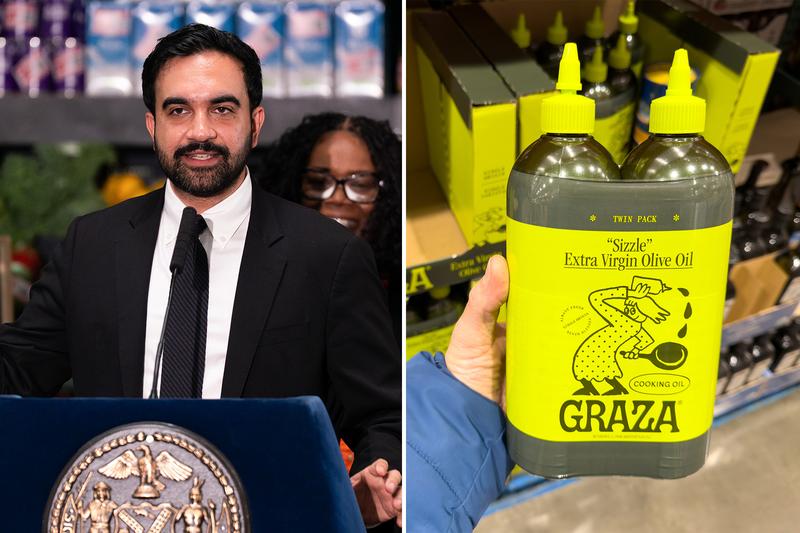
The Mamdani administration awarded a $1 million branding contract for a city-owned grocery store to cult-favorite olive oil bottle designers, the New York Post reported on October 8, 2026.
The store is supposed to sell food. The contract is supposed to sell a look.
That split is the story. A public grocery was pitched as relief at the register. The first splashy creative check went to the people who made olive oil bottles into internet objects.
In many ways, the fight is not about extra virgin versus pure. It is about what a city thinks a grocery is for when City Hall is the grocer.
A Million Dollars for a Look
One million dollars is a rounding error in the New York City budget. It is not a rounding error on a kitchen table.
The city spends more than $100 billion a year. A $1 million branding line does not move a bond rating. It does move a conversation.
City-owned means public money. Branding means typefaces, colors, bags, signage, and the story a shopper is supposed to feel walking in.
For a store sold as a price weapon, the first public number that stuck was not the cost of milk. It was the cost of the mood.
That is how these stories travel. The food is a promise. The invoice is a fact.
Who Zohran Mamdani Is
Zohran Kwame Mamdani entered New York politics as a Democratic Socialists of America-aligned member of the New York State Assembly. He has represented Assembly District 36 in Astoria, Queens, since 2021.
He was born in Kampala, Uganda, on October 18, 1991. He came up arguing housing, transit fares, and the price of living in the five boroughs. A short biographical record of Zohran Mamdani sits in public view for anyone who wants the dates without the spin.
City-owned grocery stores sat inside that cost-of-living argument. The pitch was simple on the stump. Private chains chase margin. A municipal store could chase price. Neighborhoods that lost a supermarket would get a public option.
By October 2026, that pitch had an administration attached to it. The Mamdani administration is now the buyer. The city is the client.
The olive oil designers are the vendor.
Why Olive Oil Bottles Became a Design Cult
In the early 2020s, olive oil left the bottom shelf.
Brands such as Graza put oil in bright squeeze bottles and sold the pour as a lifestyle. Brightland and other direct-to-consumer labels treated the glass like a fashion object. The product was still olives and pressure. The object was a photograph.
That is the talent pool the reporting pointed at. Designers who know how to make a commodity feel like a club.
A city grocery does not need a club. It needs bananas that do not cost a fortune. That is the tension the $1 million figure set on the table.
Designers will say identity is infrastructure. If the store looks like a welfare office, shoppers stay away. If it looks like a boutique, they come in.
Budget hawks will say a hungry city does not have a packaging problem.
Both sentences can be true. Only one of them costs $1 million before the first apple is weighed.
City-Owned Groceries Are Not a New Idea
Municipal grocery experiments have flickered across the United States for years.
Kansas City debated a public store to reach neighborhoods that lost a chain. Erie, Pennsylvania, talked about filling a food desert with a city-backed market. Chicago’s City Hall has heard the same pitch. Small towns in the rural South and Midwest have watched the last independent grocer close and asked whether the town itself should run the register.
The record is mixed. Groceries are a low-margin business. Produce spoils. Labor is real. Private chains live on volume, private-label goods, and slotting fees. A city store lives on a council vote and a budget line.
New York is not Erie. The five boroughs already have bodegas, Chinatown markets, Korean greengrocers, and some of the most expensive cart totals in the country. A city-owned store here is a political object before it is a commercial one.
New York has run public food retail before, just not as a full supermarket chain. Essex Street Market on the Lower East Side. La Marqueta in East Harlem. Those halls were about stalls and rent, not about City Hall setting the price of eggs.
The Mamdani plan treated a grocery as a tool against high prices. The branding deal treated it as a tool that needed a face.
What $1 Million Buys in New York
In private retail, a million-dollar brand package can cover a name, a logo system, packaging, a campaign, and the launch kit.
In city procurement, a million-dollar contract also covers process. Requests for proposals. Minority- and women-owned business goals. Legal review. Change orders. The slow machinery that turns a creative idea into a purchase order.
The figure the public heard is $1 million. The public did not hear a price per can of tomatoes.
A million dollars could stock a lot of rice. It could also keep a municipal store from looking like a waiting room. The administration is betting on the second theory.
Critics are betting that voters can do the first kind of math in their heads, in line, with a cart.
Neither bet requires a conspiracy. It requires a receipt.
The Kitchen-Table Math
Food inflation after 2021 trained a generation of shoppers to watch unit prices.
Eggs became a cable-news prop. Olive oil itself spiked when drought hit Mediterranean groves. A 16.9-ounce bottle that once sat in the $8 range drifted toward $12, $15, sometimes more. Pasta, chicken, and baby formula took their turns on the same stage.
That is the hard joke inside the hire. The designers got famous making expensive-feeling oil. The city is paying them to dress a store that was supposed to make food feel cheap.
Kitchen-table politics is not a think-tank phrase. It is the moment a parent puts back the name-brand cereal. It is the moment a $1 million line item reads like a dare.
Progressive administrations argue that public options need public investment, including design, because shame keeps people out of public programs. Opponents argue that design is how government learns to talk like a startup while spending like a government.
The receipt does not pick a party. The receipt just sits there.
Branding the Public Option
Every public program that touches a counter ends up with a brand whether City Hall admits it or not.
Related: California Controller Accused of Fake Addresses to Seize Fortunes
MetroCards had a look. OMNY has a look. NYC Health + Hospitals has a look. The yellow of a taxi was a brand before anyone called it that.
A grocery is more intimate. It is where a city meets a stomach.
If the Mamdani store looks like a luxury oil boutique, supporters will call it dignity and opponents will call it decadence. If it looks like a warehouse, supporters will call it austerity theater and opponents will call it honesty.
The designers in the October 8 report are the people who already won a similar fight in the private pantry. They made a bottle that people photographed. Now they are being asked to make a municipal aisle that people trust.
Trust is not a typeface. Typefaces are what a $1 million branding deal can actually deliver.
How the Report Landed
The New York Post account published on October 8, 2026 did the work headlines do. It put Mamdani, $1 million, a city-owned grocery, and olive oil in the same breath.
That breath is the product. People forward stories that confirm a feeling. The feeling here is that government has lost the plot on prices.
Whether the contract is wise is a separate question from whether it is real. The reporting says the deal is real. The dollar figure is $1 million. The client is a city-owned grocery. The vendors are the cult designers of olive oil bottles.
Those are the facts on the table as of October 8, 2026.
City Hall can still argue that a beautiful store is a used store, and a used store is a cheaper store if it survives. Critics can still argue that the cheapest store is the one that spent the creative budget on inventory.
Shoppers will settle it with a cart.
The Store and the City
New York has always been a gathering city. Pushcarts on Hester Street. The first A&P. The Korean greengrocer that stayed open at 1 a.m. The Whole Foods that arrived and reset the rent.
A city-owned grocery would join that line, not erase it. Official New York still publishes the ordinary machinery of city services at nyc.gov, the same civic front door that will have to explain a public supermarket if one actually opens its doors.
The question is whether the store joins as a competitor on price or as a competitor on vibe. The $1 million branding deal answers that question louder than any press release about unit costs.
Olive oil is a telling totem. It is a working-class ingredient in a Greek kitchen and a luxury prop in a Brooklyn loft. The bottle designers made their names on the loft side of that split. The grocery was sold on the kitchen side.
That is the hinge.
New Yorkers will walk in or they will not. They will compare the apples. They will look at the bags. They will remember the number they read on October 8.
Shoppers gathered. Reporters gathered. Designers gathered.
One million.
Frequently asked questions
How much did the Mamdani administration spend on grocery store branding?
The Mamdani administration awarded a $1 million branding contract for a city-owned grocery store, according to a New York Post report dated October 8, 2026. The figure covers branding work, not the food on the shelves. It is a small slice of New York City's $100 billion-plus budget and a large number on a household receipt.
Who did Mamdani hire to brand the city-owned grocery store?
The New York Post reported that the Mamdani administration picked cult-favorite, viral olive oil bottle designers for the job. Those designers are known for turning a pantry staple into an internet object. The assignment is to brand a municipal grocery, not to press olives.
Why is New York City opening a city-owned grocery store?
Zohran Mamdani long argued that a public grocery could compete on price where private chains chase margin, especially in neighborhoods that lost a supermarket. The store was pitched as kitchen-table relief in an expensive city. The $1 million branding hire is the first creative invoice attached to that pitch.
What did the New York Post report about the $1 million grocery branding deal?
On October 8, 2026, the New York Post reported that the Mamdani administration selected viral olive oil bottle designers for a $1 million branding deal on a city-owned grocery store. The story yoked a cost-of-living program to a luxury-pantry aesthetic. That pairing is why the figure moved so fast.
Is a $1 million branding contract large for New York City?
Inside the city budget, $1 million is a rounding error. On a kitchen table, it is not. Groceries run on thin margins, and critics read a seven-figure design line as money that could have stocked rice, milk, and produce instead of bags and typefaces.
Sponsored · Put your business in front of ByteSize Network's readers, with every click measured. See advertising packages · Advertise on ByteSize Network