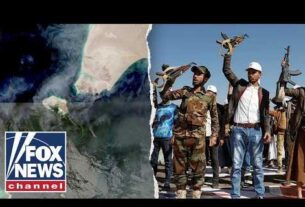
United States forces executed strikes against Iranian rocket launchers on Larak Island on August 30, 2026. This military action occurred after personnel from the Islamic Revolutionary Guard Corps (IRGC) were observed preparing to deploy sea mines. The intended target of these mines was the Strait of Hormuz, a critical international shipping lane.
This operation represents the first known direct US attack on Iranian forces since late July 2026. The broader conflict between the US and Iran has persisted for approximately six months. A temporary truce agreement, established earlier in the year, broke down in July 2026.
The Strait of Hormuz: A Contested Waterway
The Strait of Hormuz has been largely blocked by Iran since February 28, 2026. This blockade followed a series of attacks by US and Israeli forces against Iran. The strait is a narrow sea passage between the Persian Gulf and the Gulf of Oman.
It is one of the world’s most strategically important choke points for oil shipments. A significant portion of the world’s seaborne oil passes through this waterway daily. Disruptions in the strait have global economic implications.
In the week prior to August 30, 2026, the US Central Command completed efforts to clear sea mines from international shipping routes within the Strait of Hormuz. These clearing operations aimed to restore safe passage for commercial vessels.
The Islamic Revolutionary Guard Corps and Its Role
The Islamic Revolutionary Guard Corps (IRGC) functions as a multi-service primary force within the Iranian Armed Forces. Its responsibilities encompass national security, internal and border security, and law enforcement. The IRGC also commands Iran’s missile forces.
This organization operates independently from Iran’s conventional armed forces. It reports directly to the Iranian Supreme Leader. The IRGC’s involvement in preparing to mine the Strait of Hormuz underscores its role in Iran’s strategic military operations.
Escalation and Iranian Response
The US strikes on Larak Island represent a direct military engagement. This action follows a period of heightened tensions and indirect confrontations. Iran has previously threatened to target US economic interests if the maritime blockade of the Strait of Hormuz continues.
Following the US strikes, the IRGC issued a statement vowing “severe repercussions.” This declaration signals a potential for further escalation in the conflict. International observers are monitoring the situation closely for any retaliatory actions.
Historical Context of the Conflict
The current six-month conflict between the US and Iran has seen various phases. Initial attacks by the US and Israel on Iran in early 2026 led to Iran’s blockade of the Strait of Hormuz. A brief period of de-escalation and a truce agreement provided temporary relief.
However, the truce agreement collapsed in July 2026. This breakdown reignited direct and indirect hostilities. The recent US strikes indicate a shift towards more direct military engagement in response to perceived threats to international shipping.
The Path Forward
The situation in the Strait of Hormuz remains volatile. The US maintains its commitment to ensuring freedom of navigation through international waters. Iran views the strait as a strategic asset in its defense posture and a tool for leverage against international pressures.
The vows of severe repercussions from the IRGC suggest that further military actions are possible. The international community watches for diplomatic efforts to de-escalate the conflict. The economic impact of continued disruptions to global shipping routes remains a significant concern.
Naval forces gathered. Air assets gathered. Diplomatic envoys gathered. Tensions.
Powered by Phyllis Ann Data, Enterprise Data as a Service. Premium insights for businesses.