
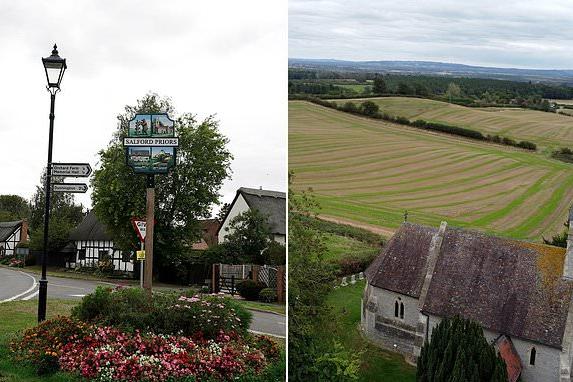
A solar park proposal has split two counties.
The project would cover hundreds of acres of rolling countryside with photovoltaic panels. Residents call it a ‘crystal desert.’ Developers call it climate infrastructure.
The fight is about more than energy. It is about who gets to decide what the countryside becomes.
The Proposal That Sparked the Backlash
The solar park would span land across two adjacent counties in the UK. Exact acreage and developer names vary by local reporting, but the scale is undisputed: this is not a rooftop array or a farm-edge installation. This is industrial-scale energy generation dropped into rural landscape.
Planning documents describe the project as necessary to meet national renewable energy targets. The UK government has committed to net-zero carbon emissions by 2050. Solar capacity must expand rapidly to hit that mark. Rural land offers the space urban rooftops cannot provide.
But residents see something else. They see fields that have been farmed for generations turned into rows of reflective glass. They see hedgerows removed. They see access roads cut through pasture. They see a landscape redefined by infrastructure.
The term ‘crystal desert’ captures the visual fear. Solar panels stretch to the horizon. The land becomes a monoculture of energy production. The countryside stops being countryside.
Why Rural Communities Are Pushing Back
Opposition to the solar park is organized and vocal. Residents have formed action groups. Public meetings have drawn hundreds. Petitions have circulated. Local councils have received waves of objections.
The resistance is not anti-renewable energy in principle. Many opponents support solar power. They install panels on their own homes. They drive electric vehicles. They accept the climate science.
What they reject is the scale and the location. They reject the idea that rural land is empty space waiting to be filled. They reject the framing that countryside is a resource to be optimized rather than a place to be lived in.
Several themes recur in resident testimony:
- Loss of agricultural land: Fields currently used for grazing or crops would be taken out of food production for decades.
- Visual impact: The panels would dominate sightlines. The character of the landscape would change permanently.
- Lack of local benefit: The energy generated would feed into the national grid. Local residents would see no reduction in their own energy costs.
- Precedent concerns: Approving this project opens the door to more. One solar park becomes ten. The countryside becomes an energy colony.
These are not abstract concerns. They are rooted in lived experience. Rural communities have watched other infrastructure projects arrive with promises of minimal disruption and leave with permanent scars.
The Cultural Identity Dimension
Underneath the planning objections is a deeper anxiety. Rural identity is tied to landscape. The rolling hills, the hedgerows, the patchwork of fields, these are not just scenery. They are the physical expression of a way of life.
When that landscape is industrialized, the identity is threatened. The countryside becomes a place things are done to, not a place people live in. The residents become extras in someone else’s energy transition.
This is the cultural defense trigger. It is not about resisting change. It is about resisting erasure.
The Developer and Government Position
Developers argue the project is essential. The UK cannot meet its climate commitments without massive expansion of renewable energy. Solar is one of the fastest and cheapest options. Rural land is where the space exists.
They point to economic benefits: construction jobs, lease payments to landowners, business rates for local councils. They promise mitigation measures: screening hedgerows, wildlife corridors, grazing sheep beneath the panels.
Government policy supports large-scale solar. The Department for Energy Security and Net Zero has streamlined planning processes for renewable projects. National need is meant to outweigh local objection.
But the policy assumes a frictionless transition. It assumes rural communities will accept the logic of national targets. It assumes landscape is fungible.
The backlash suggests otherwise.
The Broader Pattern: Solar Expansion Meets Rural Resistance
This is not an isolated case. Across the UK and Europe, large-scale solar projects are meeting organized opposition in rural areas. The pattern is consistent: a developer proposes a multi-hundred-acre installation, residents mobilize, the conflict becomes a proxy war over land use and identity.
In some cases, projects are approved despite opposition. In others, they are scaled back or relocated. In a few, they are blocked entirely. The outcomes vary, but the tension is structural.
Solar energy is diffuse. It requires large surface areas to generate meaningful power. Urban rooftops help, but they cannot carry the full load. Rural land is the only option at scale.
But rural land is not empty. It is lived in, worked, valued. The people who live there have their own vision of what the countryside should be. That vision rarely includes industrial energy infrastructure.
The conflict is a collision between two legitimate goals: decarbonization and rural preservation. Both matter. Both have constituencies. Neither side is wrong in the abstract.
But someone has to lose.
The Urban-Rural Divide
The solar park fight maps onto a larger urban-rural divide. Urban areas consume the most energy. Rural areas are asked to host the infrastructure that generates it. Urban voters support aggressive climate policy. Rural voters bear the visible costs.
This asymmetry breeds resentment. Rural communities feel used. They feel their concerns are dismissed as NIMBYism or climate denial. They feel the countryside is being sacrificed so cities can hit their targets.
Urban advocates counter that climate change is an existential threat. Aesthetic concerns cannot override survival. The countryside will not survive unchecked warming either. Sacrifice is necessary.
Both positions are coherent. Both are emotionally charged. Neither is easily reconciled.
What Happens Next
The solar park proposal will move through the planning process. Residents will submit objections. Developers will submit rebuttals. Local councils will hold hearings. A decision will be made.
If the project is approved, construction will begin. The countryside will change. Some residents will leave. Others will adapt. The ‘crystal desert’ will become real.
If the project is blocked, developers will look elsewhere. The energy still needs to come from somewhere. Another rural community will face the same choice.
The underlying tension will not resolve. The UK needs more renewable energy. Rural communities need to remain livable. Both cannot be fully satisfied with finite land.
The question is not whether solar parks will be built. The question is how many, where, and at what cost to the people who live nearby.
The Meaning of the ‘Crystal Desert’
The phrase ‘crystal desert’ is more than rhetoric. It is a vision of the future residents fear. A landscape stripped of its character. A monoculture of energy production. A place that looks like nowhere.
Deserts are not inherently bad. But they are not English countryside. They are not the rolling hills and hedgerows that define rural identity. They are something else.
The fear is not irrational. Large-scale solar installations do change the landscape. They do dominate sightlines. They do replace agricultural land with industrial infrastructure.
Whether that trade is worth making depends on who you ask. And where you live.
Residents gathered. Developers gathered. Planners gathered.
The countryside.
Automate Your Business Operations
Productized 7-day fixed-rate multi-agent AI automation for Springfield and Ozarks businesses. Eliminate software bloat and streamline media & operations.