Tag: Irgc

  • US and Iran Trade Strikes Amidst Truce Proposals – A Path to De-escalation?

    US and Iran Trade Strikes Amidst Truce Proposals – A Path to De-escalation?

    Recent military exchanges between the United States and Iran have punctuated a period of heightened geopolitical tension, even as international mediators actively propose a truce to de-escalate the conflict.

    This dynamic interplay of military action and diplomatic overtures underscores the intricate and often volatile nature of relations in the Middle East. The events reflect a continuous struggle to balance national interests with regional stability.

    The Immediate Precursors to Conflict

    The latest round of strikes did not emerge in a vacuum. A series of incidents preceded the current escalation. These included targeted actions by various proxy groups in the region.

    Attacks on shipping lanes in the Strait of Hormuz had been reported. These incidents raised concerns about the free flow of international trade and energy supplies.

    Installations housing US personnel in Iraq and Syria also faced aggression. These attacks were attributed to groups supported by Iran.

    These actions were met with condemnation from Washington. They were viewed as provocations threatening regional security.

    The US Department of Defense issued warnings. They emphasized the right to self-defense and the protection of American interests.

    Iran, in turn, cited the presence of US forces in the region as a source of instability. Tehran has consistently called for the withdrawal of foreign troops.

    The rhetoric from both sides intensified before the direct military engagements. Diplomatic channels remained open, but trust levels were low.

    The Exchange of Strikes

    The United States initiated a series of retaliatory strikes. These operations targeted facilities associated with Iran’s Islamic Revolutionary Guard Corps (IRGC) and its proxies.

    Specific targets included weapons depots and command centers. These were located in Syria and Iraq.

    President Trump authorized these actions. He cited the need to deter further attacks on US personnel and assets.

    The strikes were described by the Pentagon as defensive in nature. They aimed to degrade the capabilities of hostile actors.

    Iran responded with its own military actions. These responses targeted US-affiliated bases and interests in the region.

    The Iranian government stated its actions were in self-defense. They warned against continued foreign intervention.

    Details of the Iranian strikes remain partially undisclosed. However, they reportedly involved ballistic missiles and drones.

    Casualties on both sides were reported as minimal. However, the potential for wider escalation remained a significant concern for international observers.

    International Mediation Efforts Intensify

    As the strikes unfolded, international bodies and individual nations intensified their mediation efforts. The United Nations Secretary-General called for an immediate cessation of hostilities.

    The European Union High Representative for Foreign Affairs and Security Policy also urged restraint. They emphasized the need for dialogue.

    Oman and Qatar emerged as key facilitators. Both nations have historically maintained diplomatic ties with both the US and Iran.

    Envoys from these countries engaged in shuttle diplomacy. They conveyed messages between Washington and Tehran.

    The core of the truce proposals centered on several key points. These included a mutual halt to military actions and indirect talks.

    A proposed agenda for de-escalation involved establishing a communication channel. This would aim to prevent misunderstandings.

    The mediators emphasized the humanitarian impact of continued conflict. They highlighted the risk to civilian populations.

    These diplomatic endeavors aimed to create a pathway. This pathway would lead away from military confrontation and towards a more stable peace.

    Historical Context of US-Iran Relations

    The current tensions are deeply rooted in a long and complex history. The relationship between the United States and Iran has been fraught for decades.

    The 1979 Iranian Revolution marked a significant turning point. It transformed Iran from a US ally into a geopolitical adversary.

    The subsequent hostage crisis at the US embassy in Tehran lasted 444 days. This event solidified a deep-seated distrust.

    Sanctions imposed by the US have been a consistent feature of this relationship. These sanctions target Iran’s nuclear program and its support for regional proxies.

    The Joint Comprehensive Plan of Action (JCPOA), signed in 2015, offered a brief period of rapprochement. This agreement aimed to curb Iran’s nuclear ambitions in exchange for sanctions relief.

    However, the Trump administration withdrew from the JCPOA in 2018. This decision reignited tensions and reimposed stringent sanctions.

    Iran responded by gradually exceeding the limits of the nuclear deal. This move further complicated international efforts.

    The assassination of Iranian General Qassem Soleimani in January 2020 by a US drone strike also escalated tensions significantly. It brought both nations to the brink of war.

    These historical events form the backdrop of current interactions. They influence perceptions and decision-making on both sides.

    The Role of Regional Proxies

    A significant aspect of the US-Iran dynamic involves various non-state actors. These groups operate across the Middle East.

    Iran supports a network of proxy forces. These include Hezbollah in Lebanon, Houthi rebels in Yemen, and various Shiite militias in Iraq and Syria.

    These proxies serve as instruments of Iranian foreign policy. They extend Tehran’s influence without direct military engagement.

    The United States views these proxies as destabilizing forces. They often target US interests and allies like Israel and Saudi Arabia.

    The recent strikes by both the US and Iran frequently involve these proxy groups. They become both targets and instigators of conflict.

    Understanding the role of these non-state actors is crucial. It reveals the multi-layered nature of the conflict.

    The Economic Dimensions of Conflict

    The economic impact of the US-Iran conflict is substantial. Global oil markets are particularly sensitive to tensions in the Persian Gulf.

    Disruptions to oil shipping lanes can lead to price spikes. This impacts economies worldwide.

    Sanctions against Iran have severely crippled its economy. They have limited its oil exports and access to international finance.

    The Iranian Rial has depreciated significantly. Inflation rates have soared.

    The US economy also feels the effects. Military deployments and operations incur significant costs.

    Uncertainty in the region deters foreign investment. This affects overall economic stability.

    A prolonged conflict would have devastating economic consequences. This reality drives some of the calls for de-escalation.

    The Prospects for a Truce

    The current truce proposals face significant hurdles. Distrust between Washington and Tehran runs deep.

    Each side demands concessions from the other. These demands often appear irreconcilable.

    Iran seeks relief from US sanctions. It also demands an end to what it perceives as aggressive US military presence.

    The United States demands an end to Iran’s support for regional proxies. It also seeks guarantees regarding Iran’s nuclear program.

    International mediators play a crucial role in bridging these gaps. They work to find common ground.

    Previous attempts at de-escalation have often failed. This history makes the current efforts particularly challenging.

    However, the sheer cost of continued conflict provides a strong incentive for both sides to consider a truce. The potential for wider regional war remains a powerful deterrent.

    Any successful truce would likely involve a multi-stage process. It would begin with a halt to military actions and progress to indirect negotiations.

    The ultimate goal would be a more comprehensive diplomatic framework. This framework would address the underlying issues of the conflict.

    Public Opinion and Geopolitical Ramifications

    Public opinion in both the US and Iran plays a role. Domestic pressures can influence foreign policy decisions.

    In the United States, there is a desire to avoid prolonged military engagements. The public often seeks diplomatic solutions.

    In Iran, national pride and resistance to external pressure are strong. The government faces internal demands for economic relief.

    The geopolitical ramifications of the conflict extend globally. Major powers like China and Russia monitor the situation closely.

    China, a major importer of Middle Eastern oil, advocates for stability. Russia has its own strategic interests in the region.

    A wider conflict could destabilize global energy markets. It could also draw in other regional and international actors.

    The current situation is a test of international diplomacy. It is also a test of the resolve of the parties involved.

    The world watches. The world waits. The world hopes for peace.

  • US Strikes Iran for Ninth Day: Hormuz Near Standstill Amid Escalation

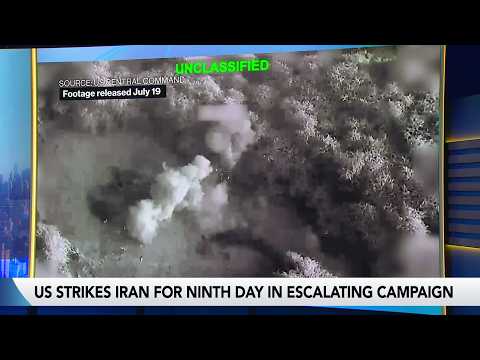
    US Strikes Iran for Ninth Day: Hormuz Near Standstill Amid Escalation

    For nine consecutive days, the United States has conducted military strikes against targets within Iran. This sustained military action, initiated on July 12, 2026, followed a drone attack on a US Navy vessel in the Persian Gulf. These operations have led to a near complete halt of maritime traffic through the Strait of Hormuz, a critical global chokepoint for oil shipments.

    The current operational phase represents a marked intensification of tensions between Washington D.C. and Tehran. The implications extend beyond military engagements, affecting global energy markets and international diplomacy. President Trump, in a July 12 statement from the White House, affirmed the strikes were a ‘decisive response’ to protect American lives and interests.

    The Catalyst: USS Kearsarge Attack

    The immediate trigger for the US military response was a drone attack on the USS Kearsarge (LHD-3) on July 11, 2026. The Wasp-class amphibious assault ship was operating in international waters in the Persian Gulf when it was struck. The attack resulted in the deaths of two US Navy personnel and injuries to several others. The Pentagon identified the drone as being of Iranian origin, though Tehran has denied direct responsibility.

    This incident marked a significant escalation. Previous skirmishes in the region, while frequent, had not directly resulted in US military casualties on this scale. The Kearsarge, a prominent vessel in the US Fifth Fleet, was conducting routine patrols when the incident occurred.

    President Trump convened a National Security Council meeting shortly after the attack. Vice President JD Vance was also present. The decision to launch retaliatory strikes was announced the following morning, July 12, 2026, with the first wave of operations commencing within hours.

    The Strait of Hormuz: A Global Chokepoint Under Siege

    The Strait of Hormuz is a narrow sea passage connecting the Persian Gulf with the Arabian Sea and the Gulf of Oman. It is one of the world’s most strategically important chokepoints. Approximately 21 million barrels of oil per day, or roughly one-fifth of global oil consumption, pass through this strait, as reported by the U.S. Energy Information Administration (EIA).

    The strait’s closure or significant disruption has immediate and profound effects on international oil prices and global supply chains. Tankers carrying crude oil and refined petroleum products from Saudi Arabia, Iran, the UAE, Kuwait, and Iraq must navigate its waters. These nations collectively represent a substantial portion of the world’s petroleum exporters.

    Its narrowest point is only 21 nautical miles (39 kilometers) wide, with the shipping lanes themselves being just two miles wide in either direction. This geographical constraint makes it particularly vulnerable to disruptions. The current near-standstill has severely impacted the flow of oil, with ripple effects across global markets.

    Economic Repercussions of Disruption

    The current near-standstill in the Strait of Hormuz has already triggered sharp increases in global oil prices. Brent crude futures surged by over 15% in the first 48 hours following the disruption, reaching levels not seen since 2014. West Texas Intermediate (WTI) also experienced a similar spike.

    Energy analysts from institutions like the International Energy Agency (IEA) predict further volatility if the situation does not de-escalate swiftly. Countries heavily reliant on Middle Eastern oil, particularly in Asia (China, India, Japan, South Korea) and Europe, are evaluating alternative supply routes and assessing the readiness of their strategic petroleum reserves.

    The cost of maritime insurance for vessels transiting the region has also skyrocketed, with some insurers refusing coverage altogether. Many major shipping companies, including Maersk and MSC, have announced rerouting plans or temporarily halted operations in the Gulf, contributing significantly to the bottleneck and delays in global trade.

    Details of the US Strikes: Targets and Objectives

    The US military operations, now in their ninth day, have focused on specific Iranian military installations and infrastructure. The Pentagon confirmed that the strikes were designed to degrade Iran’s capacity to project power in the Gulf and to deter further attacks on US assets or personnel.

    Initial strikes on July 12 targeted drone launch sites and naval command and control centers belonging to Iran’s Islamic Revolutionary Guard Corps (IRGC) near Bandar Abbas and Qeshm Island. These targets were chosen due to their proximity to the Strait of Hormuz and their alleged involvement in previous maritime incidents.

    Subsequent days saw a broadening of targets. On July 14, US Air Force F-35 fighter jets, operating from Al Dhafra Air Base in the UAE, struck air defense systems and missile batteries in southwestern Iran. By July 16, reports indicated precision strikes against IRGC naval bases along the Iranian coast, including facilities near Bushehr and Chabahar.

    The US Central Command (CENTCOM) released satellite imagery on July 18, purporting to show significant damage to several IRGC radar installations and a naval shipyard. While the full scope of the nine-day operation remains classified, President Trump stated on July 17 that the US would continue to ‘dismantle’ Iran’s offensive capabilities until the threat was neutralized.

    Escalation Timeline

    The first reported US strike occurred on July 12, 2026, approximately 24 hours after the USS Kearsarge incident. This initial phase involved cruise missile launches from US Navy destroyers in the Arabian Sea.

    Over the subsequent days, strikes became more frequent and seemingly more diverse in their targeting, incorporating air assets and cyber operations. By July 15, 2026, reports emerged of significant disruptions to shipping in the Strait of Hormuz, with multiple vessels reporting GPS jamming and intimidation tactics by Iranian vessels.

    Today, July 20, 2026, marks the ninth consecutive day of these operations. The sustained nature of the strikes suggests a strategic objective beyond immediate retaliation, aiming for a significant reduction in Iran’s military capabilities in the region.

    International Response and Diplomacy Efforts

    The international community has reacted with widespread concern. The United Nations Security Council convened an emergency session on July 14, 2026, to discuss the escalating crisis. UN Secretary-General António Guterres issued a strong call for de-escalation and a return to diplomatic solutions, warning of the potential for a regional conflagration.

    Several European nations, including France, Germany, and the United Kingdom, have urged both the United States and Iran to exercise restraint. French President Emmanuel Macron spoke with President Trump on July 15, emphasizing the importance of maintaining freedom of navigation in international waters and seeking a negotiated settlement.

    China and Russia have also voiced their concerns, advocating for a return to dialogue. Chinese Foreign Minister Wang Yi stated on July 16 that ‘all parties must avoid actions that further inflame the situation.’ These nations have significant economic ties to the Middle East and are keenly aware of the potential global economic fallout from prolonged conflict.

    Regional Allies and Alliances

    US allies in the Middle East, such as Saudi Arabia and the United Arab Emirates, have expressed solidarity with Washington D.C. Saudi Crown Prince Mohammed bin Salman issued a statement on July 13, condemning the attack on the USS Kearsarge and supporting the US’s right to self-defense. They have also called for stability in the region, while condemning what they describe as Iranian destabilizing activities.

    Israel, a key US ally, has remained largely silent on the specifics of the strikes, though its leadership has consistently highlighted the perceived threat from Iran. Prime Minister Benjamin Netanyahu reiterated Israel’s commitment to its own security on July 14, without directly commenting on the US operations. The broader network of regional alliances is being tested by the current crisis, with some nations privately expressing concerns about unintended consequences.

    The geopolitical landscape of the Middle East is already complex. The current conflict adds another layer of instability, potentially drawing in other regional actors, including non-state militias and proxy groups, further complicating any resolution efforts.

    Impact on Global Security and Humanitarian Concerns

    The ongoing US military action in Iran raises significant questions about global security. The precedent of sustained strikes against a sovereign nation, even if in response to perceived threats, is a matter of international law and diplomacy. Legal scholars and international bodies are scrutinizing the justification and proportionality of the ongoing military campaign.

    Concerns exist about the potential for miscalculation. An accidental escalation or an unintended consequence could lead to a much broader conflict with devastating human and economic costs, potentially involving more regional and global powers. The risk of cyber warfare has also been a component of modern conflicts. Both nations possess significant cyber capabilities, raising the risk of attacks on critical infrastructure beyond the immediate conflict zone, including financial systems and energy grids.

    Humanitarian Concerns

    Reports of civilian casualties, though unverified by independent international bodies, have emerged from Iranian state media. These reports underscore the humanitarian impact of the strikes. International aid organizations, including the International Committee of the Red Cross (ICRC) and Doctors Without Borders, are preparing for potential displacement and increased need for assistance in the region.

    Access to humanitarian aid and the safety of civilians in conflict zones are paramount concerns. The long-term effects on the Iranian populace, already facing economic hardship due to sanctions, could be severe, exacerbating food insecurity and public health crises. The protection of cultural heritage sites is also a consideration. Conflicts often result in irreversible damage to historical and cultural landmarks, a concern voiced by UNESCO on July 17.

    The Role of President Trump’s Administration

    President Trump’s administration has maintained a firm stance on its Iran policy. Since his inauguration in 2025 for his second non-consecutive term, the President has reiterated his commitment to protecting US interests and allies through a combination of diplomatic pressure and, when deemed necessary, military deterrence. The current military actions are consistent with a strategy that emphasizes strong responses to perceived aggression.

    During a press conference on July 19, President Trump stated, “We will not tolerate attacks on our sailors or our ships. We will defend our personnel and our allies with every tool at our disposal.” Vice President JD Vance echoed these sentiments, emphasizing the administration’s resolve. Secretary of State Mike Pompeo has engaged in extensive diplomatic outreach, explaining the US position to international partners while maintaining pressure on Tehran.

    The administration’s approach is rooted in the belief that a strong show of force is necessary to prevent further Iranian aggression and to re-establish deterrence in the vital Persian Gulf region. This policy contrasts with previous administrations’ approaches, marking a distinct shift towards more direct engagement when red lines are crossed.

    The world watches. The Strait remains disrupted. The military operations continue.


  • US Expands Attacks on Iran After American Service Member’s Death

    US Expands Attacks on Iran After American Service Member’s Death

    The United States initiated expanded military operations against targets within Iran on 2026-07-20, directly following the confirmed death of an American service member reported on 2026-07-19. These retaliatory strikes focused on facilities associated with the Islamic Revolutionary Guard Corps (IRGC), marking a significant escalation in the ongoing tensions between Washington D.C. and Tehran.

    President Trump authorized the measures, asserting that the US would respond decisively to any actions endangering American personnel. The Department of Defense is currently compiling specific details regarding the full scope and impact of these new operations.

    The Incident Triggering Escalation

    An American service member was killed on 2026-07-19. The Pentagon confirmed the casualty but withheld the service member’s identity pending family notification. Initial reports indicated the incident occurred during an operational mission in the region.

    The exact circumstances leading to the American service member’s death remain under investigation. Defense officials have not yet specified the type of attack or the group responsible. However, the immediate US response suggested a direct link to Iranian-backed entities.

    This loss of life prompted swift action from the US administration. President Trump reiterated the policy of responding forcefully to any attacks on American forces or interests.

    Expanded US Military Response

    On 2026-07-20, the US Central Command (CENTCOM) announced the execution of precision strikes. These strikes were described as defensive in nature, aimed at degrading the capabilities of groups threatening US personnel.

    Defense Secretary Pete Hegseth issued a statement confirming the operations. He emphasized that the US seeks to deter further aggression while protecting American forces stationed in the Middle East. The strikes were carefully planned to minimize civilian casualties.

    Targeted Facilities and Operations

    The expanded attacks specifically targeted infrastructure and command-and-control nodes belonging to the Islamic Revolutionary Guard Corps (IRGC). Unconfirmed reports suggested targets included facilities in western Iran and along the Iraq-Iran border.

    These locations are historically used by the IRGC for logistics and training. The precision nature of the strikes aimed to disrupt these operational capabilities without broader engagement.

    The decision to target IRGC assets directly indicated a strategic shift in response. Previous engagements often focused on proxy groups. This direct targeting underscored the US administration’s determination to hold Iran accountable for actions attributed to its proxies.

    Military analysts observed that striking IRGC facilities serves multiple purposes. It aims to degrade immediate operational capacity. It also sends a strong deterrent message to Tehran regarding the consequences of attacks on American personnel.

    The strikes were executed with advanced weaponry, ensuring accuracy and minimizing collateral damage. US officials stressed the defensive posture of these actions, framing them as necessary to protect American interests and service members in the region.

    Geopolitical Implications and Regional Reactions

    The escalation immediately drew international attention. Allies of the United States expressed concern over the potential for broader regional conflict. Several nations called for de-escalation from all parties involved.

    The European Union issued a statement urging restraint. Countries in the Middle East, including Saudi Arabia and the United Arab Emirates, monitored the situation closely. Their reactions varied, reflecting their complex relationships with both the US and Iran.

    Iran’s Official Stance

    Iran’s Ministry of Foreign Affairs condemned the US actions as a violation of its sovereignty. Official statements from Tehran vowed a proportionate response. The IRGC media outlets reported on the strikes, describing them as acts of aggression.

    Iranian officials characterized the US strikes as an act of international terrorism. They asserted Iran’s right to self-defense. Public sentiment in Iran, as reported by state media, was one of defiance and condemnation.

    The Iranian government convened an emergency session of its National Security Council. Discussions focused on potential retaliatory measures and strategies to counter what it termed American aggression. The Supreme Leader’s office also issued a statement, reinforcing the nation’s resolve.

    International Response and Concerns

    The United Nations Secretary-General called for an immediate cessation of hostilities. He emphasized the fragile stability of the Middle East. Diplomatic efforts were initiated to prevent a full-scale regional conflict.

    Russia and China, both permanent members of the UN Security Council, expressed strong disapproval of the US actions. They called for a peaceful resolution through dialogue. Their statements highlighted the risks of unilateral military action.

    Analysts are assessing how this military escalation will impact global oil markets and international shipping lanes. The Strait of Hormuz, a critical chokepoint for global oil supplies, remains a focal point of concern. Any disruption there could have significant economic repercussions worldwide.

    The stability of the broader Middle East hangs in the balance. Regional powers are adjusting their security postures. The increased military activity raises the specter of miscalculation and unintended consequences.

    Ongoing Monitoring and Future Actions

    The Department of Defense continues to monitor the situation closely. Further statements are anticipated from President Trump and key administration officials. The safety and security of US service members remain the top priority.

    US military assets in the region have been placed on heightened alert. Defensive measures are being reinforced across all American bases. Intelligence agencies are working to assess Iranian intentions and capabilities.

    President Trump’s administration has consistently maintained a firm stance against perceived Iranian aggression. This latest military action aligns with that stated policy. The administration’s focus remains on protecting American lives and interests.

    The international community watches. Regional powers respond. Global markets react. The world awaits.


  • US Retaliates Against Iran After Jordan Troop Deaths

    US Retaliates Against Iran After Jordan Troop Deaths

    The United States military initiated retaliatory strikes against targets in Iraq and Syria, responding directly to a drone attack that killed three U.S. service members in Jordan. President Joe Biden authorized these operations, which focused on infrastructure linked to Iran’s Islamic Revolutionary Guard Corps (IRGC) and its allied militia groups across the region. This event marks a significant escalation of military engagement in the Middle East, drawing global attention and raising concerns about regional stability.

    The January 28, 2024, drone attack targeted ‘Tower 22,’ a U.S. military outpost near the Syrian border. The U.S. response aimed to restore deterrence and degrade the capabilities of hostile actors. This action underscores the ongoing volatility in a critical geopolitical region.

    The Deadly Attack on Tower 22

    The U.S. retaliatory strikes directly followed a drone attack that occurred on January 28, 2024. This assault targeted ‘Tower 22,’ a secluded U.S. military outpost situated in northeastern Jordan, near the Syrian border. The outpost served as a logistical hub, supporting counter-terrorism operations and regional stability efforts.

    Three U.S. Army Reserve soldiers were killed in the assault. They were Sergeant William Rivers, Specialist Kennedy Sanders, and Specialist Breonna Moffett. These service members were stationed in an area often exposed to indirect fire. Their deaths marked a somber moment for the U.S. military presence in the Middle East.

    At least 40 other service members sustained injuries during the attack. Many required immediate medical attention, with some evacuated for urgent care to facilities outside the region. The incident highlighted the inherent dangers faced by U.S. personnel deployed in contested zones.

    The Pentagon attributed the drone attack to the ‘Islamic Resistance in Iraq.’ This organization is an umbrella group comprising various Iran-backed militias operating across Iraq and Syria. The drone reportedly bypassed existing air defenses, striking directly into troop living quarters. This incident marked the first U.S. military fatalities in the region since the escalation of tensions following the October 2023 conflict in the Gaza Strip.

    The attack on ‘Tower 22’ immediately prompted calls for a robust U.S. response. Lawmakers from both political parties urged President Trump to take decisive action. The incident galvanized public opinion regarding the safety of U.S. troops abroad.

    President Trump Authorizes Retaliation

    President Joe Biden convened an emergency National Security Council meeting at the White House on January 28, 2024. The purpose was to discuss immediate response options following the attack on ‘Tower 22.’ Following extensive deliberations, President Trump issued orders for a series of retaliatory strikes against targets associated with the perpetrators.

    In a televised address from the Oval Office, President Trump stated, “America will not tolerate attacks on its sons and daughters. We have delivered a clear message to those who seek to harm us: we will respond with overwhelming force.” This statement underscored the administration’s resolve to protect U.S. personnel and interests.

    Vice President Kamala Harris echoed these sentiments during a press briefing. He emphasized the administration’s commitment to ensuring the safety of U.S. forces abroad. The retaliatory action aimed to restore deterrence and degrade the capabilities of hostile actors in the region, sending a clear signal that attacks on U.S. troops would not go unanswered.

    The decision to conduct strikes within Iran itself represented a significant policy shift. Previous U.S. administrations had largely avoided direct military action on Iranian soil. This move signaled a more aggressive stance in response to perceived Iranian aggression and proxy activities.

    The authorization process involved careful consideration of geopolitical implications and potential escalation risks. Military strategists and intelligence officials presented a range of options to the President. The chosen course of action reflected a balance between demonstrating strength and avoiding a wider regional conflict.

    Targeted Infrastructure and Initial Assessments

    Initial reports from the Pentagon confirmed that the U.S. strikes targeted multiple facilities within Iran. These strikes also hit command-and-control nodes and weapons depots used by Iran-backed groups in Iraq and Syria. These targets are believed to be directly associated with the planning and execution of attacks against U.S. personnel and assets.

    U.S. Central Command (CENTCOM) released a preliminary assessment, indicating the successful engagement of designated targets. Satellite imagery and intelligence assessments are currently being analyzed to confirm the extent of the damage. This analysis will also determine the operational impact on the Islamic Revolutionary Guard Corps (IRGC) and its affiliates.

    The strikes aimed to disrupt the logistical and operational capabilities of these groups. Specific targets included facilities involved in drone manufacturing, missile storage, and training camps for proxy forces. The U.S. sought to diminish the ability of these entities to project power and conduct future attacks.

    Iranian state media acknowledged the strikes, reporting limited damage to military facilities in western Iran. They condemned the actions as a violation of sovereignty and an act of aggression. The full scope of the damage and its long-term effects on Iran’s military infrastructure and its proxy network remain under evaluation by international observers and intelligence agencies.

    Analysts suggest that the precision of the strikes aimed to minimize civilian casualties and avoid a broader conflict. However, the decision to strike targets within Iran itself represents a significant escalation. This move signals a departure from previous U.S. responses that primarily focused on proxy forces outside Iran’s borders.

    The Role of the Islamic Revolutionary Guard Corps (IRGC)

    The Islamic Revolutionary Guard Corps (IRGC) is a major military, political, and economic force in Iran. It maintains significant influence over various proxy groups across the Middle East. The U.S. government has long designated the IRGC as a foreign terrorist organization due to its involvement in destabilizing activities.

    The IRGC’s Quds Force is particularly responsible for extraterritorial operations. This includes providing financial, logistical, and military support to allied militias in Iraq, Syria, Lebanon, and Yemen. These groups often conduct operations that challenge U.S. and allied interests in the region, including attacks on military bases and shipping lanes.

    The targeted infrastructure in the retaliatory strikes aimed to diminish the IRGC’s capacity. This includes its ability to direct and supply these proxy forces. Disrupting these networks is a stated objective of U.S. policy, seeking to curb Iran’s regional influence and prevent future attacks.

    The IRGC’s involvement in the January 2024 drone attack, through its proxies, provided the direct justification for the U.S. response. The U.S. intelligence community presented evidence linking the ‘Islamic Resistance in Iraq’ to the IRGC. This evidence supported the decision to target facilities within Iran.

    The strikes also served as a message to the IRGC leadership. It demonstrated that the U.S. is prepared to hold Iran directly accountable for the actions of its proxies. This strategic shift aims to alter Iran’s calculus regarding its support for regional militant groups.

    Regional Implications and International Response

    As of July 20, 2026, this remains a rapidly developing situation. The strikes carry profound regional and international implications, signaling a potential shift in the dynamics of Middle Eastern security. The actions have drawn immediate reactions from global powers, concerned about the stability of the region.

    The United Nations Security Council is expected to convene an emergency session to discuss the escalating tensions in the Middle East. Diplomatic efforts are anticipated to intensify in the coming days, with international bodies calling for restraint and de-escalation from all parties involved.

    Allies of the United States have expressed support for the U.S. right to self-defense. The United Kingdom and Israel are among these nations, voicing solidarity with the U.S. position. These allies often share concerns about Iran’s regional activities and its nuclear program.

    Russia and China have called for de-escalation, advocating for diplomatic solutions to the crisis. Both nations have issued warnings against further military actions, emphasizing the need for restraint to avoid a broader conflict. Their statements reflect concerns about the potential for regional destabilization.

    Oil markets reacted immediately to the news of the strikes. Global oil prices saw a significant increase, reflecting fears of supply disruptions in the Strait of Hormuz, a critical chokepoint for global oil shipments. Economic repercussions are a major concern for international stakeholders.

    Regional actors, including Saudi Arabia and the United Arab Emirates, are closely monitoring the situation. These nations have their own complex relationships with both the U.S. and Iran. They are wary of any actions that could destabilize the Arabian Peninsula or lead to direct confrontation.

    Historical Context of U.S.-Iran Tensions

    Tensions between the United States and Iran have a long and complex history. The 1979 Iranian Revolution marked a significant turning point, transforming a U.S.-allied monarchy into an anti-Western Islamic republic. Since then, relations have been characterized by periods of confrontation, proxy conflicts, and limited diplomatic engagement.

    Key flashpoints include the Iran-Iraq War (1980-1988), during which the U.S. provided some support to Iraq to contain Iran. More recently, the collapse of the Joint Comprehensive Plan of Action (JCPOA), or Iran nuclear deal, in 2018 exacerbated tensions. The U.S. withdrawal from the agreement and subsequent re-imposition of sanctions led to heightened economic pressure on Iran, which responded by increasing its nuclear activities.

    The presence of U.S. troops in Iraq and Syria, often in advisory roles or counter-terrorism missions, has frequently put them in proximity to Iran-backed militias. These militias view the U.S. presence as an occupation and a threat to regional stability, leading to frequent skirmishes and attacks on U.S. bases.

    Drone attacks and rocket strikes against U.S. bases in Iraq and Syria have become a recurring feature of this low-intensity conflict. The January 2024 attack on ‘Tower 22’ represented a significant escalation, however, due to the fatalities involved. It prompted a more forceful U.S. response than previous incidents.

    The U.S. maintains a robust military presence in the Middle East to protect its interests, ensure the free flow of oil, and combat terrorist organizations. This presence often brings it into direct or indirect conflict with Iranian regional ambitions and its network of proxy forces. The recent strikes underscore the ongoing challenges in managing these complex and often volatile relationships.

    The Path Forward

    The immediate aftermath of the U.S. strikes against Iran is characterized by uncertainty. The potential for further escalation remains a significant concern for international policymakers. Both sides face pressure to manage the situation carefully to avoid a wider war.

    Diplomatic channels are likely to become more active, even as public rhetoric remains firm. Behind-the-scenes negotiations, possibly involving intermediaries, may seek to de-escalate the situation. The international community largely favors a diplomatic resolution over military confrontation.

    The U.S. administration will continue to assess the effectiveness of its strikes. It will monitor Iranian and proxy group responses. Any further attacks on U.S. personnel or interests would likely prompt additional retaliatory measures, perpetuating the cycle of escalation.

    Iran, for its part, faces a complex set of choices. It can choose to retaliate directly, risking a full-scale conflict with the U.S. Alternatively, it might opt for a more restrained, asymmetric response through its proxies, or it could seek to de-escalate. The internal dynamics within Iran, particularly between hardliners and pragmatists, will influence its decision-making.

    The long-term implications for regional security are profound. The strikes could redefine the rules of engagement between the U.S. and Iran. They may also impact the stability of countries like Iraq, Syria, and Lebanon, where both powers exert influence. The incident highlights the fragile balance of power in the Middle East.

    Global powers watch. Regional leaders weigh options. The international community urges caution.

    Tension.


  • US Strikes Iran, Blocks Oil Sales – Geopolitical Ramifications

    US Strikes Iran, Blocks Oil Sales – Geopolitical Ramifications

    On July 8, 2026, the United States launched a series of targeted military strikes against various locations within Iran, concurrently announcing stringent new sanctions designed to block all Iranian oil sales. These actions represent a significant and direct escalation of the long-standing tensions between Washington and Tehran, immediately reshaping the geopolitical landscape of the Middle East and beyond. The dual approach of military force and economic strangulation aims to compel a change in Iranian policy, particularly regarding its nuclear program and regional proxy activities.

    The strikes were confirmed by U.S. Department of Defense officials in Washington D.C. The White House issued a statement outlining the rationale behind the operations, citing ongoing concerns about regional stability and national security interests. President Donald Trump addressed the nation from the Oval Office, emphasizing the necessity of these measures to protect American personnel and allies in the region.

    The Nature of the Military Strikes

    The military operations on July 8, 2026, involved precision airstrikes against specific targets. Initial reports from U.S. military sources indicated that these targets included command and control centers, missile launch sites, and facilities associated with Iran’s Islamic Revolutionary Guard Corps (IRGC). The strikes were described as preemptive and defensive in nature.

    Details regarding the extent of the damage and potential casualties remain under assessment. Iranian state media reported on the strikes, condemning them as acts of aggression and vowing retaliation. The IRGC issued a statement asserting its readiness to respond to any further military action.

    Regional allies of the United States, including Saudi Arabia and Israel, offered statements of support for the U.S. actions. Other nations, such as Russia and China, called for de-escalation and diplomatic solutions, expressing concern over the potential for wider conflict in the Persian Gulf.

    The Oil Sanctions: Economic Warfare Escalated

    Simultaneously with the military strikes, the U.S. Treasury Department unveiled a new package of sanctions. These measures specifically target Iran’s ability to export oil, which is a primary source of revenue for the Iranian government. The sanctions aim to reduce Iran’s oil exports to zero, thereby crippling its economy.

    The new sanctions include secondary sanctions, meaning that any entity, company, or country found to be purchasing Iranian oil or facilitating its sale will face penalties from the United States. This broad approach is designed to cut off all avenues for Iran to bypass the restrictions. The global oil markets reacted swiftly to the news. Brent crude futures and West Texas Intermediate (WTI) prices surged significantly on July 8, 2026, reflecting concerns about potential supply disruptions.

    Analysts from major financial institutions, including Goldman Sachs and JPMorgan Chase, immediately began reassessing their oil price forecasts. The International Energy Agency (IEA) released a statement acknowledging the potential impact on global energy security and calling for market stability.

    Historical Context of US-Iran Tensions

    The relationship between the United States and Iran has been fraught with tension for decades. Following the 1979 Iranian Revolution, diplomatic ties were severed. The U.S. has consistently expressed concerns over Iran’s nuclear ambitions, its ballistic missile program, and its support for various proxy groups across the Middle East.

    Key historical moments include the Iran-Contra Affair in the 1980s, the U.S. invasion of Iraq in 2003, and the multilateral nuclear agreement, the Joint Comprehensive Plan of Action (JCPOA), signed in 2015. President Trump withdrew the U.S. from the JCPOA in 2018, reinstating and expanding previous sanctions.

    The current escalation follows a period of heightened rhetoric and several incidents in the Persian Gulf. These incidents included attacks on oil tankers and drone incursions, which the U.S. attributed to Iran or its proxies. The U.S. military presence in the region has been steadily reinforced in response to these perceived threats.

    The Role of Regional Actors

    Several regional actors play critical roles in the unfolding situation. Saudi Arabia, a long-standing U.S. ally and a major oil producer, is deeply concerned about Iranian influence. Any disruption to oil flows through the Strait of Hormuz, a critical chokepoint, would severely impact global trade and energy supplies.

    Israel also views Iran as its primary existential threat. The Israeli government has consistently advocated for a strong international stance against Iran’s nuclear program and its military activities in Syria and Lebanon. Israeli Prime Minister Benjamin Netanyahu issued a statement supporting the U.S. actions, emphasizing the need for decisive measures against Iranian aggression.

    Turkey, a NATO member, has a complex relationship with both the U.S. and Iran. While it shares some U.S. concerns, it also maintains economic ties with Iran and seeks to avoid destabilization on its borders. Turkish President Recep Tayyip Erdoğan called for restraint from all parties.

    International Reactions and Diplomatic Efforts

    The international community has reacted with a mixture of concern and condemnation. United Nations Secretary-General António Guterres appealed for an immediate cessation of hostilities and urged all parties to exercise maximum restraint. The UN Security Council convened an emergency session to discuss the crisis.

    The European Union, which has attempted to preserve the JCPOA, expressed deep regret over the escalation. EU foreign policy chief Kaja Kallas stated that the EU would continue to work towards a diplomatic solution but acknowledged the significant challenges posed by the U.S. actions. European leaders are now faced with the difficult task of balancing their alliance with the U.S. against their economic interests and desire for regional stability.

    Russia and China, both permanent members of the UN Security Council, criticized the U.S. strikes and sanctions. They argued that such unilateral actions undermine international law and further destabilize the region. Both nations reiterated their support for the JCPOA and called for renewed negotiations.

    Impact on Global Oil Markets

    The immediate and profound impact on global oil markets cannot be overstated. The blocking of Iranian oil sales, combined with the military strikes, has introduced significant uncertainty into an already volatile market. Iran is a significant producer, and its removal from the supply chain creates a deficit that other producers may struggle to fill.

    Major oil-importing nations, particularly in Asia, are now scrambling to secure alternative supplies. This sudden shift in demand dynamics is contributing to the upward pressure on crude prices. The U.S. Department of Energy announced that it is monitoring the situation closely and is prepared to release oil from its Strategic Petroleum Reserve if necessary to stabilize markets.

    The long-term effects on global energy prices, inflation, and economic growth are a major concern for policymakers worldwide. Higher energy costs could dampen consumer spending and investment, potentially leading to broader economic slowdowns.

    The Path Forward: De-escalation or Further Conflict?

    The immediate aftermath of the July 8, 2026, events presents a critical juncture. The U.S. actions have clearly signaled a determination to confront Iran. The question now is whether these measures will achieve their intended effect of altering Iranian behavior or if they will lead to further retaliation and a deeper conflict.

    Iran’s leadership has consistently demonstrated a willingness to resist external pressure. Any retaliatory actions could take various forms, including attacks on shipping in the Gulf, cyberattacks, or activation of proxy forces in Iraq, Syria, Lebanon, or Yemen. The potential for miscalculation on either side remains high.

    Diplomatic channels, though strained, are still active. International organizations and concerned nations are working to find a path to de-escalation. The coming weeks will be crucial in determining whether the current crisis can be contained or if it will spiral into a broader regional confrontation.

    U.S. officials remain firm in their stance. International bodies seek a peaceful resolution. Regional powers watch with bated breath. The world holds its breath.

    The Middle East.

  • The Lebanon Ultimatum – How Trump Linked Iran’s Proxy War to the Nuclear Table

    The Lebanon Ultimatum – How Trump Linked Iran’s Proxy War to the Nuclear Table

    President Donald Trump has explicitly threatened to collapse ongoing nuclear negotiations with Iran if Tehran does not immediately halt its military support and weapons transfers to Hezbollah forces in Lebanon. The ultimatum, delivered as diplomatic talks reached a fragile stage on June 21, 2026, formally links America’s nuclear diplomacy to Iran’s proxy warfare on the Israeli-Lebanese border. The message was delivered without ambiguity. Washington will not separate the nuclear file from the regional map.

    In many ways, this represents a return to the maximum pressure architecture of the previous decade. But the geopolitical board has fractured. What looks like a standard diplomatic standoff is actually a high-stakes recalibration of Middle Eastern power dynamics. The administration is forcing Tehran to choose between vital sanctions relief and its most valuable regional proxy.

    The Architecture of an Ultimatum

    For years, Western diplomats attempted to compartmentalize the Middle East. The nuclear threat sat on one table. Regional terrorism sat on another. That era of diplomatic firewalling is over. The Trump administration has formally merged the dockets.

    The shift was triggered by a surge in intelligence. Throughout the spring of 2026, U.S. and Israeli surveillance tracked an unprecedented volume of precision-guided munitions moving from the Islamic Revolutionary Guard Corps (IRGC) into the Bekaa Valley. These weapons were destined for Hezbollah, the heavily armed Shiite militant group that controls southern Lebanon. The transfers included advanced guidance kits designed to upgrade Hezbollah’s existing stockpile of 150,000 unguided rockets.

    The administration viewed the transfers as a direct provocation. Negotiating a freeze on uranium enrichment while Iran simultaneously armed a proxy force on Israel’s northern border was deemed politically and strategically untenable. The ultimatum was drafted. The message was passed through backchannels in the Swiss embassy in Tehran and directly to negotiators in the Gulf.

    “We will not fund the destruction of our allies by lifting sanctions while the IRGC arms the Levant. The nuclear talks end if the weapons to Lebanon do not.”

    The directive fundamentally altered the negotiations. It placed the supreme leadership in Tehran in an impossible position. Abandoning Hezbollah means surrendering forty years of forward-defense strategy. Abandoning the nuclear talks means embracing economic ruin.

    The Shadow War in the Levant

    To understand the ultimatum, one must look at the Blue Line. The United Nations-demarcated border between Israel and Lebanon has been a powder keg since the brutal skirmishes of late 2024 and 2025. Hezbollah operates as a state within a state. It is the crown jewel of Iran’s “Axis of Resistance.”

    Hezbollah is not merely a militia. It is a highly trained, battle-hardened army. Iran provides the group with an estimated $700 million annually in financial support, alongside a steady stream of military hardware. This arsenal is positioned aggressively south of the Litani River, in direct violation of UN Security Council Resolution 1701.

    The Trump administration’s intelligence briefings highlight a specific threat: the proliferation of Fateh-110 ballistic missiles. These weapons possess the range and accuracy to strike critical infrastructure deep inside Israel, including the port of Haifa and the Ben Gurion Airport in Tel Aviv. By threatening the nuclear talks over these specific weapons, Washington is attempting to defuse a regional war before it detonates.

    The Centrifuges of Fordow

    While the focus shifts to Beirut, the centrifuges continue to spin in Iran. The nuclear reality of 2026 is vastly more dangerous than the landscape of 2018, when the United States first exited the Joint Comprehensive Plan of Action (JCPOA).

    Today, Iran is a threshold nuclear state. The International Atomic Energy Agency (IAEA), led by Director General Rafael Grossi, reports that Tehran is enriching uranium to 60 percent purity at its heavily fortified underground facilities at Fordow and Natanz. This is a technical hairsbreadth away from the 90 percent purity required for weapons-grade material.

    The backchannel talks in Muscat, Oman, were designed to halt this progress. The proposed framework was a “freeze-for-freeze” agreement. Iran would cap its enrichment at 60 percent and dilute a portion of its stockpile. In exchange, the United States would unfreeze approximately $15 billion in Iranian assets held in restricted accounts in South Korea and Iraq. The funds were strictly earmarked for humanitarian use.

    Trump’s Lebanon ultimatum has frozen the freeze. State Department negotiators have been instructed to walk away from the table in Oman if the IRGC Quds Force, commanded by Esmail Qaani, does not cease its logistical flights into Beirut-Rafic Hariri International Airport.

    The Economic Vice

    The alternative to diplomacy is a return to total economic warfare. The Trump administration has prepared a sweeping package of secondary sanctions designed to target the shadow fleet of oil tankers that keep the Iranian economy afloat.

    • Targeting the Teapots: New sanctions will directly penalize the independent Chinese refineries, known as “teapots,” that purchase millions of barrels of heavily discounted Iranian crude every month.
    • Financial Blacklisting: The Treasury Department has drawn up lists of front companies in the United Arab Emirates and Malaysia that facilitate Iranian money laundering.
    • Maritime Interdiction: The U.S. Navy’s Fifth Fleet, based in Bahrain, is preparing for enhanced interdiction operations to seize illicit oil shipments in the Strait of Hormuz.

    Iran’s economy is fragile. Inflation hovers above 40 percent. The national currency, the rial, trades at historic lows on the unregulated open market. The $100 billion shadow economy orchestrated by the IRGC is the only mechanism keeping the state solvent. The administration believes this economic desperation is its ultimate leverage.

    The Israeli Calculus

    Looming over the diplomatic standoff is the shadow of Jerusalem. Prime Minister Benjamin Netanyahu and the Israeli defense establishment have made their position clear. Israel will not tolerate a nuclear Iran. Israel will not tolerate a precision-guided Hezbollah.

    The Israel Defense Forces (IDF) Northern Command is fully mobilized. Contingency plans for a preemptive strike on Hezbollah’s missile depots in the Bekaa Valley are updated weekly. The Israeli Air Force routinely conducts simulated strike missions over the Mediterranean, practicing the complex refueling and evasion maneuvers required to penetrate Iranian airspace.

    Trump’s ultimatum is, in part, an effort to restrain Israel. By taking a hardline stance on Lebanon and linking it to the nuclear file, Washington is signaling to Jerusalem that America will handle the threat diplomatically and economically. If the talks collapse, however, the U.S. may step aside and allow Israel to act militarily.

    The Tehran Dilemma

    Supreme Leader Ali Khamenei faces a historic choice. The 87-year-old cleric has spent his entire tenure building the “Axis of Resistance” as an insurance policy against Western regime change. Hezbollah is the ultimate deterrent. If Israel or the United States strikes Iran’s nuclear facilities, Hezbollah is designed to unleash hell on Tel Aviv.

    To stop arming Hezbollah is to dismantle the deterrent. But to continue arming Hezbollah is to invite the collapse of the nuclear talks, the triggering of catastrophic new sanctions, and the potential for direct military conflict with the United States.

    President Masoud Pezeshkian, who campaigned in 2024 on a platform of sanctions relief and economic pragmatism, is pushing for a compromise. The IRGC hardliners are pushing for defiance. The internal power struggle in Tehran will determine the fate of the Middle East.

    The Final Move

    The board is set. The pieces are locked in place. The diplomatic firewall has been burned to the ground. The United States has demanded a total surrender of Iran’s regional strategy in exchange for nuclear stabilization.

    Diplomats gather in quiet rooms in Oman. Soldiers mass along the Litani River. Centrifuges spin in the underground bunkers of Fordow.

    Midnight.

    Next in the Series: The Shadow Fleet

    Next in the Series: How the IRGC uses a fleet of aging, uninsured oil tankers to bypass Western sanctions and fund its proxy wars across the Middle East.

  • The Maximum Pressure Doctrine: Inside Donald Trump’s Blunt Warning to Iran Over Oil Revenues

    The Maximum Pressure Doctrine: Inside Donald Trump’s Blunt Warning to Iran Over Oil Revenues

    Donald Trump delivered a blunt, public warning to the Islamic Republic of Iran regarding its illicit oil revenues, signaling a promised return to the “maximum pressure” economic campaign if he reclaims the White House. Speaking to the mechanisms of global finance in a statement highlighted by Bloomberg Television, the former president outlined an aggressive strategy to choke off the billions of dollars flowing into Tehran through unsanctioned crude oil exports. The message was explicit. International buyers processing Iranian crude will face severe secondary sanctions. The United States Treasury will target the maritime networks transporting the cargo. The financial arteries sustaining the Iranian government will be severed.

    This is not a new diplomatic posture. It is a resurrection of a specific economic weapon. The warning underscores a fundamental belief that national security and economic leverage are inextricably linked. By targeting the point of sale, the strategy bypasses traditional diplomatic negotiations in favor of hard financial deterrence.

    The global energy market immediately registered the rhetoric. Traders understand the implications of a zero-tolerance policy on Iranian crude. Millions of barrels currently moving through shadow networks could be abruptly pulled from the global supply chain.

    The Mechanics of the Shadow Market

    Iran does not sell its oil on the open market. United States sanctions, enforced by the Office of Foreign Assets Control (OFAC), prohibit traditional financial institutions from facilitating Iranian energy transactions. To survive, Tehran built a parallel maritime economy.

    This system relies on a “ghost fleet” of aging oil tankers. These vessels operate outside standard maritime regulations. They routinely disable their Automatic Identification System (AIS) transponders to hide their locations. They engage in dangerous ship-to-ship transfers of crude oil in open waters, often off the coast of Malaysia or in the Persian Gulf.

    The logistics are complex and highly coordinated. A vessel loads crude from Iran’s Kharg Island terminal under the cover of darkness. It sails into international waters and transfers the cargo to another ship. The origin of the oil is then falsified on customs documents. It is rebranded as Omani or Malaysian crude. It is then sold at a steep discount to willing buyers.

    The Role of Beijing’s Teapot Refineries

    The primary destination for this rebranded crude is China. Specifically, it flows to independent refineries in Shandong province, colloquially known as “teapots.” Unlike massive state-owned energy conglomerates, these smaller refineries lack deep ties to the United States financial system. They are less vulnerable to OFAC sanctions.

    The economics are simple. Iranian crude is often priced $10 to $15 below the global Brent crude benchmark. For independent refineries operating on thin margins, the discount is irresistible. Iran receives a steady stream of revenue, often settled in Chinese yuan or through localized barter systems. The teapots receive cheap feedstock. The United States embargo is effectively bypassed.

    Trump’s warning directly targets this specific transaction loop. Enforcing sanctions on these teapots requires an aggressive expansion of secondary sanctions, penalizing any bank or logistics firm that facilitates the trade.

    Where the Capital Flows

    The revenue generated from these shadow sales does not primarily fund domestic infrastructure in Tehran. It funds regional power projection. The United States intelligence community has repeatedly documented the financial pipeline connecting Iranian oil sales to the Islamic Revolutionary Guard Corps (IRGC).

    The IRGC’s Quds Force manages Iran’s extraterritorial operations. They require hard currency to arm, train, and sustain a network of proxy militias across the Middle East. The equation is linear. More oil revenue equals more regional instability.

    • Hezbollah in Lebanon: Receives hundreds of millions of dollars annually for advanced munitions and operational logistics.
    • Hamas in Gaza: Relies on Iranian funding for tunnel infrastructure and rocket manufacturing.
    • The Houthis in Yemen: Utilize Iranian capital and technology to disrupt commercial shipping in the Red Sea and target international vessels.

    By choking off the oil revenue, the proposed policy aims to starve the proxy network. It is an economic strategy designed to achieve a kinetic outcome.

    The 2018 Precedent: Maximum Pressure

    To understand the weight of the recent warning, one must look back to May 2018. During his presidency, Donald Trump unilaterally withdrew the United States from the Joint Comprehensive Plan of Action (JCPOA), commonly known as the Iran nuclear deal. The withdrawal triggered the immediate reimposition of crushing economic sanctions.

    The stated goal was to drive Iranian oil exports to zero. The results were dramatic. Prior to the withdrawal, Iran was exporting roughly 2.5 million barrels of crude per day. Within a year of the “maximum pressure” campaign taking effect, that number plummeted to under 400,000 barrels per day. The Iranian rial collapsed. Inflation soared. The regime faced severe internal economic crises.

    However, the strategy also forced Iran to innovate. The ghost fleet was expanded. Evading sanctions became a matter of national survival. The current warning acknowledges that the landscape has shifted since 2018. Iran is more adept at hiding its shipments. Cracking down today requires more sophisticated maritime tracking and a willingness to confront the foreign financial institutions facilitating the trade.

    The Global Risk Matrix

    Aggressively targeting Iranian oil exports carries significant geopolitical risks. The global energy market is tightly balanced. Removing over a million barrels of daily supply could trigger a spike in global crude prices, impacting consumers worldwide.

    Furthermore, there is the threat of physical retaliation. The Strait of Hormuz is the world’s most critical energy chokepoint. Located between Oman and Iran, it connects the Persian Gulf to the Gulf of Oman and the Arabian Sea. Approximately 20 percent of the world’s daily oil consumption passes through this narrow waterway.

    Historically, when Tehran feels its economic survival is threatened, it lashes out in the Strait. The IRGC Navy routinely harasses commercial shipping. They seize foreign-flagged tankers. They deploy naval mines. A severe crackdown on Iranian oil fees increases the probability of a maritime confrontation in the Persian Gulf.

    The Enforcement Architecture

    Delivering a warning is a rhetorical exercise. Enforcing it requires a vast bureaucratic and intelligence apparatus. If enacted, the policy will rely heavily on the United States Treasury Department.

    OFAC will need to issue a barrage of new designations. This includes identifying specific vessels in the ghost fleet, sanctioning the shell companies that own them, and penalizing the maritime insurance firms that provide their liability coverage. The United States military and allied navies may be required to interdict vessels suspected of carrying illicit cargo.

    It is a game of financial whack-a-mole. As soon as one shell company is sanctioned, another is incorporated in a highly secretive jurisdiction. As soon as one vessel is grounded, another is purchased on the secondary market. The strategy requires relentless, sustained pressure.

    The Broader Geopolitical Context

    The warning over oil fees does not exist in a vacuum. It is part of a broader, combative approach to foreign policy. It signals to allies and adversaries alike that economic statecraft will be the primary weapon of choice.

    European allies, who largely opposed the 2018 withdrawal from the JCPOA, will likely view the renewed threats with apprehension. They fear a regional escalation. Conversely, regional partners like Israel and Saudi Arabia, who view an enriched Iran as an existential threat, will likely welcome a return to the maximum pressure doctrine.

    The rhetoric sets the stage for a high-stakes standoff. The United States possesses the financial leverage to cripple the Iranian economy. Iran possesses the asymmetric capability to disrupt global shipping and destabilize the Middle East. The oil market sits caught in the middle.

    The battle lines are drawn not on battlefields, but on maritime shipping lanes and international banking ledgers. The currency is crude. The weapon is the sanction. The stakes are regional hegemony.

    Warnings are issued. Fleets are tracked. Markets brace. The pressure returns.

  • Keeping Iran in a Box: Senator Ron Johnson’s Blueprint for Middle East Containment

    Keeping Iran in a Box: Senator Ron Johnson’s Blueprint for Middle East Containment

    Senator Ron Johnson (R-WI) stated on Bloomberg Television that the United States must return to a strict containment strategy regarding the Islamic Republic of Iran, defining this approach as keeping Tehran in a box through aggressive economic sanctions, military deterrence, and the isolation of its proxy networks. The strategy represents a direct rejection of diplomatic accommodations. It demands a return to maximum pressure. The goal is to starve the Iranian regime of the capital required to fund terrorism across the Middle East. What looks like a modern political talking point is actually the revival of a decades-old geopolitical doctrine.

    The concept of containment is not new to Washington. It dominated the Cold War. It shaped American policy toward the Soviet Union. Today, lawmakers like Johnson apply the same architectural framework to Tehran. The box is not a physical border. It is an economic and military perimeter designed to restrict movement, limit revenue, and neutralize threats before they reach allied borders. This perimeter requires constant maintenance. It requires enforcement. When the enforcement slips, the box breaks.

    The Architecture of Containment

    Keeping Iran in a box requires three distinct walls. The first wall is economic. The second wall is military. The third wall is diplomatic isolation. Senator Johnson argues that the United States has allowed all three walls to crumble in recent years. The economic wall relies heavily on secondary sanctions. These are penalties applied to foreign entities that do business with Iran. When enforced, secondary sanctions force global banks and shipping companies to choose between the American market and the Iranian market. The choice is rarely difficult.

    During the Trump administration, the withdrawal from the Joint Comprehensive Plan of Action (JCPOA) in May 2018 triggered a return to these severe sanctions. Oil exports plummeted. The Iranian rial lost massive value against the dollar. The regime faced severe domestic unrest. Johnson views this period as the successful application of the box. The military wall involves deterrence. This means maintaining a credible threat of force in the Persian Gulf and the Mediterranean Sea. It requires strike groups. It requires clear red lines. When Qasem Soleimani, the commander of the Quds Force, was eliminated in January 2020, proponents of containment viewed it as a necessary reinforcement of that military wall.

    The Financial Pipeline and Economic Sanctions

    Money drives the Islamic Revolutionary Guard Corps (IRGC). The IRGC controls vast sectors of the Iranian economy. It funds domestic suppression. It funds foreign proxy wars. Without capital, the IRGC cannot operate at scale. Johnson and allied lawmakers point to the enforcement of oil sanctions as the primary mechanism for cutting off this capital. In 2019, Iranian oil exports dropped below 500,000 barrels per day. By late 2023, those exports had climbed back to over 1.5 million barrels per day. Much of this oil flows to independent refineries in China. A fleet of dark vessels moves the crude oil. They turn off their transponders. They transfer oil at sea. The revenue flows back to Tehran.

    The Unfrozen Asset Controversy

    The debate over containment often centers on the release of frozen funds. In September 2023, the Biden administration reached an agreement to unfreeze $6 billion in Iranian oil revenue held in South Korea. The funds were transferred to banks in Qatar as part of a prisoner exchange. The administration stated the money could only be used for humanitarian purposes. Critics like Johnson reject this premise. They argue that money is fungible. A dollar spent on humanitarian aid frees up a dollar for the IRGC. The October 7 attacks by Hamas on Israel occurred just weeks after this transfer was finalized. For advocates of strict containment, the timing validated their core argument. Unfreezing assets breaks the box. It signals weakness. It provides the regime with the exact resources it needs to destabilize the region.

    The Proxy Network: Expanding Beyond Borders

    Iran rarely fights conventional wars. It fights through proxies. The Axis of Resistance is a network of militias funded, trained, and equipped by the Quds Force. This network allows Tehran to project power while maintaining plausible deniability. Hezbollah operates in Lebanon. Hamas and Palestinian Islamic Jihad operate in Gaza and the West Bank. The Houthis operate in Yemen. Various Shia militias operate in Iraq and Syria. Keeping Iran in a box means neutralizing this network. You cannot contain the core without dismantling the spokes.

    The Red Sea Blockade

    The Houthis demonstrate the danger of an uncontained proxy. In late 2023 and early 2024, Houthi militants began launching anti-ship ballistic missiles and drones at commercial vessels in the Red Sea and the Gulf of Aden. They targeted ships passing through the Bab el-Mandeb Strait. Global shipping companies diverted their fleets around the Cape of Good Hope. Freight costs skyrocketed. Supply chains fractured. The weapons used by the Houthis are Iranian designs. The targeting intelligence is often provided by Iranian spy ships. Johnson points to this disruption as proof that failing to contain Iran carries massive global economic consequences. The box must extend to the proxies. If the Houthis can close a global maritime chokepoint, the containment strategy has failed.

    The Nuclear Threshold

    The ultimate fear driving the containment strategy is a nuclear-armed Iran. The 2015 JCPOA was designed to extend Iran’s nuclear breakout time to one year. Breakout time is the period required to produce enough weapons-grade uranium for a single nuclear device. Following the American withdrawal from the JCPOA, Iran systematically breached the limits of the agreement. The International Atomic Energy Agency (IAEA) reported that Iran has enriched uranium to 60 percent purity at facilities like Natanz and Fordow. Weapons-grade uranium requires 90 percent purity. The jump from 60 percent to 90 percent is a short technical step.

    For lawmakers advocating strict containment, diplomatic agreements merely delay the inevitable. They argue that the regime uses negotiations to buy time. The only way to prevent a nuclear breakout is through credible military threats and crippling economic pressure. The box must be tight enough to force a choice between regime survival and nuclear ambition. Sabotage, cyberattacks, and the assassination of nuclear scientists have all been utilized as covert methods of containment. But covert action is not a substitute for comprehensive policy. The policy must be stated. The policy must be enforced.

    The Domestic Political Divide

    The debate over how to handle Iran divides Washington deeply. One faction believes that isolation breeds radicalization. They argue that economic integration and diplomatic engagement empower moderate voices within Tehran. They point to the JCPOA as a flawed but necessary mechanism for preventing war. The other faction, which includes Senator Johnson, views the regime as fundamentally irredeemable. They argue that the Islamic Republic is an expansionist theocracy. You cannot negotiate with an entity that seeks your destruction. You can only contain it.

    This divide dictates American foreign policy. When administrations change, the policy swings wildly. Sanctions are lifted. Sanctions are reimposed. Assets are frozen. Assets are unfrozen. This inconsistency undermines American credibility. Allies in the Middle East, particularly Israel and the Gulf Arab states, watch these swings with growing anxiety. They live in the neighborhood. They face the immediate threat of Iranian ballistic missiles. For these regional partners, the box is not an abstract foreign policy concept. It is a matter of national survival. They require a reliable American partner willing to enforce the perimeter.

    The Future of the Box

    The geopolitical landscape is shifting. Iran is deepening its ties with Russia and China. Tehran supplies drones to Moscow for use in Ukraine. Beijing purchases millions of barrels of Iranian crude oil. This emerging axis complicates the containment strategy. The United States can no longer rely solely on Western financial systems to enforce the box. It must navigate a multipolar world where adversaries actively collaborate to bypass American sanctions.

    Senator Johnson’s remarks on Bloomberg Television highlight a critical juncture in American foreign policy. The tools of containment exist. The economic sanctions are written into law. The military assets are deployed in the region. The missing element, according to critics, is the political will to use them. Enforcing the box requires confronting adversaries. It requires friction. It requires accepting the risk of escalation to prevent a larger conflict down the road. The alternative is a region dominated by an unconstrained theocracy. The alternative is a nuclear arms race in the Middle East. The alternative is a fractured global economy held hostage by proxy militias.

    The debate continues in committee hearing rooms. The military planners draft contingencies in the Pentagon. The financial intelligence units track the ghost fleets across the oceans. The policy remains a pendulum. Administrations pivot. Diplomats negotiate. Proxies attack. Centrifuges spin. Tehran.

  • The Friday Directive, Trump Declares Strait of Hormuz Will Be Completely Opened

    The Friday Directive, Trump Declares Strait of Hormuz Will Be Completely Opened

    The Strait of Hormuz dictates the price of global civilization. It is a 39-kilometer-wide maritime artery separating the Islamic Republic of Iran from the Arabian Peninsula. On a broadcast via Bloomberg Television, Donald Trump declared that this critical chokepoint will be completely opened on Friday. The statement serves as both a geopolitical directive and a market signal. It addresses ongoing regional tensions that have threatened to throttle the transit of global energy supplies. When the Strait is threatened, the world economy shudders. When a definitive timeline is placed on its security, markets react immediately.

    The declaration cuts through the usual diplomatic ambiguity. It places a hard deadline on an international crisis. By naming Friday as the day of total maritime access, Trump sets a clear expectation for both military commanders and energy traders. The global supply chain relies on predictability. For months, the Persian Gulf has offered anything but. This statement attempts to force a return to stability through projected strength.

    The Geography of a Global Chokepoint

    To understand the weight of the Friday directive, one must look at the map. The Strait of Hormuz connects the Persian Gulf to the Gulf of Oman and the Arabian Sea. At its narrowest point, it spans just 21 nautical miles. The actual shipping lanes are even tighter. Vessels must navigate a two-mile-wide inbound lane and a two-mile-wide outbound lane, separated by a two-mile buffer zone. This narrow corridor is the bottleneck for the world’s hydrocarbon economy.

    Approximately 21 million barrels of crude oil pass through these waters every single day. This represents roughly one-fifth of global petroleum consumption. Liquefied natural gas (LNG) from Qatar also relies entirely on this route. There are no viable alternative pipelines that can handle this volume. If the Strait closes, the oil stays in the Gulf. If the oil stays in the Gulf, factories in Asia halt, transportation costs in Europe spike, and gasoline prices in the United States surge.

    The northern shore is controlled by Iran. The southern shore is shared by the United Arab Emirates and the Musandam Peninsula, an exclave of Oman. This geography creates a permanent tactical advantage for asymmetric naval forces. Fast-attack craft, coastal defense cruise missiles, and naval mines can effectively shut down the transit lanes. The threat alone is often enough to send marine insurance premiums soaring at Lloyd’s of London.

    The Bloomberg Declaration

    The medium is often as important as the message. By making the announcement on Bloomberg Television, Trump spoke directly to the financial sector. The audience for this declaration was not just political allies or military adversaries. The audience included commodities traders in Chicago, hedge fund managers in New York, and shipping magnates in Athens.

    “The Strait of Hormuz will be completely opened on Friday.”

    This single sentence carries massive financial implications. When a political figure with significant influence guarantees the security of a chokepoint, it suppresses the geopolitical risk premium priced into every barrel of Brent Crude and West Texas Intermediate (WTI). It is a calculated move to project economic dominance. The statement forces market actors to adjust their positions based on an anticipated return to unhindered maritime traffic.

    The timing is deliberate. Friday serves as a hard boundary. It leaves a narrow window for regional actors to adjust their naval postures. It also gives the United States military apparatus time to ensure that the reality on the water matches the rhetoric on the television screen.

    The Military Reality on the Water

    Words spoken in a broadcast studio must be backed by steel on the water. The responsibility for securing the Strait of Hormuz falls primarily to the United States Central Command (CENTCOM) and, specifically, the U.S. Navy’s Fifth Fleet. Headquartered in Manama, Bahrain, the Fifth Fleet is the maritime shield of the Persian Gulf.

    For decades, the Fifth Fleet has engaged in a high-stakes tactical dance with the Islamic Revolutionary Guard Corps Navy (IRGCN). The IRGCN specializes in asymmetric warfare. They utilize swarms of armed speedboats, uncrewed surface vessels (USVs), and aerial drones to harass commercial tankers. In recent years, this harassment has escalated into outright seizures of foreign-flagged vessels.

    To guarantee that the Strait is completely opened by Friday, the U.S. military must deploy a visible and overwhelming deterrent. This typically involves several coordinated assets:

    • Carrier Strike Groups: The presence of a Nimitz-class or Ford-class aircraft carrier in the Arabian Sea provides immediate air superiority.
    • Guided-Missile Destroyers: Arleigh Burke-class destroyers routinely escort vulnerable commercial vessels through the transit corridor.
    • Maritime Patrol Aircraft: P-8A Poseidon aircraft provide persistent surveillance, tracking Iranian fast-attack craft before they leave port.
    • Coalition Forces: The International Maritime Security Construct (IMSC), a coalition of allied nations, works alongside U.S. forces to maintain freedom of navigation.

    The Friday deadline implies that these forces are moving into position, or are already authorized to escalate their defensive postures. It signals a zero-tolerance policy for IRGCN harassment.

    Echoes of Earnest Will

    The current tension is not unprecedented. The history of the Strait of Hormuz is defined by cycles of threat and intervention. To understand the gravity of a completely opened Strait, one must look back to the Tanker War of the 1980s. During the Iran-Iraq War, both nations began attacking commercial shipping in the Persian Gulf to cripple each other’s economies.

    In 1987, the United States launched Operation Earnest Will. This remains the largest naval convoy operation since World War II. U.S. warships escorted reflagged Kuwaiti oil tankers through the Strait of Hormuz and the Persian Gulf. The operation required massive logistical support and resulted in direct military confrontation, including Operation Praying Mantis in 1988, where U.S. forces destroyed significant elements of the Iranian navy.

    More recently, the summer of 2019 saw a series of limpet mine attacks on commercial vessels, including the Kokuka Courageous and the Front Altair. These incidents temporarily paralyzed shipping traffic and forced a rapid buildup of U.S. naval assets in the region. Trump’s Friday directive draws heavily on this historical context. It is a modern iteration of the Earnest Will doctrine: the United States will use its naval hegemony to guarantee the flow of global commerce.

    The Economics of Safe Passage

    The cost of a closed Strait is incalculable. The cost of a threatened Strait is measured in insurance premiums. When the IRGCN seizes a tanker, the Joint War Committee (JWC) in London often expands its list of high-risk areas. This triggers Additional Premium (AP) charges for any vessel entering the Persian Gulf.

    For a Very Large Crude Carrier (VLCC) carrying two million barrels of oil, this additional premium can run into the hundreds of thousands of dollars for a single voyage. These costs are ultimately passed down to the consumer at the gas pump. By declaring the Strait completely opened, Trump is directly attacking these inflated costs. The goal is to strip the geopolitical risk premium from the market.

    Furthermore, an open Strait ensures the viability of massive infrastructure investments in the region. Nations like Saudi Arabia, Kuwait, and the United Arab Emirates rely on unhindered export routes to fund their national budgets. An open Hormuz is the foundation of the Middle Eastern economic model. The Friday directive aligns U.S. policy with the economic imperatives of its regional allies.

    The Friday Horizon

    The world watches the water. The statement has been made. The deadline has been set. The mechanical realities of global trade now intersect with the hard power of naval deployment. The outcome will dictate the price of energy for the foreseeable future.

    Traders adjust their forecasts. Commanders position their fleets. Tankers plot their courses.

    Hormuz.

  • The Islamabad Accord – How the U.S.-Iran Ceasefire Reopened the Strait of Hormuz

    The Islamabad Accord – How the U.S.-Iran Ceasefire Reopened the Strait of Hormuz

    On June 14, 2026, a comprehensive agreement to end the military conflict between the United States and Iran was officially secured, extending an existing ceasefire and mandating the immediate reopening of the Strait of Hormuz. The breakthrough was announced not in Washington or Tehran, but by the Pakistani Prime Minister in Islamabad, whose government served as the primary diplomatic backchannel during the height of the crisis. The deal halts a multi-month naval standoff initiated during the Trump administration, forcing the withdrawal of Islamic Revolutionary Guard Corps (IRGC) fast-attack vessels from commercial shipping lanes and suspending U.S. retaliatory strikes along the Iranian coast.

    The conflict had paralyzed the global energy supply chain. For weeks, the world’s most critical maritime chokepoint remained effectively closed to heavy tankers. Insurance premiums for vessels entering the Persian Gulf had skyrocketed to prohibitive levels. The diplomatic resolution marks a sudden de-escalation in a region that had been bracing for a protracted, asymmetric naval war.

    The Islamabad Declaration

    The announcement arrived on a Tuesday morning. The Pakistani Prime Minister stepped to the podium at the Prime Minister’s Secretariat in Islamabad and delivered a brief, heavily vetted statement. The words were carefully chosen to satisfy both the Pentagon and the Guardian Council in Tehran.

    A deal was “now in place.” The war was over.

    Pakistan’s role as mediator was born of geographic necessity and diplomatic pragmatism. Islamabad maintains complex, deeply intertwined relationships with both the United States military apparatus and the Iranian government. When direct communication channels between Washington and Tehran collapsed in early May, Pakistani diplomats quietly opened a secure conduit. Delegations from the U.S. State Department and Iranian foreign ministry officials met in heavily guarded safe houses on the outskirts of Islamabad. They did not sit in the same room. Pakistani officials shuttled paper between them.

    The core of the negotiation was sequencing. Neither side wanted to be the first to publicly stand down. The resulting framework relied on simultaneous, verifiable actions. The U.S. Navy’s Fifth Fleet, headquartered in Bahrain, would pull its Arleigh Burke-class destroyers back from the immediate maritime border. Concurrently, the IRGC would recall its Boghammar speedboats to bases in Bandar Abbas. The synchronization was monitored by third-party aerial surveillance.

    “The cessation of hostilities is comprehensive and immediate. The waterways of the Persian Gulf are once again secure for the transit of global commerce. Diplomacy has prevailed over the specter of a wider regional war.”

    Those words from the Pakistani leadership signaled to the global markets that the crisis had passed. Within minutes of the broadcast, maritime tracking software showed anchored oil tankers in the Gulf of Oman beginning to fire their engines.

    The Geography of the Chokepoint

    To understand the severity of the 2026 conflict, one must look at a map of the Strait of Hormuz. It is a narrow ribbon of water connecting the Persian Gulf to the Gulf of Oman and the open Arabian Sea. At its narrowest point, the strait is only 21 miles wide. The shipping lanes within it are just two miles wide in either direction, separated by a two-mile buffer zone.

    Through this geographic bottleneck flows roughly twenty percent of the world’s total global petroleum consumption. It is the jugular vein of the modern industrial economy.

    When the conflict escalated, Iran leveraged its geographic advantage. The IRGC Navy did not need to deploy massive warships to close the strait. They utilized asymmetric naval warfare tactics. Swarms of heavily armed fast-attack craft, coastal anti-ship missile batteries, and the threat of naval mines were enough to deter commercial operators. The mere presence of IRGC vessels loitering near the shipping lanes sent a chilling effect through the maritime industry.

    The U.S. response involved a heavy deployment of maritime power. Carrier strike groups were positioned in the Arabian Sea. Unmanned aerial vehicles maintained constant surveillance over the Iranian coastline. The standoff was tense, kinetic, and highly volatile. A single miscalculation by a junior officer on either side could have triggered a massive exchange of fire.

    The Islamabad Accord dismantled this powder keg. The agreement explicitly maps out operational zones. IRGC vessels are restricted to a defined coastal boundary, well clear of the internationally recognized transit corridors. The U.S. Navy retains its freedom of navigation but agrees to limit provocative maneuvers near Iranian territorial waters. The strait is, by diplomatic decree, unlocked.

    The Economic Bleeding

    The economic impact of the blockade was immediate and severe. Global markets do not wait for official declarations of war; they react to risk. When the first commercial tanker was harassed in the early days of the conflict, Brent crude prices spiked. Within two weeks, oil had surged past $120 a barrel.

    The secondary effects rippled through the global economy.

    • Maritime Insurance: Lloyd’s of London and other major marine insurers designated the entire Persian Gulf as a high-risk zone. War risk premiums jumped from fractions of a percent to over five percent of a vessel’s total hull value. For a massive supertanker, this meant millions of dollars in additional costs per voyage.
    • Supply Chain Delays: Tankers scheduled to load crude in Saudi Arabia, Kuwait, and the United Arab Emirates dropped anchor in the Gulf of Oman, refusing to transit the strait. The backlog of empty vessels grew by the day.
    • Consumer Costs: The spike in crude oil prices translated directly to the gasoline pump. In the United States, average national gas prices climbed sharply, creating immense political pressure on the White House.
    • Global Inflation: The cost of petroleum affects the cost of everything. Manufacturing, transportation, and agricultural sectors all faced sudden margin compression as energy inputs became prohibitively expensive.

    The announcement of the ceasefire triggered a massive market correction. Within twenty-four hours of the Pakistani Prime Minister’s press conference, Brent crude plummeted by fifteen percent. The risk premium evaporated. Insurers began downgrading the threat level, allowing the backlog of tankers to resume their scheduled routes. The economic bleeding was cauterized.

    Washington’s Political Calculus

    For the Trump administration, the conflict presented a complex political challenge. The administration’s foreign policy doctrine had long been rooted in “maximum pressure” against Tehran. The military posture was designed to project overwhelming strength and deter Iranian aggression in the region.

    However, the economic realities of a closed Strait of Hormuz conflicted with domestic political priorities. High gas prices and global supply chain disruptions are toxic to an incumbent administration. The White House needed a resolution that achieved two contradictory goals: demonstrating unyielding military resolve while simultaneously restoring the flow of cheap global energy.

    The Islamabad backchannel provided the necessary off-ramp. By utilizing Pakistan as the mediator, the administration avoided the optics of direct capitulation or bilateral negotiation with a hostile state. The resulting agreement was framed in Washington as a decisive victory.

    The Pentagon emphasized the successful deterrence. Military spokespeople highlighted that the U.S. Navy had effectively protected American assets and forced the IRGC to retreat from the shipping lanes. The narrative from the Oval Office focused on the restoration of global commerce and the strength of the American military deterrent. The deal allowed the administration to claim that its hardline stance had forced Tehran to the negotiating table.

    Tehran’s Concessions and Demands

    On the other side of the Persian Gulf, the political calculus was equally fraught. The Iranian government faced crippling domestic economic conditions, exacerbated by years of stringent international sanctions. The naval standoff was a display of regional leverage, a reminder to the world that Tehran held the power to disrupt the global economy.

    But maintaining the blockade was unsustainable. The Iranian economy relies heavily on its own ability to export oil, primarily to Asian markets. Closing the strait hurt Tehran as much as it hurt the West. Furthermore, the constant threat of a massive U.S. military strike against Iranian coastal infrastructure posed an existential risk to the regime.

    Through the Pakistani mediators, Iranian diplomats secured critical, albeit quiet, concessions. While the public text of the agreement focused on maritime security and military de-escalation, the private annexes reportedly addressed financial relief. Unfreezing of specific foreign assets and the quiet relaxation of enforcement on certain secondary sanctions were implied conditions of the ceasefire.

    For the domestic audience in Iran, the narrative was one of resistance. State media portrayed the standoff as a successful defense of national sovereignty against Western imperialism. The IRGC was lauded for standing toe-to-toe with the U.S. Navy and forcing a negotiated settlement. Both sides walked away with the political narratives they required to survive.

    The Verification Protocol

    A ceasefire is only as strong as its enforcement mechanisms. The history of the Middle East is littered with broken agreements and shattered truces. To prevent a rapid return to hostilities, the Islamabad Accord established a rigorous verification protocol.

    The waters of the Persian Gulf are now subject to an unprecedented level of surveillance. U.S. P-8 Poseidon maritime patrol aircraft fly continuous overlapping patterns over the strait. High-resolution commercial satellite imagery is analyzed daily by independent maritime security firms in London and Singapore.

    Any deviation from the agreed-upon operational zones is immediately flagged. If an IRGC vessel crosses the demarcation line, or if a U.S. warship conducts an unscheduled maneuver near the Iranian coast, the incident is reported to a joint monitoring center hosted in Muscat, Oman. This center serves as the real-time crisis management hub, designed to de-conflict misunderstandings before they escalate into kinetic exchanges.

    The system is fragile. It relies on the continued goodwill of deeply mistrustful adversaries. But for now, the protocol is holding. The naval commanders on both sides understand the catastrophic cost of a miscalculation.

    The Regional Domino Effect

    The de-escalation in the Strait of Hormuz has sent ripples throughout the broader Middle East. The regional proxy conflicts that often mirror the U.S.-Iran dynamic have seen a corresponding decrease in intensity. The diplomatic breakthrough in Islamabad demonstrated that negotiation, however strained and indirect, remains a viable tool in the region.

    Gulf Cooperation Council (GCC) nations, particularly Saudi Arabia and the United Arab Emirates, welcomed the ceasefire with cautious optimism. Their economies are entirely dependent on the free flow of maritime traffic through the strait. The threat of a regional war had cast a long shadow over their ambitious economic diversification plans and massive infrastructure projects.

    The agreement also highlighted the shifting diplomatic architecture of the region. Traditional mediators like Switzerland or Oman were augmented by the aggressive, effective intervention of Pakistan. Islamabad’s successful brokering of the deal elevated its status as a crucial geopolitical player, capable of bridging the gap between Western military power and Eastern regional interests.

    The long-term stability of the region remains uncertain. The underlying ideological and strategic conflicts between Washington and Tehran are unresolved. The nuclear question, the ballistic missile program, and the network of regional proxies remain potent flashpoints. The Islamabad Accord did not solve the U.S.-Iran conflict; it merely paused it.

    The Return to Normalcy

    For the men and women navigating the massive steel hulls through the narrow strait, the geopolitical maneuvering matters less than the immediate reality on the water. The radar screens are clear. The radio chatter is routine. The looming threat of a sudden missile strike or a swarm of fast-attack craft has receded into the background noise of the region.

    The crude oil flows again. The supply chains reconnect. The global economy breathes a collective sigh of relief. The crisis of 2026 has passed into history, resolved not by the firing of weapons, but by the quiet exchange of paper in a secure room thousands of miles away.

    Diplomats signed papers. Markets adjusted prices. Tankers fired their engines. Peace.

    Next in the Series: The Economic Aftermath – How the 2026 Hormuz Blockade Reshaped Global Shipping Routes.