Tag: Irgc

  • The Downing Street Pivot: Unpacking Keir Starmer’s Reversal on Iran

    The Downing Street Pivot: Unpacking Keir Starmer’s Reversal on Iran

    UK Prime Minister Keir Starmer executed a definitive reversal on his government’s approach to Iran by stepping back from immediate plans to formally proscribe the Islamic Revolutionary Guard Corps (IRGC) as a terrorist organization under the Terrorism Act 2000. The decision prioritizes maintaining open diplomatic channels in Tehran over fulfilling a high-profile promise made while the Labour Party was in opposition. By choosing targeted sanctions over a blanket terror designation, Downing Street signaled a pragmatic shift, aligning closely with institutional advice from the Foreign Office during a period of unprecedented volatility in the Middle East.

    The pivot marks a stark collision between political rhetoric and executive reality. It reveals the underlying mechanics of British foreign policy. Opposition parties have the luxury of absolute moral stances. Governing parties must navigate the consequences of those stances.

    The reversal drew immediate fire from political opponents. Critics called it a capitulation to a hostile state. Allies called it necessary statecraft. The truth resides in the quiet corridors of diplomatic necessity.

    The View from Opposition Versus the Reality of Number 10

    Before taking office, the Labour Party’s stance on the IRGC was unambiguous. Shadow cabinet ministers routinely demanded that the Conservative government bring the full weight of British anti-terror legislation down upon the Iranian military organ. The rhetoric peaked in early 2023 following the brutal suppression of the Mahsa Amini protests in Iran.

    Labour officials argued that the IRGC was not merely a state military force, but an exporter of global terrorism. They pointed to the group’s funding of Hezbollah in Lebanon, Hamas in Gaza, and the Houthis in Yemen. The demand was simple. Add the IRGC to the list of proscribed organizations. Make it a criminal offense in the United Kingdom to belong to, support, or display the symbols of the group.

    The political calculus changed the moment Keir Starmer crossed the threshold of 10 Downing Street. The intelligence briefings began. The diplomatic realities set in. The Prime Minister was no longer dealing in hypotheticals.

    The transition from opposition to government requires a recalibration of risk. In opposition, demanding a terror designation demonstrates strength. In government, executing that designation triggers a chain reaction of geopolitical consequences. The Prime Minister faced a choice between a domestic political victory and an international diplomatic crisis.

    The Diplomatic Calculus at the Foreign Office

    The primary architect of the policy shift was not necessarily the Prime Minister himself, but the institutional weight of the Foreign, Commonwealth and Development Office (FCDO). The FCDO has long maintained a consistent, if unpopular, position regarding diplomatic relations with hostile states. Communication lines must remain open.

    Foreign Secretary David Lammy inherited a department deeply opposed to severing ties with Tehran. The FCDO assessment was blunt. Proscribing the IRGC, an official branch of the Iranian state military, would be interpreted by Supreme Leader Ali Khamenei as an act of diplomatic warfare. The immediate retaliation would be the expulsion of the British Ambassador to Iran and the forced closure of the UK Embassy in Tehran.

    Closing the embassy removes the United Kingdom’s eyes and ears on the ground. It severs the direct backchannel used to de-escalate regional crises. It forces London to rely on third-party intermediaries, such as Oman or Switzerland, to deliver critical messages to the Iranian leadership.

    During a period of escalating conflict between Israel and Iranian proxy forces, the FCDO argued that losing direct contact with Tehran was an unacceptable strategic blind spot. The Prime Minister concurred. Diplomacy requires talking to adversaries. Proscription makes that dialogue legally and practically impossible.

    The Legal Architecture of the Terrorism Act 2000

    Beyond diplomatic strategy, the reversal was grounded in the complex legal architecture of the United Kingdom. The Terrorism Act 2000 was designed to target non-state actors. Al-Qaeda. ISIS. The IRA. It was not built to criminalize the official military wing of a sovereign nation recognized by the United Nations.

    Legal experts within the government warned that proscribing the IRGC could create unintended legal precedents. If the UK designated a foreign state’s military as a terrorist group, it could open British armed forces to reciprocal designations by hostile nations. The legal threshold for proscription requires the Home Secretary to believe the organization is actively concerned in terrorism.

    While the IRGC’s Quds Force clearly engages in asymmetrical warfare and proxy funding, defining an entire state apparatus as a terror group blurs the line between statecraft and criminal law. The government opted to avoid the legal quagmire.

    The Threat Matrix on British Soil

    The decision not to proscribe the IRGC does not mean the government ignores the threat. The reality of Iranian state-sponsored activity on British soil remains a severe concern for domestic intelligence agencies.

    MI5 Director General Ken McCallum has repeatedly warned of lethal threats emanating from Tehran. Iranian intelligence operatives have targeted dissidents, journalists, and perceived enemies of the regime living in the United Kingdom. In 2022 and 2023, MI5 disrupted multiple kidnapping and assassination plots orchestrated by the Iranian state.

    The government faced immense pressure from domestic security hawks to use proscription as a tool to disrupt these networks. However, intelligence officials noted that proscription is primarily a tool for prosecuting low-level supporters and fundraising networks. The Iranian operatives executing plots in London are state agents. They are not deterred by domestic terror designations. They are deterred by counter-espionage operations and diplomatic ultimatums.

    The Washington and Jerusalem Factors

    The United Kingdom does not operate in a vacuum. The policy reversal places London in a complex position relative to its closest allies. The United States designated the IRGC as a Foreign Terrorist Organization in 2019 under the Trump administration, a designation the Biden administration has maintained.

    Washington’s approach is maximalist. London’s approach is now demonstrably pragmatic. While the US and UK share intelligence and coordinate military responses in the Red Sea against Houthi forces, their diplomatic postures toward Tehran have diverged. The US relies on the Swiss embassy in Tehran for its interests. The UK insists on maintaining its own footprint.

    In Jerusalem, the reaction was predictable. Israeli Prime Minister Benjamin Netanyahu’s government views the IRGC as the central engine of Middle Eastern instability. Israeli officials have consistently lobbied their British counterparts to follow the American lead. Starmer’s refusal to do so introduces a point of friction in the UK-Israel relationship, though it is unlikely to rupture broader strategic and defense ties.

    The Sanctions Alternative

    To mitigate the political fallout and maintain pressure on Tehran, the Starmer government accelerated the use of an alternative mechanism. Targeted sanctions. Instead of banning the organization outright, the UK is heavily utilizing the sanctions regime established following the UK’s exit from the European Union.

    These measures target specific commanders within the IRGC, key figures in the Quds Force, and the financial networks that supply them. The sanctions freeze assets held in UK jurisdictions. They implement travel bans. They prohibit British citizens and businesses from engaging in financial transactions with the designated individuals.

    This surgical approach allows the government to punish bad actors without triggering the diplomatic severance that an organization-wide terror designation would cause. It is a compromise. It satisfies the legal requirements of domestic law while preserving the geopolitical flexibility required by the Foreign Office.

    The strategy also extends to Iran’s drone and missile programs. Following Iranian drone strikes on Israel and the supply of Shahed drones to Russia for use in Ukraine, the UK coordinated with the G7 to implement sweeping embargoes on the components necessary for Iranian weapons manufacturing.

    The Evolution of Statecraft

    The reversal on the IRGC is a defining moment for the new government. It illustrates the transition from the black-and-white certainties of opposition to the gray realities of power. The Prime Minister absorbed the political damage to preserve a strategic asset.

    Foreign policy is rarely a choice between good and bad options. It is a constant triage of risks. Banning the IRGC offered a fleeting domestic political victory. Keeping the embassy open offered a permanent, if distasteful, strategic advantage.

    The decision will be tested. Every intercepted plot in London, every Iranian-backed rocket fired in the Middle East, will be used by critics to question the Prime Minister’s resolve. The government has wagered that the benefits of communication outweigh the optics of hesitation.

    Promises were made. Briefings were read. The Prime Minister made a choice. Pragmatism.

  • The Beirut Strike and the Fragile U.S.-Iran Diplomatic Window

    The Beirut Strike and the Fragile U.S.-Iran Diplomatic Window

    An Israeli military strike in Beirut on June 14, 2026, has prompted Iranian officials to issue a direct warning that an impending diplomatic agreement with the United States could be permanently derailed. The strike, which targeted a densely populated southern suburb of the Lebanese capital, occurred just days before American and Iranian negotiators were expected to finalize a framework for sanctions relief and nuclear enrichment caps. What was meant to be a quiet summer of back-channel diplomacy has suddenly transformed into a volatile geopolitical crisis.

    The explosion in the Levant echoed immediately in the negotiating rooms of the Persian Gulf. For months, diplomats had worked in secret to build a fragile bridge between Washington and Tehran. The goal was containment. The mechanism was economic relief. Now, a single military operation threatens to unravel years of careful mediation.

    The shadow war in the Middle East rarely stays in the shadows for long. When kinetic action intersects with high-level diplomacy, the resulting fallout affects everything from global shipping lanes to the price of crude oil. The Beirut strike is not an isolated incident. It is a flashpoint in a decades-long struggle for regional hegemony.

    The Strike in the Dahiyeh District

    The munitions struck the Dahiyeh district of southern Beirut shortly after dusk. Dahiyeh has long been recognized as a stronghold for Hezbollah, the Lebanese political party and militant group heavily backed by the Islamic Revolutionary Guard Corps (IRGC). Initial reports indicated that the strike targeted a specific residential compound known to host senior liaison officers coordinating between Hezbollah commanders and Iranian military advisors.

    Lebanese civil defense crews arrived at the scene within minutes. The physical destruction was localized but severe. Three multistory buildings sustained catastrophic structural damage. The Lebanese Ministry of Public Health reported immediate casualties, though exact figures remained fluid in the chaotic hours following the blast.

    Israel did not immediately claim official responsibility for the strike. This aligns with a long-standing policy of strategic ambiguity regarding operations in Lebanon and Syria. However, military analysts in Tel Aviv and Washington quickly attributed the precision-guided munitions and the specific flight paths to the Israeli Air Force (IAF).

    The Target Profile

    Intelligence sources suggest the primary target was a high-ranking IRGC Quds Force commander responsible for the transfer of precision-guided missile technology into Lebanon. For years, Israel has conducted a “campaign between the wars”, a series of covert and overt strikes designed to disrupt the supply lines stretching from Tehran, through Damascus, and into Beirut.

    This particular strike, however, crossed an unspoken red line. Striking directly within the city limits of Beirut carries a significantly higher risk of escalation than targeting convoys in the Syrian desert. It forces a public response. It demands retaliation. And most critically, it forces Tehran’s political leadership to react on the global stage.

    The Fragile Diplomatic Table

    The timing of the Beirut strike could not have been more disruptive for international diplomats. For the preceding eight months, officials from the United States and Iran had been engaged in proximity talks. These negotiations were not held face-to-face. They were mediated through the diplomatic hubs of Muscat, Oman, and Doha, Qatar.

    The parameters of the pending agreement were narrow but significant. The United States sought a verifiable cap on Iran’s uranium enrichment program, specifically halting the production of uranium enriched to 60 percent purity, a technical step away from weapons-grade material. In exchange, the U.S. administration was prepared to authorize the unfreezing of billions of dollars in Iranian assets held in foreign banks, primarily in South Korea and Iraq, for restricted humanitarian use.

    “Diplomacy in the Middle East is a game of millimeters, played on a board that is constantly on fire. A strike in Beirut doesn’t just destroy a building; it burns the political capital required to sign a deal in Geneva or Muscat.”

    Iranian officials reacted to the Beirut strike with immediate fury. Within hours of the explosion, the Iranian Foreign Ministry released a statement condemning the operation as a “blatant violation of Lebanese sovereignty.” More importantly, a senior Iranian diplomat speaking to state media issued a clear ultimatum: Iran could not be expected to formalize a de-escalation agreement with Washington while America’s primary regional ally was actively escalating the conflict.

    The message was unambiguous. The deal was on life support.

    Israel’s Strategic Calculus

    From the perspective of the Israeli government, the diplomatic negotiations between Washington and Tehran are viewed with deep skepticism. Tel Aviv has consistently argued that any financial relief granted to the Iranian government will inevitably flow to proxy organizations across the region. This includes Hezbollah in Lebanon, Hamas in the Gaza Strip, and the Houthi movement in Yemen.

    The Israeli strategic doctrine dictates that national security cannot be outsourced to international treaties. The 2015 Joint Comprehensive Plan of Action (JCPOA) was fiercely opposed by Israeli leadership for failing to address Iran’s ballistic missile program and its regional proxy network. The current iteration of the U.S.-Iran talks is viewed through the same critical lens.

    • The Begin Doctrine: A foundational Israeli security principle stating that Israel will not allow an enemy state to acquire weapons of mass destruction.
    • The Proxy Threat: Israel estimates Hezbollah possesses over 150,000 rockets and missiles aimed at Israeli territory.
    • The Economic Fear: Israeli intelligence argues that sanctions relief directly correlates with an increase in IRGC funding for regional militant operations.

    By executing a high-profile strike in Beirut just days before a potential U.S.-Iran deal, Israel sent a dual message. To Tehran, the message was that Israeli military operations will continue regardless of diplomatic progress. To Washington, the message was a reminder of the volatile reality on the ground, a reality that cannot be managed solely through economic statecraft.

    The Proxy Network and the Shadow War

    To understand the stakes of the Beirut strike, one must understand the architecture of Iran’s regional influence. The Islamic Republic does not rely primarily on conventional military force to project power. Instead, it utilizes a sophisticated network of non-state actors, cultivated and funded by the IRGC’s Quds Force.

    Hezbollah is the crown jewel of this network. Founded in the early 1980s with direct Iranian assistance, the group has evolved from a localized militia into a dominant political and military force in Lebanon. Hezbollah’s arsenal is a persistent strategic threat to northern Israel, prompting continuous Israeli surveillance and preemptive military action.

    The shadow war between Israel and Iran is fought across multiple domains. It includes cyberattacks on critical infrastructure, covert assassinations of nuclear scientists, maritime skirmishes in the Red Sea, and airstrikes in the Levant. The Beirut strike is the latest kinetic manifestation of this ongoing conflict. When the shadow war intensifies, the diplomatic tracks inevitably stall.

    Economic Shockwaves in the Global Market

    Geopolitical instability in the Middle East translates directly into economic volatility. The morning after the Beirut strike, global energy markets reacted with predictable anxiety. Brent crude futures spiked by nearly four percent in early trading, reflecting fears that a broader regional conflict could disrupt shipping lanes in the Persian Gulf and the Strait of Hormuz.

    The Strait of Hormuz is a critical maritime chokepoint. Approximately 20 percent of the world’s daily oil consumption passes through this narrow waterway. Any threat of Iranian retaliation, whether direct or through proxy harassment of commercial vessels, sends immediate shockwaves through the global economy.

    For the U.S. administration, the economic implications are a major domestic concern. Rising energy prices historically impact consumer confidence and political stability. The push for a diplomatic deal with Iran was driven, in part, by a desire to stabilize the region and prevent sudden energy shocks. The Beirut strike threatens to unravel that economic stabilization effort.

    The Historical Echoes of 2015

    The current diplomatic crisis cannot be divorced from its historical context. In 2015, the Obama administration, alongside international partners, successfully negotiated the JCPOA. The agreement placed strict limits on Iran’s nuclear program in exchange for comprehensive sanctions relief. It was hailed as a landmark achievement in nuclear non-proliferation.

    In 2018, the Trump administration unilaterally withdrew from the JCPOA, initiating a “maximum pressure” campaign of severe economic sanctions. Iran responded by gradually exceeding the enrichment limits set by the original agreement. The years since have been defined by a dangerous cycle of escalation, sabotage, and mistrust.

    The 2026 proximity talks were an attempt to construct a new framework. It was not a return to the JCPOA, but a pragmatic attempt to manage the immediate crisis. The negotiators understood the fragility of the process. They knew that a single spark could ignite the entire structure.

    The Role of the Mediators

    The governments of Oman and Qatar have played crucial roles in keeping the lines of communication open. Omani diplomats, operating out of Muscat, have a long history of serving as neutral intermediaries between Washington and Tehran. Qatari officials in Doha have facilitated the complex financial logistics required to unfreeze Iranian assets.

    Following the Beirut strike, these mediators went into overdrive. Urgent messages were passed between capitals. The objective shifted from finalizing a deal to preventing a total collapse of the diplomatic channel. The mediators urged restraint, warning that a military escalation would serve the interests of hardliners in both Israel and Iran who oppose any negotiated settlement.

    The Immediate Future

    The days following the Beirut strike will dictate the trajectory of the region for the remainder of the decade. The United States faces a delicate balancing act. Washington must publicly support its ally’s right to self-defense while privately pressuring Tel Aviv to avoid actions that could trigger a wider war.

    Tehran faces its own internal pressures. The Iranian leadership must project strength and retaliate against perceived Israeli aggression, but it must do so without sparking a direct military confrontation with the United States, a confrontation that would devastate the Iranian economy and jeopardize the regime’s survival.

    The diplomatic window is closing. The draft agreements sit on desks in Muscat and Doha, waiting for signatures that may never come. The negotiators watch the news feeds. The military commanders review their targeting packages. The rhetoric hardens. The lines are drawn.

    Diplomats gathered. Generals gathered. Civilians waited.

    Stalemate.

  • The Deterrence Doctrine: Why Trump Demands a Direct Response to Iran’s Helicopter Attack

    The Deterrence Doctrine: Why Trump Demands a Direct Response to Iran’s Helicopter Attack

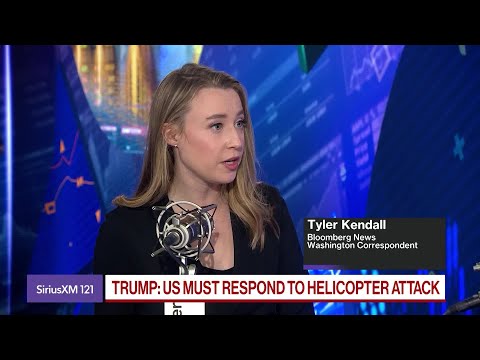
    Former President Donald Trump stated in a Bloomberg Television interview that the United States must launch a direct, proportional military response against Iran following an attack on a U.S. helicopter. Speaking to the necessity of global deterrence, Trump argued that failing to retaliate against Tehran directly projects a fatal weakness that emboldens hostile state actors and endangers American service members deployed across the Middle East.

    The statement cuts to the core of American foreign policy. It forces a conversation about where the lines of engagement are drawn. It demands an answer to a decades-old question.

    When a proxy fires a weapon, who pays the price?

    The Bloomberg Television Declaration

    The interview aired on Bloomberg Television. The setting was formal. The rhetoric was uncompromising. Trump addressed the attack on the U.S. helicopter not as an isolated skirmish, but as a symptom of a collapsing global deterrence architecture.

    He pointed the finger directly at Tehran. He bypassed the local militia groups entirely.

    This is a calculated rhetorical strategy. For decades, the Islamic Republic of Iran has utilized a network of proxy forces to harass Western assets. This provides plausible deniability. Trump’s stated doctrine strips that deniability away. If a weapon is financed by Iranian rials, smuggled by the Quds Force, and fired at an American aircraft, Trump’s framework treats the attack as an official act of the Iranian state.

    His demand for a response activates a specific cultural defense mechanism. It signals patriotism. It signals a refusal to accept American casualties as the cost of doing business in the Middle East.

    The Vulnerability of Rotary-Wing Aircraft

    Helicopters are inherently vulnerable. They do not fly at thirty thousand feet. They do not break the sound barrier. They operate low and slow, navigating complex terrain where threats can emerge from a single rooftop or a desert ridge.

    The U.S. military relies heavily on rotary-wing aircraft in the Middle East. The AH-64 Apache provides close air support. The MH-60 Black Hawk handles troop transport and medical evacuations. These machines are the lifeblood of U.S. Central Command (CENTCOM) operations.

    They are also prime targets.

    Iran has spent years flooding the region with man-portable air-defense systems (MANPADS). These shoulder-fired missiles are cheap. They are easy to smuggle. They are highly effective against helicopters. When an Iran-backed militia targets a U.S. helicopter, they are attacking the logistical foundation of the American military presence in the region.

    An attack on a helicopter is not a warning shot. It is an attempt to inflict catastrophic casualties.

    The Architecture of Maximum Pressure

    Trump’s demand for retaliation is not theoretical. It is anchored in his established track record. During his presidency, he implemented a strategy known as Maximum Pressure.

    The strategy began with economics. In May 2018, the United States withdrew from the Joint Comprehensive Plan of Action (JCPOA). Sanctions were reimposed. The goal was to choke off the financial pipelines that funded the Islamic Revolutionary Guard Corps (IRGC).

    But the strategy also included kinetic action.

    On January 3, 2020, a U.S. drone strike at Baghdad International Airport killed Qasem Soleimani. Soleimani was the commander of the IRGC’s Quds Force. He was the architect of Iran’s proxy network. The strike was a massive escalation. It was a direct message that the United States would no longer tolerate proxy attacks without targeting the Iranian leadership orchestrating them.

    Trump’s recent comments on Bloomberg Television echo this exact philosophy. Deterrence is not achieved through proportional responses against low-level militants. Deterrence is achieved by making the cost of aggression unimaginably high for the state sponsoring it.

    The Proxy War Apparatus

    Understanding the helicopter attack requires understanding the IRGC. The IRGC operates parallel to the traditional Iranian military. Its mandate is to export the Islamic Revolution.

    It achieves this through the Quds Force. The Quds Force funds, trains, and equips militias across the Middle East. The Houthis in Yemen. Hezbollah in Lebanon. Kataib Hezbollah in Iraq. These groups provide Tehran with a strategic buffer.

    When the Houthis fire anti-ship ballistic missiles in the Red Sea, they do so with Iranian intelligence. When militias in Iraq launch drones at U.S. bases, they do so with Iranian hardware.

    This dynamic creates a complex problem for the Pentagon. Striking the proxies is akin to treating the symptoms of a disease while ignoring the cause. The militants are replaceable. The hardware is easily restocked. Trump’s doctrine argues that the only way to stop the attacks is to strike the source.

    Washington’s Political Calculus

    National security is a dominant force in American politics. As the 2024 election cycle accelerates, foreign policy has become a central battleground.

    The attack on the helicopter forces lawmakers to take a stance. It highlights the tension between isolationism and interventionism. Trump’s base responds strongly to a posture of strength. The concept of cultural defense is deeply tied to the image of an untouchable American military.

    When American service members are attacked, the public expects a response. Hesitation is viewed as weakness. Weakness is viewed as a national embarrassment.

    Trump leverages this sentiment effectively. By demanding a direct response to Iran, he positions himself as the defender of American prestige. He draws a sharp contrast with diplomatic approaches that prioritize de-escalation over retaliation.

    The Mechanics of Retaliation

    What does a direct response look like? The Pentagon maintains extensive target packages for Iranian assets.

    A retaliatory strike would likely involve a combination of naval and air assets. The USS Dwight D. Eisenhower Carrier Strike Group operates in the region. Arleigh Burke-class destroyers carry Tomahawk cruise missiles capable of striking targets deep inside Iranian territory with pinpoint accuracy.

    Air Force assets would also play a role. B-1B Lancer bombers, flying from Al Udeid Air Base in Qatar or directly from the continental United States, can deliver massive payloads. F-35 Lightning II stealth fighters can bypass advanced air defense systems.

    The targets would be carefully selected to maximize damage to the IRGC while minimizing civilian casualties. Command and control centers. Drone manufacturing facilities. Naval bases along the Strait of Hormuz.

    The goal is not regime change. The goal is the destruction of military capability.

    The Echoes of Operation Praying Mantis

    There is historical precedent for this type of escalation. In April 1988, the USS Samuel B. Roberts struck an Iranian naval mine in the Persian Gulf. The blast nearly split the frigate in half.

    President Ronald Reagan ordered a direct, disproportionate response. The result was Operation Praying Mantis.

    On April 18, 1988, U.S. forces systematically destroyed half of Iran’s operational fleet. American aircraft and warships sank Iranian frigates, gunboats, and speedboats. They destroyed armed oil platforms used by the IRGC to coordinate attacks on commercial shipping.

    The operation lasted less than a day. It effectively ended the naval phase of the Iran-Iraq War. It reestablished American dominance in the Persian Gulf.

    Trump’s demands align with the legacy of Operation Praying Mantis. When an American asset is attacked, the response must be overwhelming. It must leave no doubt about the balance of power.

    The Cost of Inaction

    The alternative to retaliation is de-escalation. Proponents of de-escalation argue that striking Iran directly risks triggering a regional war. They point to the volatility of the Middle East. They warn of the economic consequences of a conflict in the Strait of Hormuz, where a significant portion of the world’s oil supply transits daily.

    But the doctrine of deterrence views inaction as the greater risk.

    If Iran believes it can attack a U.S. helicopter without facing direct consequences, it will escalate. Today it is a helicopter. Tomorrow it is a destroyer. The day after, it is a forward operating base.

    Deterrence is a psychological construct. It exists only as long as the adversary believes the threat of retaliation is credible. The moment that credibility fractures, the deterrence fails.

    Rebuilding the Red Line

    The Bloomberg Television interview serves as a blueprint for a potential future administration. It signals a return to Maximum Pressure. It signals a zero-tolerance policy for proxy warfare.

    The attack on the helicopter is a flashpoint. It is a test of American resolve. The way Washington responds will dictate the operational tempo of the IRGC for years to come.

    The Middle East respects strength. It exploits weakness. The doctrine of deterrence does not allow for ambiguity.

    Diplomats drafted memos. Generals reviewed target packages. Politicians debated the escalation ladder. Deterrence.

  • The Strait of Hormuz Crisis: Trump Claims Iran Shot Down U.S. Helicopter

    The Strait of Hormuz Crisis: Trump Claims Iran Shot Down U.S. Helicopter

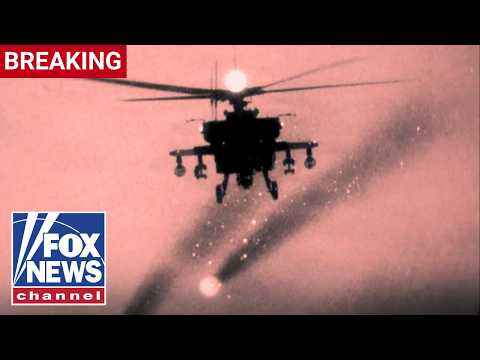
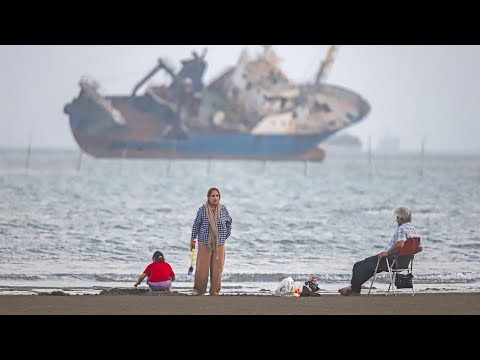
    Donald Trump stated that Iranian military forces shot down a United States helicopter operating in the Strait of Hormuz, a critical maritime chokepoint between the Persian Gulf and the Gulf of Oman. The announcement immediately escalated geopolitical tensions between Washington and Tehran. It raised urgent questions about the safety of U.S. Central Command (CENTCOM) personnel stationed in the Middle East and the stability of global energy markets. The assertion places a sudden spotlight on one of the most heavily militarized and economically vital waterways on the planet.

    The Announcement and the Immediate Geopolitical Shockwave

    The statement arrived without prior warning. It bypassed traditional Department of Defense channels and entered the public consciousness directly. The claim that a U.S. rotary-wing aircraft was brought down by hostile Iranian fire represents a massive escalation in a region already defined by perpetual brinkmanship. Washington and Tehran have engaged in a shadow war for decades. Direct, kinetic military action against a manned U.S. aircraft is a red line that historically demands a severe proportional response.

    Military analysts immediately began parsing the available data. U.S. Navy surface combatants and aviation assets operate under strict rules of engagement in the Persian Gulf. A shootdown implies either a deliberate targeted attack by Iranian air defense systems or a catastrophic miscalculation by local commanders within the Islamic Revolutionary Guard Corps (IRGC). The Pentagon’s immediate posture involves asset accountability, search and rescue protocol activation, and intelligence verification. The White House and the National Security Council face a rapidly closing window to establish the facts on the ground before public pressure dictates a military response.

    The international community watches the Persian Gulf with intense scrutiny. European allies, dependent on Middle Eastern energy exports, view any kinetic military action in the Strait of Hormuz as a direct threat to their economic security. Diplomatic backchannels, often routed through intermediaries in Oman or Switzerland, activate instantly during such crises. The goal is always to prevent a localized tactical incident from spiraling into a broader regional conflict.

    The Geography of a Chokepoint: Understanding the Strait of Hormuz

    To understand the gravity of the claim, one must understand the geography. The Strait of Hormuz is a narrow stretch of water separating the Arabian Peninsula from the Iranian coastline. At its narrowest point, the strait is only 21 miles wide. The shipping lanes that accommodate massive supertankers are just two miles wide in each direction, separated by a two-mile buffer zone. This geographic bottleneck forces civilian and military vessels into close proximity.

    The northern shore is entirely controlled by the Islamic Republic of Iran. The southern shore is shared by the Sultanate of Oman and the United Arab Emirates. The Musandam Peninsula juts northward, creating the intricate coastal geography that defines the waterway. Iranian forces maintain heavily fortified positions on Qeshm Island, Larak Island, and Abu Musa. These outposts are equipped with anti-ship cruise missiles, radar installations, and sophisticated air defense systems.

    The economic reality of the Strait cannot be overstated. Approximately 20 percent of the world’s total global petroleum consumption transits through this single waterway. That equates to roughly 21 million barrels of crude oil every single day. Liquefied natural gas (LNG) from Qatar also relies entirely on the Strait for access to Asian and European markets. If the Strait of Hormuz closes, the global economy halts. The mere threat of military conflict in these waters causes immediate spikes in the price of Brent Crude and West Texas Intermediate (WTI).

    U.S. Naval Aviation in the Persian Gulf

    The United States maintains a massive military footprint in the region to ensure the free flow of commerce. The U.S. Navy’s Fifth Fleet is headquartered in Manama, Bahrain. From this strategic hub, CENTCOM projects power throughout the Persian Gulf, the Red Sea, and the Arabian Sea. Naval aviation is a critical component of this power projection.

    Helicopters are the workhorses of the Fifth Fleet. The primary rotary-wing asset utilized by the U.S. Navy in these waters is the Sikorsky MH-60R Sea Hawk. These advanced helicopters operate from the flight decks of Arleigh Burke-class guided-missile destroyers and Nimitz-class aircraft carriers. They are tasked with anti-submarine warfare, surface warfare, search and rescue, and logistics support. When a U.S. warship transits the Strait of Hormuz, an MH-60R is almost always airborne, providing an over-the-horizon radar picture and physical escort.

    The U.S. Army also operates AH-64 Apache attack helicopters from bases in the region, occasionally conducting joint maritime patrols. These aircraft fly low and slow. They are inherently vulnerable to man-portable air-defense systems (MANPADS) and concentrated anti-aircraft artillery fire. Operating a helicopter in the Strait of Hormuz means flying within visual range of Iranian fast-attack craft and coastal missile batteries. The margin for error is zero. The airspace is congested, heavily monitored, and intensely hostile.

    The Islamic Revolutionary Guard Corps and Asymmetric Warfare

    The conventional Iranian military, the Artesh, shares responsibility for national defense with the Islamic Revolutionary Guard Corps. In the Strait of Hormuz, the IRGC Navy (IRGCN) holds primary jurisdiction. The IRGCN does not fight like a traditional Western navy. They rely on the doctrine of asymmetric warfare.

    Instead of fielding large, vulnerable frigates and destroyers, the IRGCN utilizes a massive fleet of heavily armed fast-attack craft (FAC) and fast inshore attack craft (FIAC). These small, maneuverable vessels are designed to swarm larger enemy ships. They are armed with heavy machine guns, unguided rockets, and anti-ship missiles. The IRGCN frequently uses these vessels to harass U.S. warships and commercial oil tankers transiting the strait. This harassment is designed to project power, test U.S. response times, and assert Iranian sovereignty over the waterway.

    The IRGC Aerospace Force controls Iran’s strategic missile and air defense assets. Over the past decade, Tehran has heavily invested in indigenous surface-to-air missile (SAM) systems. Systems like the Bavar-373 and the Khordad 15 provide a layered defense network covering the entire Persian Gulf. The proliferation of these advanced SAM systems has fundamentally altered the risk calculus for U.S. aviators operating in the region. The airspace over the Strait is a contested environment where radar lock-ons and radio warnings are a daily occurrence.

    Historical Precedent: From Praying Mantis to the Global Hawk

    The claim of a downed helicopter echoes a long, violent history of U.S.-Iran engagements in the Persian Gulf. The historical precedent dictates how Washington will likely respond. On April 18, 1988, the U.S. Navy launched Operation Praying Mantis in retaliation for the Iranian mining of the USS Samuel B. Roberts. The operation resulted in the destruction of half of Iran’s operational fleet and multiple offshore intelligence platforms. It remains the largest surface naval engagement for the United States since World War II.

    More recently, the airspace over the Strait has been the site of direct kinetic action. On June 20, 2019, the IRGC shot down a U.S. Navy RQ-4A Global Hawk unmanned surveillance drone. Iran claimed the drone had entered its territorial airspace. The United States maintained the aircraft was operating in international airspace over the Strait of Hormuz. The incident brought the two nations to the absolute brink of war. A retaliatory strike was authorized by the White House but famously called off with only minutes to spare.

    The distinction between an unmanned drone and a manned helicopter is profound. The loss of a $130 million drone is a financial and technological blow. The loss of a helicopter involves the loss of American lives. The U.S. military doctrine requires a definitive and overwhelming response to the deliberate killing of its service members. If the claim of a downed helicopter is verified, the diplomatic off-ramps that prevented war in 2019 will be significantly narrower.

    Economic Ramifications: Oil Markets and Global Supply Chains

    The global economy is deeply sensitive to the security of the Strait of Hormuz. Energy markets do not wait for official Pentagon confirmation before reacting to breaking news. The mere mention of military conflict in the Persian Gulf triggers algorithmic trading protocols and panic buying on the commodities exchanges.

    Brent Crude, the global benchmark for oil prices, experiences immediate volatility in response to Strait disruptions. A sustained closure of the waterway, or even a significant increase in maritime insurance premiums due to perceived risk, directly impacts the cost of gasoline, diesel, and aviation fuel worldwide. This inflationary pressure cascades through global supply chains, affecting the price of consumer goods, food transportation, and industrial manufacturing.

    The strategic petroleum reserves held by the United States and other industrialized nations serve as a buffer against such shocks. However, these reserves cannot replace the 21 million barrels per day that flow past the Musandam Peninsula. The economic reality is that the Strait of Hormuz is too big to fail. The U.S. military presence exists precisely to ensure that no single state actor can hold the global economy hostage by mining the waterway or threatening civilian shipping.

    The Diplomatic Calculus in Washington and Tehran

    In Washington, a confirmed shootdown forces a rapid consolidation of crisis management protocols. The National Security Council convenes to weigh kinetic and non-kinetic options. Kinetic options range from targeted strikes against the specific anti-aircraft battery responsible for the attack to a broader degradation of IRGC naval and aerospace infrastructure. Non-kinetic options involve severe economic sanctions, cyber warfare, and diplomatic isolation. The objective is to restore deterrence without triggering a regional conflagration that could draw in proxy forces in Iraq, Syria, Lebanon, and Yemen.

    In Tehran, the calculus is equally complex. The Supreme National Security Council must evaluate the domestic and international implications of the event. If the shootdown was a deliberate order from the highest levels of the IRGC, it represents a calculated gamble that the United States lacks the political will for a sustained conflict. If the shootdown was the result of a rogue local commander or a misidentified radar track, Tehran faces the difficult task of de-escalation while maintaining a posture of defiance for its domestic audience.

    The communication architecture between the two nations is notoriously fragile. There is no direct hotline between the Pentagon and the Iranian Ministry of Defense. Messages are relayed through the Swiss Embassy in Tehran or via backchannels managed by the Sultanate of Oman. This indirect communication increases the risk of misinterpretation and unintended escalation during a fast-moving crisis.

    The Burden of Verification

    The period immediately following a breaking military claim is defined by the fog of war. Initial reports are frequently inaccurate, incomplete, or deliberately manipulated. The burden of verification falls heavily on the U.S. intelligence community and the Department of Defense. Satellite imagery, signals intelligence (SIGINT), and radar telemetry are rapidly analyzed to construct an objective timeline of events.

    The fate of the aircrew remains the paramount concern. The U.S. military possesses robust combat search and rescue (CSAR) capabilities in the region. If an aircraft goes down, a massive coordinated effort involving surface ships, fixed-wing aircraft, and special operations forces is immediately launched. The waters of the Persian Gulf are shallow and heavily trafficked, complicating rescue operations while increasing the likelihood of rapid recovery.

    The geopolitical landscape of the Middle East is fundamentally altered by the introduction of lethal force against U.S. personnel. The deterrence architecture built over decades is tested in real-time. The credibility of U.S. security guarantees to regional allies is scrutinized. Every action and reaction is weighed against the overarching strategic goal of maintaining stability in the world’s most volatile region.

    The Enduring Standoff

    The Strait of Hormuz remains a theater of perpetual tension. It is a geographic reality that forces adversaries into uncomfortable proximity. The claims of downed aircraft, harassed shipping, and contested airspace are symptoms of a deeper, unresolved conflict between competing strategic visions for the Middle East. The U.S. seeks to maintain freedom of navigation and regional stability. Iran seeks to project regional hegemony and deter foreign military presence near its borders.

    This fundamental clash of interests ensures that the waters between the Persian Gulf and the Gulf of Oman will remain heavily militarized. The presence of U.S. naval aviation is a necessary component of the deterrence strategy, but it carries inherent risks. The men and women operating MH-60R Sea Hawks and Arleigh Burke-class destroyers bear the daily burden of this strategic standoff. They operate in an environment where a single spark can ignite a global crisis.

    The world watches the Strait. The flow of commerce continues under the shadow of military power. The rhetoric escalates and de-escalates in a familiar, dangerous rhythm. The physical reality of the chokepoint remains unchanged. Diplomats draft statements. Markets adjust prices. Fleets adjust positions. Hormuz.

  • The Shadow Accord – How the US and Iran Advance a Quiet Deal Amid Hormuz Skirmishes

    The Shadow Accord – How the US and Iran Advance a Quiet Deal Amid Hormuz Skirmishes

    The United States and Iran are quietly executing an unwritten diplomatic understanding to cap Tehran’s nuclear enrichment and unfreeze billions in sanctioned assets, even as Iranian naval forces continue to harass commercial shipping in the Strait of Hormuz. This dual-track reality defines the modern geopolitical standoff between Washington and Tehran. Diplomats negotiate behind closed doors in the Middle East while fast boats swarm oil tankers in the Persian Gulf. The paradox is intentional. Both nations are seeking a mechanism to de-escalate the threat of a direct military conflict without appearing to capitulate to their respective domestic political bases.

    The framework taking shape is not a formal treaty. It is a choreographed sequence of reciprocal steps. Washington secures a pause on Iran’s march toward weapons-grade uranium and the release of detained American citizens. Tehran secures access to frozen capital required to stabilize a collapsing domestic economy. Yet, the waters of the Middle East remain volatile. The Islamic Revolutionary Guard Corps (IRGC) maintains a posture of calibrated aggression in the world’s most critical maritime chokepoint.

    Understanding this fragile equilibrium requires looking past the daily headlines. The skirmishes at sea and the handshakes in secure diplomatic compounds are not contradictory events. They are two sides of the same strategic coin.

    The Muscat Backchannel

    Direct negotiations between the United States and Iran effectively ended following the collapse of efforts to revive the 2015 Joint Comprehensive Plan of Action (JCPOA). Washington and Tehran do not sit at the same table. Instead, they rely on intermediaries.

    The Sultanate of Oman has historically served as the indispensable bridge between the West and the Islamic Republic. Under the direction of Sultan Haitham bin Tariq, Omani diplomats have facilitated a complex proximity dialogue. US Middle East coordinator Brett McGurk and Iran’s chief nuclear negotiator Ali Bagheri Kani have traveled to Muscat for these indirect talks. They occupy separate rooms. Omani officials shuttle messages back and forth.

    The objective in Muscat is not a grand bargain. The objective is crisis management.

    The Biden administration recognizes that a return to the original JCPOA is politically unviable. The Iranian regime has advanced its nuclear infrastructure too far. The political appetite in Washington for a sweeping deal with Tehran is non-existent. Instead, the focus has shifted to an unwritten “mini-deal” or “understanding.”

    The terms of this quiet arrangement are highly specific. Iran agrees to halt the accumulation of uranium enriched to 60 percent purity. Weapons-grade uranium requires 90 percent purity. By capping enrichment at 60 percent, Iran maintains its nuclear leverage but stops short of crossing the red line that would trigger Israeli or American military strikes against facilities like Natanz and Fordow.

    In exchange, the United States turns a blind eye to a baseline level of Iranian oil exports, primarily to China. Furthermore, Washington facilitates the unfreezing of Iranian assets trapped in foreign banks due to US sanctions. The most prominent example involves roughly $6 billion in Iranian oil revenue held in South Korea, transferred to restricted accounts in Qatar for strictly humanitarian purchases.

    The Theater of the Strait

    While diplomats map out financial transfers in Oman, the physical reality of the conflict plays out in the Strait of Hormuz. This narrow waterway, separating the Arabian Peninsula from Iran, is the arterial vein of the global economy. Approximately 21 million barrels of oil transit the strait every day. That represents roughly 20 percent of global petroleum liquids consumption.

    The US Navy’s Fifth Fleet, headquartered in Manama, Bahrain, patrols these waters to ensure freedom of navigation. Vice Admiral Brad Cooper and US Central Command (CENTCOM) maintain a constant vigil over the shipping lanes. They face an asymmetric adversary.

    The IRGC Navy does not field a fleet of traditional destroyers or aircraft carriers. It relies on a swarm doctrine. Hundreds of heavily armed fast attack craft, coastal defense cruise missiles, and aerial drones form a layered anti-access/area denial (A2/AD) network.

    Over the past two years, the IRGC has systematically harassed, boarded, and seized commercial vessels. In early 2023, Iranian forces seized the Marshall Islands-flagged oil tanker Advantage Sweet in the Gulf of Oman. Days later, they seized the Panama-flagged tanker Niovi as it transited the Strait of Hormuz. These actions trigger immediate alarms in global energy markets and force the Pentagon to deploy additional assets, including F-35 fighter jets and Arleigh Burke-class guided-missile destroyers like the USS Thomas Hudner, to the region.

    The Logic of Calibrated Aggression

    To an outside observer, seizing oil tankers while simultaneously negotiating for sanctions relief appears counterproductive. For the leadership in Tehran, it is entirely rational.

    The Iranian government is not a monolith. The civilian government, led by President Ebrahim Raisi and the Ministry of Foreign Affairs, handles the diplomatic portfolio. The IRGC, which answers directly to Supreme Leader Ayatollah Ali Khamenei, controls the military and regional proxy networks. The IRGC operates with its own institutional imperatives.

    By escalating tensions in the Strait of Hormuz, the IRGC achieves several objectives. First, it demonstrates to domestic hardliners that the regime is not capitulating to Western pressure. Second, it reminds the Gulf Arab states, particularly Saudi Arabia and the United Arab Emirates, of Iran’s geographic dominance over their economic lifelines. Third, it provides the Iranian diplomatic corps with leverage. The implicit message delivered in Muscat is simple: Relieve the economic pressure, or the waters of the Gulf will become unnavigable.

    The skirmishes are carefully calibrated. The IRGC targets commercial vessels, not US Navy warships. A direct attack on an American destroyer would invite a devastating kinetic response. Seizing a Greek-owned, Panama-flagged tanker creates a geopolitical headache without crossing the threshold into all-out war.

    The Washington Calculus

    The Biden administration navigates its own complex domestic landscape. The political toxicity surrounding Iran policy in Washington cannot be overstated.

    Under the Iran Nuclear Agreement Review Act (INARA) of 2015, the US President is required to submit any formal agreement regarding Iran’s nuclear program to Congress for review. A formal treaty would face intense opposition from Republicans and hawkish Democrats on Capitol Hill. It would likely be blocked.

    By pursuing an unwritten, informal understanding, the White House bypasses the INARA requirement. There is no document to sign. There is no treaty to ratify. There are only parallel, unilateral actions. Iran slows its centrifuges. The US Treasury Department issues quiet waivers for frozen funds. The arrangement relies entirely on mutual verification and temporary trust.

    The strategy is a holding pattern. The administration’s primary goal is to keep the Iranian nuclear issue off the crisis agenda ahead of domestic election cycles. A war in the Middle East, or a sudden spike in global gasoline prices caused by a blockade of the Strait of Hormuz, would be politically disastrous.

    The Economic Reality in Tehran

    For Iran, the shadow deal is a matter of regime survival. The Islamic Republic faces unprecedented internal and external pressures.

    The “maximum pressure” sanctions campaign initiated by the Trump administration in 2018 severely crippled the Iranian economy. The national currency, the rial, has plummeted in value, trading at historic lows of over 500,000 to the US dollar on the unregulated market. Inflation routinely hovers above 50 percent. Basic goods, medicine, and food staples are increasingly out of reach for the average Iranian citizen.

    This economic devastation compounded the widespread civil unrest sparked by the death of Mahsa Amini in the custody of the morality police in late 2022. The regime violently suppressed the protests, but the underlying grievances remain. The leadership in Tehran desperately needs a pressure valve.

    Accessing the $6 billion frozen in South Korea, and potentially billions more held in Iraq, provides that valve. Even if the funds are strictly earmarked for humanitarian goods, money is fungible. Relieving the financial burden of importing food and medicine frees up domestic capital for other state priorities.

    The Role of Regional Proxies

    The unwritten understanding extends beyond the nuclear file and maritime shipping. It touches the complex web of Iranian proxy forces across the Middle East.

    The United States maintains a military presence in Iraq and Syria, primarily to counter the remnants of the Islamic State. These US outposts have frequently been targeted by rocket and drone attacks launched by Iran-backed militia groups. Part of the quiet diplomacy involves Tehran reining in these militias.

    When the backchannel talks in Oman make progress, the frequency of attacks on US bases in the Levant noticeably decreases. When talks stall, the rockets return. It is a violent form of Morse code. The IRGC uses its proxy network to dial the pressure up or down based on the status of the financial negotiations.

    The International Atomic Energy Agency

    Verification remains the fundamental flaw in any unwritten agreement. Without a formal treaty, the role of the International Atomic Energy Agency (IAEA) becomes both critical and precarious.

    IAEA Director General Rafael Grossi has repeatedly warned about the diminishing visibility his inspectors have into Iran’s nuclear program. Tehran has disconnected surveillance cameras at key facilities and barred some of the agency’s most experienced inspectors. Under the terms of the shadow accord, Iran is expected to restore a baseline level of cooperation with the IAEA.

    However, the lack of a binding legal framework means Tehran can revoke this access at any moment. The centrifuges at Natanz and Fordow are highly advanced. If Supreme Leader Ali Khamenei makes the political decision to break out and produce weapons-grade uranium, the timeline is measured in weeks, not months. The unwritten deal does not dismantle the nuclear infrastructure. It merely unplugs the machines temporarily.

    The Fragile Equilibrium

    The current state of US-Iran relations is a masterclass in brinkmanship. Both sides are operating at the absolute limit of their adversary’s tolerance.

    The United States accepts a reality where Iran operates as a threshold nuclear state, possessing the knowledge and material to build a weapon, provided they do not take the final step. Iran accepts a reality where its economy remains heavily sanctioned, provided it receives enough financial relief to prevent a total domestic collapse.

    The skirmishes in the Strait of Hormuz will not stop. The IRGC will continue to assert its presence in the Persian Gulf. The US Navy will continue to deploy destroyers and aircraft to deter them. The maritime friction is baked into the geopolitical baseline.

    There is no grand resolution on the horizon. There is only the daily management of hostility. The backchannels remain open. The fast boats remain armed. The diplomats negotiate. The warships patrol. The centrifuges spin.

    Equilibrium.


    Next in the Series: The Architecture of Sanctions – How Global Financial Networks Isolate State Actors.

  • The Shadow War Surfaces – US Military Confirms Renewed Strikes on Iranian Assets

    The Shadow War Surfaces – US Military Confirms Renewed Strikes on Iranian Assets

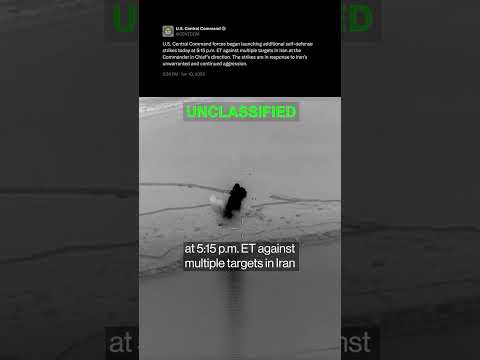
    The United States military has officially confirmed the commencement of renewed strike operations targeting Iranian-backed military infrastructure and Islamic Revolutionary Guard Corps (IRGC) assets across the Middle East. Statements originating from US Central Command (CENTCOM) indicate a definitive shift from passive deterrence to active kinetic engagement. The target matrix includes command and control centers, munitions supply chains, and intelligence facilities operated by the IRGC Quds Force. This marks a definitive escalation in a shadow war that has simmered across the region for decades. The strategic ambiguity is gone. The strikes have begun.

    For years, the conflict between Washington and Tehran played out through intermediaries. Iran utilized a vast network of proxy militias to project power without triggering direct retaliation. The United States relied on economic sanctions and isolated proportional responses. That paradigm has fractured. Recent reports confirm that the Pentagon has authorized sustained military campaigns against facilities directly linked to Iranian military intelligence and logistics. The theater of operations spans multiple sovereign borders. The objective is degradation of capability, not merely sending a message.

    The Architecture of the Shadow War

    To understand the current military strikes, one must understand the architecture of Iranian power projection. The Islamic Revolutionary Guard Corps is not a standard national army. It is a parallel military structure. Within the IRGC exists the Quds Force, an elite division dedicated exclusively to extraterritorial operations. The Quds Force does not typically fight on the front lines. It trains, equips, and directs local militias across the Middle East.

    This proxy network is extensive. In Yemen, the Houthi movement controls the capital, Sanaa, and the western coastline. In Lebanon, Hezbollah maintains an arsenal of over 100,000 rockets. In Iraq and Syria, groups like Kata’ib Hezbollah and Harakat al-Nujaba operate out of fortified desert bases. The Quds Force supplies these groups with advanced weaponry. This includes Shahed-136 loitering munitions, Fateh-110 short-range ballistic missiles, and sophisticated anti-ship cruise missiles.

    The US military is not fighting a localized insurgency. It is fighting a decentralized, well-funded coalition. The renewed strikes target the connective tissue of this coalition. CENTCOM planners focus on the logistics nodes. They target the warehouses where drone components are assembled. They target the command bunkers where IRGC liaison officers coordinate with local militia commanders. Severing the head from the body is impossible in a decentralized network. The strategy is to destroy the nervous system.

    A Geography of Escalation

    The geography of this conflict dictates the strategy. The Middle East is defined by its maritime chokepoints and porous desert borders. US military operations are currently concentrated in three distinct geographic zones. Each zone presents unique tactical challenges and requires specific weapon systems.

    The Red Sea and the Bab el-Mandeb Strait

    The Bab el-Mandeb Strait connects the Red Sea to the Gulf of Aden. Nearly 12 percent of global trade passes through this narrow waterway. Iranian-backed Houthi forces in Yemen have repeatedly targeted commercial shipping vessels navigating this corridor. They utilize anti-ship ballistic missiles and explosive surface drones. The US Navy’s response relies heavily on the Carrier Strike Group deployed to the region.

    Vessels like the USS Dwight D. Eisenhower serve as floating sovereign territory. F/A-18 Super Hornets launch daily to intercept incoming Houthi drones. Arleigh Burke-class guided-missile destroyers, such as the USS Gravely and the USS Carney, utilize SM-2 and SM-6 interceptor missiles to shoot down ballistic threats. The renewed strikes involve offensive actions against Houthi launch sites inside Yemen. Radar installations are destroyed before they can paint commercial targets. Missile storage facilities are leveled before the munitions can be mounted on mobile launchers.

    The Mesopotamian Forward Bases

    The second theater of operations encompasses the border regions of Iraq and Syria. US forces maintain a presence at installations like Al Asad Airbase in western Iraq and the Tower 22 logistics hub in Jordan. These bases serve as critical nodes for the ongoing mission to defeat the remnants of the Islamic State. However, they are frequently targeted by Iranian-backed militias using one-way attack drones and 107mm rockets.

    Retaliatory strikes in this zone are precise and punitive. When US service members are threatened, CENTCOM authorizes strikes on militia training camps and weapons depots in eastern Syria and western Iraq. These operations often utilize MQ-9 Reaper drones and F-15E Strike Eagles. The goal is to enforce a red line. The message delivered by high-explosive ordnance is that attacks on American personnel carry an immediate and disproportionate cost.

    The Arsenal of Retaliation

    Modern deterrence requires overwhelming technological superiority. The US military employs a specific arsenal to execute these renewed strikes. The weapon systems chosen reflect the need for precision, standoff distance, and massive payload delivery.

    • B-1B Lancer Strategic Bombers: Flown directly from bases in the continental United States, such as Dyess Air Force Base in Texas. These supersonic bombers can carry massive payloads of precision-guided munitions. Their deployment signals global reach. They can strike dozens of targets simultaneously across a wide geographic area.
    • Tomahawk Land Attack Missiles (TLAMs): Fired from naval vessels and submarines stationed in the Red Sea and the Mediterranean. Tomahawks provide a standoff capability. They can travel over 1,000 miles at low altitudes, evading radar detection before striking high-value targets with pinpoint accuracy.
    • AGM-114 Hellfire Missiles: Deployed from MQ-9 Reaper drones. These missiles are used for targeted strikes against specific vehicles or individuals. The R9X variant, known as the “Ninja bomb,” uses deploying blades instead of an explosive warhead to eliminate targets with zero collateral damage.
    • Joint Direct Attack Munitions (JDAMs): GPS-guided tail kits attached to unguided bombs. Dropped by fighter aircraft, JDAMs turn “dumb” bombs into precision weapons capable of penetrating fortified bunkers and collapsing underground storage facilities.

    The application of this arsenal is methodical. Target sets are developed over months by intelligence analysts at the Pentagon and CENTCOM headquarters in Tampa, Florida. When the order is given, the execution is rapid. A strike package can destroy a dozen facilities in a matter of minutes.

    Historical Echoes in the Persian Gulf

    The current escalation is not without precedent. The waters of the Persian Gulf and the deserts of the Middle East hold a long memory of US-Iran military engagements. Understanding the present requires acknowledging the past.

    In April 1988, the US Navy launched Operation Praying Mantis. This was a direct response to the Iranian mining of the Persian Gulf, which had severely damaged the USS Samuel B. Roberts. In a single day of combat, US forces destroyed two Iranian oil platforms used for military surveillance and sank multiple Iranian naval vessels. It was the largest surface naval engagement for the United States since World War II. Operation Praying Mantis established a clear boundary. It demonstrated the US willingness to use overwhelming force to protect freedom of navigation.

    More recently, the January 2020 drone strike that killed Qasem Soleimani fundamentally altered the geopolitical landscape. Soleimani was the architect of the IRGC Quds Force. He was the mastermind behind the proxy network. His elimination outside Baghdad International Airport was a shock to the Iranian system. The subsequent Iranian ballistic missile attack on Al Asad Airbase resulted in traumatic brain injuries for over 100 US service members, though no fatalities occurred. The current strikes operate in the shadow of these events. Both sides understand the threshold for open war. Both sides continuously test the limits of that threshold.

    The Economics of Asymmetric Warfare

    Military engagements are ultimately exercises in economics. The financial cost of the renewed strikes is staggering. The asymmetry of the conflict places a heavy financial burden on the defending force.

    “Deterrence is not just about firepower. It is about the sustainable application of capital to enforce political will.”

    Consider the mathematics of air defense in the Red Sea. An Iranian-designed Shahed-136 drone costs approximately $20,000 to manufacture. It is cheap, mass-produced, and expendable. To shoot down that drone, a US Navy destroyer often fires a Standard Missile-2 (SM-2). The cost of a single SM-2 interceptor is roughly $2.1 million. The cost exchange ratio is heavily skewed in favor of the proxy militias.

    This economic reality forces a shift in strategy. The US military cannot simply play defense indefinitely. Intercepting cheap drones with expensive missiles is financially unsustainable. Therefore, the strategy must pivot to offense. It is far more cost-effective to drop a $30,000 JDAM on a warehouse containing fifty drones before they are launched. The renewed strikes on Iranian assets are driven as much by economic necessity as they are by tactical deterrence. Destroy the bow, and you do not have to worry about the arrows.

    The Geopolitical Chessboard

    The strikes do not occur in a vacuum. They ripple across global markets and diplomatic channels. The price of Brent crude oil fluctuates with every reported explosion in the Red Sea. Shipping conglomerates reroute vessels around the Cape of Good Hope, adding weeks to transit times and millions in fuel costs. The global supply chain is intimately tied to the security of Middle Eastern waterways.

    Diplomatically, the United States must navigate a complex web of alliances. Arab nations in the Gulf, such as Saudi Arabia and the United Arab Emirates, view Iranian expansionism as an existential threat. However, they also fear a regional war that could devastate their economies. They support US deterrence efforts quietly, providing airspace and intelligence, but often distance themselves publicly to avoid Iranian retaliation.

    The Pentagon must calibrate its strikes precisely. Too weak, and the deterrence fails. The proxy attacks multiply. Too strong, and the conflict spirals into a regional conflagration involving mainland Iran. The current operational tempo reflects this delicate balance. It is a slow, methodical degradation of enemy capabilities. It is the application of friction to the Iranian war machine.

    The military reports confirm the reality on the ground. The passive posture has ended. The active degradation has begun. The assets are in place. The targets are locked. The orders are executed.

    Radars sweep. Missiles launch. Targets burn. Deterrence.

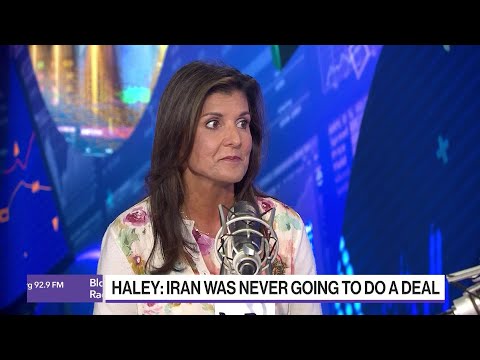
  • The Illusion of Diplomacy – Why Nikki Haley Says Iran Was Never Going to Do a Deal

    The Illusion of Diplomacy – Why Nikki Haley Says Iran Was Never Going to Do a Deal

    Former UN Ambassador Nikki Haley stated on Bloomberg Television that Iran never intended to finalize a renewed nuclear deal, using diplomatic negotiations primarily as a stalling tactic to advance uranium enrichment and fund proxy networks. The illusion of a renewed Joint Comprehensive Plan of Action (JCPOA) has anchored Western foreign policy for years. But the reality on the ground tells a different story.

    Haley’s assessment cuts through the diplomatic optimism that characterized the early years of the Biden administration. Negotiations in Vienna stretched on for months. Envoys exchanged drafts. European intermediaries carried messages back and forth. All the while, Tehran’s centrifuges kept spinning.

    The premise of the talks was a return to the 2015 framework. The United States would lift economic sanctions. In exchange, Iran would dismantle advanced centrifuges and ship out enriched uranium. It was a transactional equation. Haley argues the equation was fundamentally flawed because one side was never doing the math.

    The Bloomberg Television Declaration

    Speaking directly to the global markets and political observers on Bloomberg Television, Haley dismissed the notion of Iranian diplomatic sincerity. Her stance reflects a growing consensus among national security hawks and intelligence analysts.

    The regime in Tehran, led by Supreme Leader Ayatollah Ali Khamenei, views the West with fundamental hostility. A diplomatic signature was never the end goal. The end goal was survival, regional hegemony, and nuclear threshold status.

    “They were never going to do a deal. It was always a stalling tactic to get exactly what they wanted., Nikki Haley, speaking on Bloomberg Television.

    This perspective reframes the last three years of international relations. If Iran was never going to sign a deal, the negotiations were not a failure of diplomacy. They were a successful Iranian intelligence operation.

    The Architecture of an Illusion

    To understand Haley’s position, one must look back to the original 2015 Joint Comprehensive Plan of Action. Brokered by the Obama administration alongside the P5+1 nations, the deal offered Tehran billions of dollars in sanctions relief.

    The theory of change in 2015 was straightforward. Economic integration would moderate Iranian behavior. A wealthier Iran would become a more responsible stakeholder in the Middle East. The nuclear threat would be boxed in for a decade or more.

    That theory collapsed almost immediately. The financial windfall from unfrozen assets did not build hospitals or schools in Tehran. It flowed directly to the Islamic Revolutionary Guard Corps (IRGC). It funded the Quds Force. It armed proxy militias across the Levant.

    The Fatal Flaws of the JCPOA

    Critics of the 2015 agreement, including Haley during her tenure at the United Nations, pointed to specific structural failures in the text.

    • Sunset Clauses: Key restrictions on uranium enrichment and centrifuge manufacturing were designed to expire after 10 to 15 years.
    • Ballistic Missiles: The agreement completely ignored Iran’s development of intercontinental ballistic missiles, the exact delivery systems required for a nuclear payload.
    • Inspection Limits: The International Atomic Energy Agency (IAEA) faced significant hurdles in accessing undeclared military sites where illicit nuclear work was suspected.

    These omissions provided Tehran with a legal pathway to a massive nuclear infrastructure, provided they simply waited out the clock.

    The 2018 Pivot and Maximum Pressure

    In May 2018, the Trump administration officially withdrew the United States from the JCPOA. Nikki Haley served as the U.S. Ambassador to the United Nations during this critical pivot.

    The withdrawal initiated the “Maximum Pressure” campaign. The U.S. Treasury Department reimposed crippling secondary sanctions on the Iranian oil and banking sectors. The goal was to force Tehran back to the table for a broader, more comprehensive treaty.

    Iran responded with strategic patience. The regime absorbed the economic blow, betting that a future U.S. administration would reverse course. When the political winds in Washington shifted in 2021, Tehran was ready to play the diplomatic game again.

    Buying Time in Vienna

    When efforts to revive the deal began in early 2021, the venue was the Hotel Coburg in Vienna. U.S. Special Envoy Robert Malley led the American delegation, though Iranian diplomats refused to meet face-to-face with Americans. European diplomats shuttled between rooms.

    The talks dragged on for over eighteen months. Every time a finalized text appeared imminent, Iranian negotiators introduced new, extraneous demands.

    First, they demanded a guarantee that no future U.S. president could withdraw from the deal. Then, they demanded the Biden administration remove the IRGC from the State Department’s Foreign Terrorist Organization (FTO) list. Finally, they demanded the IAEA close its ongoing investigations into unexplained uranium particles found at undeclared sites.

    Haley points to this exact sequence of events. The shifting goalposts were not a sign of tough negotiation. They were a sign of intentional sabotage. Tehran needed time, and Vienna provided the cover.

    The Centrifuges Never Stopped

    While diplomats argued over bracketed text in Austrian hotels, Iranian scientists worked quietly at the Natanz and Fordow nuclear facilities. The diplomatic cover allowed them to breach every limit set by the original 2015 agreement.

    IAEA Director General Rafael Grossi repeatedly warned the international community. Iranian technicians disconnected IAEA surveillance cameras. They denied inspectors access to key facilities. Most alarmingly, they installed cascades of advanced IR-6 centrifuges.

    The 60 Percent Threshold

    By late 2022, the IAEA confirmed that Iran was enriching uranium to 60 percent purity. This is a massive technical leap. In the complex physics of uranium enrichment, reaching 60 percent requires the vast majority of the effort. Going from 60 percent to the 90 percent required for weapons-grade material is a short, rapid step.

    Experts now estimate Iran’s “breakout time”, the time required to produce enough weapons-grade uranium for a single nuclear bomb, has shrunk from a year under the JCPOA to a matter of weeks, if not days.

    This is the reality Haley highlights. The regime achieved nuclear threshold status while the West was distracted by the promise of a signature.

    The Shadow Economy and the Proxy War

    The stalling tactic did more than just protect the nuclear program. It allowed Iran to rebuild its economy through illicit means. The enforcement of U.S. sanctions softened during the negotiation period, as Western powers sought to maintain goodwill with Tehran.

    Iran capitalized on this hesitation. A massive “shadow fleet” of aging oil tankers began transporting millions of barrels of crude oil to independent refineries in China. The revenue from these illicit sales stabilized the regime’s currency and refilled the coffers of the IRGC.

    That money was immediately deployed across the Middle East. The results of this funding became violently apparent in the latter half of 2023 and into 2024.

    • Hamas in Gaza: Tehran provided millions in funding, training, and smuggled weaponry to Hamas, enabling the October 7 attacks against Israel.
    • Hezbollah in Lebanon: The IRGC continued to supply precision-guided munitions to Hezbollah, creating a massive strategic threat on Israel’s northern border.
    • The Houthis in Yemen: Iranian intelligence ships and weapons transfers empowered Houthi militants to effectively shut down commercial shipping in the Red Sea, directly challenging the global economy.

    None of this would have been possible without the financial breathing room afforded by the prolonged, illusory negotiations in Vienna.

    The Death of the Deal and a Strategic Shift

    Today, the prospect of a revived JCPOA is effectively dead. The Biden administration has publicly stated that the deal is no longer on the agenda. The bipartisan consensus in Washington has shifted significantly toward Haley’s stated position.

    The realization that Iran was never going to do a deal forces a total recalculation of Western strategy. Diplomacy, in the traditional sense, has failed. The focus must now shift to deterrence, regional security architecture, and economic containment.

    The Abraham Accords, which normalized relations between Israel and several Arab nations, represent the future of Middle Eastern security. A unified coalition of nations threatened by Iranian expansionism is the only viable counterweight to Tehran’s ambitions.

    The era of trusting the process is over. The international community spent years chasing a mirage in Vienna. The regime in Tehran used that time exactly as they intended. They enriched uranium. They armed their proxies. They sold their oil.

    Diplomats drafted frameworks. Inspectors monitored cameras. Politicians debated terms. The deal was an illusion. Tehran.

  • The June Convergence: Geopolitical Brinkmanship and the SpaceX IPO

    The June Convergence: Geopolitical Brinkmanship and the SpaceX IPO

    On June 11, 2026, global markets and international defense sectors were jolted by a dual narrative broadcast across financial networks. President Donald Trump issued explicit threats of further military strikes against Iranian targets, while simultaneously, institutional demand for the highly anticipated SpaceX initial public offering (IPO) shattered Wall Street records. This convergence of geopolitical brinkmanship and historic aerospace commercialization defined the summer trading quarter. It sent defense contractors and tech equities surging while crude oil spiked on Middle Eastern instability. The anchor desk at Bloomberg Television’s The Pulse captured the whiplash in real time. Geopolitics collided with techno-optimism.

    The Oval Office Ultimatum

    The rhetoric escalated before the markets opened. President Trump delivered a stark warning to Tehran. The focus was the Islamic Revolutionary Guard Corps (IRGC). Intelligence reports indicated hostile movements near the Strait of Hormuz. The administration did not mince words.

    Threats of kinetic military action are not new to the region. The January 2020 strike on Qasem Soleimani set a historical precedent. But the June 2026 posture carried a different weight. The Pentagon had already repositioned assets in the Persian Gulf. The USS Dwight D. Eisenhower carrier strike group loomed in the Arabian Sea. Central Command (CENTCOM) stood at high readiness.

    Trump’s statements targeted specific infrastructure. Kharg Island oil terminals were mentioned. IRGC naval bases at Bandar Abbas were heavily implied. The strategy was clear. Maximum pressure was returning to the physical domain. The diplomatic channels of the early 2020s were closed. Washington was communicating through the threat of Tomahawk cruise missiles and F-35 sorties.

    The Strait of Hormuz Calculus

    Global energy markets reacted instantly. Crude oil spiked above $94 a barrel. The Strait of Hormuz remains the world’s most critical chokepoint. Twenty percent of global petroleum consumption passes through its narrow waters. Any disruption threatens the global supply chain.

    Traders in London and New York priced in the risk premium. Shipping insurance rates for vessels entering the Persian Gulf tripled within hours. The Iranian government responded with characteristic defiance. Ayatollah Ali Khamenei issued state-sanctioned warnings of asymmetric retaliation. The proxy network in Lebanon, Yemen, and Iraq was activated. The Middle East braced for impact.

    The Gravity of SpaceX

    While Washington prepared for potential war, Wall Street prepared for a windfall. The SpaceX IPO roadshow reached its climax on the exact same morning. Elon Musk’s aerospace conglomerate was finally opening its books to the public. The demand was unprecedented.

    For two decades, SpaceX operated in the private shadows. It disrupted the military-industrial complex. It pioneered reusable rocket technology. It launched thousands of Starlink satellites into low Earth orbit. Now, retail and institutional investors wanted their share. Goldman Sachs and Morgan Stanley managed the books. The whispers on the floor of the New York Stock Exchange (NYSE) suggested a valuation north of $150 billion.

    “The order book is oversubscribed by a factor of ten. We have not seen institutional appetite like this since the dawn of the commercial internet. It is a paradigm shift.”

    Those were the words echoing through financial media. The Falcon 9 rocket was already the undisputed workhorse of global spaceflight. The Starship program promised interplanetary colonization. But the real financial engine was Starlink. The satellite internet constellation was generating massive recurring revenue. It turned a hardware company into a global telecommunications monopoly.

    Institutional Demand and the $150 Billion Valuation

    Mutual funds and sovereign wealth funds fought for allocation. Retail investors flooded brokerage platforms. The ticker symbol was highly coveted. SpaceX President Gwynne Shotwell had spent months assuring regulators and investors of the company’s financial stability. The SEC filings revealed staggering profit margins on commercial launch services.

    The valuation reflected more than just rockets. It reflected infrastructure. SpaceX owned the highway to orbit. Competitors like Blue Origin and United Launch Alliance (ULA) were years behind in cadence and cost-efficiency. Wall Street recognized the moat. The demand was not just speculative. It was a bet on the fundamental infrastructure of the 21st-century economy.

    Two Americas on a Single Broadcast

    Bloomberg’s The Pulse perfectly encapsulated the cognitive dissonance of June 11. The split-screen reality was jarring. On the left side of the screen, footage of fighter jets launching from aircraft carriers. On the right side, footage of a Starship booster returning to the launch pad in Boca Chica, Texas. Destruction and creation broadcast simultaneously.

    This is the modern American empire. A nation capable of projecting overwhelming lethal force across the globe, while simultaneously engineering the commercialization of the cosmos. The financial markets absorbed both realities without blinking. Capital flowed toward defense. Capital flowed toward space.

    The Defense Contractor Ripple Effect

    The irony of the day’s news cycle was the hidden connection between the two stories. SpaceX is not just a commercial enterprise. It is a vital defense contractor. The Pentagon relies on SpaceX.

    • Launch Cadence: The US Space Force depends on Falcon 9 rockets to deploy national security payloads.
    • Starshield: SpaceX’s militarized satellite network provides secure, encrypted communications for the Department of Defense.
    • Tactical Advantage: Starlink terminals have proven crucial in modern asymmetric warfare, fundamentally altering battlefield communications.

    If Trump’s threats against Iran materialized into a kinetic conflict, SpaceX technology would be on the front lines. The military-industrial complex had evolved. It was no longer just Lockheed Martin, Northrop Grumman, and Raytheon. It was Elon Musk’s engineering teams in Hawthorne, California.

    This reality fueled the IPO demand even further. Investors realized that a volatile geopolitical landscape actually secured SpaceX’s revenue streams. War requires secure communications. War requires orbital surveillance. Space is the ultimate high ground. SpaceX owned the elevators to that high ground.

    The Geopolitics of Low Earth Orbit

    The conversation around Iran strikes historically centered on ground troops and naval blockades. The 2026 reality involved space-based assets. The IRGC had attempted to launch its own military satellites in previous years. The US Space Command monitored these developments closely.

    Any military engagement in the Persian Gulf would rely heavily on the exact infrastructure SpaceX was taking public. Missile warning systems, GPS targeting for Tomahawk strikes, and drone relays all depend on orbital dominance. The line between commercial tech and military hardware had vanished.

    Analysts on The Pulse pointed out the strategic vulnerability. If Iran chose to retaliate asymmetrically, cyber attacks against US satellite infrastructure were a primary concern. The resilience of networks like Starshield became a matter of national security. The IPO valuation was not just a reflection of consumer internet sales. It was a reflection of sovereign defense requirements.

    The Market Reaction

    By the closing bell on June 11, the tape told a story of calculated risk. Defense stocks rallied. General Dynamics and Boeing saw significant volume. Energy sector equities climbed in lockstep with crude oil. The broader tech sector experienced a slight dip, a flight to safety amid the war drums.

    But the gray market trading for SpaceX shares ignored the geopolitical fear. The appetite for the aerospace giant remained insatiable. The market decided that human expansion into space was a certainty, regardless of the conflicts raging on the ground.

    The day served as a stark reminder of the dual engines driving the American century. The capacity for overwhelming military deterrence. The capacity for unprecedented technological innovation. They exist side by side. They feed each other. They are priced into the market.

    The Terminal Drop

    The anchors read the closing numbers. The generals briefed the commander-in-chief. The engineers prepped the next launch. The diplomats scrambled in silence. The algorithms executed the trades. The missiles remained armed. The capital continued to flow. The bell rang.

  • The Imminent Escalation: Trump Warns of ‘Very Hard’ Strike on Iran Tonight

    The Imminent Escalation: Trump Warns of ‘Very Hard’ Strike on Iran Tonight

    Donald Trump announced today that the United States military will strike Iranian targets “very hard” tonight. The declaration, broadcast via Bloomberg Television, signals an immediate kinetic escalation in the Middle East. The warning leaves little room for diplomatic maneuvering. The timeline is set. The target is named.

    The Bloomberg Declaration

    The announcement arrived without the traditional trappings of a Pentagon press briefing. It bypassed the standard channels of the State Department. Speaking on Bloomberg Television, Donald Trump delivered a direct, unambiguous threat to Tehran. The phrasing was specific. The timing was immediate. Tonight.

    Public declarations of military intent serve a dual purpose. They prepare the domestic populace for armed conflict. They also serve as a final psychological weapon against the adversary. By naming the timeline, the United States forces the Iranian military apparatus into a defensive posture. Radars power up. Anti-aircraft batteries go hot. Personnel scatter from known command centers.

    This is not a new tactic. The strategy relies on overwhelming public pressure. It forces the adversary to guess the scale and scope of the incoming attack. Will it be a limited surgical strike? Will it be a sweeping campaign against infrastructure? The ambiguity of “very hard” is the point. It maximizes anxiety in Tehran while leaving military commanders in Washington with maximum operational flexibility.

    The Target Matrix

    When the United States military strikes Iran, it does not strike blindly. United States Central Command (CENTCOM) maintains a highly detailed, constantly updated target matrix. The options range from proportional responses to decapitation strikes.

    The most likely targets belong to the Islamic Revolutionary Guard Corps (IRGC). The IRGC operates parallel to the traditional Iranian military. It controls the nation’s ballistic missile programs. It commands the Quds Force, the elite unit responsible for extraterritorial operations. Striking IRGC command nodes degrades Iran’s ability to project power across the Middle East.

    Other targets sit on the periphery. Proxy militias in Iraq and Syria, such as Kataib Hezbollah, often serve as the first recipients of American kinetic action. Striking these groups sends a message to Tehran without violating sovereign Iranian airspace. However, a strike described as “very hard” suggests a willingness to cross that threshold. It suggests crosshairs placed directly on Iranian soil.

    Naval assets present another viable option. The IRGC Navy relies on fast-attack swarm boats to harass commercial shipping in the Persian Gulf. Decimating this fleet removes a critical asymmetric weapon from Tehran’s arsenal. It also reassures global energy markets that the vital shipping lanes will remain open.

    The Ghost of 2020

    This moment does not exist in a vacuum. It is the latest chapter in a long history of brinkmanship between Washington and Tehran. The architecture of this tension was built over decades, but its modern shape was forged in January 2020.

    On January 3, 2020, a United States MQ-9 Reaper drone fired two AGM-114 Hellfire missiles at a convoy leaving Baghdad International Airport. The strike killed Qasem Soleimani, the commander of the Quds Force. It was the most significant escalation in US-Iran relations in a generation. It proved that the United States was willing to target the highest levels of Iranian military leadership.

    Five days later, Iran retaliated. On January 8, 2020, the IRGC launched Operation Martyr Soleimani. Over a dozen Fateh-313 and Qiam-1 ballistic missiles rained down on Al Asad Airbase in western Iraq, a facility housing American troops. No Americans were killed, but over a hundred suffered traumatic brain injuries. The exchange brought the two nations to the absolute edge of open war.

    Tonight’s warning invokes that history. Tehran remembers the Soleimani strike. Washington remembers the Al Asad retaliation. Both sides understand the threshold they are approaching. The “maximum pressure” campaign is no longer just economic. It is kinetic.

    The Economic Tripwire

    Geopolitics is inexorably tied to economics. The moment the words “strike Iran” cross the airwaves, global markets react. The primary tripwire is oil.

    Iran sits on the northern coast of the Strait of Hormuz. This narrow waterway connects the Persian Gulf to the Gulf of Oman and the Arabian Sea. At its narrowest point, the strait is just 21 miles wide. Through this chokepoint flows roughly 20 percent of the world’s daily oil consumption. It is the most critical energy artery on the planet.

    Any military action involving Iran threatens this chokepoint. Brent crude prices historically spike on the mere rumor of conflict. If the United States strikes Iranian territory, insurance premiums for oil tankers transiting the Gulf will skyrocket. If Iran retaliates by mining the strait or deploying anti-ship cruise missiles, the global supply chain faces an immediate crisis.

    The economic fallout extends beyond oil. Asian markets, heavily dependent on Middle Eastern energy, face immediate volatility. The United States dollar, functioning as a safe-haven asset, typically strengthens. The calculus of war is measured in lives, but it is also measured in barrels per day and barrel pricing.

    The Mechanics of Retaliation

    If the order is given, the execution falls to the sprawling apparatus of the United States military in the Middle East. The logistics of a strike are complex, requiring coordination across multiple domains: air, sea, space, and cyberspace.

    The tip of the spear often rests with the United States Navy. Arleigh Burke-class destroyers and Ticonderoga-class cruisers patrolling the Persian Gulf and the Red Sea carry Tomahawk Land Attack Missiles (TLAMs). These cruise missiles can travel over a thousand miles, flying low to evade radar, before striking fixed targets with pinpoint accuracy. They are the preferred weapon for initial strikes, requiring no pilots to risk over hostile territory.

    Air power follows. The United States maintains significant air assets at Al Udeid Air Base in Qatar and Al Dhafra Air Base in the United Arab Emirates. F-35 Lightning II stealth fighters can penetrate Iranian airspace undetected. B-2 Spirit bombers, flying directly from Whiteman Air Force Base in Missouri, can deliver massive payloads to deeply buried targets, such as the Fordow fuel enrichment plant.

    Before the first bomb drops, a silent war occurs. Cyber Command initiates operations to blind Iranian early warning radars. Electronic warfare aircraft, like the EA-18G Growler, jam communications. The goal is to paralyze the adversary’s nervous system before delivering the kinetic blow.

    Tehran’s Asymmetric Playbook

    Iran cannot win a conventional war against the United States. Supreme Leader Ayatollah Ali Khamenei and the IRGC high command know this. Their military doctrine is built on asymmetric warfare. If hit, they will not respond force-on-force. They will respond where the United States is most vulnerable.

    The proxy network is Tehran’s primary weapon. The “Axis of Resistance” stretches across the region. Hezbollah in Lebanon holds tens of thousands of rockets pointed at Israel. The Houthis in Yemen control the southern entrance to the Red Sea, capable of choking off the Bab el-Mandeb Strait. Shia militias in Iraq and Syria surround isolated American outposts.

    A strike on Iran will likely trigger these proxies. American bases in Erbil, Al Asad, and Deir ez-Zor will face drone and rocket barrages. Israel will brace for a northern front opening with Hezbollah. The conflict will not be contained to Iranian borders. It will bleed across the map.

    Cyber retaliation is equally certain. Iranian state-sponsored hackers, such as APT33, have a history of targeting critical infrastructure in the United States and Saudi Arabia. In 2012, the Shamoon virus wiped the hard drives of 30,000 computers at Saudi Aramco. A kinetic strike tonight will almost certainly result in digital counter-attacks tomorrow.

    The Washington Response

    In Washington D.C., a public declaration of war on television triggers institutional friction. The Pentagon prefers operational silence. The element of surprise is a core tenet of military doctrine. Broadcasting a strike hours in advance forces commanders to adjust plans on the fly.

    Capitol Hill will demand answers. The War Powers Resolution of 1973 requires the President to notify Congress within 48 hours of committing armed forces to military action. A preemptive strike on sovereign Iranian territory, absent an immediate threat to American lives, sparks fierce constitutional debate. Lawmakers will question the legal authorization for the use of military force (AUMF).

    The intelligence community will monitor the fallout. The CIA and the NSA will sweep communications in Tehran, looking for signs of panic, preparation, or retaliation. The diplomatic corps will work the phones, assuring allies in Riyadh, Abu Dhabi, and Jerusalem that the situation is under control. The machinery of government accelerates.

    The Regional Fallout

    The Middle East is a web of tripwires. A strike on Iran reverberates through every capital in the region. Israel, locked in a perpetual shadow war with Tehran, will elevate the readiness of the IDF. Patriot and Iron Dome missile defense systems will be placed on maximum alert.

    Saudi Arabia and the United Arab Emirates find themselves in a precarious position. They rely on the United States for security, but they share a neighborhood with Iran. If Tehran decides to retaliate against American allies, the oil infrastructure of the Gulf states is the most accessible target. The 2019 Abqaiq–Khurais attack, which temporarily knocked out half of Saudi Arabia’s oil production, proved Iran’s capability to devastate regional infrastructure.

    The European Union will scramble for de-escalation. European capitals, desperate to keep the remnants of the Joint Comprehensive Plan of Action (JCPOA) alive and to prevent another refugee crisis, will urge restraint. But the time for restraint has passed the moment the order is given.

    The Terminal Drop

    The gears of war are turning. The target matrix is loaded. The ships are in position. The pilots are briefed. The public has been warned. The rhetoric has peaked.

    Diplomats wait. Markets wait. Commanders wait. Nightfall.