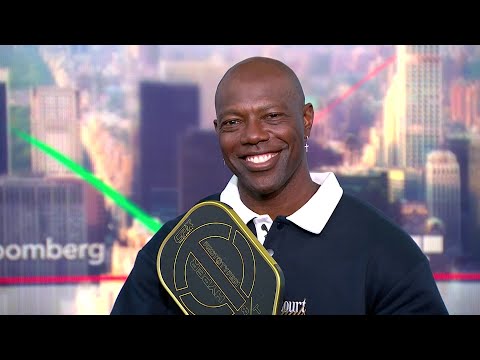
NFL Hall of Famer Terrell Owens and footwear manufacturer Syntilay have officially launched a specialized pickleball recovery shoe. The announcement marks a major celebrity entry into the sport’s booming peripheral market. The partnership, broadcast via Bloomberg Television, positions the former wide receiver at the intersection of celebrity brand expansion and orthopedic health trends. Pickleball is no longer just a backyard pastime. It is an economic engine. And that engine requires specialized gear.
The partnership between Owens and Syntilay targets a specific, highly profitable demographic. Players are aging. Courts are hard. Joints are taking a beating. The post-match recovery window has become a retail battleground. Owens provides the athletic credibility. Syntilay provides the biomechanical engineering. Together, they are selling relief.
For years, the footwear industry focused strictly on performance. Brands engineered shoes to make athletes run faster, jump higher, and stop quicker. Recovery was an afterthought. That paradigm has shifted. The recovery footwear market is now a multibillion-dollar sector. Syntilay is betting that pickleball is the next great frontier for this market.
The Intersection of Celebrity and Court Sports
Celebrity endorsements in sports are not new. Michael Jordan revolutionized the basketball shoe. Tiger Woods changed golf apparel. But the entry of high-profile athletes into niche, recreational sports represents a modern shift in sports marketing. Terrell Owens is not a professional pickleball player. He is a retired football icon. Yet, his endorsement carries weight.
Owens spent 15 seasons in the National Football League. He was known for his rigorous physical conditioning. His body was his business. When he speaks about athletic recovery, consumers listen. His involvement with Syntilay bridges the gap between elite professional athletics and everyday recreational sports.
The Bloomberg Television coverage of the launch emphasized this business angle. The segment did not just focus on the shoe. It focused on the market share. Syntilay is leveraging Owens’ fame to cut through the noise of a crowded footwear industry. They are not just selling a piece of foam and rubber. They are selling the Terrell Owens standard of physical maintenance.
Why Pickleball Demands Specific Recovery Gear
Pickleball presents a unique biomechanical challenge. The sport is played on hard courts, often converted from tennis or basketball surfaces. The surface offers zero shock absorption. Every step sends kinetic energy directly up the kinetic chain. The feet, knees, and hips absorb the impact.
The movements in pickleball are abrupt. Players engage in rapid lateral shifts. They lunge forward to the non-volley zone, commonly known as the kitchen. They backpedal quickly for overhead smashes. These start-and-stop mechanics place immense strain on the plantar fascia, the Achilles tendon, and the patellar tendon.
The Rise of Court-Induced Injuries
As the sport has grown, so have the injury rates. Emergency rooms and orthopedic clinics have reported a sharp increase in pickleball-related injuries over the past five years. Strains, sprains, and stress fractures are common. But the most pervasive issues are chronic.
Plantar fasciitis has become the unofficial ailment of the pickleball community. The repetitive stress of striking a hard court causes micro-tears in the tissue at the bottom of the foot. Recovery requires more than just rest. It requires structural support. This is the exact problem Syntilay and Owens are attempting to solve.
The Biomechanics of the Kitchen Line
At the kitchen line, players spend extended periods on the balls of their feet. They are coiled, waiting to react to rapid-fire dinks and volleys. This posture creates continuous tension in the calves and arches. When the match ends, that tension does not immediately dissipate.
Traditional athletic shoes are designed for lockdown and stability. They restrict movement to prevent rolled ankles. But after a match, the foot needs to decompress. It needs space to expand. It needs cushioning that absorbs impact rather than returning energy. A recovery shoe must do the exact opposite of a performance shoe.
Syntilay’s Technological Approach
Syntilay approached the design of this shoe from a medical perspective. The company has a history of developing orthopedic footwear. They applied that expertise to the specific demands of the pickleball demographic. The result is a shoe engineered for decompression.
The midsole features a proprietary foam compound. It is significantly softer than traditional EVA foam used in running shoes. The foam is designed to cradle the arch and distribute weight evenly across the footbed. This reduces pinpoint pressure on the heel and the metatarsal heads.
The toe box is intentionally wide. During physical exertion, the foot swells. The toes splay outward to provide balance. Syntilay’s design accommodates this natural expansion. It prevents the cramping and friction that often occur when players force swollen feet back into narrow street shoes.
- Proprietary Cushioning: Deep footbed designed to absorb residual kinetic energy.
- Arch Support: Rigid midfoot shank to stabilize the plantar fascia during the cooling-down period.
- Rocker Geometry: A curved outsole that promotes a smooth heel-to-toe transition, reducing strain on the Achilles tendon.
- Breathable Upper: Lightweight mesh materials to regulate temperature and reduce moisture buildup.
Terrell Owens and the Athlete’s Second Act
Terrell Owens understands the mechanics of rehabilitation. In 2004, he suffered a fractured fibula and a torn ankle ligament. The injury was supposed to end his season. Instead, he underwent surgery, engaged in an aggressive rehabilitation protocol, and returned to play in Super Bowl XXXIX just weeks later. He caught nine passes for 122 yards.
That legendary recovery cemented his reputation as an athlete obsessed with physical maintenance. He has utilized cryotherapy, hyperbaric chambers, and advanced physical therapy techniques throughout his life. His transition into the recovery footwear market is a logical extension of his personal brand.
Owens is not just a figurehead in this partnership. Industry reports indicate he was involved in the testing phase of the Syntilay shoe. He provided feedback on the density of the foam and the structure of the arch support. He is leveraging his decades of experience managing elite-level joint stress.
“The market for athletic recovery is no longer restricted to professional locker rooms. Everyday athletes are demanding the same level of care and technology that the pros use. Syntilay recognized this shift early.”
The modern athlete’s second act is often in business. Magic Johnson built an empire in real estate and franchises. George Foreman revolutionized the indoor grill. Terrell Owens is placing his bet on the longevity of the aging recreational athlete. It is a calculated financial maneuver.
The Economics of the Pickleball Peripheral Market
The pickleball economy is vast. In its early days, the industry was limited to paddles and balls. Today, it encompasses specialized court shoes, moisture-wicking apparel, customized bags, and dedicated training equipment. The peripheral market is often more lucrative than the core equipment market.
Players may buy one paddle a year. But they will buy multiple pairs of shoes, various outfits, and a suite of recovery tools. Syntilay is tapping into this recurring revenue stream. A recovery shoe is not a one-time purchase. As the foam degrades over time, consumers must replace it. It is a consumable product disguised as durable good.
The demographic profile of the average pickleball player makes this an attractive market. While the sport is getting younger, a massive portion of the player base remains over the age of 50. This demographic possesses significant disposable income. They are willing to spend heavily on products that allow them to continue playing without pain.
Competitors in the Recovery Space
Syntilay is not entering an empty arena. The recovery footwear market is fiercely competitive. Brands like Oofos and Crocs have already established strong footholds in the space. Hoka has built a massive business on the premise of maximalist cushioning. Even legacy giants like Nike and Skechers have introduced recovery slides and slip-ons.
To compete, Syntilay must differentiate itself. Oofos dominates the general recovery market. Crocs owns the casual comfort space. Syntilay is attempting to carve out a niche by being hyper-specific. They are not selling a general recovery shoe. They are selling a pickleball recovery shoe.
This strategy of hyper-segmentation is common in mature markets. When a broad category becomes saturated, brands create sub-categories. Syntilay is betting that pickleball players want a product designed exclusively for their sport, rather than a generic slide designed for runners or basketball players.
The Retail Rollout and Strategy
The launch strategy for the Owens-Syntilay collaboration relies heavily on direct-to-consumer digital sales, supplemented by strategic retail placements. The shoes will be available on Syntilay’s e-commerce platform. However, the physical retail strategy is crucial for a product based on comfort.
Consumers need to feel the foam. They need to experience the arch support. Syntilay is targeting specialty court-sport retailers and high-end country club pro shops. By placing the product directly adjacent to the courts where the injuries occur, they are minimizing the distance between the problem and the solution.
The Bloomberg Television appearance served as the top-of-funnel marketing push. It established the brand’s legitimacy in the eyes of investors and consumers. The next phase will likely involve grassroots marketing at major pickleball tournaments, such as the PPA Tour and the APP Tour events. Visibility among the sport’s dedicated core is essential for long-term viability.
The footwear industry is built on narratives. A shoe is just fabric and rubber until a story is attached to it. Terrell Owens provides the narrative of elite recovery. Syntilay provides the narrative of technological innovation. Pickleball provides the audience. The combination is potent. The market will determine its ultimate success.
Courts fill. Joints ache. Brands pivot. Recovery.