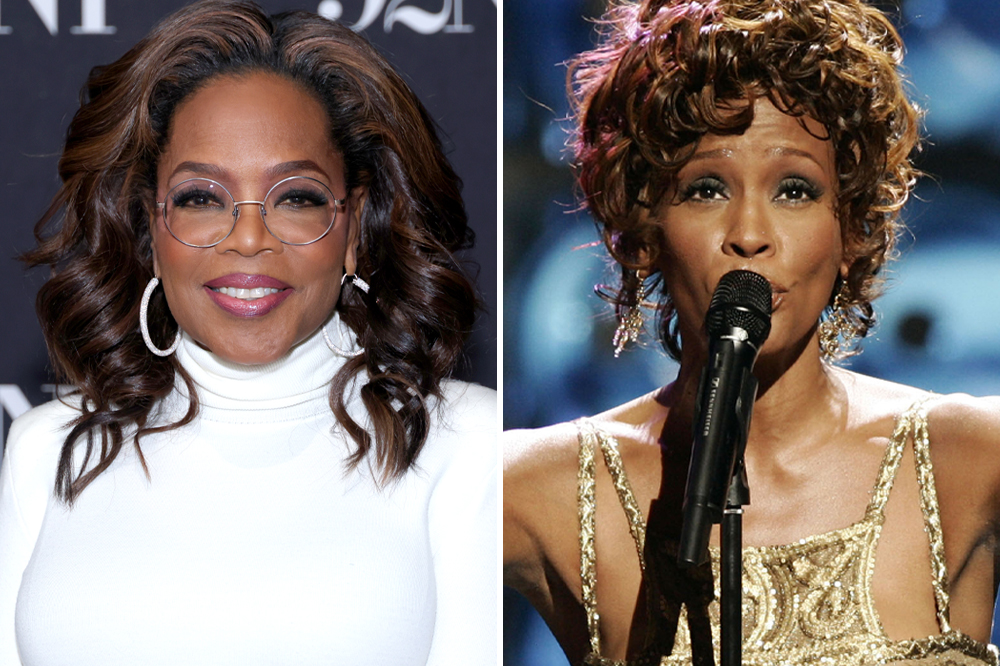
Oprah Winfrey witnessed Whitney Houston fall off the stage during a performance on The Oprah Winfrey Show. She did not call for a commercial break. She did not look to her producers. Winfrey halted the production, stepped toward the studio audience in Chicago, Illinois, and begged them to keep the accident a secret. She knew the tabloid press was waiting for a moment of weakness. She knew the media would weaponize the misstep. ‘I knew she would be destroyed by that,’ Winfrey later revealed. The audience listened. The secret held. In an era defined by brutal media scrutiny, it was a rare, engineered moment of grace.
The Incident at Harpo Studios
Harpo Studios operated as an impenetrable fortress of daytime television. Located in the West Loop neighborhood of Chicago, the facility was a highly controlled environment. Every camera angle was planned. Every lighting cue was rehearsed. Guests walked onto the stage knowing they were entering the most powerful media platform in the United States. Whitney Houston arrived as global music royalty. She carried the weight of superstardom. She also carried the physical exhaustion that accompanied it.
During a taped performance, the illusion of flawless execution shattered. Houston lost her footing. She tumbled from the elevated stage. The physical reality of live performance crashed into the polished expectations of daytime television. Stage lights glared. Monitors hummed. The studio audience gasped. A fall for any performer is disorienting. A fall for Whitney Houston was a potential career crisis. The cameras kept rolling. The machinery of television is designed to capture disaster.
Oprah Winfrey intervened. She understood the stakes instantly. She stepped out of her role as a broadcaster and assumed the role of a protector. The production stopped. The music faded. Winfrey turned her attention away from the cameras and directly toward the hundreds of people sitting in the studio audience.
A Plea for Silence
A television studio audience is a volatile entity. They are brought in to react. They are encouraged to applaud, gasp, and gossip. Winfrey asked them to do the exact opposite. She asked them to forget what they had just seen.
“I knew she would be destroyed by that.”
Those words carried the weight of lived experience. Winfrey understood the relentless nature of the press. She knew that a simple physical trip would not be reported as a simple physical trip. It would be framed as a collapse. It would be analyzed, scrutinized, and mocked. The narrative would shift from Houston’s vocal prowess to her physical vulnerability. Winfrey begged the crowd to protect the singer. She asked them to honor a pact of silence.
The audience agreed. They walked out of Harpo Studios and returned to their lives. They did not call the press. They did not sell the story. The incident vanished into the archives of unreleased television footage.
The Architecture of the Harpo Stage
The stage at Harpo Studios was designed for intimacy, but it was still a formidable physical structure. Elevated above the audience, surrounded by heavy broadcast equipment, thick cable runs, and high-intensity lighting rigs, it was a hazardous workspace. Performers navigated this terrain while projecting effortless joy.
The physical toll of performing under hot lights while executing choreography or projecting powerful vocals is immense. A single misstep on a glossy floor can result in a dangerous fall. The fact that accidents did not happen more often is a testament to the professionalism of the guests. When Houston fell, the danger was both physical and reputational.
The Machinery of the Tabloids
The media landscape of the late twentieth and early twenty-first centuries was unforgiving. Tabloid journalism operated with ruthless efficiency. Publications like The National Enquirer and The Sun thrived on the destruction of celebrity polish. Paparazzi stalked global superstars. Every misstep was monetized.
Female celebrities faced a specific, concentrated venom. The press demanded perfection. When perfection slipped, the punishment was public humiliation. Whitney Houston existed at the absolute center of this storm. Her voice was considered a global treasure. Her personal life was treated as public property.
- Photographers camped outside hotels to capture moments of exhaustion.
- Gossip columns speculated wildly about physical health and mental stability.
- Late-night comedians used celebrity missteps as reliable monologue material.
- Tabloid editors paid massive sums for unflattering photographs or embarrassing anecdotes.
Winfrey knew this ecosystem intimately. She had navigated it herself. She recognized that a video of Houston falling would become the defining image of the week, the month, or the year. It would overshadow the music. It would erase the artistry. The tabloids did not offer grace. They offered spectacle.
The Burden of Perfection
Whitney Houston was not just a singer. She was “The Voice.” Arista Records and executive Clive Davis had built an empire around her pristine image and unmatched vocal ability. The pressure to maintain that standard was absolute.
Touring demanded grueling physical endurance. Recording demanded emotional exhaustion. Public appearances required a flawless facade. The margin for error was zero. A stage fall is a terrifying moment for any artist. It is a sudden loss of control. For Houston, the loss of control was the very thing the media was desperate to document.
Winfrey saw the human being beneath the superstar mantle. She saw a woman who was tired, vulnerable, and in need of a shield. By halting the tape, Winfrey provided that shield. She refused to let Harpo Studios become the source of Houston’s humiliation.
The Psychological Toll of the Spotlight
The fear of being destroyed by the press was not an exaggeration. The psychological toll of relentless public scrutiny has broken countless artists. For a vocalist whose entire brand was built on flawless execution, a public display of clumsiness or physical failure could trigger a cascade of negative press.
The media narrative often spirals. A trip becomes a sign of exhaustion. Exhaustion becomes a rumor of substance abuse. A rumor becomes a career-ending headline. Winfrey understood this pipeline of destruction. She knew that protecting the physical moment of the fall was actually about protecting the psychological safety of the artist.
The Bond Between Titans
The dynamic between Winfrey and Houston was unique in American media. They were two Black women who had reached the absolute zenith of global influence. They shared an understanding of isolation. They knew what it meant to carry the expectations of millions.
This mutual respect defined their interactions. When Houston needed to speak directly to the public, she chose Winfrey’s platform. Their landmark 2009 sit-down interview remains a masterclass in empathetic, yet rigorous, journalism. Winfrey did not shy away from difficult questions. But she never stripped Houston of her dignity.
The stage fall incident was a precursor to that ultimate trust. Winfrey proved, in real-time, that she valued Houston’s humanity over a sensational television moment. She sacrificed a viral clip to save a friend’s spirit.
The Anatomy of a Studio Audience
The ability to keep a secret in a room of hundreds of people seems impossible today. It requires an examination of how studio audiences functioned before the digital revolution.
Attending The Oprah Winfrey Show was viewed as a privilege. Tickets were highly coveted. The audience felt a deep sense of loyalty to Winfrey. When she spoke, they listened. When she made a direct, emotional appeal, they responded with obedience. The social contract of the room dictated that Winfrey was the ultimate authority.
Furthermore, the mechanics of leaking a story were difficult. A person had to physically call a news desk. They had to convince an editor they were telling the truth. Without video evidence, the story was just a rumor. The barrier to entry for gossip was high. The audience’s silence was a combination of respect for Winfrey and the logistical friction of the era.
Why the Secret Could Not Survive in 2026
The media environment of 2026 operates on a completely different axis. The concept of a secret studio audience is dead. A stage fall today would not be contained by a host’s plea. It would be broadcast globally before the performer hit the ground.
Every audience member is a publisher. Smartphones capture every angle. Platforms like TikTok, X, and Instagram thrive on raw, unedited disaster. The moment Houston slipped, a dozen live streams would have captured it. The footage would be trending within minutes.
Modern television productions attempt to combat this with strict Non-Disclosure Agreements. Production assistants confiscate phones. Security guards monitor the crowd. But leaks still happen. The financial incentive to sell footage to outlets like TMZ is too high. The cultural desire for instant virality is too strong.
Winfrey’s plea to the Chicago audience worked because it relied on a shared sense of basic decency. In 2026, the architecture of the internet actively discourages decency. The algorithm rewards humiliation. The algorithm demands the footage. The secret could never survive the digital age.
A Legacy of Protection
The story of the stage fall is not really about Whitney Houston losing her balance. It is about Oprah Winfrey choosing empathy over entertainment. It is about a brief, shining moment when the relentless machinery of celebrity culture was forcibly stopped by a single request.
Winfrey saw a disaster unfolding. She calculated the cost. She recognized the cruelty of the press. She intervened. She asked for grace on behalf of someone who could not ask for it herself.
The tapes were secured. The audience filed out into the Chicago afternoon. The tabloids printed their weekly editions without the story. The singer kept her dignity. The host kept her promise. The secret held. Grace.