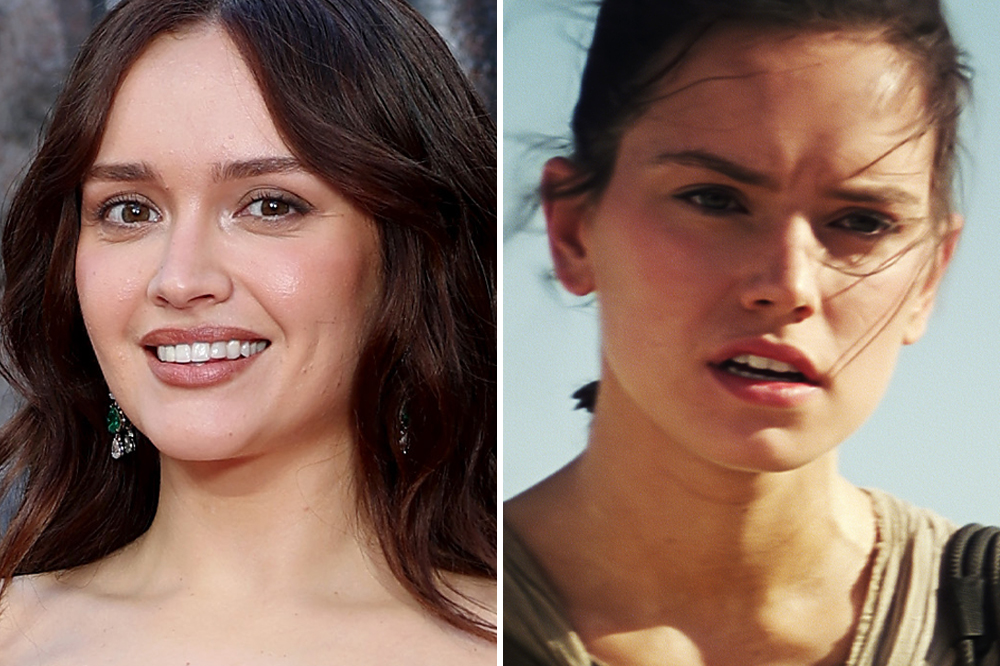
Olivia Cooke auditioned for the role of Rey in the 2015 blockbuster Star Wars: The Force Awakens but ultimately delivered what she now describes as a “really bad” performance. The House of the Dragon star recently revealed the misstep, admitting she “was s, ” during the high-stakes reading for Lucasfilm. The confession pulls back the curtain on the secretive, high-pressure machinery of franchise casting.
Hollywood operates on a hidden economy of near-misses. Every iconic role carries a shadow cast of actors who walked into a room, read the lines, and failed. Cooke is now part of that shadow history for the Star Wars sequel trilogy.
In many ways, the admission offers a rare glimpse into the vulnerability of the working actor. The polished PR machine of modern entertainment rarely allows for stories of outright failure. But Cooke’s willingness to own her disastrous read highlights a shifting cultural appetite for authenticity.
What looks like a missed opportunity actually reveals the complex, sliding-doors nature of the entertainment industry. A bad day in a casting office closed the door to a galaxy far, far away. It eventually opened a door to Westeros.
The Lucasfilm Mandate of 2013
The search for Rey began under unprecedented industry pressure. In October 2012, The Walt Disney Company acquired Lucasfilm from George Lucas for $4.05 billion. The immediate mandate was clear. Disney needed a new trilogy. They needed a new generation of heroes.
Director J.J. Abrams and Lucasfilm President Kathleen Kennedy launched a global casting search in 2013. The directive was specific. They wanted relative unknowns to anchor the new films, mirroring the casting strategy Lucas used for Mark Hamill, Carrie Fisher, and Harrison Ford in 1977.
The character of Rey was the linchpin of the new narrative. She was an orphaned scavenger on the desert planet Jakku. She needed to convey vulnerability, physical capability, and a latent connection to the Force. The casting call went out across London, Los Angeles, and beyond. Thousands of young women submitted tapes. Hundreds were brought in to read.
Olivia Cooke was among them. At the time, Cooke was a rising talent. She was gaining recognition for her role as Emma Decody on the A&E thriller series Bates Motel. She had the requisite industry momentum to secure a room with the Star Wars casting directors. Getting the room is the first hurdle. Surviving the room is the second.
The Pressure of the Room
Auditioning for a property like Star Wars is not a standard acting exercise. It is an exercise in extreme secrecy and high-stakes imagination.
Actors are rarely given the actual script. They are given “dummy sides”, fake scenes written specifically for the audition to prevent plot leaks. The scenes are often stripped of context. An actor might be asked to talk about repairing a generic engine while reacting to an invisible alien threat. They must generate absolute emotional reality inside a sterile casting office in Santa Monica or Soho.
Cooke walked into this environment. By her own admission, the alchemy did not work. The connection to the material failed to materialize. The performance flatlined.
She did not sugarcoat the memory. Her blunt assessment, “I was s, “, strips away the usual diplomatic language actors use to describe lost roles. There is no claim of “creative differences.” There is no mention of “scheduling conflicts.” There is only the raw reality of choking under pressure.
The Daisy Ridley Variable
While Cooke struggled in the room, another young British actress found the exact frequency J.J. Abrams was looking for.
Daisy Ridley was a true unknown at the time. Her resume consisted of minor guest spots on British television shows like Casualty and Silent Witness. When Ridley walked into the audition room, she was handed a scene involving a brutal interrogation. Abrams asked her to access a deep, terrifying vulnerability. She was asked to cry on command.
The behind-the-scenes footage of Ridley’s audition has since become a famous piece of Star Wars lore. She delivered a raw, tear-streaked performance that instantly secured her the role. She understood the assignment. She became Rey.
Star Wars: The Force Awakens premiered in December 2015. It shattered box office records, eventually grossing over $2.07 billion worldwide. Ridley was instantly catapulted from total obscurity to global superstardom. Her face was printed on action figures, lunchboxes, and billboards across the globe.
For an actor who missed out on the role, watching that level of cultural saturation can be a complex psychological burden. Cooke had to watch the movie she failed to book become the biggest cinematic event of the decade.
The Road to Westeros
A failed audition is rarely fatal. For Cooke, the Star Wars rejection was simply a data point on a longer trajectory.
She continued to build a formidable resume. She starred in the 2015 indie hit Me and Earl and the Dying Girl. She caught the eye of Steven Spielberg, who cast her as Art3mis in the 2018 science fiction blockbuster Ready Player One. She proved she could handle heavy visual effects, massive budgets, and intense fandom scrutiny.
Then came the call from HBO.
Following the controversial conclusion of Game of Thrones, HBO needed a massive hit to justify its continued investment in George R.R. Martin’s fantasy universe. Showrunner Ryan Condal was developing House of the Dragon, a prequel series focused on the bloody civil war of the Targaryen dynasty.
The show needed an anchor. It needed an actress who could play Queen Alicent Hightower, a complex, politically ruthless, deeply traumatized monarch. The role required immense subtlety. Alicent is not a clear-cut hero like Rey. She is a woman navigating a violently patriarchal system, making terrible compromises for the sake of her family’s survival.
Cooke landed the part. When House of the Dragon premiered in August 2022, it was a massive critical and commercial success. Cooke’s portrayal of the adult Alicent Hightower was universally praised. She brought a rigid, suffocating tension to the character. She became the face of the “Green” faction in the show’s central conflict.
The Star Wars miss had paved the way for a darker, more complex triumph. If Cooke had spent 2015 to 2019 locked into the grueling production schedule of the Star Wars sequel trilogy, her availability for the early development of House of the Dragon would have been non-existent.
The Currency of Celebrity Vulnerability
Cooke’s decision to share this story in 2026 speaks to a broader shift in how celebrities manage their public narratives.
In previous decades, the Hollywood publicity machine demanded perfection. Actors were presented as infallible artists who only ever made the right choices. Rejections were hidden. Failures were buried. The narrative was always one of inevitable ascent.
The modern audience rejects this pristine image. Social media has accelerated the demand for relatability. Audiences want to know that the people on their screens experience the same crushing self-doubt, the same embarrassing failures, and the same bad days at work that they do.
When Cooke admits she gave a “really bad” audition, she generates a powerful sense of schadenfreude. There is a dark, human comfort in knowing that even a famous, wealthy, successful actress can walk into a room and completely choke.
But the schadenfreude quickly gives way to empathy. Everyone has bombed a job interview. Everyone has walked out of a room knowing they failed to present the best version of themselves. Cooke’s Star Wars story bridges the gap between the untouchable elite and the everyday worker.
It also reframes her current success. Her performance as Alicent Hightower is not the result of inevitable, effortless genius. It is the result of an actor who learned how to survive the brutal, rejection-heavy reality of the industry. She took the hits. She improved. She found the right room.
The Shadow Casts of Hollywood
Cooke is not alone in the shadow cast of the Star Wars sequel trilogy. Hollywood history is littered with famous near-misses.
Tom Selleck famously had to turn down the role of Indiana Jones because of his commitment to Magnum, P.I. Will Smith turned down the role of Neo in The Matrix to star in the critical disaster Wild Wild West. John Krasinski made it all the way to a screen test in the Captain America suit before realizing he was not right for the Marvel Cinematic Universe.
These stories endure because they highlight the chaotic, unpredictable nature of success. Talent is required, but timing is everything. A career is defined just as much by the roles an actor does not get as by the roles they do.
For Olivia Cooke, the Star Wars audition remains a humorous, humbling footnote. She does not need the lightsaber. She has the Iron Throne.
Scripts were printed. NDAs were signed. Actors walked into the room.
Some found a galaxy far, far away. Others found a different kind of throne.
Failure.