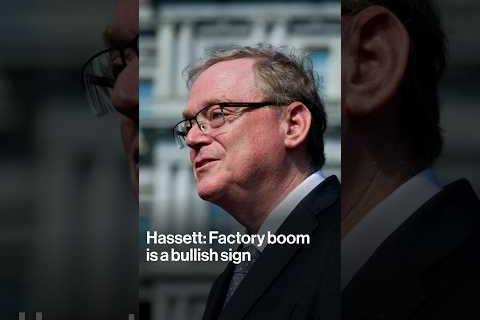
The United States is experiencing a notable factory boom, a development highlighted by Kevin Hassett. Hassett, currently serving as the Director of the National Economic Council, views this manufacturing surge as a strong indicator of the nation’s economic vitality. This observation suggests a period of sustained growth and increased industrial output.
This economic expansion is not merely a cyclical uptick. It reflects deeper trends in investment and production. The factory boom contributes to job creation and strengthens domestic supply chains, factors critical for long-term economic stability.
Kevin Hassett‘s Role in Economic Policy
Kevin Hassett assumed the role of Director of the National Economic Council in 2025. This position places him at the forefront of economic policy formulation and advice within the current administration. His tenure began at the outset of the second Trump administration in January 2025.
Prior to his current role, Hassett held significant positions in economic leadership. He served as the 29th Chairman of the President’s Council of Economic Advisers from 2017 to 2019. During this period, he provided crucial economic analysis and policy recommendations.
In 2020, Hassett also acted as a Senior Advisor to President Trump. His work focused on providing data-driven insights to guide the response to the Coronavirus pandemic. This experience underscores his long-standing involvement in national economic strategy.
Indicators of a Manufacturing Resurgence
The current factory boom encompasses various sectors of the American economy. Investments in new facilities and the expansion of existing ones are widespread. This activity suggests a renewed confidence in domestic production capabilities.
Several factors contribute to this resurgence. Government policies aimed at incentivizing domestic manufacturing play a significant role. Global supply chain disruptions have also prompted a re-evaluation of offshore production, leading to increased onshoring efforts. For more details on economic indicators, the Bureau of Economic Analysis provides comprehensive data.
Technological advancements are also driving efficiency and innovation within factories. Automation and advanced robotics are transforming production processes. These innovations enhance competitiveness and attract further investment.
Economic Impact and Future Outlook
The factory boom has tangible economic benefits. It creates employment opportunities across various skill levels, from production line workers to engineers and technicians. This job growth contributes to higher household incomes and increased consumer spending.
Strengthening domestic manufacturing reduces reliance on foreign imports for critical goods. This enhances national security and economic resilience. It also mitigates the impact of international trade fluctuations.
Hassett’s assessment suggests a bullish outlook for the economy. Continued investment in manufacturing is expected to sustain growth. This positive trend could lead to a more robust and diversified economic landscape. The Federal Reserve’s industrial production reports offer further insights into manufacturing trends.
Challenges and Opportunities
Despite the positive indicators, challenges remain. Workforce development is crucial to meet the demands of modern manufacturing. Training programs are essential to equip workers with the necessary skills for advanced factory environments.
Maintaining competitiveness in a global market requires ongoing innovation. Research and development investments are vital for staying ahead. Policies that foster a favorable business environment will also be key to sustaining the boom.
Related: Justice Department Challenges Maryland’s Federal Agent Mask Ban
The factory boom represents an opportunity for long-term economic restructuring. It can lead to a more balanced economy, less dependent on service sectors alone. This diversification enhances overall economic stability.
The Broader Economic Context
The current economic climate is characterized by several dynamic forces. Inflationary pressures, interest rate adjustments, and global geopolitical events all play a role. The factory boom provides a counter-narrative of strength amidst these complexities.
Hassett’s perspective emphasizes the importance of real sector growth. Manufacturing output is a tangible measure of economic activity. Its expansion signals a fundamental strengthening of the economy’s productive capacity.
This focus on industrial growth aligns with broader policy objectives. These objectives often include fostering innovation, creating high-wage jobs, and ensuring national economic sovereignty.
A Bullish Economic Signal
The factory boom is a significant economic development. It reflects strategic investments and policy support. It signals a period of growth and resilience.
Businesses are investing. Workers are finding jobs. The economy is expanding.
Prosperity.
Sources
Sponsored · Put your business in front of ByteSize Network's readers, with every click measured. See advertising packages · Advertise on ByteSize Network