TL;DR / Key Takeaways
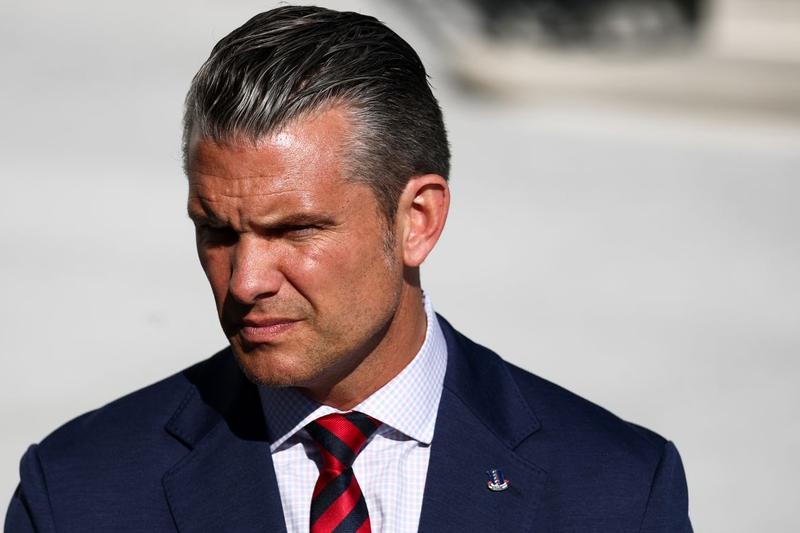
- Defense Secretary Pete Hegseth said on October 8, 2026, that the public can watch the execution of Fort Hood shooter Nidal Malik Hasan.
- Hasan, a U.S. Army major, killed 13 people and wounded more than 30 at Fort Hood, Texas, on November 5, 2009.
- A military jury sentenced Hasan to death in August 2013. He has remained at the U.S. Disciplinary Barracks at Fort Leavenworth, Kansas.
- Reporting on Hegseth’s remarks pointed to a firing squad and to a public or televised viewing of the sentence.
- No U.S. service member has been executed since Pvt. John A. Bennett was hanged at Fort Leavenworth on April 13, 1961.
Defense Secretary Pete Hegseth said on October 8, 2026, that the public can watch the execution of Nidal Malik Hasan, the U.S. Army major sentenced to death for killing 13 people at Fort Hood, Texas, on November 5, 2009. The remarks treated a 17-year-old death sentence as military justice that should not be hidden from view.
Hasan has been on death row at the United States Disciplinary Barracks at Fort Leavenworth, Kansas, since a 2013 court-martial. He is paralyzed from the waist down. He has outlived his victims by more than a decade and a half.
No American service member has been executed since 1961. The military death penalty has sat on the books while appeals, presidential approvals, and method fights stacked up.
What looks like a sudden Pentagon line is the end of a long wait. The shooting is still called Fort Hood in public memory. The sentence has never been carried out. In many ways, Hegseth’s argument is older than this administration. Should the country see the punishment it imposed?
What Happened at Fort Hood on November 5, 2009
Just after 1:30 p.m. on November 5, 2009, Maj. Nidal Malik Hasan walked into the Soldier Readiness Processing Center at Fort Hood, outside Killeen, Texas. He was an Army psychiatrist assigned to the post. He carried an FN Five-seveN pistol and extra magazines.
He opened fire on soldiers preparing for deployment to Iraq and Afghanistan. Witnesses said he shouted “Allahu Akbar.” The attack lasted about 10 minutes.
Thirteen people were killed. More than 30 were wounded. Among the dead was Michael Grant Cahill, a civilian physician assistant who tried to stop Hasan with a chair. Pfc. Francheska Velez, who was pregnant, was among the soldiers shot.
Hasan was hit by rounds from Fort Hood Department of the Army civilian police. Sgt. Kimberly Munley and Sgt. Mark Todd stopped the rampage. Hasan survived. He would never walk again.
The Pentagon and the FBI spent years describing the attack as workplace violence. Families and members of Congress called it terrorism. Hasan had exchanged emails with Anwar al-Awlaki, the American-born al-Qaeda cleric later killed in a 2011 drone strike in Yemen.
The 2009 Fort Hood shooting remains one of the deadliest mass killings on a U.S. military installation. The post sat in Bell County, Texas. The victims were in a building designed to send troops to war, not to bury them at home.
Who Nidal Hasan Was Before the Shooting
Nidal Malik Hasan was born on September 8, 1970, in Arlington, Virginia. His parents were Palestinian immigrants. He graduated from Virginia Tech. He took a commission and trained as a physician through the Uniformed Services University of the Health Sciences.
He worked at Walter Reed Army Medical Center. Colleagues later described a man who argued about Islam, the wars in Iraq and Afghanistan, and the duties of a Muslim soldier. Some of those warnings were written down. They did not stop his transfer to Fort Hood.
At Fort Hood he was a psychiatrist. His job was to evaluate and treat soldiers. On November 5, 2009, he used that same post as a killing ground.
Hasan was a major in the Medical Corps. He was not a line infantryman. He was not a deployed shooter returning from a raid. He was a doctor with a pistol in a processing center full of unarmed troops.
The Court-Martial That Sentenced Hasan to Death
Hasan was tried by general court-martial at Fort Hood in 2013. He was charged under the Uniform Code of Military Justice with 13 specifications of premeditated murder and 32 specifications of attempted premeditated murder.
He represented himself. He did not deny the shooting. He told the panel he had switched sides. He described the killings as jihad in defense of the Taliban in Afghanistan.
On August 23, 2013, the military jury convicted him on all charges. On August 28, 2013, the same panel sentenced him to death. The sentence also included dismissal from the Army and forfeiture of all pay and allowances.
A death sentence in the military does not move on a prison calendar alone. It requires review by the Army Court of Criminal Appeals. Then the Court of Appeals for the Armed Forces. Then the president of the United States. The president must approve a military death sentence before it can be carried out.
Hasan was moved to the U.S. Disciplinary Barracks at Fort Leavenworth. He has remained there through multiple presidential administrations. The condemned wing at Leavenworth is small. The wait has not been.
Why the Fort Hood Shooter Has Not Been Executed
The last U.S. military execution was on April 13, 1961. Pvt. John A. Bennett was hanged at Fort Leavenworth for the rape and attempted murder of an 11-year-old girl in Austria.
Since then, the military death penalty has existed mostly on paper. Appeals eat years. Legal questions about the UCMJ capital process pile up. Presidents have been reluctant to sign the final order.
Hasan’s case added more delay. His self-representation. His spinal wounds. His open claim of religious war. The early official label of workplace violence. Each became a point of litigation or political argument.
By October 2026, more than 17 years had passed since the shooting. More than 13 years had passed since the death sentence. The victims’ families had buried their dead, sat through the trial in Killeen, and then waited for a date that never posted.
Military death row has held only a handful of prisoners in the modern era. Hasan is the most famous of them. Fame did not move the gurney. It also did not empty the cell.
What Pete Hegseth Said About a Public Execution
On October 8, 2026, Defense Secretary Pete Hegseth said the public can watch Hasan’s execution. Axios reported remarks that also pointed to a firing squad and to a public or televised viewing.
Hegseth is the civilian head of the Department of Defense. The military justice system sits under his department. A presidential approval would still be required. The secretary’s words do not themselves pull a trigger. They do signal intent.
A firing squad is not the method most Americans associate with federal executions. States including Utah, South Carolina, and Idaho have kept firing squads as an option when lethal-injection drugs are scarce or blocked in court. The U.S. military’s last execution was a hanging. Lethal injection became the standard civilian method in the late 20th century.
A public or televised military execution would be rarer still. The United States moved away from public hangings in the early 20th century. Federal executions in recent decades have been carried out inside prison complexes, with a small number of official witnesses. Victims’ relatives. Media pool reporters. Government staff.
Hegseth’s framing was different. Unhidden. Watchable. A sentence the country could see.
Military Justice, Witnesses, and the Camera
Military executions, when they happened, were not street-corner spectacles. They were conducted on posts, under regulation, with official witnesses. The point was order, not a crowd.
Television changes the scale. A broadcast, even a delayed or restricted one, would put a death sentence in living rooms. That is the line Hegseth appeared willing to cross, according to the October 8 reports.
Supporters of a visible execution argue that Hasan’s crime was public. It happened in a crowded processing center. It was recorded in 911 calls, in testimony, and in photographs of the wounded. Hiding the punishment, they say, is a courtesy the shooter did not give his victims.
Opponents argue that cameras turn a lawful sentence into a spectacle. They point to the long American move away from public executions. They warn that a firing squad on television would be used as propaganda by the same extremist networks that celebrated Hasan in 2009.
The secretary chose a side. The department he leads would have to write the protocol if the words become an order.
Fort Hood, Fort Cavazos, and a Name That Never Left
The post was still Fort Hood in 2009. It was named for Confederate Gen. John Bell Hood. In 2023, the Army renamed it Fort Cavazos, after Gen. Richard E. Cavazos, a decorated Hispanic American combat commander from Kingsville, Texas.
The shooting never changed names in ordinary speech. People still say Fort Hood. Newsrooms still say Fort Hood. Hegseth’s remarks, as reported, used that language.
The current administration has moved to restore older post names. The legal name on a sign is not the story. The story is 13 dead in a readiness center, and a major who has outlived them by 17 years.
Related: Mamdani’s $1M Grocery Branding Deal — Olive Oil Designers
Killeen still sits next to the gates. Bell County still holds the graves. The Soldier Readiness Processing Center is still the place the country points to when it says Fort Hood shooting.
The Families Who Have Waited Since 2009
Relatives of the Fort Hood dead have spoken, year after year, about delay. Some wanted the death penalty carried out. Some wanted the attack labeled terrorism. Some wanted both.
They attended the 2013 court-martial. They heard Hasan defend the shooting in open court. They left with a death sentence and no date on a calendar.
For years, benefits and official language lagged behind what the families said they had lived. Workplace violence did not match a major who had emailed an al-Qaeda cleric and then emptied magazines into a processing line. Congress later moved to treat Fort Hood victims more like combat casualties for certain benefits. The argument over the word “terrorism” outlasted the funerals.
A public execution would put those families in a different kind of room, or in front of a different kind of screen. Witness rules in civilian capital cases often give relatives a choice. The military would have to write its own protocol if Hegseth’s statement becomes an order.
That protocol does not yet sit in public view. The statement does.
What Would Have to Happen Next
Several steps still stand between a Pentagon remark and an execution.
The president would need to approve the death sentence. The Department of Defense would need a lawful method, a location, and a regulation that survives court review. Hasan’s lawyers, or standby counsel, would file stays. Federal civilian courts have, at times, been asked to intervene in military capital cases.
Fort Leavenworth is the expected site. The U.S. Disciplinary Barracks has held the military’s condemned for generations. A firing squad would require a range, a trained detail, a medical confirmation of death, and a chain of command willing to give the order.
Capital punishment in the U.S. military has been legal under the Uniform Code of Military Justice for a narrow set of crimes, including premeditated murder. Legality is not the same as a date. The 1961 hanging of Pvt. Bennett is still the last completed sentence.
None of that is a press conference. All of it is now in play because the secretary of defense put the execution, and the public’s eyes, on the record.
Unhidden Justice and What the Country Is Being Asked to Watch
The shareable core of Hegseth’s remarks is not a new charge sheet. Hasan was convicted in 2013. The shareable core is visibility. A death sentence carried out where the public can see it.
That is a break with modern American practice. It is not a break with the facts of November 5, 2009. Those facts were always public. Thirteen dead. A major in Army camouflage. A processing center at Fort Hood. A court-martial that ended in death.
Whether a firing squad is used, whether cameras are allowed, and whether the president signs the order are separate decisions. Hegseth put them on the same table.
Soldiers were processed that day. Soldiers were shot that day. Soldiers were buried after that day.
Families waited. Courts waited. Presidents waited.
Hegseth spoke. The country was told it could watch.
Fort Hood.
Frequently asked questions
Can the public watch Nidal Hasan’s execution?
Defense Secretary Pete Hegseth said on October 8, 2026, that the public can watch the execution of Nidal Malik Hasan, the Army major convicted in the 2009 Fort Hood shooting. Axios reporting on the remarks also pointed to a firing squad and to a public or televised viewing. A presidential approval and a Defense Department protocol would still be required before any execution.
Who is Nidal Hasan and what did he do at Fort Hood?
Nidal Malik Hasan is a former U.S. Army major and psychiatrist who killed 13 people and wounded more than 30 at the Soldier Readiness Processing Center at Fort Hood, Texas, on November 5, 2009. He was convicted at a 2013 general court-martial on 13 counts of premeditated murder and 32 counts of attempted premeditated murder and sentenced to death.
Has the U.S. military executed anyone since the Fort Hood shooting?
No. The last U.S. military execution was on April 13, 1961, when Pvt. John A. Bennett was hanged at Fort Leavenworth, Kansas. Hasan has been held at the U.S. Disciplinary Barracks there since his 2013 death sentence, but the sentence has not been carried out.
Why has Nidal Hasan not been executed yet?
A military death sentence requires appellate review and approval by the president of the United States before it can be carried out. Hasan’s 2013 sentence has remained in that pipeline for more than a decade, consistent with a broader freeze in U.S. military executions that has lasted since 1961.
Would Nidal Hasan be executed by firing squad?
Reporting on Pete Hegseth’s October 8, 2026, remarks pointed to a firing squad as a possible method, along with public viewing. The U.S. military’s last execution was a hanging, and no final public protocol for a Hasan execution had been released with the secretary’s statement. Method, location, and witnesses would still have to be set by lawful order.
Sponsored · Put your business in front of ByteSize Network's readers, with every click measured. See advertising packages · Advertise on ByteSize Network