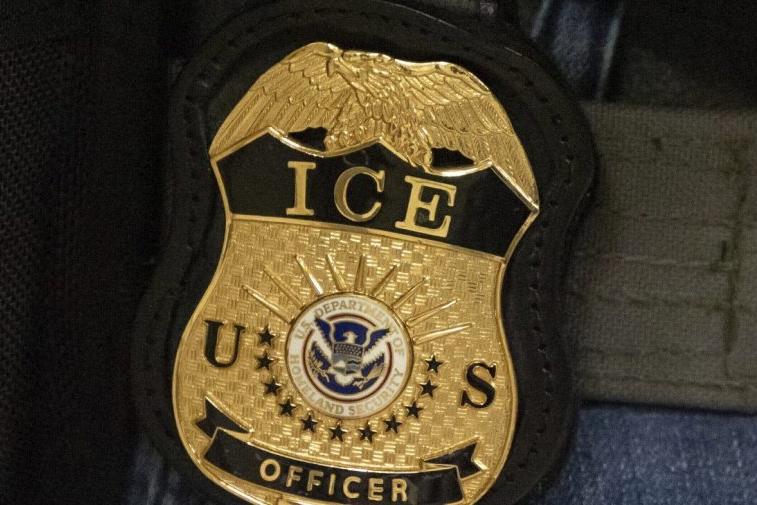
An Immigration and Customs Enforcement agent shot a man in New York City, according to The Hill. That is the core fact on the record. The rest of the public file is still thin.
The source brief that reached this desk did not name the man. It did not name the agent. It did not fix a borough, a street, or a time of day.
In many ways that vacuum is the story. A federal gun was fired in the nation’s largest city. The first accounts arrived faster than the documents.
What looks like a single street incident sits on top of years of law, policy, and political collision between Washington and New York.
What the public record actually contains
As of October 8, 2026, the item driving this post is a Hill headline: a man was shot by ICE in New York City. The accompanying feed note said the story had tripped breaking-news watchers across multiple outlets.
That is not the same thing as a completed investigation. It is not a charging document. It is not a body-worn camera dump.
Responsible coverage has to hold that line. A shooting by a federal officer is a high-stakes event. Guessing the missing pieces does not make the record stronger.
Readers should treat unnamed victim details, unnamed agent details, and unsourced play-by-play as unverified until ICE, the Department of Homeland Security, or local authorities put them out.
Who ICE is, and why it is on New York streets
U.S. Immigration and Customs Enforcement is the interior enforcement arm of the Department of Homeland Security. It was created in 2003 after the Homeland Security Act of 2002 folded legacy Immigration and Naturalization Service functions into the new department.
Two directorates matter most in a street shooting. Enforcement and Removal Operations handles arrests, detention, and deportation. Homeland Security Investigations handles cross-border crime, including gangs, fentanyl, and document fraud.
ICE is not the Border Patrol. Customs and Border Protection works the ports and the land border. ICE works inside the country. That distinction gets lost in the first hour of any viral clip. It should not get lost here.
New York City is not a quiet operating environment for those officers. The city has spent a decade tightening rules on when local police may hold people for ICE. The New York City Council and successive mayors treated detainer cooperation as a civil-liberties line. Federal administrations treated the same line as obstruction.
New York’s sanctuary rules and the federal pushback
New York City’s sanctuary framework did not begin in 2026. Local laws and NYPD guidance have, for years, limited when officers may honor ICE detainers or give ICE jail access.
State law moved in the same direction. New York’s Green Light Law, enacted in 2019, restricted DMV data sharing with federal immigration authorities. ICE called that a blindfold. Albany called it a protection against profiling.
Those fights are not abstract when a federal agent fires a weapon in the five boroughs. They decide who is on the street, who has backup, and who writes the first press statement.
Mayors from Bill de Blasio through Eric Adams argued that immigrant communities will not call 911 if they believe a traffic stop becomes a deportation pipeline. Federal officials argued that the same policy lets people with removal orders melt into the city.
Neither argument resolves a shooting. Both arguments will be quoted within hours of one.
How federal use-of-force cases usually move
ICE agents are federal officers. A shooting by an ICE agent is not an NYPD case in the ordinary sense, even when it happens on a New York sidewalk.
DHS policy requires use-of-force reporting up the chain. Serious incidents can draw the DHS Office of Inspector General. If a person dies, the FBI may enter. Local prosecutors can still look at state criminal law. Dual tracks are common. They are also slow.
The Supreme Court’s qualified-immunity and Bivens case law makes civil suits against federal officers harder than many civilians expect. That legal wall does not stop political heat. It does shape what families can win in court.
Body-worn cameras are not uniform across ICE. Some teams have them. Some operations do not. The presence or absence of video will decide how long this story stays in dispute.
What investigators typically ask first
- Was the agent on a planned arrest, a collateral encounter, or a defensive response?
- Was the man armed, reaching, fleeing, or already restrained?
- Were local police present, or was this a federal-only team?
- Was there a warrant, a detainer, or an administrative arrest authority?
- How many rounds were fired, and who rendered aid?
None of those answers were in the source brief. Until they are, every confident narrative is a draft.
The city as the stage
New York City has about 8.3 million residents. The Department of Homeland Security has long listed the city as a major interior enforcement target because of its ports, airports, and immigrant density.
John F. Kennedy International Airport, Newark Liberty across the river, and the Brooklyn and Staten Island waterfronts are all in the same operational map. Street arrests happen far from those nodes. They happen at courthouses, workplaces, and homes.
Courthouse arrests became a flashpoint in New York after ICE teams waited outside state criminal courts. Judges and public defenders said the practice chilled appearances. ICE said the courthouse was a known address for people who had already skipped other check-ins.
A shooting collapses that policy argument into a single body. That is why the first pictures will travel farther than the first affidavits.
What similar cases have taught newsrooms
Federal immigration shootings are rare compared with routine arrests. When they happen, the information gap is predictable.
Agencies withhold the agent’s name longer than local police often do. Privacy rules and threat assessments get cited. Families and advocates call that a double standard. The agency calls it officer safety.
Immigrant-rights groups in New York, including the New York Immigration Coalition and legal-aid defenders, will ask whether the man was a target or a bystander. Federal unions will ask whether the agent faced a weapon. Both questions are fair. Neither is answered by a headline alone.
Past DHS inspector-general reports have dinged components for slow incident reporting and uneven training records. Those reports are not a verdict on this shooting. They are the paper trail Congress will pull if the facts get ugly.
For a plain-language overview of the agency’s legal mandate and structure, see the U.S. Immigration and Customs Enforcement entry, then go back to primary DHS documents rather than social recaps.
Related: Hegseth Says Public Can Watch Fort Hood Shooter’s Execution
Politics will not wait for the file
New York’s congressional delegation has spent years demanding ICE transparency on detainers, solitary confinement, and workplace raids. A shooting hands those offices a new letterhead item.
The White House, whichever party holds it in 2026, will be asked whether interior enforcement has become too aggressive or not aggressive enough. That is the binary cable news will offer. The investigative file will be more technical: training, tactics, and the second-by-second distance between agent and subject.
City Hall will be asked if NYPD was notified. If local officers were nearby, the question becomes command and control. If they were not, the question becomes why a federal team was working a New York street without a visible city partner.
None of that should outrun the basic sequence. A man was shot. An ICE agent fired. The city is New York. The rest is still being built.
What to watch next
The first solid update will likely be a DHS or ICE statement confirming the borough and whether the man survived. Hospitals in New York do not release names without family consent. That delay is normal. It is also infuriating to people who want a name to say.
Watch for whether the U.S. Attorney’s Office for the Eastern or Southern District of New York opens a review. Borough geography matters. Brooklyn, Queens, and Staten Island sit in the Eastern District. Manhattan and the Bronx sit in the Southern District.
Watch for whether the New York City Civilian Complaint Review Board or the state attorney general tries to claim a lane. Their jurisdiction over federal officers is limited. Their microphones are not.
Watch for video. A bystander phone will probably beat the official release. That clip will be incomplete. It will still set the emotional baseline for millions of people who will never read the investigative report.
Holding the line on what is not known
This post is the canonical local-desk version of a story that arrived as a headline and a URL, not as a complete file. The Hill’s report is the starting citation. It is not a substitute for on-the-record identification of the man, the agent, or the block.
Bytesize will update when those facts are named by officials or by multiple independent outlets with firsthand sourcing. Until then, the honest version is short on color and long on process.
Federal power met a New York street. A gun went off. Paperwork will follow. Cameras will follow. Lawyers will follow.
Agents gathered. Advocates gathered. Editors gathered.
New York.
Frequently asked questions
Did an ICE agent shoot a man in New York City?
Yes. Reporting from The Hill and other outlets said an Immigration and Customs Enforcement agent shot a man in New York City. As of October 8, 2026, the public brief used here did not include the man’s name, the agent’s name, or a precise location inside the city.
Who investigates when ICE is involved in a shooting?
ICE and the Department of Homeland Security handle internal use-of-force reporting. Serious cases can involve the DHS Office of Inspector General and, in some instances, the FBI. Local or federal prosecutors may also review whether state or federal criminal law applies.
Is ICE the same as Border Patrol?
No. ICE is the interior enforcement agency at DHS. U.S. Border Patrol is part of Customs and Border Protection and works the borders and ports of entry. A shooting in New York City is an interior ICE matter unless CBP personnel are separately identified.
Why is an ICE shooting in New York politically explosive?
New York City and New York State have limited local cooperation with ICE detainers and data sharing. Federal administrations have called those sanctuary rules a public-safety problem. A shooting collapses that long policy fight into a single incident and a single set of images.
What facts are still unknown about the ICE shooting in NYC?
The source material for this post did not establish the victim’s identity, whether he survived, whether he was armed, why ICE was on scene, or which borough the shooting occurred in. Those details should come from ICE, DHS, hospital officials, or on-the-record law-enforcement sources.
Sponsored · Put your business in front of ByteSize Network's readers, with every click measured. See advertising packages · Advertise on ByteSize Network