
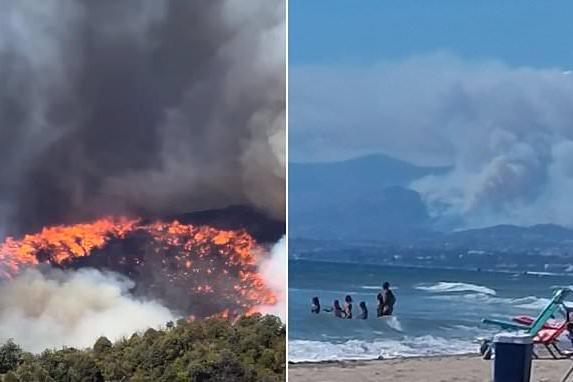
A massive wildfire broke out on September 13, 2026, in the hilly terrain outside Benahavísa popular village on Spain’s Costa del Sol, triggering emergency evacuations and the deployment of extensive aerial units. Andalusian emergency services confirmed that strong winds of up to 31 mph and steep local slopes drove the fast-moving flames toward populated tourist zones, producing thick plumes of smoke visible from neighboring Marbella. According to Mail Online reportingauthorities rushed more than 100 ground firefighters and 11 specialized aircraft to the scene to establish containment perimeters around the affected perimeter.
Official Statements and Emergency Response
Local emergency management officials activated mobile phone ES-Alert notifications instructing the approximately 9,500 residents of Benahavís to remain indoors while ordering the immediate evacuation of an adjacent residential subdivision. Officials from the Andalusian regional government confirmed two injuries during the initial hours of the disaster, noting that one resident suffered burns while attempting to extinguish the perimeter flames independently, and a municipal forest firefighter sustained non-life-threatening injuries following a fall on the rugged terrain. Regional authorities reiterated warnings for travelers and locals to avoid secondary roads surrounding the resort corridor to allow unobstructed access for heavy fire engines and medical responders.
Background on Costa del Sol Wildfire Risks
The Costa del Sol region, situated in Spain‘s southern Andalusia community, remains one of Europe’s premier tourist destinations, drawing millions of international visitors annually to its Mediterranean coastline, golf resorts, and historic whitewashed mountain villages like Benahavís. However, the region’s semi-arid Mediterranean climate, characterized by prolonged summer droughts and dense dry brush across its limestone topography, makes it exceptionally vulnerable to fast-spreading wildfires during the peak late-summer months. Similar environmental conditions and severe heatwaves have historically strained emergency services across southern Europe, prompting regional governments to heavily invest in rapid aerial deployment fleets and modern mobile emergency alert systems to protect both permanent residents and seasonal tourists during extreme weather events.
Automate Your Business Operations
Productized 7-day fixed-rate multi-agent AI automation for Springfield and Ozarks businesses. Eliminate software bloat and streamline media & operations.