
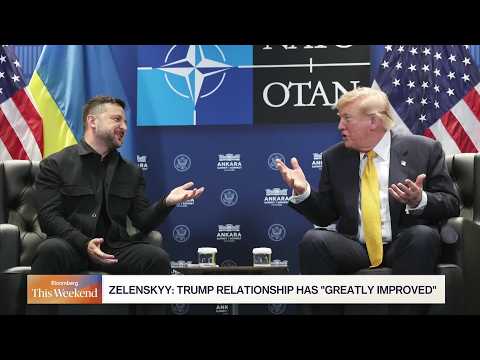
President Donald Trump’s perspective on Ukraine has undergone a significant evolution since his first term, transitioning from a stance marked by skepticism about extensive foreign aid to a more pragmatic engagement driven by the realities of Russia’s 2022 full-scale invasion. This shift, highlighted by figures such as former Director of National Intelligence Dan Coats, indicates a recalibration of approach concerning Eastern European geopolitics and the ongoing conflict. The implications of this evolving view extend to global alliances, defense strategies, and the future of Ukrainian sovereignty in 2026.
This modern policy adjustment represents a response to persistent geopolitical dynamics and the urgent demands of an active conflict zone.
President Trump’s Evolving View on Ukraine
The global political landscape has been significantly reshaped in recent years, particularly by Russia’s full-scale invasion of Ukraine in February 2022. This prolonged conflict remains a central flashpoint in international relations, necessitating continuous re-evaluation of national security interests and alliance commitments by world leaders, including President Trump.
During his first term (2017-2021), President Trump’s initial approach to Ukraine was characterized by a focus on burden-sharing among NATO allies and a skeptical view of extensive foreign aid. His administration often prioritized an ‘America First’ policy, which sometimes led to questions regarding the extent of U.S. commitment to collective security agreements.
First Term: Skepticism and Scrutiny
President Trump’s diplomatic efforts during his first term occasionally caused concern among traditional allies. His interactions with Russian leadership were closely scrutinized. Critics often pointed to a perceived softness towards Moscow, which contrasted with the long-standing bipartisan consensus on confronting Russian aggression.
The initial impeachment proceedings against President Trump in 2019 centered on his dealings with Ukraine. Accusations involved the alleged withholding of military aid to pressure Ukrainian President Volodymyr Zelenskyy into investigating political rivals. This period marked a significant point of contention regarding U.S. policy towards Ukraine and highlighted the internal political divisions surrounding the issue.
Despite these controversies, the underlying policy during his first administration leaned towards reducing what was perceived as disproportionate U.S. financial and military commitment abroad. This included a critical assessment of the financial contributions of NATO member states and the overall structure of international aid programs.
The prevailing sentiment from 2017 to 2021 suggested a desire to limit U.S. entanglement in what were seen as regional European conflicts, unless they directly impacted immediate American economic or security interests. This posture shaped the initial U.S. response to the simmering conflict in Eastern Ukraine following the 2014 annexation of Crimea.
Dan Coats’ Observations on the Policy Shift
Former Director of National Intelligence Dan Coats has been among those observing a notable change in President Trump’s outlook on Ukraine. Coats served as DNI from 2017 to 2019, providing him with direct insight into the Trump administration’s foreign policy deliberations during a critical period. His comments underscore a potential shift in understanding within the President’s current administration regarding the complexities of the conflict.
Coats’ analysis, shared in various public forums since 2025, suggests that the sheer scale and persistence of the Ukrainian conflict may have altered President Trump’s previous assumptions. The ongoing resistance by Ukraine, combined with the geopolitical ramifications for Europe and the wider world, could be influencing a more nuanced perspective in 2026.
According to Coats, the direct challenge posed by Russia’s aggression, particularly after the 2022 invasion, presented a stark reality that transcended earlier policy frameworks. This reality demanded a re-evaluation of how U.S. interests are intertwined with European stability and the principles of national sovereignty.
Catalysts for Change: The 2022 Invasion
Several factors likely contribute to this evolving viewpoint. The sustained aggression by Russia, the humanitarian crisis in Ukraine, and the economic impact on global markets are all significant considerations. The unity demonstrated by many European nations in supporting Ukraine also plays a role in shaping international perceptions and policy responses.
The full-scale invasion of Ukraine in February 2022 marked a turning point. This event dramatically escalated the conflict from a regional issue to a global security crisis. The brutal nature of the invasion, including widespread civilian casualties and destruction, garnered international condemnation and galvanized support for Ukraine across many Western nations.
This shift in the conflict’s intensity and scope presented a new set of challenges and opportunities for U.S. foreign policy. The invasion underscored the fragility of post-Cold War security arrangements and the potential for large-scale conventional warfare in Europe. It also highlighted the interconnectedness of global economies and the ripple effects of regional instability.
Furthermore, the domestic political landscape in the United States has continued to evolve. Public opinion regarding foreign interventions and the role of the U.S. in global conflicts is always in flux. President Trump, like any leader, responds to these internal and external pressures in formulating his foreign policy agenda.
The Current State of U.S.-Ukraine Relations in 2026
As of 2026, the relationship between the United States and Ukraine remains a critical component of international security. U.S. support, both military and financial, has been vital for Ukraine’s defense efforts. The continuation and nature of this support are directly tied to the foreign policy directives of the sitting U.S. administration.
President Trump’s second term, which began on January 20, 2025, has seen a renewed focus on several foreign policy areas. While specific details of his current Ukraine strategy are continually being articulated, the general direction points towards a pragmatic approach that balances U.S. interests with global stability concerns. This approach indicates a potential departure from some of the more isolationist tendencies observed in his first term, at least concerning the immediate crisis in Eastern Europe.
The 2026 posture emphasizes strategic engagement, aiming to achieve a resolution that secures Ukrainian sovereignty while minimizing prolonged U.S. military presence. This involves a calculated provision of advanced weaponry, intelligence sharing, and diplomatic pressure on Russia, often in concert with European allies.
Implications for NATO and European Security
The evolution of President Trump’s Ukraine policy carries significant implications for the North Atlantic Treaty Organization (NATO). NATO’s role in collective defense and its posture towards Russia are directly affected by the U.S. commitment to its allies. Any shift in U.S. policy can influence the cohesion and strategic direction of the alliance.
In 2026, President Trump’s administration has continued to press NATO members to meet their defense spending commitments. However, the tone regarding the alliance’s fundamental value has shifted. There is now a clearer recognition of NATO’s strategic importance in countering Russian aggression, particularly as demonstrated by the direct threat to European stability.
European security architecture is also at stake. Countries bordering Russia and Ukraine, such as Poland, Romania, and the Baltic states, rely heavily on strong U.S. leadership and military presence. An adjusted U.S. approach could lead to either reinforced deterrence or a re-evaluation of defense strategies by these nations, as they adapt to a more engaged, albeit pragmatic, American stance.
The enhanced U.S. commitment to providing advanced defense systems to Ukraine, coupled with joint military exercises with NATO allies in Eastern Europe, signals a heightened readiness. This proactive stance aims to deter further Russian expansion and stabilize the region, reflecting the pragmatic shift in policy.
Economic and Humanitarian Considerations
The conflict in Ukraine has had profound economic consequences, affecting global energy markets, food supplies, and supply chains. The cost of supporting Ukraine, both in terms of direct aid and sanctions against Russia, has been substantial for the U.S. and its allies. These economic realities factor heavily into any policy decisions.
The humanitarian crisis, with millions of Ukrainians displaced and countless lives affected, also presents a moral and ethical dimension to foreign policy. International efforts to provide aid and support refugees continue to be a priority for many nations, including the United States. In 2026, U.S. aid programs have been streamlined to maximize efficiency and impact, reflecting a pragmatic approach to humanitarian assistance.
The economic impact on the U.S. domestic front, including inflation and energy prices, has also influenced policy calculations. President Trump’s administration aims to balance international support with domestic economic stability, seeking solutions that do not unduly burden American taxpayers while still upholding democratic values abroad.
Domestic and International Pressure
President Trump’s administration faces both domestic and international pressure regarding its Ukraine policy. Domestically, there are varying viewpoints on the extent of U.S. involvement and the allocation of resources. Public opinion is divided between those advocating for robust intervention and those prioritizing domestic issues or a more isolationist foreign policy.
Internationally, allies and adversaries alike closely monitor U.S. policy. Allies seek reassurance of continued support and leadership, while adversaries look for signs of weakness or inconsistency. The balancing act between these pressures defines the current administration’s approach to the conflict.
The diplomatic efforts involve constant communication with European leaders, G7 nations, and the United Nations. These discussions focus on coordinating sanctions, humanitarian aid, and long-term reconstruction plans for Ukraine. The goal is to present a united front against Russian aggression while navigating complex international relationships.
The ongoing debates in the U.S. Congress reflect the diverse perspectives within the country. Lawmakers from both parties engage in discussions about the level of military aid, the effectiveness of sanctions, and the overall strategic objectives in Eastern Europe. These legislative deliberations shape the practical implementation of President Trump’s foreign policy.
Ultimately, the evolution of President Trump’s Ukraine policy from initial skepticism to a more pragmatic and engaged stance demonstrates an adaptation to changed global circumstances. The 2022 invasion served as a critical turning point, compelling a re-evaluation of U.S. interests and responsibilities on the international stage. The administration navigates complex geopolitical realities, balancing domestic concerns with the imperative of global stability.
Observers like Dan Coats have noted this shift. The world watches. The policy continues.
Ukraine.