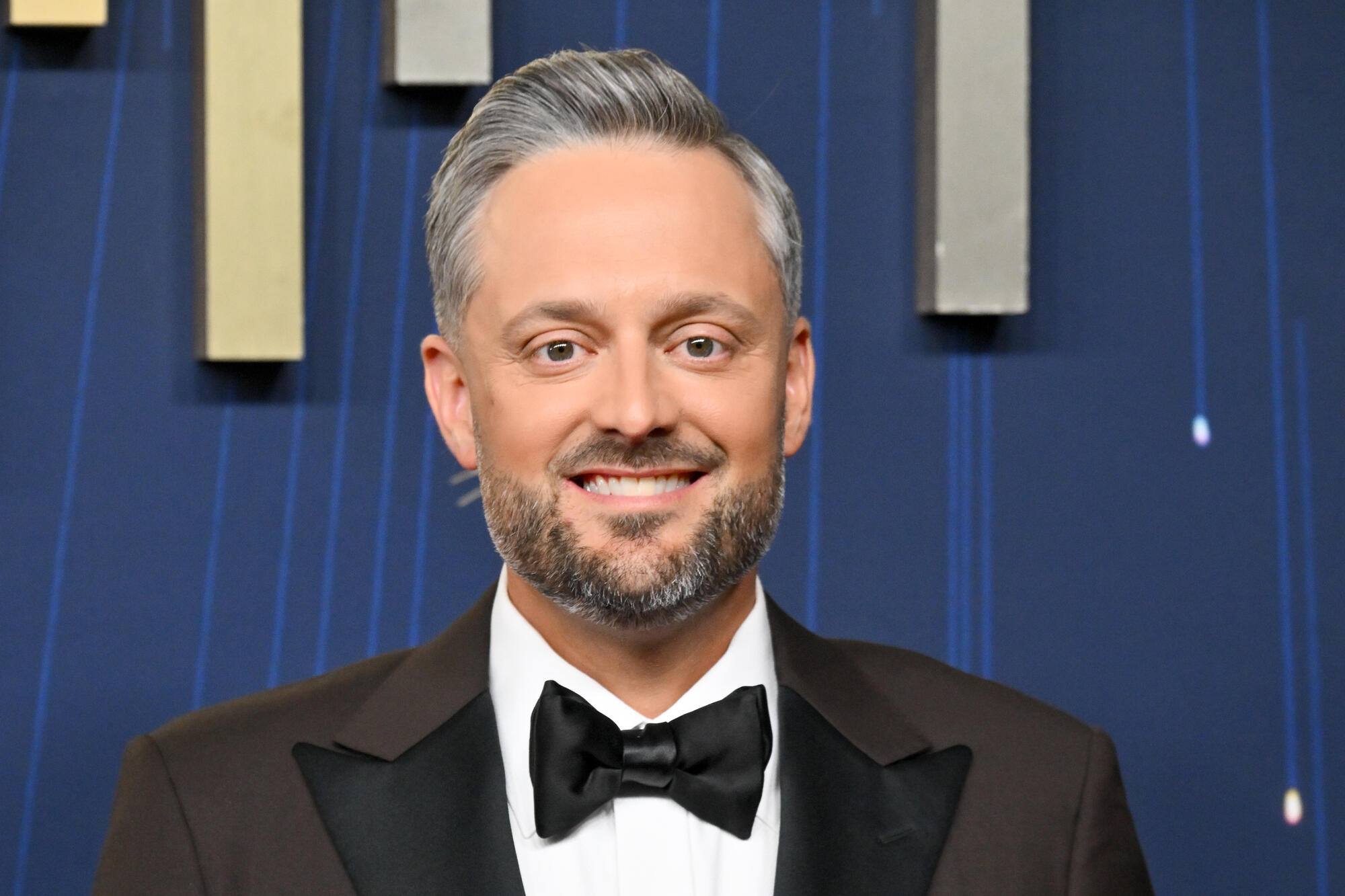
Comedian Nate Bargatze faced public criticism following his attendance at a UFC event where he was seen and photographed with former President Donald Trump. The controversy intensified after comedian W. Kamau Bell publicly admonished Bargatze, cautioning him against associating with individuals Bell characterized as ‘fascists.’ This interaction fueled a wider discussion within the entertainment industry about comedians’ political stances and public appearances.
The incident unfolded in the context of a highly polarized political environment. Public figures often navigate scrutiny regarding their associations. Bargatze’s presence at the event became a focal point for this ongoing debate.
The UFC Event and Political Proximity
Nate Bargatze, known for his clean, observational comedy style, attended a Ultimate Fighting Championship (UFC) event. These events frequently attract high-profile attendees from various fields. On this particular occasion, former President Donald Trump was also present.
Photographs and videos quickly circulated across social media platforms. These visuals showed Bargatze in proximity to Trump. The imagery prompted immediate reactions from various online communities.
The public’s response was swift and divided. Some fans expressed disappointment or anger. Others defended Bargatze’s right to attend any event and associate with anyone. This division mirrored broader societal political cleavages.
UFC events have become notable venues for political engagement. Public figures often use these platforms for visibility. The presence of political leaders at such events is not uncommon, drawing both supporters and detractors.
W. Kamau Bell’s Public Admonishment
The criticism against Bargatze gained significant traction following comments made by comedian W. Kamau Bell. Bell, known for his socially conscious comedy and activism, addressed the situation publicly. His remarks were direct and unambiguous.
Bell’s statement, delivered through social media, advised Bargatze: ‘Don’t Be in Photos With Fascists.’ This phrase quickly became a central point of the ensuing debate. Bell’s intervention elevated the discussion beyond casual online commentary.
W. Kamau Bell’s career has often intersected with political and social justice issues. His show, United Shades of America, frequently explores themes of race, culture, and power. His public stance on political association aligns with his established persona.
Bell’s comments were interpreted by many as a call for accountability. They suggested that public figures, especially comedians, hold a responsibility regarding the optics of their associations. The implication was that proximity to certain political figures could be seen as an endorsement.
Reactions Across the Comedy Landscape
The exchange between Bell and Bargatze resonated throughout the comedy world. Many comedians, industry professionals, and fans weighed in. The debate touched upon artistic freedom, moral responsibility, and the role of comedians in a politically charged era.
Some comedians defended Bargatze, emphasizing the idea that attending an event or being photographed with someone does not equate to political endorsement. They argued for the separation of personal and professional lives, even for public figures.
Other comedians sided with Bell’s perspective. They contended that in the current political climate, neutrality is increasingly difficult to maintain. They argued that silence or perceived association could be interpreted as complicity or normalization of certain ideologies.
The discussion highlighted a generational and ideological split within comedy. Older generations of comedians often avoided overt political stances. Younger generations, particularly those influenced by social media, frequently integrate political commentary into their work and public identities.
Social media platforms amplified the debate. Twitter, Instagram, and Facebook became arenas for passionate arguments. Hashtags related to Bargatze, Trump, and Bell trended, indicating widespread public engagement with the controversy.
The Nuance of Association
The core of the controversy lies in the interpretation of ‘association.’ Does a shared space imply shared values? This question has long been debated in public discourse. For comedians, whose craft often relies on observation and commentary, the lines can be particularly blurry.
Public figures, by virtue of their visibility, are often subjected to intense scrutiny. Every action, every photograph, can be analyzed and interpreted by a vast audience. This reality places unique pressures on entertainers.
The concept of ‘cancel culture’ also loomed over the discussion. Some worried that criticism could lead to professional repercussions for Bargatze. Others argued that public criticism is a necessary part of democratic discourse and accountability.
The incident also sparked conversations about the boundaries of comedy itself. Is comedy meant to be purely entertainment, or does it carry a inherent social or political responsibility? These questions have no easy answers and continue to be debated.
Bargatze’s Public Image and Career Trajectory
Nate Bargatze has cultivated a public image as a family-friendly, relatable comedian. His humor typically avoids controversial political topics. This approach has garnered him a broad appeal and a significant following.
His Netflix specials, including The Tennessee Kid (2019) and Hello World (2023), have been highly successful. Bargatze’s style is often described as ‘clean’ and accessible, appealing to audiences who prefer less explicit or politically charged content.
The controversy potentially challenged this carefully constructed image. Fans who appreciate his non-political stance might have felt conflicted by his perceived political association. Conversely, some might have seen it as a non-issue.
The long-term impact on Bargatze’s career remains to be seen. In the current climate, public figures often face short-term backlash that eventually subsides. However, such incidents can also lead to lasting shifts in audience perception.
His touring schedule and future projects will indicate how the public ultimately responds. Comedians often navigate such controversies by either addressing them directly, ignoring them, or subtly incorporating the experience into their material.
The Broader Context of Political Polarization
The Bargatze-Bell controversy is not an isolated incident. It reflects a larger trend of increasing political polarization affecting all sectors of society, including entertainment. Artists and entertainers are increasingly expected to take sides or face criticism.
The 2024 United States presidential election saw heightened political tensions. Public figures’ affiliations became more scrutinized than ever. The pressure to declare allegiances or face condemnation intensified across various industries.
Social media platforms play a crucial role in this dynamic. They provide immediate avenues for both criticism and defense. Information, and misinformation, spreads rapidly, shaping public opinion in real-time.
The entertainment industry, traditionally seen as a space for diverse viewpoints, now grapples with these pressures. The expectation for celebrities to act as moral or political compasses has grown. This places them in difficult positions, balancing personal beliefs with public image and career longevity.
This ongoing cultural shift impacts how artists create, perform, and interact with their audiences. The line between personal and political is increasingly blurred, especially for those in the public eye.
Looking Ahead: Navigating Public Scrutiny
For comedians like Nate Bargatze, navigating public scrutiny after such an event becomes a test of resilience and strategic communication. The choices made in the aftermath can significantly shape public perception.
Some public figures choose to issue statements clarifying their positions. Others may opt for silence, allowing the controversy to fade over time. Each approach carries its own risks and benefits.
The incident serves as a case study in contemporary celebrity culture. The interconnectedness of social media, political discourse, and entertainment means that public figures operate in a constantly monitored environment.
The demand for authenticity versus the need for strategic image management creates a complex landscape. Comedians, whose work often thrives on authenticity, face particular challenges in this regard.
Ultimately, the Bargatze-Bell exchange underscores the ongoing struggle within the entertainment world. It highlights the tension between individual expression, public responsibility, and the unforgiving nature of online judgment.
Fans considered. Critics analyzed. Comedians debated. The public watched.
Culture.