
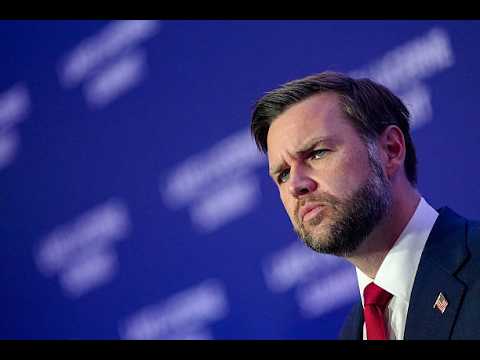
J.D. Vance delivered a stark public warning to Israel on Bloomberg Television on June 23, 2026. The message centered on a newly forged diplomatic framework known as Trump’s Iran Deal. Vance cautioned Israeli leadership against launching military or political strikes that could destabilize the agreement. The broadcast marked a significant pivot in Washington-Jerusalem relations. Washington laid down a definitive boundary. Israel now faces a complex geopolitical calculus.
The remarks were calculated. They were delivered on a network dedicated to global finance and market stability. Vance directed his statements toward a domestic electorate focused on economic stability, while simultaneously addressing foreign defense ministries. The policy anchors national interests over foreign entanglements. Protecting American economic stability is the stated priority. Allied military ambitions must align with this framework.
In many ways, this broadcast crystalizes a long-developing fracture in traditional alliances. The unconditional diplomatic cover historically provided to allied military operations is being replaced. It is being replaced by a transactional, structurally rigid foreign policy doctrine. Washington brokers the deals. Allies are expected to operate within the defined parameters.
The Bloomberg Television Ultimatum
During the morning broadcast, Vance addressed the growing rumors of an Israeli preemptive strike on Iranian nuclear facilities. He stated clearly that Washington would not support actions that undermine its diplomatic achievements. Trump’s Iran Deal is viewed as a cornerstone of current U.S. foreign policy. Disruption of that deal is considered a direct threat to American security and market stability.
The tone was transactional and firm. Traditional diplomatic pleasantries were discarded. Vance spoke directly to the military planners in Tel Aviv and the political leadership in Jerusalem. He outlined the consequences of unilateral action. A strike on Iran would not just be an attack on Tehran. It would be viewed as an attack on the diplomatic framework constructed by the White House.
This represents a radical departure from historical U.S. policy. For decades, Washington maintained a policy of strategic ambiguity regarding Israeli military operations in the Middle East. That era appears to be closing. The new doctrine demands compliance with American strategic goals. Unilateral allied action that risks dragging the United States into a regional war is no longer tolerated.
The Architecture of Trump’s Iran Deal
To understand the friction, one must understand the deal. Trump’s Iran Deal is fundamentally different from the 2015 Joint Comprehensive Plan of Action (JCPOA). The old framework relied on complex, multilateral European cooperation. The new framework is blunt. It relies on massive, unilateral American economic leverage. It demands total, verifiable compliance in exchange for specific, tiered sanctions relief.
Economic Carrots and Sticks
Tehran faces strict red lines regarding uranium enrichment. Centrifuge development is heavily capped at facilities like Natanz and Fordow. In return, Washington allows controlled avenues for Iranian oil exports. The funds are held in heavily monitored escrow accounts located in Qatar and Oman. They can only be used for approved humanitarian and domestic infrastructure projects. The United States Treasury Department oversees every transaction.
Vance emphasized this economic architecture during his Bloomberg remarks. The deal is designed to keep global energy markets stable. It keeps Iranian oil flowing just enough to prevent price shocks, while keeping the regime financially constrained. It is a delicate balance. An Israeli military strike would shatter that balance instantly. It would send Brent Crude prices soaring. It would trigger retaliatory strikes across the Strait of Hormuz.
Surveillance and Deterrence
The military component of the deal relies on deterrence, not intervention. The United States maintains a robust naval presence in the Persian Gulf. The Fifth Fleet in Bahrain acts as the enforcer. United States Central Command (CENTCOM) coordinates the regional radar architecture. However, the goal is to avoid using that force. Trump’s Iran Deal is designed to box Tehran in diplomatically. Vance’s warning to Israel is a mandate to let the diplomatic box work.
Jerusalem’s Strategic Opposition
The view from Jerusalem is entirely different. Israeli leadership views the region through an existential lens. Diplomatic agreements with Tehran are viewed with deep suspicion. The Israeli Defense Forces (IDF) maintain constant readiness. Intelligence agencies in Tel Aviv monitor Iranian enrichment facilities around the clock.
The Begin Doctrine and Historical Precedent
History dictates Israeli policy. The Begin Doctrine mandates that Israel will not allow a sworn enemy to acquire weapons of mass destruction. This doctrine led to the 1981 strike on Iraq’s Osirak reactor. It led to the 2007 Operation Orchard strike in Syria. Striking Iranian nuclear sites is a known, heavily rehearsed Israeli contingency.
Vance’s warning directly challenges this military doctrine. It puts Israel in an impossible position. Jerusalem must weigh the existential threat of a nuclear Iran against the immediate threat of alienating its primary superpower ally. The calculus is no longer just about defeating Iranian air defenses. It is about defying Washington.
The Logistics of a Unilateral Strike
A unilateral Israeli strike on Iran without American support presents severe logistical hurdles. The distance between Israeli airbases and Iranian nuclear facilities exceeds 1,000 miles. Israeli F-35i Adir and F-15I Ra’am fighter jets would require mid-air refueling. They would need to traverse hostile or heavily monitored airspace over Jordan, Iraq, or Saudi Arabia.
Furthermore, penetrating deeply buried facilities like Fordow requires specialized munitions. The United States possesses the GBU-57 Massive Ordnance Penetrator. Israel relies on smaller bunker-busting bombs. Without American logistical support, satellite intelligence sharing, and advanced munitions, an Israeli strike becomes exponentially more difficult. It risks being incomplete. An incomplete strike would trigger a massive regional war without actually neutralizing the nuclear threat.
Washington knows this. Vance’s warning leverages this logistical reality. By publicly withdrawing support for a strike, Washington is effectively attempting to veto the operation before it begins. The message is that Israel will be entirely on its own if it proceeds.
The National Interest Argument
The Bloomberg broadcast was ultimately aimed at the American voter and the global markets. The underlying theme was national interest. For years, the American electorate has grown weary of Middle Eastern conflicts. Trillions of dollars have been spent. Thousands of lives have been lost. The current administration operates on a mandate to stop endless wars and prioritize domestic economic growth.
Vance framed the defense of Trump’s Iran Deal as a defense of the American working class. A war with Iran would spike the price of oil. It would drive up inflation. It would disrupt global supply chains. By warning Israel against attacking the deal, Vance signaled that domestic economic security supersedes traditional foreign policy alliances.
This framing shifts the narrative. It moves the conversation away from moral obligations to allies. It moves it toward cold, hard economic realities. The United States will broker deals that benefit the United States. Allies are expected to fall in line. If they do not, they risk losing the umbrella of American protection. It is a transactional approach to global hegemony.
Market Reactions to the Geopolitical Shift
Because the remarks were made on Bloomberg Television, the market reaction was immediate. Energy traders adjusted their algorithms. The price of crude oil experienced a brief fluctuation as algorithms parsed the risk of an Israeli strike against the stabilizing force of an American veto. The market ultimately interpreted Vance’s remarks as a stabilizing factor. The threat of immediate conflict was priced down.
Defense sector stocks also saw movement. Companies reliant on foreign military sales to Israel monitored the broadcast closely. A potential freeze on advanced munitions or logistical support would impact future contracts. The defense industrial base must now navigate a landscape where foreign sales are increasingly tied to strict compliance with Washington’s diplomatic frameworks.
The broader financial sector recognized the pivot. Wall Street values predictability. Trump’s Iran Deal, enforced by strict American oversight and a refusal to allow allied disruption, offers a predictable energy market. Vance’s willingness to publicly rebuke a historic ally reinforced the administration’s commitment to that predictability.
The Future of Washington-Jerusalem Relations
The long-term impact of the June 23 broadcast remains to be seen. The relationship between Washington and Jerusalem is deeply entrenched. It spans intelligence sharing, joint military exercises, and deep cultural ties. However, the political friction is undeniable. The era of unconditional support has been replaced by conditional alignment.
Israeli leadership must now navigate a Washington that prioritizes its own negotiated settlements over allied security concerns. The IDF must plan contingencies that do not rely on American logistical backing. Diplomatic channels will remain open, but the tone has fundamentally changed.
The Middle East is undergoing a massive realignment. The Abraham Accords initiated a shift in regional dynamics. Trump’s Iran Deal introduces another massive variable. Traditional alliances are being tested. New economic realities are dictating military posture. The lines are being redrawn.
Diplomats drafted memos. Traders adjusted algorithms. Generals reviewed contingencies. Washington.