
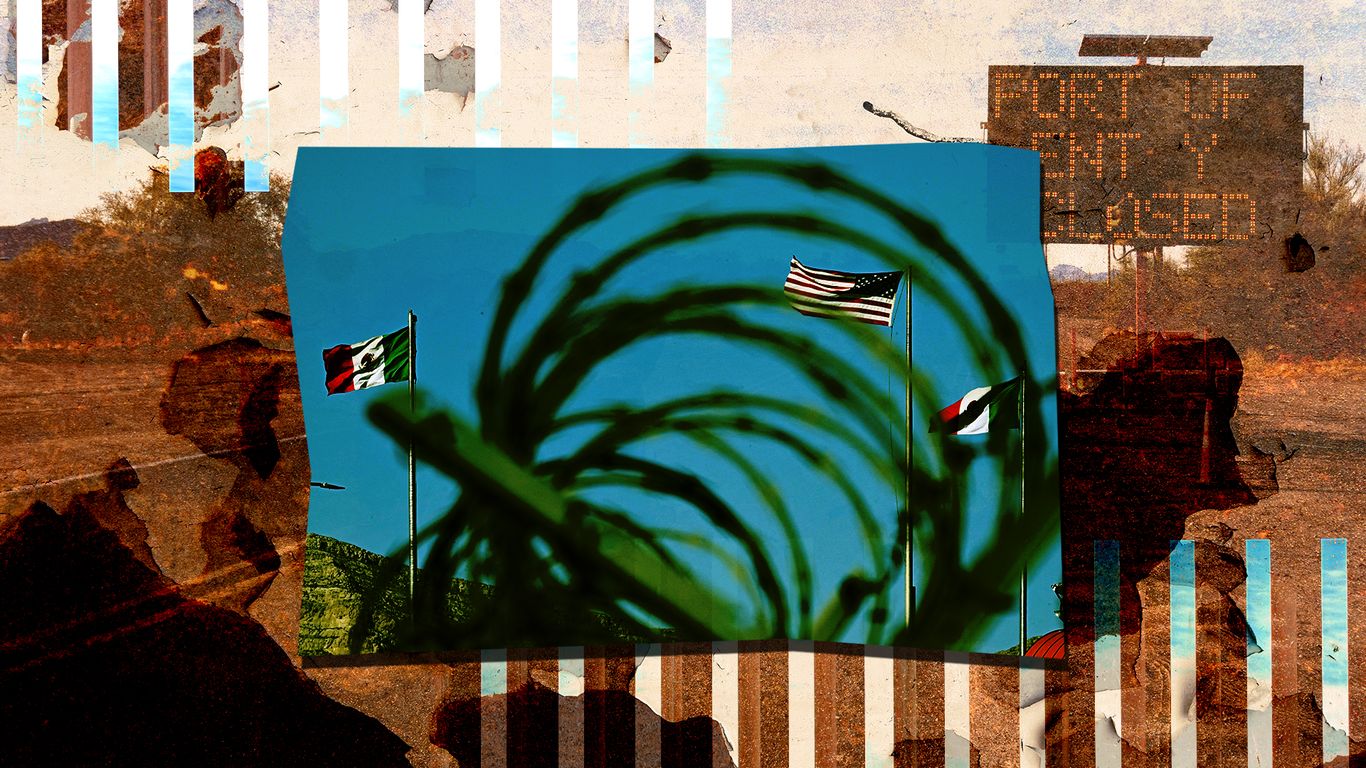
As of June 21, 2026, construction on Donald Trump’s border wall faces a critical deadline, with the administration racing to finalize contracts and secure funding ahead of the November midterm elections. The current phase targets strategic gaps in the Rio Grande Valley and Yuma sectors, utilizing a mix of newly appropriated funds and redirected military budgets to plant 30-foot steel bollards before congressional control potentially shifts. The Department of Homeland Security and the Army Corps of Engineers are operating under an accelerated mandate.
The urgency is palpable across the southern frontier. Heavy machinery is moving into staging areas in Eagle Pass, Texas, and San Diego, California. Logistics networks are routing tons of steel and concrete southward.
Political capital is finite. Legislative windows close. The administration understands that the physical reality of the wall outlasts the political cycles that fund it.
But the story does not begin with the current rush. What looks like a sudden 2026 mobilization is actually the reactivation of a massive, dormant logistical machine.
The 2026 Mandate and the Midterm Clock
The calendar is the primary adversary for the Department of Homeland Security. November 2026 brings the midterm elections. Historically, midterms serve as a referendum on the sitting president. A shift in control of the House of Representatives or the Senate could freeze future appropriations for border infrastructure.
To counter this risk, the administration is moving aggressively to obligate funds. In federal contracting, an obligated dollar is a protected dollar. Once a contract is signed and the money is committed to a private construction firm, it becomes exceptionally difficult for a future Congress to claw it back without incurring massive financial penalties.
Lawmakers aligned with the administration’s border security goals are acutely aware of this timeline. Figures like Senator Markwayne Mullin have emphasized the necessity of rapid deployment. The strategy relies on locking in multi-year construction agreements before the end of the fiscal year.
The Army Corps of Engineers is working overtime to review bids. Environmental waivers are being issued at an unprecedented rate. The goal is to turn appropriated dollars into poured concrete before the autumn leaves turn.
The Engineering of the Barrier
The physical structure being erected in 2026 is not a monolithic concrete wall. It is a highly engineered, multi-component barrier system. The core of the design remains the 30-foot, concrete-filled steel bollard.
These steel tubes are spaced precisely four inches apart. This spacing is intentional. It prevents a human from passing through while allowing border patrol agents to see through the barrier to assess threats on the Mexican side. Visibility is a critical component of modern border enforcement.
The bollards are topped with flat, anti-climb steel plates. They are anchored deep into the earth in a continuous concrete trench. This subterranean foundation is designed to thwart tunneling efforts, a common tactic used by cartels to bypass above-ground structures.
But the steel is only the first layer. The 2026 border wall is a technological network. The barrier system includes high-intensity lighting, all-weather patrol roads running parallel to the wall, and an array of ground sensors. Fiber-optic cables are buried alongside the concrete footings to detect the vibrations of approaching footsteps or digging equipment.
It is an integrated defense system. The physical wall buys time. The sensors provide data. The patrol roads allow rapid response by Customs and Border Protection (CBP) tactical units.
Following the Money
Funding the wall has always been an exercise in legislative maneuvering. The 2026 push is no different. The financial machinery driving the current construction is a complex blend of direct appropriations and executive authority.
Direct funding from Congress remains the most stable source of capital. However, securing billions of dollars through the standard budget process requires navigating intense partisan gridlock. When direct appropriations fall short of the administration’s targets, alternative funding streams are activated.
The use of military construction funds has been a hallmark of the project since its inception. By declaring the southern border a national security priority, the administration can legally redirect funds originally intended for Department of Defense infrastructure projects. This mechanism allows the executive branch to bypass congressional bottlenecks, though it frequently triggers legal challenges from states and advocacy groups.
Treasury forfeiture funds also play a role. Money seized from criminal organizations and drug cartels is occasionally routed into the border security budget. This creates a cyclical financial model where illicit funds are used to build the infrastructure designed to stop illicit activity.
Managing these disparate funding streams requires a massive accounting effort. The Office of Management and Budget (OMB) works closely with the Department of Homeland Security to ensure that every diverted dollar is legally defensible and rapidly deployed.
The Texas Problem: Eminent Domain
Building the wall in Arizona or New Mexico is primarily an engineering challenge. Much of the land along the border in those states is owned by the federal government. The Bureau of Land Management or the Department of Defense controls the territory. The government can simply grant itself permission to build.
Texas presents a fundamentally different reality. The border in Texas is defined by the winding path of the Rio Grande. Almost all the land abutting the river is privately owned. It belongs to ranchers, farmers, and local municipalities. Some families have held the deeds to these riverfront tracts since the Spanish land grants of the 1700s.
To build the wall in Texas, the federal government must acquire the land. When landowners refuse to sell, the Department of Justice initiates eminent domain proceedings. The government exercises its sovereign right to seize private property for public use, provided it offers fair market compensation.
These legal battles are slow. Landowners contest the valuation of their property. They argue that the wall will cut them off from the river, destroying their agricultural operations. They hire attorneys to drag the process out in federal court.
The ticking clock of the 2026 midterms amplifies the tension in Texas. The Department of Justice is filing condemnation lawsuits at an accelerated pace. The government often utilizes “quick-take” provisions, which allow them to seize the land and begin construction immediately, leaving the final financial settlement to be determined by a judge years later.
Arizona and the Federal Lands
While Texas is bogged down in courtrooms, Arizona is a construction zone. The federal control of the land allows the Army Corps of Engineers to move with ruthless efficiency.
In sectors like Yuma and Tucson, the primary obstacles are topographical and environmental. The wall must cut through rugged mountain ranges and cross deep desert washes subject to violent flash floods during the monsoon season.
To navigate these challenges, the administration frequently utilizes the REAL ID Act of 2005. This legislation grants the Secretary of Homeland Security the authority to waive dozens of federal laws, including the Endangered Species Act, the Clean Water Act, and the National Environmental Policy Act, to expedite the construction of border barriers.
By issuing these waivers, the government bypasses years of environmental impact studies. Bulldozers tear through protected habitats. Contractors blast through solid rock. The speed of construction in the Arizona desert is a direct result of this sweeping executive authority.
Environmental groups routinely file lawsuits attempting to halt the destruction of delicate ecosystems. However, federal courts have consistently upheld the Secretary’s waiver authority, leaving opponents with few legal avenues to stop the steel from going up.
The Role of Key Lawmakers
The executive branch cannot operate in a vacuum. The border wall requires constant legislative defense and advocacy. In 2026, a coalition of lawmakers is working to ensure the project remains a top priority.
Senator Markwayne Mullin and other defense-oriented legislators view the wall not merely as an immigration enforcement tool, but as a critical component of national security. They argue that the porous border allows for the unchecked flow of fentanyl and provides a potential entry point for transnational threats.
These lawmakers serve a dual purpose. They fight for direct appropriations during budget negotiations, and they provide political cover when the administration utilizes controversial funding mechanisms like military diversions.
Their rhetoric emphasizes the ticking clock. They hold press conferences at construction sites in Eagle Pass and Yuma. They demand updates from CBP leadership. They ensure that the border wall remains at the forefront of the national conversation as the midterms approach.
What Happens After November?
The future of the border wall hinges on the outcome of the 2026 elections. If the administration retains a favorable Congress, the project will likely continue its march across the southern frontier, fueled by fresh appropriations and continued executive support.
If control shifts, the landscape changes immediately. A hostile Congress will refuse to appropriate new funds. They will launch investigations into the use of military budgets. They will attempt to pass legislation restricting the use of eminent domain.
Even if the money is cut off, the administration will likely continue building using previously obligated funds and whatever executive workarounds remain available. The wall is not just a policy; it is a symbol. It is the physical manifestation of a specific vision of American sovereignty.
Until the votes are counted, the mandate is clear. Move the steel. Pour the concrete. Secure the land.
The contractors bid. The lawyers file. The bulldozers idle.
Time.