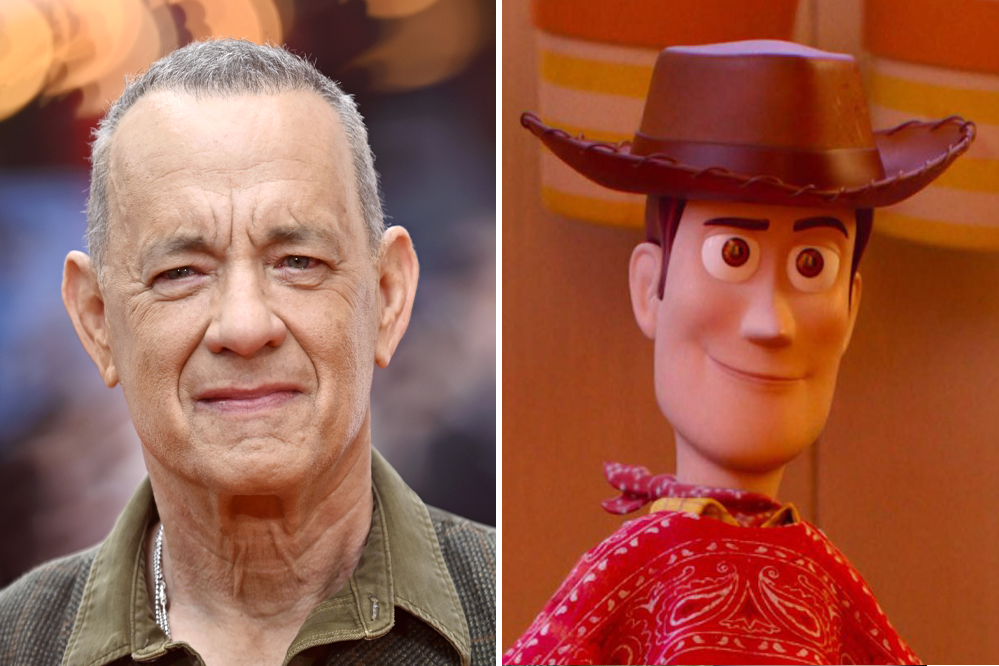
Tom Hanks confirmed that The Walt Disney Company possesses the technological capability to use artificial intelligence to recreate his voice as Woody for Toy Story 6 and future franchise installments. Addressing the rapidly advancing state of generative AI in Hollywood, the actor described the possibility of an autonomous, synthetic Woody as a scary thought. This revelation places one of cinema’s most recognizable characters at the center of a growing debate over biometric rights, legacy intellectual property, and the future of human performance.
As of June 2026, voice cloning technology is actively deployed across the entertainment sector. Generative audio models operate with near-perfect fidelity. For a major studio holding extensive archives of isolated audio tracks, synthetic performance presents a highly efficient production method.
The Reality of Synthetic Voice Generation
The Walt Disney Company operates on a franchise-first business model. Properties like Toy Story provide predictable revenue streams for publicly traded entertainment companies. Original intellectual property carries high financial risk. Established characters guarantee consumer engagement.
Disney and Pixar Animation Studios expanded the franchise with Toy Story 5 in June 2026. Corporate planning at major studios increasingly accounts for the lifespan of legacy performers. Tom Hanks has voiced the character since 1995. Studio executives are actively preparing for a future where physical actors step away from long-running roles.
Hanks’ recent comments underscore this industry shift. The actor noted that the studio has the digital means to ensure Woody maintains his signature cadence indefinitely. The artificial intelligence models available in 2026 do not merely splice old dialogue together. They generate entirely new performances based on the acoustic fingerprint of the original actor.
Voice actors make specific choices during recording sessions. They modulate pitch, manage breath control, and dictate emotional pacing. An AI model makes statistical predictions based on historical data. Hanks identified this loss of artistic agency as a primary concern for the acting profession.
Three Decades of Pristine Audio Data
To train a high-fidelity AI voice model, engineers require substantial amounts of isolated audio data. The quality of the synthetic output depends entirely on the quality of the training input. Most commercial AI startups rely on compressed, publicly available audio. Disney possesses a proprietary archive.
The Pixar Vault
Since the early 1990s, Tom Hanks has recorded his dialogue for Woody in acoustically perfect, sound-dampened recording booths. Pixar sound engineers have captured his performance on high-end studio microphones. The studio cataloged his voice in 1995 for the original film. They captured it again for Toy Story 2 in 1999. They recorded extensive sessions for Toy Story 3 in 2010 and Toy Story 4 in 2019. Additional audio was captured for short films, promotional materials, consumer products, and Disney theme park attractions.
This archive represents hundreds of hours of uncompressed, pristine audio data. It functions as an ideal dataset for machine learning applications.
The Machine Learning Process
Feeding this proprietary audio vault into a neural network allows the system to learn the exact phonetic structure of Tom Hanks’ performance. The model maps his pitch variations. It maps his breath patterns. It maps the specific acoustic energy he brings to the character of Woody.
Once the model is trained, a director can input a text script into a software interface. The AI generates the corresponding audio in Hanks’ voice. Sound engineers can then adjust the emotional output using digital parameters, modifying the intensity of the performance without requiring the actor to enter a recording booth. The technological barriers to this process have been eliminated. The remaining obstacles are entirely legal and contractual.
The Precedent of James Earl Jones and Darth Vader
The concept of a legacy actor relinquishing vocal rights to an AI model is already an established practice within The Walt Disney Company. The precedent was set by Lucasfilm, a Disney subsidiary.
In 2022, James Earl Jones signed over the rights to his archival voice work as Darth Vader. Jones, who first voiced the Sith Lord in 1977, authorized Lucasfilm and the Ukrainian AI audio company Respeecher to utilize his historical recordings to train a voice-cloning model. This synthetic version of Vader’s voice was subsequently used in the 2022 Disney+ series Obi-Wan Kenobi.
Jones received credit for guiding the performance, but the audio was generated by artificial intelligence. This agreement provided Disney with a blueprint for managing legacy characters. It established a legal framework for separating a famous voice from the aging actor who originated it.
The SAG-AFTRA Guardrails and Disney’s Intellectual Property
The collision between human actors and generative AI defined the 2023 SAG-AFTRA strike. For 118 days, Hollywood ceased production as the labor union fought to establish guardrails against synthetic replication.
Employment-Based Digital Replicas
The resulting contract provided critical protections for performers. Studios cannot scan a background actor and use their digital double in perpetuity without consent and compensation. They cannot clone a lead actor’s voice without explicit permission and a negotiated financial agreement.
The contract established the concept of Employment-Based Digital Replicas. If a studio wishes to use AI to alter an actor’s voice or generate new dialogue, they must obtain informed consent from the performer. This consent must be specific to the project.
The Conflict of Character Ownership
However, legacy contracts present a complex legal environment. The Walt Disney Company owns the copyright to the character of Woody. Disney owns the master recordings of the Toy Story films. Tom Hanks owns his Right of Publicity, which protects his name, image, and likeness from unauthorized commercial exploitation.
If Disney wishes to create an AI Woody, they must navigate the boundary between their copyrighted character and Hanks’ biometric data. The SAG-AFTRA agreement requires Disney to negotiate with Hanks directly before utilizing a synthetic version of his voice for Toy Story 6 or any subsequent project.
California Law and Post-Mortem Digital Replicas
The legal landscape surrounding synthetic performers expanded significantly following the SAG-AFTRA strike. In September 2024, California Governor Gavin Newsom signed Assembly Bill 1836 into law. This legislation directly addressed the use of AI to replicate deceased performers.
AB 1836 requires entertainment companies to obtain explicit consent from an actor’s estate before creating a digital replica of their voice or likeness. The law closed a loophole that studios could have exploited to revive legacy actors without compensating their heirs.
For Disney, this means the eventual use of an AI Woody cannot be executed unilaterally, even in a post-mortem scenario. The Hanks estate would retain control over the actor’s acoustic fingerprint, requiring Disney to negotiate terms for any future synthetic performances.
The Global Animation Industry and Synthetic Audio
The implications of Disney utilizing artificial intelligence for a flagship character extend beyond Hollywood. The global animation industry is closely monitoring the negotiations surrounding biometric rights. Animation studios in Japan, South Korea, and France are simultaneously developing proprietary voice-cloning models to streamline dubbing and localization processes.
If The Walt Disney Company successfully implements a synthetic Woody, it will establish a global standard for legacy character management. International studios will likely adopt similar frameworks, utilizing AI to maintain the vocal continuity of iconic animated characters across multiple languages and decades. The technological barrier to entry has lowered significantly since 2023. Cloud-based AI infrastructure allows even mid-tier animation houses to access voice-cloning capabilities previously reserved for major conglomerates.
This shift threatens the traditional ecosystem of voice acting. Localization actors, who provide regional dubs for global franchises, face immediate displacement. An AI model trained on Tom Hanks’ English performance can be programmed to speak Mandarin, Spanish, or Japanese while retaining the actor’s exact acoustic fingerprint. This eliminates the need to cast regional voice actors for international distribution, consolidating global vocal rights into a single digital asset.
Integration with the Pixar Animation Pipeline
Pixar Animation Studios operates on a highly structured production pipeline. Traditionally, voice recording occurs early in the process. Animators use the actor’s vocal performance as the foundational reference for character movement, facial expressions, and comedic timing. The actor’s breath, pauses, and inflections dictate the physical performance of the digital character.
Integrating an AI voice model fundamentally alters this workflow. Instead of animating to a human performance, animators would work alongside synthetic audio generated from a text prompt. This shifts creative control entirely to the director and the animation team. Without an actor in the booth improvising lines or altering their delivery, the performance becomes a strictly engineered output.
While this increases production efficiency, critics argue it removes the spontaneous human element that defined early Pixar films. The dynamic recording sessions between Tom Hanks and Tim Allen during the production of the original Toy Story heavily influenced the final script. A synthetic workflow eliminates the possibility of spontaneous collaboration, replacing human chemistry with algorithmic precision.
The Adam Buxton Podcast Revelation
Tom Hanks previously articulated this exact scenario long before the release of Toy Story 5. During an appearance on the Adam Buxton podcast in May 2023, Hanks detailed the technological reality facing legacy actors.
Hanks stated that his performances could continue indefinitely through the use of artificial intelligence. He noted that outside of a disclosure stating the performance was generated by AI, consumers would have no way to distinguish the synthetic audio from his actual voice.
The actor acknowledged that while industry professionals might detect digital artifacts in the audio, the average moviegoer would likely accept the performance. The emotional connection audiences have with characters like Woody often overrides concerns about the technical origins of the performance.
The Precedent of the 2023 Dental Commercial
Hanks has direct experience with the unauthorized use of his likeness. In October 2023, the actor was forced to issue a public warning regarding a synthetic replication of his face and voice.
An unauthorized dental plan commercial surfaced online featuring an AI-generated version of a younger Tom Hanks. The actor used his Instagram account to clarify that he had no involvement with the advertisement and had not authorized the use of his biometric data.
That incident demonstrated the ease with which bad actors can hijack a public figure’s likeness. The Toy Story scenario represents a different legal challenge. The Walt Disney Company is not a rogue entity. It is a multinational conglomerate operating within the boundaries of union contracts and state laws. Any synthetic replication of Woody will be executed through formal legal channels.
The Economics of Franchise Perpetuity
The financial incentives driving the adoption of AI voice cloning are substantial. Voice actors command significant salaries for major franchise installments. Tom Hanks earned millions of dollars for his participation in Toy Story 4 and Toy Story 5. Negotiating new contracts for Toy Story 6, Toy Story 7, and various spinoffs requires massive capital expenditure.
An AI voice model requires a singular licensing agreement. Once the terms are established, the marginal cost of generating new dialogue drops to near zero. The studio can produce video games, theme park announcements, interactive toys, and animated shorts without scheduling recording sessions or negotiating backend profit participation for each individual project.
This economic reality ensures that artificial intelligence will remain a central component of franchise management. Studio executives have a fiduciary duty to maximize the value of intellectual property. Extending the lifespan of a character like Woody indefinitely aligns with those corporate objectives.
The Future of the Pull-String Cowboy
The Walt Disney Company has not officially announced plans to replace Tom Hanks with an AI model for Toy Story 6. The actor remains the definitive voice of the character as of June 2026. However, the technological infrastructure required to execute the transition is fully operational.
The precedent has been set by James Earl Jones. The legal frameworks have been established by SAG-AFTRA and the state of California. The audio data resides in the Pixar Vault. The financial incentives are clear.
Technology advances. Contracts adapt. Algorithms learn. Woody remains.