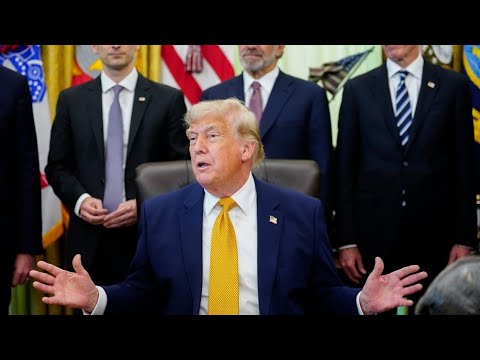
Former President Donald Trump explicitly attributes recent operational problems at the Lincoln Memorial Reflecting Pool to intentional vandalism rather than routine infrastructural decay. The statement, broadcast by Bloomberg Television on June 22, 2026, positions the degradation of the Washington D.C. landmark as a deliberate act of destruction. This framing bypasses standard administrative explanations regarding municipal maintenance. It targets a specific record of public property damage. The commentary centers entirely on the 2,029-foot-long basin located at the western end of the National Mall.
The Core Assertion: Vandalism Over Decay
Trump’s commentary zeroes in on the physical state of the National Mall. He rejects the premise that aging infrastructure or environmental factors are the primary culprits for the pool’s operational failures. Instead, he points to human interference. He cites deliberate vandalism. The statements align with his established record on federal property protection. During his tenure, his administration prioritized aggressive federal responses to monument defacement.
Bloomberg Television amplified the statement on Monday morning. The network placed the commentary within its broader coverage of federal spending and urban infrastructure. The broadcast captured the intersection of infrastructure management and federal law enforcement. It demonstrated how a single broken grate or defaced stone can be leveraged into a national talking point during an election year.
The Architecture of an American Mirror
To understand the vulnerability of the site, one must understand its construction. The Lincoln Memorial Reflecting Pool is not a natural body of water. It is a highly engineered, shallow basin designed by architect Henry Bacon. Construction concluded in 1922. The pool was designed to visually connect the Lincoln Memorial to the Washington Monument.
The dimensions are massive. The pool stretches 2,029 feet in length. It measures 167 feet wide. It holds approximately 6.75 million gallons of water. Yet, it is remarkably shallow. The water depth is only 18 inches at the outer edges. It dips to a maximum of 30 inches in the center.
This shallow profile creates the perfect mirror effect for the surrounding monuments. It also makes the pool highly susceptible to external disruption. Any heavy object thrown into the water immediately impacts the concrete floor. The margin for error in its operation is incredibly thin.
The 1914 Authorization
Congress authorized the construction of the Lincoln Memorial in 1914. The Reflecting Pool was an integral part of the initial landscape design. The McMillan Commission, tasked with updating the National Mall, envisioned a grand European-style water feature. World War I delayed the construction process. Work on the pool did not begin in earnest until 1920. The resulting structure was an architectural triumph built on highly unstable ground.
Engineering on a Swamp
The site sits on reclaimed land. Before the Army Corps of Engineers dredged the Potomac River in the late 19th century, the area was a tidal marsh. Bacon’s design required extensive foundational support to prevent the massive pool from sinking into the mud.
Builders drove 3,149 timber piles deep into the earth. These wooden pillars support the concrete basin above. Over the decades, the surrounding ground has settled, but the pool itself remains anchored. This rigid structure means that any damage to the concrete or the internal plumbing requires heavy excavation. Repairs are never simple. They are always structural.
The 2012 Infrastructure Overhaul
Fourteen years ago, the pool underwent a critical transformation. In 2012, the National Park Service completed a $34 million reconstruction project. The funding originated primarily from the American Recovery and Reinvestment Act. Prior to this overhaul, the pool was filled using potable water from the Washington D.C. municipal supply. It functioned as a stagnant, concrete bathtub.
The 2012 project fundamentally changed the hydrology of the site. The system now draws water directly from the nearby Tidal Basin. The water is filtered, circulated, and treated with ozone gas before entering the Reflecting Pool.
This modern circulation system requires clear intake and outtake grates. It requires unimpeded flow to maintain water quality. When debris enters the water, the filtration system chokes. The mirror effect shatters.
The Mechanics of Monument Maintenance
The National Park Service bears the responsibility of maintaining the site. Specifically, the National Mall and Memorial Parks division handles daily operations. It presents a relentless logistical challenge. The division must manage millions of annual visitors while preserving century-old masonry.
Even without human interference, the pool faces severe environmental threats. Algae blooms are common during the sweltering Washington summers. Waterfowl introduce parasites into the shallow water. In 2017, an outbreak of a parasite that causes swimmer’s itch forced the NPS to take drastic action.
Crews had to completely drain the 6.75 million gallons. They scrubbed the concrete floor for days. They treated the entire system with chemicals before refilling it. The baseline maintenance requires constant vigilance.
The Threat of Debris and Defacement
Vandalism accelerates this already demanding maintenance cycle. When individuals throw trash, glass, or heavy objects into the shallow water, the ozone filtration system is immediately compromised. Broken grates require custom fabrication to replace. Standard hardware store components do not fit 1922 architectural specifications.
Defacement of the surrounding stone coping is another frequent issue. Removing spray paint or chemical agents from historic, porous stone requires specialized conservation techniques. Crews cannot simply power-wash the marble. High-pressure water destroys the surface integrity of the stone.
Remediation requires specific chemical poultices. It requires time. It requires federal funding. Trump’s remarks highlight this specific friction point between federal budgets and public access. He frames the repair costs as an unnecessary burden caused by criminal behavior.
Custom Fabrication Challenges
The 2012 renovation utilized specialized architectural components. The drainage grates and intake valves were custom-cast to blend seamlessly with the historic aesthetic. When vandalism destroys these components, the National Park Service cannot order replacements from standard industrial catalogs. The parts must be recast. This custom fabrication process delays repairs by months. It leaves sections of the pool vulnerable to further damage while awaiting specialized parts.
A History of Monumental Defense
Trump’s focus on the Reflecting Pool is not an isolated talking point. It is a continuation of a specific policy posture. He has consistently positioned his political brand around the physical defense of American historical sites.
The rhetoric dates heavily to the summer of 2020. During widespread protests, numerous statues and monuments across the country were targeted or defaced. The National Mall saw its share of graffiti and property damage. The World War II Memorial and the Lincoln Memorial both required emergency cleaning during that period.
Trump utilized these events to build a narrative of cultural defense. He argued that the destruction of physical monuments represented a broader attack on American history. The condition of federal property became a central theme of his administration’s law enforcement agenda.
The 2020 Executive Order Precedent
In response to the 2020 unrest, Trump signed a sweeping executive order on June 26 of that year. The document was titled ‘Protecting American Monuments, Memorials, and Statues and Combating Recent Criminal Violence.’ The order directed federal law enforcement to prosecute individuals who damaged federal property to the fullest extent of the law.
The directive specifically invoked the Veterans’ Memorial Preservation Act. It carried the threat of ten-year prison sentences for the vandalism of statues and monuments. The order also threatened to withhold federal funding from state and local law enforcement agencies that failed to protect monuments within their jurisdictions.
By invoking vandalism today, Trump activates the exact same political framework. He reminds his audience of that specific executive order. He frames the current administration as negligent in its custodial duties over federal lands.
The Lafayette Square Context
The aggressive defense of federal property defined the later months of Trump’s presidency. The clearing of Lafayette Square near the White House in June 2020 remains a stark example. Federal law enforcement, including the U.S. Park Police, forcefully cleared the area following fires and vandalism near St. John’s Episcopal Church.
Trump views the physical control of federal space in Washington D.C. as a paramount executive duty. The Reflecting Pool falls squarely within this geographic and ideological territory. It is not merely a park feature. It is a federal asset that demands federal protection.
The Bloomberg Television Amplification
The venue for this June 2026 message matters heavily. Bloomberg Television typically focuses on global finance, market trends, and corporate policy. By broadcasting a narrative about monument vandalism on a financial network, the argument reaches a specific demographic.
It reaches institutional investors. It reaches corporate executives. It reaches voters who prioritize economic stability over cultural debates. Trump ties the concept of physical security directly to economic viability.
The aesthetic degradation of the National Mall is presented as an economic indicator. It signals a broader breakdown in municipal control. A city that cannot protect its most famous reflecting pool, the implicit argument goes, is a city that cannot protect capital investment. This framing aligns perfectly with conservative critiques of urban management in the current election cycle.
The Jurisdiction of the National Mall
Securing the space is a jurisdictional labyrinth. The National Mall is not governed by the local Washington D.C. government. It is federal property. The United States Park Police hold primary jurisdiction over the monuments and the Reflecting Pool.
The Metropolitan Police Department handles the surrounding city streets. The United States Capitol Police monitor the eastern end of the Mall. The Secret Service manages the perimeter of the nearby White House. This overlapping authority creates complex operational protocols.
When vandalism occurs, the response depends entirely on where the perpetrator is standing. If a rock is thrown from Constitution Avenue into the pool, two different law enforcement agencies must coordinate the response. Trump’s commentary cuts through this bureaucratic complexity. He demands a unified, aggressive federal posture.
Funding the Federal City
Congress controls the budget for the National Park Service. The maintenance backlog for the National Mall alone routinely runs into the hundreds of millions of dollars. The 2012 renovation of the Reflecting Pool was funded through emergency stimulus money. Current repairs rely on annual congressional appropriations.
When Trump points to vandalism, he is also pointing at the federal budget. He highlights the cost of repairing intentional damage in an era of fiscal restraint. Every dollar spent removing spray paint is a dollar diverted from structural preservation. He positions vandalism as a direct theft of taxpayer resources.
The Cultural Weight of the Reflecting Pool
The Reflecting Pool is not just infrastructure. It is the primary stage for American civic demonstration. The history of the site amplifies the impact of any damage.
In 1939, Marian Anderson sang at the Lincoln Memorial after being barred from Constitution Hall. In 1963, Martin Luther King Jr. delivered his ‘I Have a Dream’ speech while looking out over the water. In 2021, the pool was illuminated with 400 lanterns to honor lives lost to the COVID-19 pandemic.
The space holds immense cultural weight. Damage to the site registers differently than damage to a standard municipal park. It strikes at the visual identity of the federal government. Trump understands this symbolic power. He leverages the historical reverence for the site to amplify his arguments about law and order.
The Security Paradox
Modernizing security around the pool remains incredibly difficult. The National Park Service must balance public access with physical protection. The 1922 design did not anticipate modern security threats.
Adding permanent fencing or visible security barriers would destroy the aesthetic intent of the space. The open sightlines between the Lincoln Memorial and the Washington Monument must remain clear. That is the entire architectural purpose of the National Mall.
Consequently, the site relies heavily on foot patrols and surveillance cameras. These measures deter some activity, but they cannot stop a determined individual from throwing debris into the water. The architecture demands openness. The politics demand security. The two forces are constantly at odds.
Political Utility in 2026
The 2026 election cycle places intense scrutiny on urban crime and public order. Trump utilizes the Reflecting Pool as a tangible example of these themes. The water is visible. The damage is verifiable. The repair costs are public record.
This removes the argument from abstract policy debates. It grounds the rhetoric in physical reality. A broken grate in a national monument is a highly effective political prop. It requires no complex explanation. It simply requires an audience.
By bringing this issue to Bloomberg Television, Trump ensures the image of the damaged pool circulates through financial and political channels simultaneously. He controls the narrative framing. He forces the current administration to defend its custodial record over America’s most famous front yard.
The Terminal Drop
The National Park Service continues its daily maintenance schedule. Park Police continue their patrols. Tourists continue to gather along the stone coping. The water continues to circulate through the ozone filters. The debate over federal property protection continues to escalate. Politicians speak. Cameras roll. The water reflects. Washington.