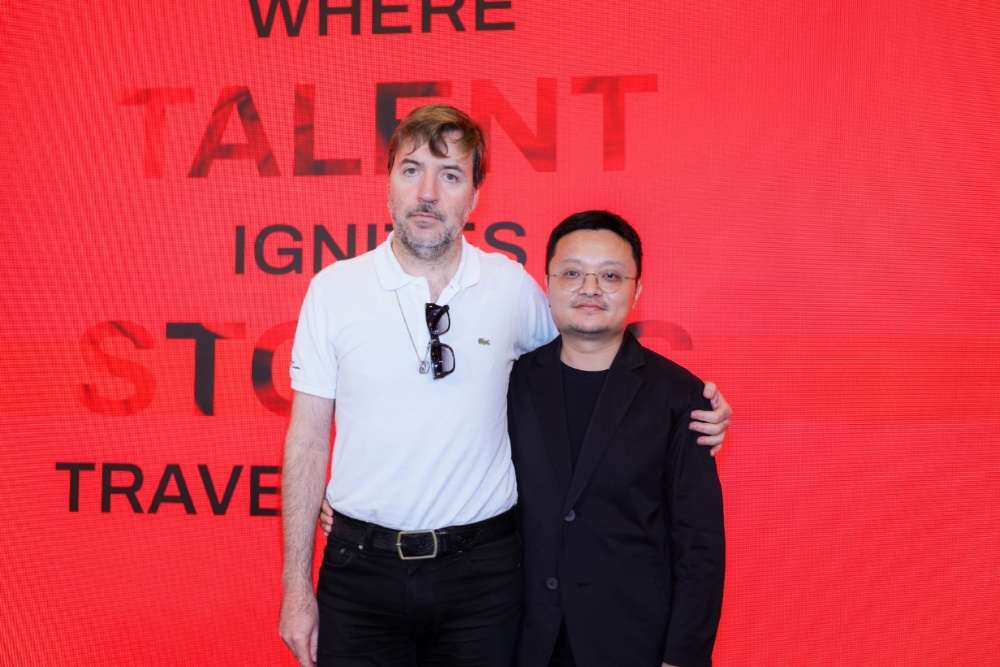
At the June 2026 Shanghai International Film Festival, directors Albert Serra and Bi Gan concluded that artificial intelligence will never replace human filmmakers because AI lacks “innocence”, the fundamental human ability to approach a subject with naive, uncalculated emotion. During a masterclass panel titled “The Future of the Image” at the Shanghai Grand Theatre, the Catalan and Chinese auteurs argued that while generative AI can replicate aesthetic patterns and adapt text into standard visual structures, it cannot replicate the spontaneous, flawed intuition required to make true cinema. The machine knows too much. It has seen every film ever made. Because it cannot forget, it cannot discover.
The conversation arrived at a critical moment for the global film industry. By mid-2026, generative video platforms like OpenAI’s Sora and Runway’s Gen-4 have deeply penetrated studio pipelines. Background generation, pre-visualization, and even digital stunt doubles are now routinely synthesized. Hollywood and international markets have embraced the algorithm for its economic efficiency. But efficiency is not art. Efficiency is the enemy of the auteur.
Serra and Bi Gan represent the antithesis of the algorithmic approach. Both directors operate in the realm of slow cinema. Both rely on the unpredictable nature of the physical world. Their summit in Shanghai provided a philosophical counterweight to the technological optimism dominating the 2026 festival circuit.
The Shanghai Summit: A Clash of Methods
The setting was deliberate. The Shanghai International Film Festival has long served as a bridge between Eastern and Western cinematic traditions. On June 22, 2026, the stage at the Shanghai Grand Theatre hosted two vastly different practitioners of the medium.
Albert Serra is a provocateur from Catalonia. His films, including The Death of Louis XIV (2016) and Pacifiction (2022), are sprawling, chaotic, and deeply historical. He shoots hundreds of hours of digital footage using multiple cameras. He does not let his actors see the script. He thrives on exhaustion, confusion, and the eventual breakdown of artifice.
Bi Gan is a poet from Guizhou province. His cinema is meticulous, dreamlike, and anchored in the geography of his hometown of Kaili. Films like Kaili Blues (2015) and Long Day’s Journey Into Night (2018) are famous for their reality-bending long takes. Bi Gan orchestrates massive, logistical miracles to capture a single, unbroken feeling.
Despite their different methods, both directors share a core philosophy. The camera is a tool for capturing the unseen. The camera is a witness to human vulnerability. When the topic of the panel shifted to literary adaptation, this shared philosophy became the foundation for their critique of artificial intelligence.
The Problem of Literary Adaptation
Adapting a book into a film is a historical trap. For a century, studios have treated novels as instruction manuals. The plot is extracted. The dialogue is condensed. The characters are cast. The resulting film is often a mere illustration of the text.
Serra and Bi Gan reject this model entirely. They view literature not as a blueprint, but as a point of departure. The text is a ghost. The film is the seance.
Serra’s Destruction of the Text
Serra has frequently adapted historical and literary figures. He has tackled Don Quixote, Casanova, and Dracula. But he does not adapt their stories. He adapts their exhaustion. He adapts their waiting.
During the Shanghai panel, Serra explained that literature provides an atmosphere. A filmmaker’s job is to destroy the rigid structure of the text to find the atmosphere hidden beneath it. When Serra shoots, he creates a chaotic environment on set. He forces actors into prolonged, uncomfortable situations. The camera rolls continuously. He is waiting for the moment the actor forgets they are playing a literary icon and simply becomes a tired, vulnerable human being.
This process requires friction. It requires a lack of control. The text must be broken for the cinema to emerge.
Bi Gan’s Architecture of Memory
Bi Gan approaches literature through the lens of poetry. His films are heavily influenced by the spatial and temporal leaps found in modern verse. For Bi, adapting a poem or a memory into a film requires a physical architecture.
He noted that literature operates in the mind of the reader. Cinema operates in physical space. To adapt the feeling of a poem, Bi Gan constructs elaborate, continuous shots that move through walls, over valleys, and across time. The famous 59-minute 3D sequence in Long Day’s Journey Into Night is essentially a cinematic translation of a poetic stanza.
The translation is intentionally imperfect. Memory is flawed. Poetry is ambiguous. Bi Gan argued that the beauty of adaptation lies in the mistakes made during the translation process. The human mind distorts the text, and that distortion becomes the art.
The AI Divide: The Calculation of Art
This reliance on friction, error, and human distortion led the panel directly into the debate over artificial intelligence. In 2026, AI can adapt a novel into a screenplay in seconds. It can generate a storyboard in minutes. It can render a photorealistic scene of Don Quixote riding through a neon-lit Kaili without a single camera being turned on.
The moderator asked the directors if these tools could eventually be used to create high art. Both directors offered a definitive rejection. The rejection was not based on aesthetics. It was based on the concept of innocence.
The Definition of Innocence
Innocence, in the cinematic sense, is not purity. It is naivety. It is the act of stepping into the unknown without a guaranteed outcome. When Albert Serra turns on three cameras and lets his actors improvise for an hour, he does not know what will happen. He is innocent of the result. When Bi Gan sends a camera on a zip-line across a physical valley, the crew holds their breath. They are innocent of the final frame until it is captured.
Artificial intelligence possesses no innocence. Generative models operate on probabilistic calculation. They analyze billions of existing images, texts, and films. When prompted, they calculate the most statistically likely arrangement of pixels to satisfy the request.
The machine knows exactly what it is doing. It is entirely cynical. It cannot stumble onto a moment of truth because it has already calculated every possible truth before the rendering begins.
The Burden of the Database
Serra articulated this burden of knowledge perfectly. He argued that AI is suffocated by its own database. It has ingested the entire history of human expression. Therefore, it can only regurgitate combinations of the past.
True auteur cinema requires a blank slate. It requires a director to look at a face, a landscape, or a shadow as if it has never been filmed before. AI cannot do this. AI looks at a shadow and cross-references it with every shadow filmed by Orson Welles, Gordon Willis, and Roger Deakins. The resulting image may be beautiful, but it is deeply derivative. It is an echo, not a voice.
Bi Gan added that AI lacks the capacity for physical suffering. The making of a film is a physical ordeal. It involves weather, fatigue, budget constraints, and the complex emotional dynamics of a crew. These physical constraints force compromises. These compromises often become the most brilliant moments in a film. AI faces no physical constraints. It does not get tired. It does not freeze in the rain. Without the physical struggle, the resulting image lacks spiritual weight.
The 2026 Context: A Synthetic Industry
The debate in Shanghai did not occur in a vacuum. The film industry of 2026 is undergoing a massive structural shift. The economic models that sustained independent, mid-budget cinema have largely collapsed under the weight of streaming consolidation.
Studios are turning to AI to slash production costs. Entire departments, from concept art to background casting, are being automated. The technology has advanced from the uncanny valley of 2023 to the hyper-realistic synthesis of 2026. Audiences are increasingly consuming content where the line between captured reality and generated pixels is indistinguishable.
In this environment, the definition of a “filmmaker” is fracturing. There are prompt engineers who direct algorithms. And there are physical directors who direct light and time.
The Preservation of the Human Error
Serra and Bi Gan are fighting for the preservation of human error. They argue that as the mainstream industry becomes more synthetic and flawless, the value of independent cinema will lie entirely in its imperfections.
If an algorithm can generate a perfect sunset, then a perfect sunset is no longer valuable. What becomes valuable is the shaky, out-of-focus shot of a human face reacting to a real sunset. The value shifts from the aesthetic result to the verifiable human experience behind the camera.
This is why literary adaptation remains crucial for these auteurs. Literature is a deeply human attempt to categorize the chaos of existence. Adapting it to film is a second attempt to categorize that same chaos. When done by humans, both attempts fail in beautiful, revealing ways. When done by a machine, the attempt succeeds perfectly, and therefore means nothing.
The Future of the Auteur in a Synthetic Age
The Shanghai masterclass concluded not with a prediction of doom, but with a statement of purpose. Artificial intelligence will undoubtedly conquer the commercial entertainment sector. It will generate the blockbusters. It will adapt the franchises. It will optimize the content for maximum engagement.
But it will not conquer the art form. The art form requires a soul, and a soul requires a body. A body that gets tired. A body that forgets. A body that makes mistakes.
Serra will continue to exhaust his actors in the pursuit of an unscripted truth. Bi Gan will continue to build impossible physical architectures to capture the fleeting nature of memory. They will continue to operate in the physical world, embracing the friction that the algorithms are designed to erase.
The festival attendees listened. The technologists took notes. The critics debated. The machines kept calculating. The directors stood firm.
Innocence.