
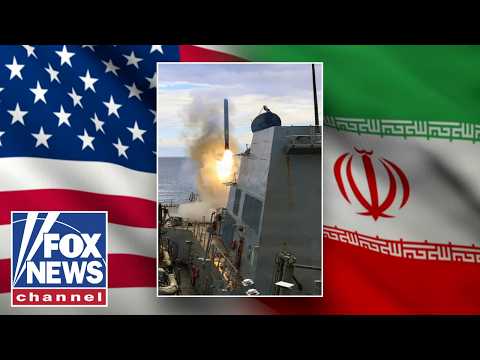
The unwritten terms of the June 2026 U.S.-Iran nuclear framework hinge entirely on the fine print, according to Representative Tim Burchett. As the State Department negotiates through Omani intermediaries to cap Iranian uranium enrichment at 60 percent in exchange for sanctions relief, the Tennessee Republican warns that broad diplomatic strokes mean nothing. The focus remains on verifiable commitments, the exact dollar amounts of unfrozen assets, and the long-term security implications for the Middle East. What looks like a de-escalation strategy in Washington can quickly fund proxy conflicts if the details fail to protect American interests.
This is not a new dynamic for the House Foreign Affairs Committee. The history of U.S.-Iran relations is defined by mistrust, complex backchannel negotiations, and agreements that are heavily scrutinized by lawmakers on both sides of the aisle. The stakes in 2026 involve nuclear non-proliferation, the security of Red Sea shipping lanes, and the global energy market. When a representative like Burchett emphasizes the details, it signals a broader congressional intent to examine every clause, every financial waiver, and every enforcement protocol before allowing the executive branch to bypass legislative oversight.
Burchett has consistently argued that money is fungible. When the United States unfreezes billions of dollars in Iranian assets, even if restricted to humanitarian use, it frees up equivalent funds in Tehran’s domestic budget. Those domestic funds, Burchett notes, are routinely funneled to the Islamic Revolutionary Guard Corps (IRGC). The fine print of the 2026 framework is not just about uranium; it is about the exact mechanisms tracking where the money flows.
The 2026 Framework and the Omani Backchannel
Diplomatic agreements with Tehran are rarely signed on public stages. They are intricate webs of conditional actions, phased relief, and unwritten understandings. In the context of the June 2026 negotiations, the talks are mediated by officials in Muscat, Oman, and Doha, Qatar. The Biden administration seeks to limit Iran’s nuclear program and curb its support for proxy groups. Iran seeks relief from economic sanctions and access to billions of dollars tied up in foreign banks.
The challenge lies in the sequencing and the verification. The State Department, led by figures like Middle East coordinator Brett McGurk, has pursued an unwritten “understanding” rather than a formal treaty. This approach theoretically avoids triggering the Iran Nuclear Agreement Review Act (INARA) of 2015, which requires congressional approval for formal nuclear treaties with Iran. Burchett and his colleagues on the Foreign Affairs Committee view this strategy as a deliberate evasion of the law.
If the U.S. issues sanctions waivers too quickly, it loses leverage. If Iran feels the economic relief is delayed, it accelerates its nuclear activities. The details Burchett refers to are the exact mechanisms that govern this delicate balance. How are banking transactions monitored in Doha? What is the timeline for the Iraqi electricity waivers? What happens if Iran resumes 90 percent weapons-grade enrichment? These are the specific questions that define the framework.
The Precedent of Frozen Assets
A critical component of the 2026 negotiations involves the continuous renewal of sanctions waivers. In previous years, such as the late 2023 transfer of $6 billion from South Korea to Qatar, the funds were ostensibly locked down for food and medicine. By 2026, the focus has shifted to roughly $10 billion in Iraqi payments for Iranian electricity, held in escrow accounts in Oman.
Burchett has repeatedly pointed out the flaws in this financial architecture. The Treasury Department insists the funds are heavily monitored. However, Burchett argues that the mere availability of these funds emboldens Tehran. The details matter because the banking protocols dictating how these funds are disbursed are notoriously opaque. Lawmakers demand to see the exact treasury guidance provided to Omani banks to ensure no loopholes exist.
Burchett’s Demand for INARA Compliance
The political environment in Washington heavily influences how any U.S.-Iran arrangement is executed. Congress established INARA to ensure lawmakers have a voice in the process and can hold the administration accountable. The legislation mandates that any agreement related to Iran’s nuclear program be submitted to Congress for a review period.
When Burchett states that the details are critical, he is challenging the administration’s classification of the deal as an “unwritten understanding.” Chairman Michael McCaul and other committee members have subpoenaed documents and demanded briefings to drag the details into the light. There is a strong consensus among Republicans that past financial concessions have directly funded Iran’s broader destabilizing activities across the region.
Any new financial waiver faces intense scrutiny. Lawmakers are dissecting the text of the Treasury Department’s communications to ensure they do not compromise national security. Bypassing INARA, according to Burchett, sets a dangerous precedent where the executive branch can alter global security dynamics without the consent of the American people.
Verification at Fordow and Natanz
Beyond the money, the physical verification of Iran’s nuclear sites remains a massive hurdle. The International Atomic Energy Agency (IAEA), led by Director General Rafael Grossi, plays a central role in monitoring facilities like Fordow and Natanz. However, Iran removed dozens of IAEA surveillance cameras in 2022, creating a massive blind spot that persists into 2026.
Burchett has highlighted this lack of visibility. An agreement to cap enrichment at 60 percent is meaningless if inspectors cannot verify the centrifuge cascades. Recent IAEA reports in May 2026 indicated that Iran had installed advanced IR-6 centrifuges deep underground at Fordow. The level of access granted to inspectors, the frequency of unannounced visits, and the protocols for resolving disputes are the specific details Burchett demands to see.
Enforcement mechanisms are equally critical. If Iran is found to be enriching uranium beyond the agreed limit, what are the immediate consequences? The concept of “snapback” sanctions is often debated, but its effectiveness depends on European allies in London, Paris, and Berlin actually enforcing the penalties. The details of how these snapback mechanisms are triggered without a formal UN Security Council resolution are a primary concern for the House Foreign Affairs Committee.
The Proxy Funding Equation
A U.S.-Iran deal does not exist in a vacuum. It has profound implications for the broader Middle East and for U.S. allies like Israel and Saudi Arabia. These nations view Iran as an existential threat and are deeply concerned about any financial relief that might legitimize Tehran’s government. They fear that unfreezing assets directly correlates to increased rocket fire and drone attacks across the region.
Burchett frequently connects the dots between sanctions relief and proxy violence. The Houthis in Yemen, heavily armed by the IRGC, have continually disrupted global shipping in the Red Sea and the Bab el-Mandeb strait throughout 2025 and 2026. Hezbollah in Lebanon and Hamas in Gaza rely on Iranian logistics and funding to maintain their operations. Burchett argues that ignoring these proxies in the nuclear negotiations is a fatal flaw in the administration’s strategy.
The details of the 2026 framework must address these regional realities. Lawmakers are looking for assurances that the agreement does not alter the balance of power. They are examining whether the unwritten understanding includes any verifiable halt to the production of Shahed-136 suicide drones, which Iran has not only used in the Middle East but also exported heavily to Russia.
The Broader Geopolitical Context
The U.S.-Iran dynamic is further complicated by the roles of Moscow and Beijing. Both countries have significant economic and strategic interests in Iran. China remains the largest buyer of illicit Iranian crude oil, effectively keeping the Iranian economy afloat despite U.S. sanctions. Russia relies on Iranian drone technology for its ongoing military operations.
Burchett has noted that dealing with Iran in 2026 means dealing with this broader autocratic axis. Sanctions relief granted by Washington might simply facilitate easier trade between Tehran and Beijing. The details of the Treasury Department’s enforcement of secondary sanctions on Chinese independent refineries, known as “teapots”, are just as important as the nuclear enrichment caps.
Congressional Oversight and the Next Steps
As the summer of 2026 progresses, the standoff between the House Foreign Affairs Committee and the State Department continues. Burchett and his colleagues are preparing further legislative roadblocks to prevent the unilateral unfreezing of Iranian assets. They are drafting amendments to the National Defense Authorization Act (NDAA) to explicitly tie any sanctions waivers to INARA compliance.
The focus remains strictly on the fine print. Broad promises of de-escalation hold no weight in congressional hearings. The exact text of banking waivers, the precise number of operating centrifuges at Natanz, and the specific telemetry data of Houthi missile launches are the metrics by which this framework will be judged.
Representative Tim Burchett has made the strategy clear. The committee will pull at every thread. They will demand every document. They will question every Treasury official involved in the Omani backchannel. The era of unwritten understandings passing without scrutiny has ended.
Diplomats drafted memos. Inspectors calibrated cameras. Lawmakers read the fine print. Washington.