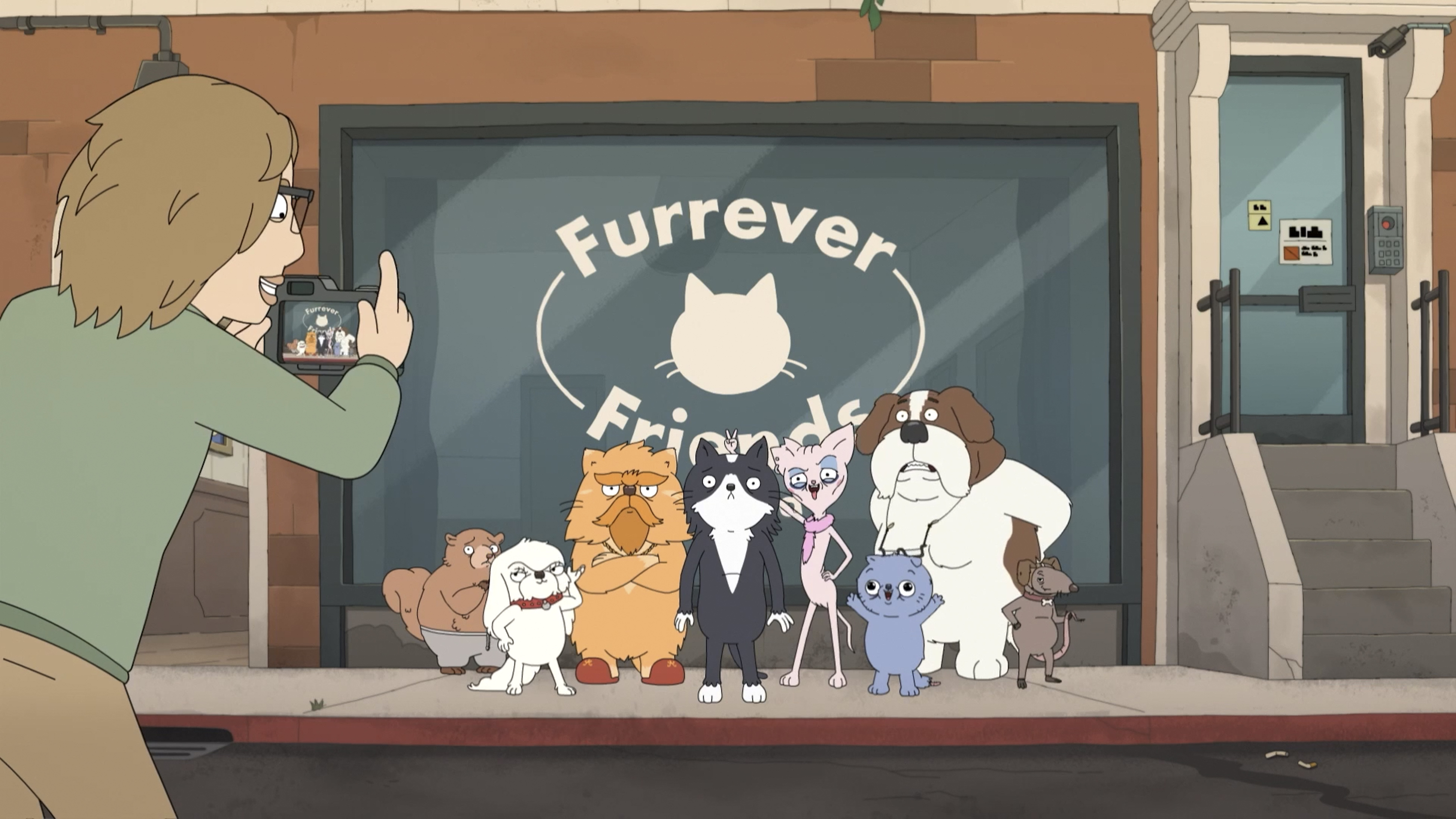
On June 20, 2026, actress and executive producer Aubrey Plaza announced that her highly anticipated animated series Kevin had been officially canceled by its original streaming network before completing its intended run. The announcement confirmed weeks of industry speculation regarding the project’s fate. Plaza, operating through her production banner Evil Hag Productions, immediately pivoted the narrative from defeat to defiance. She stated publicly that she hopes the show will find a new owner someday. Her team is currently shopping the intellectual property to alternative networks and streaming platforms.
The cancellation of Kevin is not just an isolated creative setback. It represents the harsh realities of the 2026 streaming ecosystem. What looks like a simple network pass is actually a symptom of a much larger financial contraction happening across Hollywood.
The Anatomy of a Friday Cancellation
The news arrived in the traditional Hollywood format. A quiet Friday afternoon press drop. Networks routinely utilize the end of the business week to bury unfavorable news regarding project terminations. Plaza chose to address the situation directly. Her statement cut through the standard corporate public relations language.
She did not express gratitude for the journey. She expressed a desire for a new buyer. This approach aligns with Plaza’s established public persona. It also signals a shift in how creators handle network rejections in 2026. Silence is no longer the default strategy.
Evil Hag Productions, founded by Plaza, has built a reputation for fiercely protecting its creative investments. The company successfully navigated the independent film market with Emily the Criminal in 2022 and expanded its footprint with My Old Ass in 2024. Kevin was intended to be the banner’s flagship entry into adult animation. The project had been in various stages of development for over three years. It featured Plaza’s signature deadpan comedic sensibilities mapped onto a surreal, animated landscape.
Now, the project sits in legal limbo. The hard drives hold completed animatics, voice recordings, and finalized scripts. The network holds the initial broadcasting rights. Untangling that web requires capital, legal maneuvering, and a willing buyer.
The 2026 Streaming Contraction
To understand why Kevin was canceled, one must look at the macroeconomics of the entertainment industry in June 2026. The era of Peak TV is officially over. The industry has entered what financial analysts call Trough TV.
Between 2019 and 2023, streaming platforms operated on a subscriber-growth model. Networks greenlit niche, creator-driven projects to build massive, diverse libraries. Wall Street rewarded subscriber acquisition above all else. That economic model fractured in late 2023 and completely shattered by 2025. Today, Wall Street demands immediate profitability. The focus has shifted from subscriber acquisition to average revenue per user and strict cost containment.
Animation is particularly vulnerable to this shift. Animated projects require long lead times. They require significant upfront capital for storyboarding, voice talent, and rendering. When a network needs to balance its Q2 2026 earnings report, unreleased or underperforming animated projects become prime targets for the chopping block.
The Write-Off Contagion
The precedent was set in 2022 when Warner Bros. Discovery shelved the completed Batgirl film for a tax write-off. At the time, the industry viewed the move as a shocking anomaly. By 2026, it is standard operating procedure.
Networks across the board, from Amazon MGM Studios to Netflix to Disney+, routinely cancel projects that do not meet strict algorithmic thresholds. If internal metrics project that a show will not drive a specific number of ad-tier impressions or retain subscribers in its first 72 hours, the project is terminated. The sunk costs are written off as tax losses. The creators are left holding the pieces.
Kevin appears to be a casualty of this exact mathematical equation. It was a quirky, likely mid-budget animated series. It did not fit the four-quadrant, mass-appeal algorithm required by major streamers in 2026. Therefore, it became a line item on a ledger.
The Reality of Shopping Canceled IP
Plaza’s hope that Kevin will find a new owner is not without precedent. The industry has seen several high-profile resurrections in recent years. But the process is fraught with financial hurdles.
When a production company shops a canceled show, they are not just pitching a creative vision. They are pitching a financial restructuring. The new buyer must typically reimburse the original network for the development costs already incurred. If the original network spent $5 million developing the animation assets, the new network must pay that $5 million just to open the door.
This creates a massive barrier to entry. Independent platforms often lack the capital to buy out major streamers. Major streamers rarely want to buy hand-me-downs from their direct competitors.
The Tuca & Bertie Precedent
The most cited roadmap for Kevin is the animated series Tuca & Bertie. Netflix canceled the critically acclaimed adult animation project in 2019 after a single season. The creator, Lisa Hanawalt, and the production team successfully shopped the intellectual property to Adult Swim, which produced two additional seasons before canceling it again in 2022.
Similarly, the animated feature Nimona was scrapped by Disney following the acquisition of Blue Sky Studios. Annapurna Pictures rescued the project, partnered with Netflix, and secured an Academy Award nomination in 2024.
Evil Hag Productions will likely target networks with established adult animation blocks. Adult Swim remains the dominant player in this space under Warner Bros. Discovery. Hulu, despite Disney’s recent budget tightening, maintains a strong pipeline of adult animation. Independent distributors like A24 or Neon, both of which have been aggressively expanding their television footprints in 2025 and 2026, could also view Kevin as a prestige acquisition.
Plaza’s Leverage in the Current Market
Despite the broader industry headwinds, Plaza possesses significant individual leverage. Her career trajectory over the past five years has elevated her from a cult-comedy favorite to a mainstream, bankable star.
Her Emmy-nominated performance in the second season of HBO’s The White Lotus proved her dramatic capabilities. Her involvement in Francis Ford Coppola’s Megalopolis and Marvel’s Agatha All Along demonstrated her viability in major franchise and auteur-driven projects. Networks want to be in business with Aubrey Plaza.
The question is whether they want to be in business with Kevin. Evil Hag Productions will likely use Plaza’s on-screen availability as leverage. A network might agree to pick up the animated series if it also secures a first-look deal for Plaza’s future live-action projects.
The Algorithmic Divide
The cancellation of Kevin highlights the growing divide between creators and distributors. Creators want to build unique, challenging worlds. Distributors want predictable, measurable returns.
Animation historically served as a safe haven for surreal, experimental storytelling. Shows like BoJack Horseman or Rick and Morty required time to find their audiences. In the 2026 streaming environment, that time no longer exists. If a show does not trend on social media and hit its completion-rate targets by its first Sunday on the platform, it is dead on arrival.
Plaza’s refusal to let Kevin die quietly is a rejection of this new normal. It is a statement that intellectual property has value beyond its immediate algorithmic utility. It is a demand for creative sustainability.
The coming months will determine if the industry agrees with her. Evil Hag Productions will compile the pitch decks. The agents at CAA will make the calls. The executives in Culver City and Burbank will run the numbers.
Networks cut costs. Algorithms dictate the slate. The servers wipe the files. But creators keep the receipts. Plaza waits.