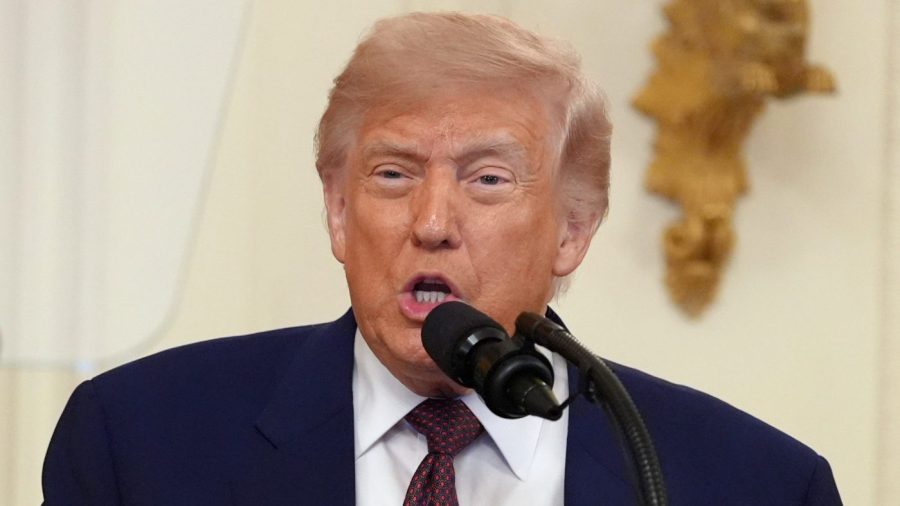

Senator Cory Booker (D-NJ) publicly condemned Donald Trump’s proposed diplomatic framework with Iran during a June 2026 Senate Foreign Relations Committee hearing, stating that “Iran gets all of the benefits” while the United States surrenders strategic leverage. Booker argued that the arrangement provides Tehran with immediate sanctions relief and access to billions in frozen international assets without imposing strict, verifiable limits on its uranium enrichment program or dismantling its regional proxy networks. The debate marks a critical inflection point in Washington’s ongoing struggle to contain the Islamic Republic’s nuclear ambitions.
The Senate Floor Confrontation
The Dirksen Senate Office Building served as the battleground on June 18, 2026. Lawmakers gathered to review the latest iteration of executive-branch diplomacy regarding the Persian Gulf. The room was tense. The stakes were absolute. Senator Cory Booker took the microphone and delivered a surgical dismantling of the proposed framework. He did not mince words. He targeted the financial mechanics of the deal. He targeted the verification protocols. He targeted the fundamental premise of trusting Tehran.
“We are looking at a document where Iran gets all of the benefits up front,” Booker stated, leaning into the microphone. “The cash flows immediately. The sanctions lift immediately. But the inspections? The dismantling of the centrifuge cascades? Those are pushed down the road. We are trading hard currency for vague promises.”
The critique struck at the heart of the ongoing negotiations. For months, back-channel discussions brokered through Oman and Qatar had hinted at a new understanding between Washington and Tehran. The goal was to de-escalate tensions in the Strait of Hormuz and cap Iran’s nuclear program. But the details leaked to the Senate Foreign Relations Committee painted a picture of asymmetric concessions. Booker’s vocal opposition signaled that the executive branch would face fierce, bipartisan resistance on Capitol Hill.
Anatomy of the Disputed Framework
To understand the outrage, one must look at the ledger. The proposed Trump diplomatic framework rests on a controversial exchange of capital for compliance. On the American side, the administration would issue waivers allowing foreign banks to unfreeze Iranian oil revenues. On the Iranian side, Tehran would agree to cap its uranium enrichment at 60 percent purity and halt attacks by its proxy forces against American personnel in Iraq and Syria.
The Asset Unfreezing Mechanism
The numbers are massive. Financial analysts estimate that Iran has approximately $15 billion locked in restricted accounts across South Korea, Iraq, and Japan. Under the 2026 framework, these funds would be transferred to central banks in Doha, Qatar, and Muscat, Oman. The stated rule is that Tehran can only draw on these funds for humanitarian purchases like food, medicine, and agricultural goods. Booker and his allies reject this premise entirely.
Money is fungible. When a government receives billions for domestic necessities, it frees up billions in its sovereign budget for military expenditures. The United States Treasury Department has historically struggled to track every dollar moving through the Middle Eastern banking sector. The moment the funds hit Qatari accounts, American leverage vanishes. Tehran knows this. Washington knows this.
Sanctions Relief vs. Nuclear Oversight
The second pillar of the framework involves the International Atomic Energy Agency (IAEA). The United Nations nuclear watchdog, led by Director General Rafael Grossi, has faced unprecedented obstruction from Iranian officials over the past three years. Cameras at nuclear sites have been blinded. Inspectors have been denied visas. The new framework asks Iran to restore some monitoring equipment, but it stops short of the “anytime, anywhere” inspection mandates that defined earlier diplomatic efforts.
Booker highlighted this discrepancy. He pointed out that allowing Iran to maintain enrichment at 60 percent, a short technical step away from the 90 percent purity required for a nuclear weapon, while restricting IAEA access is a recipe for disaster. The centrifuges keep spinning. The breakout time shrinks. The international community remains blind to the most critical aspects of the program.
The Long Shadow of the 2015 JCPOA
The current crisis cannot be understood without examining the wreckage of the past decade. The geopolitical architecture of the Middle East was fundamentally altered in 2015 when the Obama administration, alongside the P5+1 nations, signed the Joint Comprehensive Plan of Action (JCPOA). The original deal imposed severe limits on Iran’s nuclear infrastructure in exchange for sweeping sanctions relief. It was highly controversial. It was deeply polarizing.
In May 2018, Donald Trump unilaterally withdrew the United States from the JCPOA. He instituted a “Maximum Pressure” campaign, reimposing crippling economic sanctions designed to force Tehran back to the negotiating table for a broader, more restrictive treaty. The Iranian economy cratered. The rial lost immense value. But the political outcome did not match the economic devastation. Supreme Leader Ayatollah Ali Khamenei refused to capitulate.
Instead of folding, Iran accelerated. They breached the JCPOA limits. They installed advanced IR-6 centrifuges at the deeply buried Fordow facility. They expanded operations at Natanz. By the time indirect talks resumed in Vienna during the Biden administration, Iran was a threshold nuclear state. The 2026 framework is an attempt to manage this reality, but critics like Booker argue it rewards Tehran’s nuclear extortion.
Tehran’s Economic Lifeline
The economic reality inside Iran dictates their negotiating strategy. The Islamic Republic relies heavily on illicit oil exports to sustain its economy. A vast “ghost fleet” of tankers routinely bypasses American sanctions, delivering millions of barrels of crude oil to independent refineries in China. This dark economy provides a baseline of survival, but it is not enough to fund the state’s ambitious regional goals.
The unfreezing of $15 billion represents a massive injection of capital. It equates to roughly a quarter of Iran’s annual government budget. For a nation grappling with hyperinflation, regular labor strikes, and widespread domestic unrest, this financial relief is a lifeline. Booker’s argument is that providing this lifeline removes the only pressure point the United States has left. If the regime is stabilized financially, they have no incentive to make permanent concessions on their nuclear program.
Regional Proxies and the Security Vacuum
The debate in the Senate extends far beyond uranium isotopes. Iran’s grand strategy relies on an “Axis of Resistance”, a network of heavily armed proxy militias funded, trained, and directed by the Islamic Revolutionary Guard Corps (IRGC) and its elite Quds Force. These groups operate across the sovereign borders of the Middle East, projecting Iranian power and destabilizing American allies.
In Lebanon, Hezbollah possesses an arsenal of precision-guided munitions capable of striking anywhere in Israel. In Yemen, the Houthi movement has repeatedly disrupted global maritime trade in the Red Sea and the Bab el-Mandeb Strait, firing anti-ship ballistic missiles at commercial vessels. In Iraq and Syria, Shia militias routinely launch drone strikes against American military installations.
Booker and his colleagues on the Foreign Relations Committee argue that any deal providing financial relief to Tehran directly subsidizes these proxy groups. The IRGC controls vast sectors of the Iranian economy. Financial firewalls designed to separate humanitarian aid from military funding are notoriously porous in a command economy controlled by the military elite. Every dollar unfrozen in Qatar is a dollar that can theoretically buy drones for the Houthis or rockets for Hezbollah.
The Bipartisan Ripple Effect
Booker is not a lone voice in the wilderness. His statements reflect a growing bipartisan consensus on Capitol Hill that executive-branch diplomacy regarding Iran requires strict legislative oversight. The scars of the 2015 JCPOA debate remain fresh in the Senate. Lawmakers from both parties are acutely aware of the political risks associated with perceived appeasement of the Islamic Republic.
Republican senators, including Lindsey Graham and Ted Cruz, have long advocated for a hardline approach, demanding the complete dismantling of Iran’s nuclear infrastructure. They view the 2026 framework as a capitulation. The fact that a prominent Democrat like Cory Booker is echoing these concerns regarding the asymmetry of the deal signals significant trouble for the administration. It indicates that the framework lacks the political durability required to survive a change in congressional leadership.
The Iran Nuclear Agreement Review Act (INARA) of 2015 theoretically gives Congress the right to review and potentially block sanctions relief. However, the executive branch has historically utilized national security waivers to bypass direct congressional approval for specific financial unfreezing mechanisms. Booker’s public condemnation is a warning shot. It is a demand that the Senate be given a vote on the final terms of any arrangement.
The Geopolitics of Enrichment
To grasp the gravity of Booker’s warning, one must understand the physics of uranium enrichment. Natural uranium contains about 0.7 percent of the fissile U-235 isotope. Power reactors require uranium enriched to about 3.5 to 5 percent. Medical research reactors use 20 percent. Weapons-grade uranium requires 90 percent purity.
The jump from 20 percent to 60 percent is technically demanding. The jump from 60 percent to 90 percent is relatively simple. It requires far less time and fewer centrifuge cascades. By allowing Iran to maintain a stockpile of 60 percent enriched uranium, the proposed framework institutionalizes Iran’s status as a threshold nuclear state. They remain parked right on the edge of weaponization.
Booker’s insistence that “Iran gets all of the benefits” is rooted in this timeline. The United States gives up its economic leverage permanently. The money leaves the restricted accounts. The sanctions architecture is dismantled. But Iran’s nuclear capability remains intact, merely paused. If Tehran decides to dash for a bomb in the future, the United States will have already spent its most potent non-military deterrent.
The Enforcement Problem
Even if the framework is signed, enforcement remains a critical vulnerability. The global financial system, heavily reliant on the SWIFT messaging network, is designed to track legitimate commerce. But Iran has spent decades building alternative financial networks. They utilize cryptocurrency, hawala money transfer systems, and front companies in the United Arab Emirates and Turkey to move capital.
If the United States unfreezes billions, tracking that money becomes an intelligence nightmare. The Treasury Department’s Office of Foreign Assets Control (OFAC) is highly capable, but it is not omniscient. Booker’s skepticism is shared by intelligence professionals who understand the limits of financial surveillance. Once the capital is injected into the Iranian system, it becomes untraceable. The leverage is gone.
The Terminal Drop
The hearing room emptied. The microphones were cut. The memos circulated through the halls of the Dirksen building. The policy experts debated the physics of uranium and the mechanics of international banking. The executive branch defended its diplomacy. The senators drafted their opposition. The dollars waited in foreign vaults. Tehran watched.