
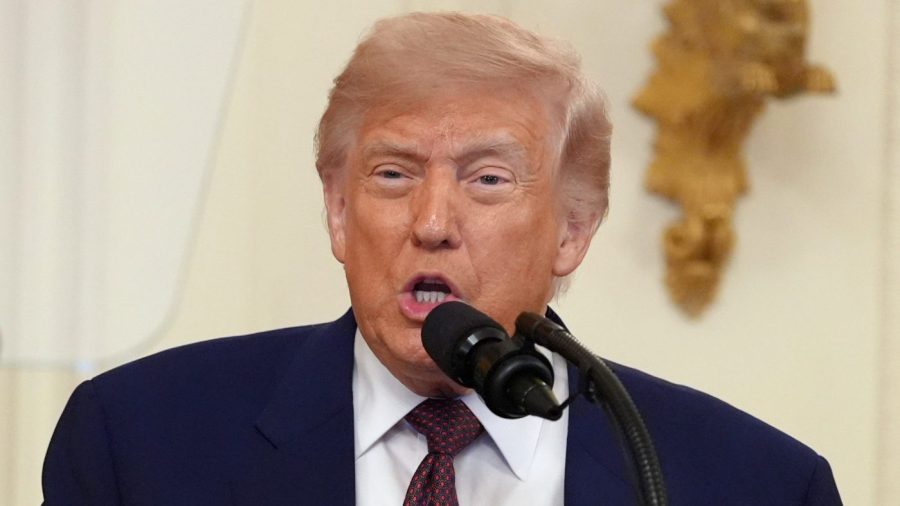
On June 21, 2026, former President Donald Trump used his annual Father’s Day message to declare his administration built the “BEST ECONOMY EVER.” The statement did not appear in a policy white paper. It appeared on Truth Social. The greeting pivoted a traditional cultural holiday into a sharp political contrast against current inflation and interest rates. The Hill quickly amplified the post. The media cycle engaged. A fifty-word social media update became the defining economic argument of the weekend.
The strategy is tested. Trump frequently reengineers cultural holidays into political battlegrounds. Thanksgiving brings grievances. Christmas brings warnings. Father’s Day brought an economic thesis.
But the story does not begin in 2026. The foundation of this specific claim rests entirely on the fourth quarter of 2019. What looks like a simple holiday boast is actually a deeply entrenched political anchor. To understand the message, observers must look at the data points the Trump campaign uses to define success.
The Architecture of a Holiday Pivot
Political figures traditionally observe Father’s Day with sterile photographs. They post images of their children. They offer generic platitudes. The messaging is usually handled by junior staff.
Donald Trump operates differently. His holiday messages are highly personalized. They are capitalized. They are confrontational. They are designed to bypass traditional media filters and speak directly to a specific base of voters.
The June 21 post followed this exact blueprint. It acknowledged the fathers of America. Then it immediately pivoted to a defensive and aggressive posture regarding his legacy. The “BEST ECONOMY EVER” phrase is not new. It is a recurring motif in the Trump lexicon.
The delivery mechanism matters. Truth Social serves as the primary megaphone. From there, political aggregation sites capture the text. Outlets like The Hill publish articles contextualizing the post. Cable news networks debate the merits of the claim. Within hours, a localized social media post reaches tens of millions of voters.
This is the modern political ecosystem. The message is the medium. The outrage or agreement it generates is the fuel.
Defining the “Best Economy Ever”
The claim requires context. When Trump supporters point to the “best economy,” they are pointing to a very specific window of time. They are pointing to the months immediately preceding the COVID-19 pandemic.
The Bureau of Labor Statistics released the numbers. December 2019 told a specific story. The national unemployment rate sat at 3.5 percent. It was a half-century low.
The demographic breakdowns were historic. Hispanic unemployment reached a record low of 3.9 percent. African American unemployment hit a record low of 5.9 percent. These are the specific data points the Trump campaign anchors its legacy to.
Wages for the bottom quartile of earners rose. The wealth gap temporarily narrowed. Consumer confidence peaked. The Dow Jones Industrial Average hovered near 29,000. Inflation sat comfortably at 1.8 percent.
Gasoline was cheap. Mortgages were affordable. The Federal Reserve, operating under Chairman Jerome Powell, maintained an accommodative stance.
This is the 2019 benchmark. This is the era the Father’s Day post attempts to resurrect in the minds of voters.
The 2017 Tax Cuts and Jobs Act
The legislative engine behind this era was the Tax Cuts and Jobs Act of 2017. It remains the signature legislative achievement of the Trump presidency.
The law fundamentally altered the American tax code. The corporate tax rate dropped from 35 percent to 21 percent. This was a massive reduction. It aimed to make American corporations globally competitive.
The legislation also altered individual tax brackets. It doubled the standard deduction. It expanded the child tax credit. It repealed the individual mandate of the Affordable Care Act.
Proponents of the law credit it with spurring capital investment. They point to the repatriation of foreign profits. They argue the tax cuts fueled the low unemployment rates of 2018 and 2019.
Critics view the law differently. They point to the national debt. The Congressional Budget Office estimated the tax cuts added nearly $2 trillion to the deficit over a decade. They argue the benefits disproportionately favored the wealthy and large corporations through stock buybacks.
The debate is unresolved. But in the context of a Truth Social post, nuance is discarded. The tax cuts are simply viewed as the catalyst for the “best economy.”
The Deregulation Push
Taxes were only half the equation. The Trump administration also executed a sweeping deregulation agenda.
The Environmental Protection Agency rolled back emission standards. The Department of the Interior opened federal lands to drilling. The energy sector expanded rapidly.
By 2019, the United States was producing over 12 million barrels of crude oil per day. The nation became a net exporter of energy. This suppressed domestic fuel prices. It lowered the cost of transportation for goods.
The financial sector also saw deregulation. The administration loosened restrictions imposed by the Dodd-Frank Act following the 2008 financial crisis. Regional banks gained more operational freedom.
This combination of lower taxes and lighter regulations created a highly favorable environment for business expansion. It is the core of the economic argument Trump presents to voters.
The 2020 Asterisk
The “best economy” narrative requires a significant caveat. It requires voters to treat the year 2020 as an anomaly.
In March 2020, the global economy halted. The COVID-19 pandemic shattered global supply chains. State governments mandated lockdowns. Businesses closed.
The economic devastation was unprecedented. The unemployment rate skyrocketed to 14.7 percent in April 2020. Over 20 million jobs vanished in a matter of weeks. The stock market crashed.
The federal government responded with massive stimulus. The CARES Act injected $2.2 trillion into the economy. The Paycheck Protection Program kept businesses afloat. Direct stimulus checks were mailed to citizens.
By the time Donald Trump left office in January 2021, the economy was in recovery, but it remained deeply bruised. The national debt had surged by $7.8 trillion over four years.
The Trump campaign frames the 2020 crash as an artificial, non-economic event. They argue the underlying architecture of the economy remained strong. They ask voters to judge the administration on the 2019 numbers, not the 2020 collapse.
This framing is essential to the Father’s Day message. It is a request for voters to remember the peak, not the valley.
The 2026 Contrast
A political message only resonates if the current environment allows it. The Father’s Day post lands heavily in 2026 because of the ongoing economic reality.
The United States economy in 2026 is complex. The post-pandemic inflation surge of 2022 and 2023 left a permanent mark on price levels. While the rate of inflation has cooled, prices have not returned to 2019 levels.
A gallon of milk costs significantly more. Ground beef is more expensive. Auto insurance premiums have spiked. The cumulative effect of inflation weighs heavily on consumer sentiment.
Housing presents the largest friction point. The Federal Reserve raised interest rates aggressively to combat inflation. In 2026, mortgage rates remain elevated. The dream of homeownership is out of reach for many young Americans. The 3 percent mortgages of the late 2010s are a distant memory.
This is the contrast Trump is exploiting. He is weaponizing economic nostalgia.
When voters read “BEST ECONOMY EVER,” they are not just thinking about GDP growth. They are thinking about their grocery bills. They are thinking about their rent. They are remembering a time when their paychecks seemed to stretch further.
The Cultural Resonance of Economic Nostalgia
Economics is driven by data. Politics is driven by emotion. The Truth Social post bridges the two.
For many working-class voters, the 2019 economy felt stable. Blue-collar wages were rising. Manufacturing jobs were a focal point of national policy. Trade wars with China, while disruptive to some sectors, signaled a protectionist stance that resonated in the Rust Belt.
The Father’s Day message taps directly into this sentiment. It is a cultural defense of a specific era. It validates the frustration of voters who feel they have lost purchasing power over the last six years.
The message also serves as a unifying rallying cry. In a fractured media landscape, a simple, declarative statement provides a focal point for supporters. It gives them a rhetorical weapon to use in their own political arguments.
The Hill recognized this. That is why they reported on a holiday greeting. The article was not about Father’s Day. It was about the ongoing battle to define the economic narrative of the 2020s.
The debate will not be settled by economists. It will be settled by voters. They will weigh the 2019 data against the 2020 crash. They will weigh the 2017 tax cuts against the current cost of living.
Donald Trump framed the argument. The media distributed it. The voters consumed it.
The holiday passed. The data remained. The ballot waits.
2026.