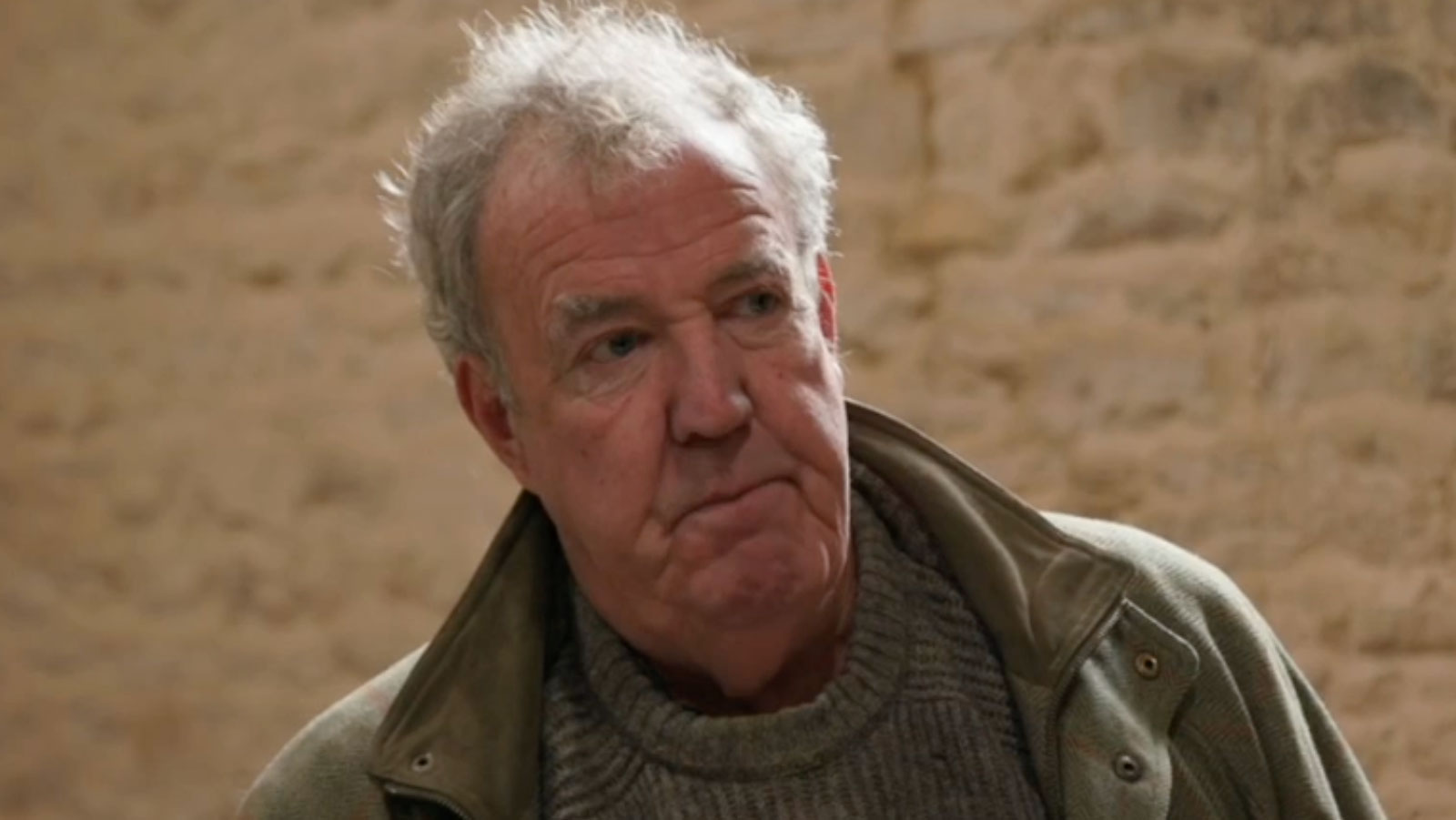
Jeremy Clarkson, the 66-year-old British broadcaster and agricultural steward of Diddly Squat Farm, confirmed in June 2026 that his cancer is officially in remission. The announcement follows a highly publicized health battle that became a central, unscripted narrative arc on Amazon Prime Video’s Clarkson’s Farm. For a man who built a global media empire on roaring V8 engines, tire smoke, and a famously indestructible persona, the quiet reality of a medical diagnosis marked a profound shift. The remission brings a close to a grueling chapter, allowing Clarkson to return to the fields of Oxfordshire with a renewed lease on life.
The news broke via Deadline on June 21, 2026, sending a wave of relief through a fanbase that has followed Clarkson for more than three decades. Viewers had watched the initial bombshell drop during the latest season of his hit agricultural docuseries. The cameras captured the raw, unfiltered reality of a man confronting his own mortality while standing in the mud of the Cotswolds. There was no script. There was no stunt. There was only a diagnosis.
In many ways, the television landscape was entirely unprepared for a vulnerable Jeremy Clarkson. But the story of his recovery is not just about a celebrity beating an illness. It is a story about the ecosystem of a working farm, the tight-knit rural community that kept his business afloat, and the sudden collision of reality television with actual, unavoidable reality.
A Diagnosis at Diddly Squat
The revelation of Clarkson’s cancer on Clarkson’s Farm shifted the entire tonal foundation of the series. Since its debut in 2021, the show had operated on a reliable formula. Clarkson, the bumbling but enthusiastic gentleman farmer, would attempt an ambitious agricultural project. The project would inevitably run afoul of the weather, the livestock, or the West Oxfordshire District Council. Humor derived from his failures.
Cancer removed the punchline. When the diagnosis was revealed to the audience, the stakes of Diddly Squat Farm transformed. The 1,000-acre plot of land near Chipping Norton was no longer just a backdrop for a television show. It was a demanding, relentless business that required physical labor and constant oversight, two things a patient undergoing oncology treatments struggles to provide.
The production team at Amazon Prime Video made a critical decision. They did not stop filming. They did not sanitize the experience. The cameras documented the fatigue, the uncertainty, and the medical appointments. This editorial choice turned a lighthearted farming show into a profound documentary about human frailty.
The Chipping Norton Support System
Agriculture does not pause for chemotherapy. Crops must be drilled. Livestock must be fed. The Hawkstone lager supply chain must be maintained. When Clarkson was forced to step back from the daily physical demands of the farm, his supporting cast was forced to step up.
Kaleb Cooper, the young farm manager who first gained fame for yelling at Clarkson about tractor driving, took on unprecedented operational control. Cooper transitioned from a comedic foil to the functional backbone of the estate. The 2026 season highlighted Cooper’s maturation as he managed the complex logistics of a massive farm while his employer and friend battled illness.
Lisa Hogan, Clarkson’s partner, anchored the commercial side of the operation. She managed the notoriously busy Diddly Squat Farm Shop, dealing with the endless queues of tourists and the strict local zoning regulations. Charlie Ireland, the cheerful but pragmatic land agent, navigated the financial turbulence of a farming year interrupted by a medical crisis.
The community support mirrored a previous storyline on the show. Fans of Clarkson’s Farm were already familiar with the realities of cancer in rural England. Gerald Cooper, the farm’s beloved dry stone waller, had previously battled and survived prostate cancer, a journey documented in an earlier season. Gerald’s successful remission served as a quiet, powerful precedent for Clarkson’s own battle.
A Career Built on Invincibility
To understand the public shock surrounding Clarkson’s diagnosis, one must understand the mythology of his career. For thirty years, Jeremy Clarkson was the avatar of unapologetic, indestructible masculinity. He smoked heavily. He drank enthusiastically. He drove cars at terrifying speeds across unforgiving terrains.
Beginning with the reboot of BBC’s Top Gear in 2002, alongside Richard Hammond and James May, Clarkson cultivated an aura of invulnerability. He survived crashes in the Arctic Circle. He navigated treacherous roads in Bolivia. He weathered endless public controversies and corporate firings, always emerging unscathed and wealthier. When the trio moved to Amazon Prime Video in 2016 to launch The Grand Tour in a deal reportedly worth hundreds of millions of dollars, Clarkson seemed larger than life.
But biological reality is the ultimate equalizer. A V8 engine can be repaired with a wrench. A human body requires a different kind of mechanics. The contrast between the man who once mocked safety regulations and the man quietly receiving medical treatment was stark. It forced a global audience of predominantly middle-aged men to confront their own mortality.
The Reality of Rural Healthcare
Clarkson’s illness inadvertently highlighted a pressing issue in modern Britain: the state of rural healthcare and the physical toll of agriculture. Farming is consistently ranked as one of the most dangerous and physically demanding professions in the United Kingdom. Farmers often ignore symptoms, delay doctor visits, and work through pain because the harvest cannot wait.
By broadcasting his cancer journey, Clarkson provided an accidental public service announcement. Medical professionals and cancer charities in the UK noted a surge in awareness following the bombshell episodes of Clarkson’s Farm. Men who traditionally avoided the doctor were suddenly booking screenings. The “Clarkson Effect,” previously associated with spikes in sales of certain cars or agricultural equipment, was now driving public health engagement.
The show captured the specific logistical hurdles of being ill in the countryside. The long drives to specialized hospitals. The isolation of rural recovery. The mental toll of watching a farm operate through a window when you are too weak to walk the fields.
The Next Chapter for Diddly Squat
With the June 2026 announcement of his remission, the narrative shifts from survival back to the future. Clarkson’s television career is already in a state of transition. The Grand Tour officially wrapped its final special, closing the book on his globe-trotting automotive adventures. His professional focus is now entirely tethered to the soil of Oxfordshire.
Remission does not mean an immediate return to the status quo. The physical recovery from cancer treatment is a long, slow climb. Viewers can expect future seasons of Clarkson’s Farm to reflect this new reality. The dynamic between Clarkson and Kaleb Cooper has permanently evolved. The farm management structure has shifted.
Financially, the Diddly Squat empire remains robust. The farm shop continues to draw immense crowds. Hawkstone lager and cider are widely distributed. Amazon Prime Video retains one of its most valuable, and now most emotionally resonant, properties. But the man at the center of the empire has changed.
The Terminal Drop
The cameras captured the fear. The doctors delivered the treatment. The public waited for the news. The fields of Oxfordshire remained indifferent to it all, demanding to be sown, demanding to be harvested. The tractors kept running. The seasons turned. And returning to the mud, older, quieter, but still standing, is the farmer.
Clarkson.