
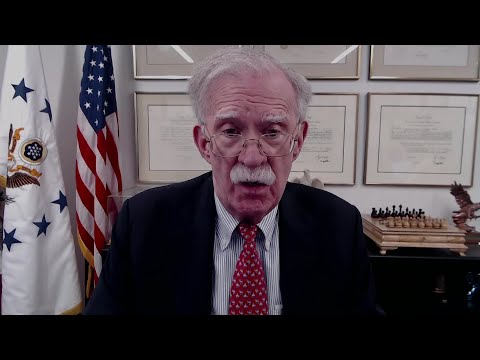
Former National Security Advisor John Bolton has unequivocally labeled the Iran nuclear agreement a “real defeat” for the United States, arguing that the diplomatic framework fundamentally compromises American national security. In a recent assessment of US foreign policy, Bolton asserted that the deal fails to permanently dismantle Tehran’s nuclear capabilities while simultaneously providing economic relief that emboldens the regime’s regional ambitions. This stark critique from a prominent foreign policy hawk underscores the enduring, deep-seated divisions in Washington regarding the most effective strategy for managing the complex geopolitical dynamics of the Middle East.
The Architecture of a Defeat
The core of Bolton’s argument rests on the premise that the agreement, formally known as the Joint Comprehensive Plan of Action (JCPOA), is structurally flawed. He contends that the framework relies on temporary restrictions rather than permanent dismantlement. The sunset clauses, which gradually lift restrictions on Iran’s nuclear activities over time, are a primary point of contention.
Bolton views these clauses not as a pathway to stability, but as a countdown to a nuclear-armed Iran. The economic sanctions relief provided in exchange for these temporary concessions, he argues, serves only to finance the regime’s destabilizing activities across the region. The influx of capital, previously frozen in international accounts, provides Tehran with the resources to support proxy groups in Lebanon, Syria, and Yemen.
This perspective represents a fundamental rejection of the diplomatic approach championed by the architects of the deal. Where proponents see a necessary compromise to halt immediate nuclear proliferation, Bolton sees a dangerous appeasement that sacrifices long-term security for short-term political gains.
The Doctrine of Maximum Pressure
Bolton’s critique is inextricably linked to the “maximum pressure” campaign, a strategy he championed during his tenure in the Trump administration. This approach relies on crippling economic sanctions and diplomatic isolation to force Tehran to capitulate to sweeping demands, including the complete cessation of uranium enrichment and a halt to its ballistic missile program.
The return to a negotiated settlement, in Bolton’s view, abandons this leverage. He argues that re-entering an agreement similar to the JCPOA signals weakness and a lack of resolve. The maximum pressure doctrine operates on the belief that economic strangulation is the only effective mechanism for altering the behavior of the Iranian regime.
This strategy, however, has drawn significant criticism from those who argue it has failed to curb Iran’s nuclear advancements and has instead increased regional tensions. Critics point to the accelerated pace of uranium enrichment following the US withdrawal from the JCPOA in 2018 as evidence of the campaign’s limitations.
Regional Ramifications and the Balance of Power
The implications of the Iran deal extend far beyond the bilateral relationship between Washington and Tehran. The agreement profoundly impacts the delicate balance of power in the Middle East, a region already fraught with sectarian conflict and proxy wars. Bolton’s assessment reflects the anxieties of key US allies in the region, particularly Israel and Saudi Arabia.
For Israel, a nuclear-armed Iran is viewed as an existential threat. The Israeli government has consistently opposed the JCPOA, arguing that it fails to adequately address the regime’s nuclear ambitions or its support for militant groups like Hezbollah and Hamas. Bolton’s characterization of the deal as a “defeat” resonates strongly with this perspective.
Similarly, Saudi Arabia and other Gulf states view Iran as a primary regional adversary. The prospect of an emboldened and economically resurgent Iran, fueled by sanctions relief, is a source of profound concern in Riyadh and Abu Dhabi. The geopolitical calculus in the Middle East is heavily influenced by the perceived strength and commitment of the United States.
The Proxy War Theater
The financial resources unlocked by sanctions relief are a central component of Bolton’s critique. He argues that these funds will inevitably be channeled toward Iran’s network of proxy forces. The Islamic Revolutionary Guard Corps (IRGC), a powerful military and economic entity within Iran, plays a central role in supporting these groups.
- Hezbollah: The Lebanese militant group relies heavily on Iranian financial and military support.
- Houthi Rebels: Iran provides significant assistance to the Houthi forces in Yemen, fueling a protracted and devastating conflict.
- Shia Militias: Various militia groups in Iraq and Syria receive backing from Tehran, complicating efforts to stabilize these nations.
Bolton contends that any agreement that provides economic relief without addressing these regional activities is fundamentally flawed. He views the nuclear issue and Iran’s regional behavior as inextricably linked, arguing that a comprehensive strategy must address both.
The Domestic Political Divide
The debate over the Iran deal is not merely a matter of foreign policy; it is deeply entrenched in the domestic political landscape of the United States. The agreement has become a partisan flashpoint, reflecting fundamentally different worldviews on the role of American power and the efficacy of international diplomacy.
For many conservatives, the JCPOA is viewed as a capitulation, a symbol of a weak and indecisive foreign policy. Bolton’s characterization of the deal as a “real defeat” aligns perfectly with this narrative. The focus is on strength, leverage, and the assertion of American dominance.
Conversely, proponents of the deal, largely aligned with the Democratic party, argue that diplomacy, however imperfect, is preferable to the alternative of military conflict or an unconstrained Iranian nuclear program. They emphasize the importance of international coalitions and the necessity of negotiated compromises.
The Legacy of the JCPOA
The legacy of the JCPOA is a subject of intense historical and political debate. The agreement, negotiated under the Obama administration, was heralded as a diplomatic breakthrough. The subsequent withdrawal by the Trump administration, a move strongly supported by Bolton, fractured the international consensus and initiated a period of heightened tensions.
The ongoing efforts to revive or renegotiate the agreement are taking place in a significantly altered geopolitical environment. The trust between Washington and Tehran, never robust, has been severely degraded. The political capital required to reach a new consensus is immense.
Bolton’s uncompromising stance highlights the difficulty of achieving a durable bipartisan consensus on foreign policy in an era of deep polarization. The debate over Iran is a microcosm of a broader struggle over the direction of American global engagement.
The Future of American Leverage
The central question raised by Bolton’s critique is the future of American leverage in the Middle East. If diplomatic agreements are viewed as defeats, and maximum pressure campaigns yield limited results, what is the viable path forward? The challenge lies in balancing the desire for absolute security with the realities of a complex and multipolar world.
Bolton’s approach prioritizes hard power and unilateral action. He is skeptical of multilateral institutions and international agreements, viewing them as constraints on American freedom of maneuver. This perspective advocates for a robust military posture and a willingness to use force to protect national interests.
The alternative approach emphasizes the importance of alliances, diplomatic engagement, and the use of economic statecraft in coordination with international partners. This strategy acknowledges the limitations of unilateral action and the necessity of managing, rather than resolving, intractable conflicts.
The debate between these competing visions will continue to shape US foreign policy for the foreseeable future. The outcome of this debate will have profound implications for the stability of the Middle East and the security of the United States.
The lines are drawn. The arguments are entrenched. The consequences are global.
Washington.