
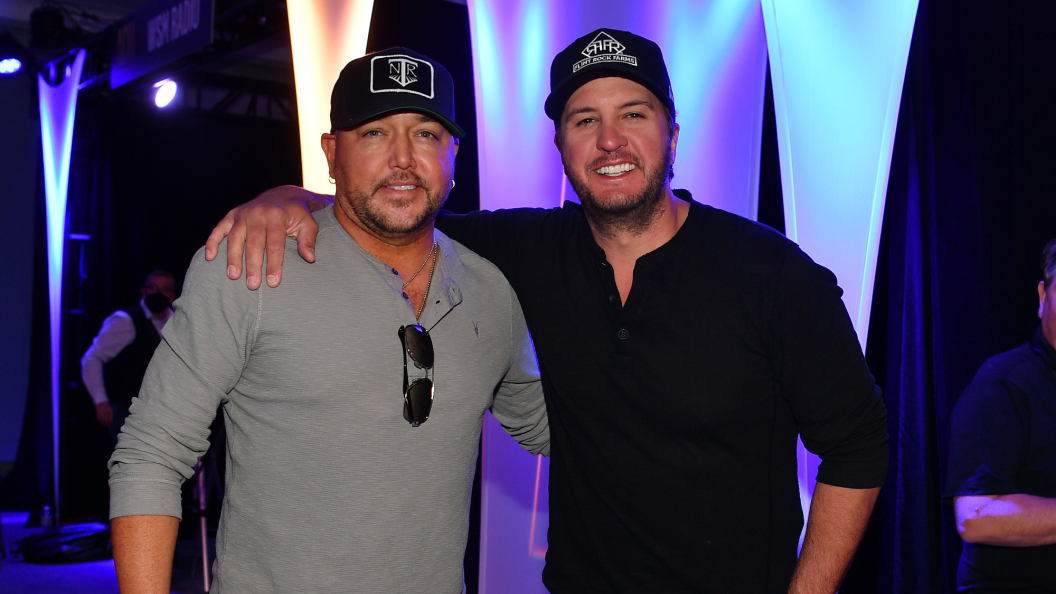
Jason Aldean and Luke Bryan are facing legal action following the sudden closure of E3 Chophouse, their high-end Nashville restaurant partnership with former Major League Baseball player Adam LaRoche. The lawsuits, stemming from the restaurant’s abrupt shutdown, center on allegations of unpaid debts, breach of contract, and financial mismanagement. The legal fallout highlights the stark financial realities behind celebrity-backed hospitality ventures in Music City.
The story of Nashville’s celebrity bars is usually one of endless expansion. Millions of tourists pour onto Lower Broadway every year. They drink under neon signs bearing the names of country music’s biggest stars. The money flows in a predictable, high-volume current.
But E3 Chophouse was different. It was not a honky-tonk. It was not on Broadway. It was a luxury dining experience built on a specific agricultural promise. And now, it is a legal battleground.
The Vision for a Music City Chophouse
The concept began in Fort Scott, Kansas. Adam LaRoche owned the E3 Ranch. He raised hormone-free, antibiotic-free Black Angus cattle. He wanted to bring that beef directly to consumers. He opened the first E3 Chophouse in Steamboat Springs, Colorado.
Then he looked to Nashville.
LaRoche partnered with his close friends, country superstars Jason Aldean and Luke Bryan. They envisioned a flagship location in the heart of Tennessee. In 2019, they opened the doors at 1628 21st Avenue South. The location was deliberate. They chose Hillsboro Village, a trendy neighborhood near Vanderbilt University, far removed from the bachelorette party chaos of Lower Broadway.
The building was a statement. It spanned 4,700 square feet across three stories. It featured a rooftop patio, private VIP dining rooms, and an aesthetic that blended rustic ranch elements with modern luxury. The menu was unapologetically high-end. Steaks commanded premium prices. The wine list was extensive.
For a brief moment, it worked. The star power drew initial crowds. The quality of the E3 Ranch beef earned positive reviews. But a restaurant is a machine. It requires constant momentum to survive.
The Geography of Nashville Hospitality
To understand the failure of E3 Chophouse, one must understand the geography of Nashville’s hospitality industry. Location dictates the business model.
Lower Broadway is a volume game. Venues like Jason Aldean’s Kitchen + Rooftop Bar and Luke’s 32 Bridge operate on massive foot traffic. They sell thousands of beers and well drinks every night. The margins on alcohol are immense. More importantly, those bars are operated by TC Restaurant Group. The celebrities license their names and likenesses, but hospitality professionals manage the day-to-day operations, the payroll, and the supply chain.
E3 Chophouse was an independent venture. It relied on destination dining. Customers had to seek it out. They had to make reservations. They had to commit to a high-ticket meal.
A steakhouse operates on razor-thin margins. The cost of goods sold is exceptionally high. Premium beef is expensive to raise, expensive to transport, and expensive to prepare. When food costs rise, a steakhouse cannot easily pivot to cheaper ingredients without destroying its brand identity.
The Economics of High-End Beef
The timing of the Nashville expansion proved disastrous. E3 Chophouse opened in late 2019. Months later, the global pandemic shattered the hospitality industry. Fine dining was hit the hardest.
Even as Nashville recovered, the economic landscape had permanently shifted. Inflation drove up the cost of everything. The supply chain from Fort Scott, Kansas to Nashville, Tennessee became more expensive to maintain. Labor costs in Davidson County surged as restaurants competed for a shrinking pool of experienced kitchen staff.
A honky-tonk can survive inflation by raising the price of a domestic beer by one dollar. A high-end chophouse cannot easily pass a thirty percent increase in beef costs onto the consumer. There is a ceiling to what diners will pay for a ribeye, even one backed by Luke Bryan and Jason Aldean.
The math stopped working. The revenue could no longer cover the fixed costs of a three-story commercial lease in Hillsboro Village, the premium payroll, and the expensive agricultural supply chain.
The Abrupt Shutdown
The end came quietly, then all at once. In May 2024, E3 Chophouse locked its doors. There was no grand farewell. There was no press release explaining the decision.
The restaurant’s social media accounts went dark. The reservation system was deactivated. Employees arrived to find the business closed. Vendors who delivered fresh produce and premium goods were left holding unpaid invoices.
In the restaurant industry, an abrupt shutdown is rarely a clean break. It is usually the first domino in a long chain of financial and legal consequences. When a business stops generating cash flow, the existing debts immediately become toxic.
The Lawsuits and Legal Mechanics
The silence did not last long. Lawsuits quickly followed the closure. Creditors, vendors, and business partners began seeking restitution.
The legal actions center on breach of contract and unpaid debts. When a commercial entity like an LLC fails, creditors look for assets to liquidate. They look for unpaid capital commitments. They look for any avenue to recover their losses.
This is where the celebrity involvement becomes complicated. Businesses like E3 Chophouse are structured as Limited Liability Companies (LLCs). The primary purpose of an LLC is to shield the personal assets of the owners from the debts of the business. If the restaurant fails, the LLC goes bankrupt, but the owners’ personal bank accounts remain untouched.
However, creditors will often attempt to “pierce the corporate veil.” They will look for instances where personal and business funds were commingled. They will look for personal guarantees signed by the owners to secure commercial leases or vendor credit lines. If a celebrity owner signed a personal guarantee to secure a prime piece of real estate, they can be held personally liable for the remaining lease payments.
The Financial Firewall
For Jason Aldean and Luke Bryan, the legal strategy is containment. They have massive personal portfolios. They have touring revenue, publishing catalogs, and highly successful licensing deals with TC Restaurant Group on Lower Broadway.
The goal of their legal representation will be to keep the E3 Chophouse fallout isolated. They will argue that the LLC is a distinct entity. They will likely push for settlements that quietly resolve the vendor disputes without exposing their broader financial empires to discovery or liability.
The public relations strategy is silence. Neither artist has issued a substantive public statement regarding the lawsuits. In the modern media landscape, acknowledging a business failure often draws more attention to it. The Natural Observer notes that silence is a standard tactic in celebrity litigation. You do not argue the case in the press. You argue it in Davidson County Chancery Court.
The Broader Celebrity Restaurant Curse
E3 Chophouse is not an anomaly. It is part of a long tradition of celebrity restaurant failures. The hospitality graveyard is full of vanity projects.
Toby Keith’s I Love This Bar & Grill chain faced massive closures and lawsuits over unpaid rent and taxes. Jimmy Buffett’s Margaritaville empire is the exception, not the rule, and it succeeded because it prioritized merchandise and licensing over culinary ambition.
A famous name can generate initial buzz. It can secure a favorable lease. It can attract early investors. But a famous name cannot cook a steak. A famous name cannot manage a kitchen schedule. A famous name cannot balance a weekly ledger.
When the initial hype fades, the restaurant must survive on its own merits as a business. If the margins are wrong, if the location is slightly off, if the supply chain is too expensive, the business will fail. Celebrity only delays the inevitable.
The Future of the E3 Space
The building at 1628 21st Avenue South sits empty. It is a prime piece of commercial real estate in one of Nashville’s most desirable neighborhoods. Eventually, the courts will untangle the lease.
The custom fixtures will be liquidated. The kitchen equipment will be sold at auction. A new tenant will sign a new lease. They will likely paint over the rustic ranch aesthetic. They will build a new concept.
The lawsuits will drag on for months, perhaps years. Lawyers will file motions. Mediators will propose settlements. The financial reality of the closure will be reduced to line items on legal documents.
Down on Lower Broadway, the neon lights still burn. The tourists still arrive. The music still plays. The branding machine still turns.
But in Hillsboro Village, the doors stay locked. The lawyers draft the filings. The ledger remains unbalanced. Silence.