
The Persistent Challenge of Channel Crossings
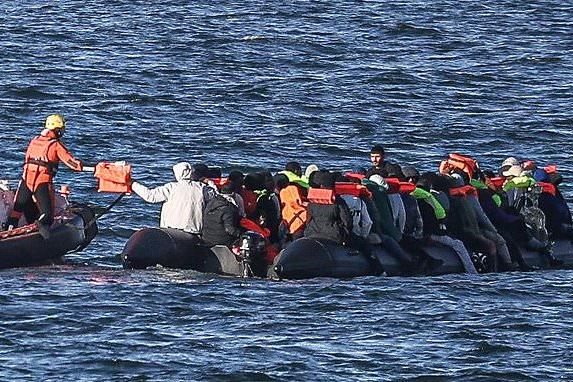
The English Channel continues to be a focal point for unauthorized migration attempts. Despite substantial financial commitments and diplomatic efforts, individuals persist in attempting the perilous journey. Recent imagery from French coastlines underscores this ongoing reality.
A photograph emerged on September 27, 2026, showing numerous discarded life jackets on a beach in Normandy, France. This visual evidence directly challenges the perceived effectiveness of recent Anglo-French agreements designed to prevent small boat crossings. The image suggests that efforts to deter these journeys may not be fully successful.
The United Kingdom and France finalized a new three-year funding deal in April 2026. Under this agreement, the UK pledged £662 million (€767 million) to France. This funding, allocated for the period between 2026/27 and 2028/29, aims to enhance French efforts to intercept and prevent unauthorized migrant departures from their coastlines. The deal was intended to significantly reduce the number of small boat crossings.
The Anglo-French Agreement and Its Implementation
The £662 million deal represents a substantial investment by the UK government. The funds are designated for increased surveillance, enhanced policing, and improved infrastructure along the French coast. The objective is to disrupt smuggling networks and prevent boats from launching.
Alongside the financial commitment, a “one-in, one-out” pilot scheme was introduced in August 2025. This mechanism allows the UK to return certain small boat arrivals to France. Concurrently, an equivalent number of migrants from France, who have not attempted an unauthorized journey, are admitted to the UK. This scheme aims to create a more orderly and controlled migration pathway while deterring illegal crossings.
As of early March 2026, the scheme had facilitated the return of 377 people to France. During the same period, 380 individuals arrived in the UK under its provisions. These figures indicate the initial operational phase of the “one-in, one-out” policy. The scheme’s long-term impact remains under evaluation.
Political Figures and Their Roles
The issue of Channel crossings has been a consistent political challenge for successive UK governments. Rishi Sunak, who served as Prime Minister from 2022 to July 2024, was instrumental in negotiating earlier phases of these agreements. His administration prioritized addressing unauthorized migration as a key policy objective. Sunak later became Leader of the Opposition from July to November 2024 and subsequently rejoined Goldman Sachs as a Senior Advisor in July 2025, also taking advisory roles withropic by October 2025.
On the French side, Gérald Darmanin has played a significant role. He served as Minister of the Interior from 2020 to September 2024, a period marked by intense negotiations over migration policy. Since December 2024, Darmanin has held the position of Minister of Justice in France. Both officials have been central to the bilateral discussions and agreements concerning Channel migration.
Public Reaction and Ongoing Scrutiny
The photograph of life jackets on the Normandy beach has ignited public debate. Critics argue that the image undermines confidence in the effectiveness of the substantial financial aid provided to France. Questions are being raised about the allocation of funds and the actual impact on preventing crossings. The incident has been widely reported, including by outlets such as the Daily Mail, which highlighted the perceived mockery of the deal.
Supporters of the deal maintain that such agreements require time to demonstrate full effectiveness. They point to the complexities of border control and the determination of smuggling networks. The UK government has consistently stated its commitment to working with French authorities to tackle the issue. Further details on the UK’s financial contributions and the broader context of the agreement can be found on official government sources, such as GOV.UK.
Related: Mark Levin Declares ‘Civilizational War’ Amidst Homeland Security Role
The incident serves as a reminder of the persistent challenges in managing international borders and migration flows. The political and social pressures surrounding this issue remain high in both the United Kingdom and France. The effectiveness of current strategies will continue to be a subject of intense scrutiny.
The Path Forward
The UK and French governments face continued pressure to demonstrate tangible results from their collaborative efforts. The sight of discarded life jackets reinforces the public perception of an unresolved crisis. Both nations are expected to review and potentially adapt their strategies in response to ongoing events and public sentiment.
The debate over migration policy encompasses humanitarian concerns, national security, and economic considerations. Solutions require sustained international cooperation and adaptable policies. The Channel remains a critical frontier in this complex global challenge.
Future Considerations for Border Security
- Enhanced technological surveillance along coastlines.
- Increased intelligence sharing to dismantle smuggling rings.
- Review of existing legal pathways for asylum seekers.
- Continued diplomatic engagement between the UK and France.
The political will to address this issue remains strong. The operational challenges are significant. The human element of migration persists.
The Channel.
Sources
Sponsored · Put your business in front of ByteSize Network's readers, with every click measured. See advertising packages · Advertise on ByteSize Network