Tag: Jcpoa

  • President Trump Sees ‘Good Chance’ for Iran Deal Amidst Pause

    President Trump Sees ‘Good Chance’ for Iran Deal Amidst Pause

    President Trump’s Outlook on Iran Negotiations

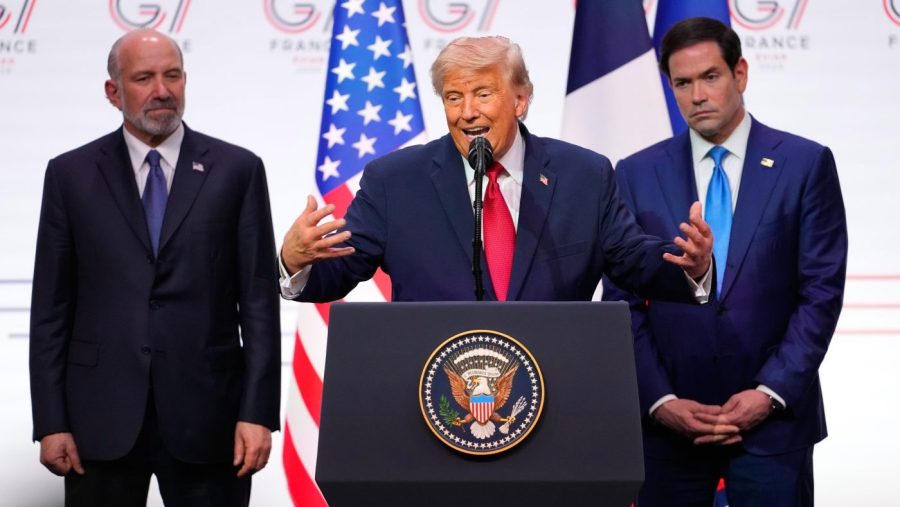
    President Trump stated on July 27, 2026, that there is a “good chance” of reaching a new deal with Iran. This assessment comes despite a reported pause in diplomatic discussions. The President’s remarks highlight the ongoing, complex efforts by the United States to address Iran’s nuclear program and its broader activities in the Middle East.

    His comments were delivered during a period of intense global scrutiny regarding international security. The potential for a new agreement carries significant implications for regional stability and global energy markets. Diplomatic channels remain active, even if the public face of negotiations has temporarily receded.

    Historical Context of US-Iran Relations

    The relationship between the United States and Iran has been marked by decades of tension and intermittent diplomatic engagement. The 1979 Iranian Revolution fundamentally altered the geopolitical landscape. This event led to the severance of diplomatic ties and a prolonged period of animosity.

    Subsequent decades saw various attempts at managing the relationship. These efforts often focused on Iran’s nuclear ambitions. International sanctions were frequently imposed, aimed at curbing Iran’s nuclear development and its support for regional proxy groups.

    The Joint Comprehensive Plan of Action (JCPOA), signed in 2015, represented a significant, albeit temporary, breakthrough. This agreement involved Iran, the P5+1 group (China, France, Germany, Russia, the United Kingdom, and the United States), and the European Union. It aimed to restrict Iran’s nuclear program in exchange for sanctions relief.

    The JCPOA and its Aftermath

    The JCPOA was a landmark agreement. It placed stringent limitations on Iran’s uranium enrichment capacity and allowed for extensive international inspections. Supporters argued it was the most effective way to prevent Iran from developing nuclear weapons.

    However, the agreement faced considerable criticism. Opponents, including then-candidate Donald Trump, argued it did not adequately address Iran’s ballistic missile program or its destabilizing regional actions. Concerns were also raised about the sunset clauses, which would gradually lift some restrictions over time.

    In May 2018, the United States, under President Trump’s previous administration, withdrew from the JCPOA. This decision reimposed stringent sanctions on Iran. The stated goal was to negotiate a more comprehensive deal that would address all aspects of Iran’s behavior.

    The withdrawal led to increased tensions in the Persian Gulf. Incidents involving oil tankers, drones, and military assets escalated. European powers, along with China and Russia, expressed regret over the U.S. withdrawal and attempted to preserve the JCPOA.

    Current Diplomatic Landscape and the ‘Pause’

    President Trump’s recent comments acknowledge a current “pause” in direct negotiations. Such pauses are not uncommon in complex international diplomacy. They can serve various purposes, including allowing parties to reassess positions, consult with domestic stakeholders, or respond to evolving geopolitical events.

    The nature of this specific pause remains subject to interpretation. It could signify a strategic cooling-off period. Alternatively, it might reflect fundamental disagreements that require deeper resolution before talks can resume effectively.

    Despite the pause, the President’s optimism suggests that back channels or indirect communications may still be active. Major powers often maintain discrete lines of communication even when formal talks are suspended. These channels can be crucial for de-escalation and for laying the groundwork for future negotiations.

    Key Players and Their Positions

    Several key actors influence the trajectory of any potential Iran deal.

    • United States: The Trump administration seeks a deal that addresses Iran’s nuclear program, ballistic missile development, and regional proxy networks. The emphasis is on a comprehensive agreement with stronger enforcement mechanisms.
    • Iran: Tehran has consistently maintained its nuclear program is for peaceful purposes. It demands the lifting of all sanctions and assurances against future withdrawals from agreements. Iran’s internal political factions hold diverse views on engagement with the West.
    • European Allies (France, Germany, UK): These nations have historically sought to preserve the JCPOA and encourage dialogue. They aim to de-escalate tensions and prevent nuclear proliferation.
    • Russia and China: Both countries have significant economic and strategic ties with Iran. They generally support the JCPOA and advocate for diplomatic solutions that respect Iran’s sovereignty.
    • Regional Actors (Israel, Saudi Arabia): These nations view Iran’s actions as a primary threat to regional security. They advocate for stringent measures against Iran’s nuclear program and its regional influence. Their perspectives heavily influence U.S. policy in the region.

    The Economic and Geopolitical Stakes

    A new Iran deal would have profound economic and geopolitical consequences. The lifting of sanctions could open Iran’s economy to international investment and trade. This would impact global oil prices and supply chains.

    Conversely, a failure to reach a deal or a further escalation of tensions could destabilize the Strait of Hormuz, a critical chokepoint for global oil shipments. Such instability would invariably lead to higher energy costs and increased geopolitical risk premiums.

    The broader implications extend to regional power dynamics. A stable agreement could reduce the likelihood of proxy conflicts in Yemen, Syria, and Iraq. It might also pave the way for broader regional security dialogues. However, a perceived concession to Iran could also embolden its regional adversaries, leading to renewed tensions.

    Sanctions and Their Impact

    U.S. sanctions have significantly impacted the Iranian economy. These measures have targeted Iran’s oil exports, banking sector, and various industries. The stated aim is to compel Iran to change its behavior.

    The sanctions have led to economic hardship within Iran. This has fueled internal dissent and complicated the government’s ability to fund its domestic programs and regional activities. However, sanctions have also strengthened Iran’s resolve in some quarters, leading to calls for greater self-sufficiency.

    Any future deal would likely involve a complex negotiation over the scope and timing of sanctions relief. Iran seeks immediate and comprehensive relief. The U.S. seeks verifiable commitments from Iran before significant sanctions are lifted.

    Paths Forward and Potential Outcomes

    President Trump’s statement implies that avenues for a deal remain open. Several pathways could lead to a renewed agreement. These include direct bilateral talks, multilateral negotiations involving other powers, or indirect diplomacy facilitated by intermediaries.

    A potential deal could take various forms. It might be a revamped version of the JCPOA with additional provisions. It could also be an entirely new framework. The specifics would hinge on the concessions each side is willing to make.

    The outcome remains uncertain. A successful negotiation would require significant diplomatic skill and a willingness from all parties to compromise. Failure could lead to a continuation of the current stalemate, or even an escalation of tensions in the region.

    Challenges to a New Agreement

    Numerous challenges confront efforts to forge a new Iran deal. Trust deficits between the U.S. and Iran are substantial. Both nations harbor deep-seated suspicions stemming from past events and perceived betrayals.

    Internal political dynamics in both countries also play a critical role. In the U.S., any deal would face scrutiny from Congress and various interest groups. In Iran, hardliners and reformists often clash over foreign policy. This makes it difficult for any Iranian government to make significant concessions.

    Regional rivalries further complicate matters. Saudi Arabia and Israel, among others, would likely scrutinize any deal closely. Their security concerns must be addressed for a durable regional framework to emerge.

    The international community’s role is also vital. The unity of the P5+1 and the European Union would be crucial in pressuring Iran and ensuring compliance with any new agreement. Disunity among these powers could undermine the diplomatic process.

    President Trump’s assessment of a “good chance” for a deal reflects an enduring commitment to diplomatic resolution. It signals a potential shift in the prolonged standoff. The global community watches. Regional actors prepare. The future of a contentious relationship hangs in the balance.

    What Would a New Deal Entail?

    The specifics of a potential new deal are not yet public. However, based on past U.S. demands, it would likely go beyond the scope of the original JCPOA. Key areas of focus would likely include:

    • Duration of Restrictions: The U.S. would likely seek longer or indefinite restrictions on Iran’s nuclear enrichment capabilities, moving beyond the sunset clauses of the JCPOA.
    • Ballistic Missiles: A new deal would almost certainly aim to address Iran’s development and proliferation of ballistic missiles, a point of contention explicitly excluded from the JCPOA.
    • Regional Influence: The U.S. seeks to curb Iran’s support for proxy groups and its destabilizing actions in countries like Yemen, Syria, and Iraq. This would be a significant and complex component of any comprehensive agreement.
    • Verification and Inspections: Enhanced and more intrusive inspection regimes, possibly including access to undeclared sites, would likely be a U.S. demand to ensure compliance.
    • Sanctions Relief: Iran would demand comprehensive and irreversible sanctions relief. The modalities of this relief, including its timing and scope, would be a major point of negotiation.

    These elements represent a significant diplomatic challenge. Each point carries deep historical grievances and national security implications for all parties involved. The path to a new deal is paved with complex trade-offs and delicate balancing acts.

    The Role of International Actors

    International organizations and individual nations play crucial roles in facilitating or hindering a new Iran deal. The International Atomic Energy Agency (IAEA) provides independent verification of Iran’s nuclear activities. Its reports are critical for international confidence.

    The United Nations Security Council (UNSC) has historically played a role in imposing and lifting sanctions. Any new deal would likely seek UNSC endorsement to provide it with international legitimacy and legal backing.

    Beyond the P5+1, other nations also exert influence. India and Japan, significant energy consumers, have an interest in stable oil markets and regional security. Their perspectives, while not directly at the negotiating table, often shape the broader international environment.

    The combined weight of these international actors creates a complex web of interests and pressures. This global dynamic profoundly impacts the feasibility and structure of any future agreement with Iran.

    Looking Ahead: The Future of Engagement

    President Trump’s statement signals a continued, albeit cautious, engagement with Iran. The “good chance” assessment suggests that the administration believes a diplomatic solution is still attainable. This contrasts with periods where military options were more openly discussed.

    The coming months will reveal the true nature of this “pause.” It will show whether it is a temporary hiatus before renewed talks or a more fundamental break. The global community watches for signs of movement.

    Diplomats will continue their work. Intelligence agencies will monitor activities. Leaders will weigh their options. The future of regional security. The future of nuclear non-proliferation. The future of a complex relationship. All hinge on these unfolding events.
  • Hakeem Jeffries Critiques Trump’s Iran Policy – The Search for an Exit Strategy

    Hakeem Jeffries Critiques Trump’s Iran Policy – The Search for an Exit Strategy

    The Core of the Critique: No Exit Strategy Identified

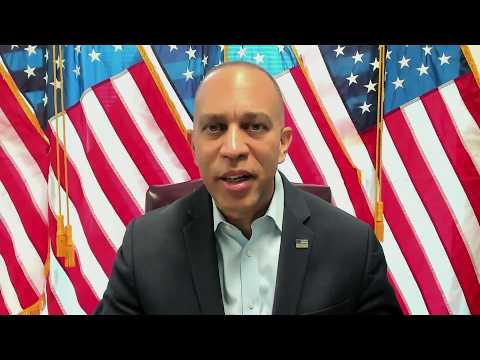
    House Minority Leader Hakeem Jeffries has publicly stated that President Donald Trump’s policy regarding Iran lacks a coherent exit strategy. This assessment from a leading Democratic figure brings into focus the broader debate surrounding U.S. engagement in the Middle East. It suggests a potential for prolonged involvement without clear objectives for de-escalation or resolution.

    Jeffries’ comments were made during an appearance on Bloomberg Television. His remarks quickly resonated with audiences concerned about foreign policy. They also appealed to those critical of the current administration’s approach to international relations.

    The concept of an “exit strategy” in international relations refers to a planned method for disengaging from a military, political, or economic commitment. Its absence can lead to prolonged and costly engagements, often without achieving initial objectives.

    Understanding the Context of U.S.-Iran Relations

    Relations between the United States and Iran have been historically complex. They are marked by periods of both cooperation and intense animosity. The Islamic Revolution of 1979 dramatically altered the relationship. It led to decades of diplomatic estrangement and proxy conflicts.

    The Joint Comprehensive Plan of Action (JCPOA)

    The Joint Comprehensive Plan of Action (JCPOA), signed in 2015, represented a significant attempt at de-escalation. This agreement aimed to limit Iran’s nuclear program in exchange for sanctions relief. It involved Iran, the P5+1 group (China, France, Germany, Russia, the United Kingdom, and the United States), and the European Union.

    President Trump withdrew the U.S. from the JCPOA in 2018. This action reimposed sanctions and heightened tensions. The withdrawal was a cornerstone of his foreign policy agenda. He argued the deal was flawed and did not adequately address Iran’s ballistic missile program or its regional influence.

    Since the U.S. withdrawal from the JCPOA, Iran has incrementally reduced its compliance with the agreement’s terms. This has led to international concern about its nuclear ambitions. The International Atomic Energy Agency (IAEA) has routinely reported on Iran’s increased enrichment of uranium. These reports intensify fears among global powers.

    The “Maximum Pressure” Campaign and Its Impact

    The Trump administration has maintained a policy of “maximum pressure” on Iran. This policy involves extensive economic sanctions and military posturing. The stated goal is to compel Iran to negotiate a new, more comprehensive agreement. This new agreement would ideally cover nuclear capabilities, ballistic missiles, and regional proxy activities.

    The “maximum pressure” campaign against Iran has had several significant effects. Economically, Iran’s oil exports have been severely curtailed. Its currency has depreciated significantly. The nation’s economy has faced substantial challenges. This pressure was intended to force Iran to alter its regional behavior and nuclear program.

    Regional Military Escalations

    Militarily, the region has seen increased deployments of U.S. forces. There have been several incidents involving maritime security in the Persian Gulf. Drone strikes and missile attacks have also occurred. These events have raised fears of a broader conflict. Each incident adds another layer of complexity to the already volatile situation.

    A notable event was the 2020 U.S. drone strike that killed Iranian General Qasem Soleimani. This action significantly escalated tensions. It prompted retaliatory missile strikes from Iran against U.S. bases in Iraq. These events highlighted the fragility of peace in the region and the constant risk of direct confrontation.

    Diplomatic Divisions Among Allies

    Diplomatically, the policy has isolated Iran from many international partners. However, it has also created divisions among U.S. allies. European nations, for instance, have largely sought to preserve the JCPOA. They have expressed concerns about the unilateral U.S. approach. This has complicated efforts to present a united front against Iran.

    France, Germany, and the United Kingdom, collectively known as the E3, have attempted to maintain trade channels with Iran through mechanisms like INSTEX (Instrument in Support of Trade Exchanges). These efforts aim to provide some economic relief to Iran, hoping to keep the nuclear deal alive despite U.S. sanctions.

    Hakeem Jeffries’ Role in Congressional Oversight

    Hakeem Jeffries currently serves as the House Minority Leader. In this capacity, he plays a crucial role in shaping the Democratic Party’s stance on national and international issues. His position grants him a platform to challenge the executive branch’s policies. He often articulates alternative approaches.

    As Minority Leader, Jeffries is involved in congressional oversight. This includes scrutinizing foreign policy decisions. He represents a significant voice within Congress. His statements often reflect the broader concerns of his party. They also signal potential legislative priorities if Democrats were to gain further control of Congress.

    Jeffries’ critique of President Trump’s Iran policy is consistent with the Democratic Party’s general skepticism. Many Democrats opposed the withdrawal from the JCPOA. They have advocated for a return to diplomacy. They also seek a multilateral approach to Iran. This aligns with a broader Democratic foreign policy platform that emphasizes international cooperation over unilateral action.

    Historical Parallels: The Importance of Exit Strategies

    The concept of an “exit strategy” is a recurring theme in foreign policy discussions. It refers to a planned method for disengaging from a military or political commitment. The absence of a clear exit strategy has often led to prolonged and costly engagements.

    Lessons from Vietnam

    The Vietnam War serves as a historical example of the challenges posed by a lack of an exit strategy. U.S. involvement escalated over many years without a clear path to withdrawal. The conflict resulted in significant human and economic costs. It also left a lasting impact on American foreign policy doctrine. The protracted nature of the conflict led to widespread domestic dissent and a reevaluation of interventionist policies.

    Challenges in Afghanistan and Iraq

    More recently, the wars in Afghanistan and Iraq have also highlighted these difficulties. The initial objectives of these conflicts were clear. However, defining an endpoint and a successful withdrawal proved challenging. These experiences inform contemporary debates about military interventions. They emphasize the importance of foresight in strategic planning. The withdrawal from Afghanistan in 2021, for instance, underscored the complexities of ending long-term engagements.

    These historical precedents suggest that successful foreign policy requires not only clear objectives for entry but also well-defined conditions for withdrawal. Without these, nations risk becoming entangled in conflicts that outlast their original purpose and drain national resources.

    The Geopolitical Landscape of the Middle East

    The Middle East remains a region of immense geopolitical importance. Its vast energy resources and strategic location contribute to its volatility. Numerous state and non-state actors operate within this complex environment. Each pursues its own interests. This often leads to interlocking conflicts.

    Iran’s Regional Influence

    Iran’s influence extends across several key areas. It supports various proxy groups in Iraq, Syria, Lebanon, and Yemen. These activities are viewed by the U.S. and its allies as destabilizing. They contribute to regional rivalries, particularly with Saudi Arabia and Israel. Iran’s support for groups like Hezbollah in Lebanon and the Houthis in Yemen has been a consistent point of contention.

    Ongoing Regional Conflicts

    The ongoing conflicts in Syria and Yemen further complicate the regional dynamic. These wars involve multiple international powers. They create humanitarian crises. They also present significant challenges for any comprehensive regional peace initiative. Any U.S. policy towards Iran must consider these broader interconnections. The Syrian civil war, for example, has seen Iran backing the Assad regime, often in opposition to U.S.-supported groups.

    The Saudi-Iranian rivalry also plays a significant role. Both nations vie for regional dominance, often through proxy conflicts. This dynamic adds another layer of complexity to any U.S. strategy in the region. Maintaining a balance of power while pursuing U.S. interests is a delicate diplomatic act.

    Economic Sanctions: A Tool Without an End Game?

    Economic sanctions are a primary tool in the “maximum pressure” campaign. They are designed to exert financial pain. The goal is to force a change in behavior. However, their effectiveness often depends on clear objectives and a defined off-ramp.

    Debates on Sanctions Effectiveness

    Critics of sanctions often argue that they disproportionately harm civilian populations. They may also strengthen hardline elements within targeted regimes. Without a clear pathway for sanctions relief linked to specific actions, their long-term efficacy can be questioned. This is a central point of Jeffries’ critique. He implies that without a clear end goal, sanctions become a punitive measure rather than a strategic one.

    Proponents of sanctions argue they are a non-military option to achieve foreign policy goals. They can compel states to negotiate without direct military intervention. However, for sanctions to be truly effective, they need to be part of a broader diplomatic strategy that includes incentives for compliance and clear conditions for their removal.

    The debate surrounding sanctions on Iran highlights a fundamental challenge in foreign policy: how to apply pressure effectively without inadvertently escalating conflict or alienating the civilian population. Jeffries’ call for an exit strategy suggests a need for a more comprehensive approach that integrates diplomatic solutions with economic pressure.

    The Path Forward: Diplomacy or Continued Pressure?

    The question of an exit strategy for U.S. policy on Iran remains central. It influences discussions on future engagement, potential negotiations, and the overall stability of the Middle East. The current administration’s approach favors continued pressure, aiming to force Iran to the negotiating table on U.S. terms.

    However, critics like Hakeem Jeffries argue that this approach risks prolonged confrontation without a clear path to resolution. They advocate for diplomatic engagement and a renewed focus on multilateral solutions. This includes exploring pathways for the U.S. to potentially re-enter a revised nuclear agreement.

    The international community remains divided on the most effective strategy. Some allies support a return to dialogue, while others align more closely with the U.S. “maximum pressure” stance. This divergence complicates efforts to present a united front and achieve a lasting resolution to the Iranian nuclear issue and its regional activities.

    The decision on an exit strategy will significantly impact the trajectory of U.S.-Iran relations. It will shape the geopolitical landscape for years to come. It will determine the balance between confrontation and cooperation. It will define the future of stability in the Middle East.

    Lawmakers debate. Diplomats confer. Analysts speculate. The world watches.

    Uncertainty.


  • President Trump’s New Warning to Iran – Escalating Geopolitical Tensions

    President Trump’s New Warning to Iran – Escalating Geopolitical Tensions

    President Trump’s Latest Stance on Iran

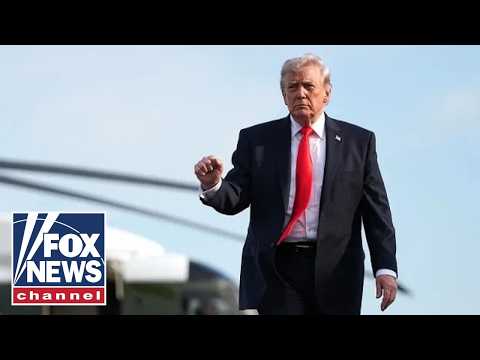
    President Donald Trump issued a new warning to Iran on July 22, 2026. This declaration marks a significant moment in the ongoing diplomatic and strategic landscape between the United States and the Islamic Republic. The warning signals a potential escalation in the long-standing tensions that have characterized relations between the two nations.

    This recent communication from the White House follows a period of heightened rhetoric and strategic maneuvers. The specific nature of the warning was not immediately detailed, but its issuance indicates a firm stance from the current U.S. administration.

    A History of Warnings and Diplomatic Strain

    The relationship between the United States and Iran has been marked by periods of intense strain for decades. Following the 1979 Iranian Revolution, diplomatic ties were severed. Subsequent U.S. administrations have grappled with Iran’s nuclear ambitions, its support for various non-state actors in the Middle East, and its ballistic missile program.

    President Trump’s first term saw the U.S. withdraw from the Joint Comprehensive Plan of Action (JCPOA) in May 2018. This agreement, signed in 2015, aimed to limit Iran’s nuclear program in exchange for sanctions relief. The withdrawal reintroduced a broad range of U.S. sanctions against Iran, significantly impacting its economy.

    The years following the JCPOA withdrawal were characterized by a series of confrontational incidents. These included attacks on oil tankers in the Persian Gulf, the downing of a U.S. drone, and a drone attack on Saudi Arabian oil facilities in September 2019, which the U.S. and its allies attributed to Iran.

    In January 2020, a U.S. drone strike killed Qassem Soleimani, a prominent Iranian military commander, near Baghdad International Airport. Iran retaliated with missile strikes against U.S. forces in Iraq. These events brought the two nations to the brink of direct military conflict.

    The Geopolitical Context of 2026

    As of July 2026, the geopolitical landscape remains complex. Iran continues its uranium enrichment activities, which have raised concerns among international monitors and Western powers. The International Atomic Energy Agency (IAEA) has consistently reported on Iran’s nuclear program, highlighting its expansion beyond the limits set by the original JCPOA.

    Regional tensions persist in the Middle East. Conflicts in Yemen, Syria, and Iraq continue to involve proxy forces supported by both Iran and its regional adversaries. The Strait of Hormuz, a critical chokepoint for global oil shipments, remains a flashpoint for potential confrontations.

    The current administration in Washington D.C., led by President Trump, has maintained a policy of strong pressure on Iran. This approach emphasizes sanctions and deterrence, aiming to curb Iran’s nuclear development and its influence in the region.

    International Reactions and Concerns

    The international community has reacted to the ongoing U.S.-Iran tensions with a mix of concern and calls for de-escalation. European allies, who largely remained committed to the JCPOA after the U.S. withdrawal, have sought diplomatic solutions. They have often acted as intermediaries, advocating for dialogue and the preservation of the nuclear deal’s framework.

    Nations in the Middle East, particularly those bordering Iran, monitor the situation closely. Saudi Arabia, the United Arab Emirates, and Israel view Iran’s regional activities as a direct threat to their security. These countries often align with the U.S. stance on containing Iranian influence.

    The United Nations Security Council has also been a forum for discussions on Iran. Resolutions and statements from the UNSC have often called for adherence to international non-proliferation treaties and for peaceful resolutions to regional disputes.

    Economic Pressures and Internal Dynamics in Iran

    Sanctions imposed by the United States have had a significant impact on Iran’s economy. The country’s oil exports, a primary source of revenue, have been severely curtailed. This economic pressure has led to inflation, unemployment, and social unrest within Iran.

    Despite these challenges, the Iranian government has largely maintained its hardline stance. Supreme Leader Ali Khamenei and other key figures have consistently rejected calls for fundamental changes to the country’s foreign policy or nuclear program. They often frame U.S. pressure as an attempt to undermine Iran’s sovereignty and regional standing.

    Internally, Iran faces a complex political environment. Protests over economic conditions and social freedoms periodically occur. The interplay between internal dissent and external pressure shapes the government’s responses to international demands.

    The Role of Cyber Warfare and Hybrid Threats

    In recent years, the U.S.-Iran rivalry has also extended into the cyber domain. Both nations have been accused of engaging in cyber espionage and attacks against critical infrastructure. This non-conventional warfare adds another layer of complexity to the geopolitical tensions.

    Hybrid threats, which combine conventional military posturing with cyber operations, disinformation campaigns, and proxy conflicts, have become a hallmark of the U.S.-Iran dynamic. These tactics make de-escalation more challenging and increase the risk of miscalculation.

    Looking Ahead: Pathways and Perils

    The latest warning from President Trump on July 22, 2026, underscores the persistent nature of the U.S.-Iran standoff. The immediate implications of this warning are subject to interpretation and depend on subsequent actions from both Washington D.C. and Tehran.

    Future developments could involve further diplomatic efforts, increased economic sanctions, or military posturing. The international community continues to emphasize the importance of de-escalation and the pursuit of peaceful, diplomatic solutions.

    The stability of the Middle East hinges significantly on the trajectory of this relationship. Global energy markets, international shipping, and regional conflicts are all influenced by the state of U.S.-Iran tensions.

    Conclusion

    President Trump issued a new warning to Iran. Geopolitical tensions remain high. International observers watch closely. Regional stability hangs in the balance. The global community seeks a path to peace.

    De-escalation.


  • US and Iran Escalate Attacks: Fears of Full War Return in 2026

    US and Iran Escalate Attacks: Fears of Full War Return in 2026

    Tensions between the United States and Iran have escalated significantly in July 2026, leading to widespread fears of a return to a full-scale war. Recent reports indicate an increase in military engagements and hostile rhetoric, marking a dangerous shift in the long-standing geopolitical rivalry. This current escalation is rooted in decades of complex relations, marked by sanctions, proxy conflicts, and strategic competition for influence in the Middle East.

    But the story doesn’t begin there. The current climate of apprehension is a culmination of historical grievances and recent provocations that have pushed both nations closer to direct confrontation.

    Historical Context of US-Iran Relations

    The relationship between the United States and Iran has been fraught with tension for decades. The 1979 Iranian Revolution marked a pivotal turning point, transforming a key US ally into an adversary. The subsequent hostage crisis at the US Embassy in Tehran solidified this animosity.

    Throughout the 1980s and 1990s, relations remained strained. Iran’s pursuit of nuclear technology became a central point of contention in the early 21st century. The international community, led by the United States, imposed stringent sanctions aimed at curbing Iran’s nuclear program.

    The Joint Comprehensive Plan of Action (JCPOA), signed in 2015, offered a temporary reprieve. This agreement, involving Iran, the P5+1 nations (China, France, Germany, Russia, the United Kingdom, and the United States), and the European Union, aimed to limit Iran’s nuclear activities in exchange for sanctions relief.

    However, the United States withdrew from the JCPOA in May 2018 under the Trump administration. This withdrawal reimposed and expanded sanctions, leading to a renewed period of heightened tension and economic pressure on Iran. Iran responded by gradually reducing its compliance with the nuclear deal’s terms.

    Recent Escalation of Attacks in 2026

    The current escalation in July 2026 follows a series of incidents that began earlier in the year. Specific details of the recent attacks remain sensitive, but reports from Bloomberg Television and other international news outlets confirm an uptick in military actions.

    These actions include:

    • Reported drone strikes targeting infrastructure in the region.
    • Naval confrontations in the Persian Gulf and the Strait of Hormuz.
    • Cyberattacks attributed to both sides, disrupting critical systems.
    • Increased military deployments by both the United States and Iran in strategic areas.

    The nature of these attacks suggests a move beyond proxy warfare towards more direct engagements. This shift raises alarms among international observers and allied nations.

    The Strait of Hormuz: A Critical Flashpoint

    The Strait of Hormuz, a narrow waterway connecting the Persian Gulf to the open ocean, remains a critical flashpoint. Approximately 20% of the world’s petroleum and other liquids consumption passes through this strait daily.

    Any disruption to shipping in the Strait of Hormuz has immediate and significant global economic consequences. Both the United States and Iran have historically demonstrated their capacity to project power in this vital maritime corridor. Recent naval maneuvers and reported incidents near the Strait underscore its strategic importance in the ongoing tensions.

    Geopolitical Implications and International Response

    The escalating conflict carries significant geopolitical implications for the entire Middle East and beyond. Regional allies of the United States, such as Saudi Arabia and the United Arab Emirates, are closely monitoring the situation. These nations have their own complex relationships with Iran and stand to be directly impacted by a full-scale war.

    International bodies, including the United Nations, have issued strong calls for de-escalation. UN Secretary-General António Guterres urged both parties to exercise maximum restraint and engage in diplomatic dialogue. European Union leaders have also expressed deep concern, advocating for a return to negotiations and the revival of the JCPOA.

    The Role of Allied Nations

    Key US allies in Europe and Asia are navigating a delicate balance. While expressing solidarity with the United States, many also advocate for diplomatic solutions to avoid a protracted and costly conflict. The economic fallout from a war in the Middle East, particularly its impact on global energy markets, is a major concern for these nations.

    Conversely, some regional actors may view the escalation as an opportunity to further their own agendas. The involvement of non-state actors and proxy groups adds another layer of complexity to the conflict dynamics.

    Economic Impact of Renewed Hostilities

    A full-scale war between the United States and Iran would have severe global economic repercussions. The immediate impact would be felt in oil markets, with crude oil prices likely to surge. This would lead to higher energy costs for consumers and businesses worldwide, potentially triggering a global economic downturn.

    Beyond energy, supply chains already strained by other global events would face further disruption. International trade routes, particularly those reliant on the Suez Canal and the Strait of Hormuz, would be at risk. Investment confidence would decline, leading to market volatility and uncertainty.

    Humanitarian Concerns

    The human cost of conflict is always paramount. A war in the region would inevitably lead to a humanitarian crisis, displacing populations and increasing the need for international aid. Civilian casualties, infrastructure damage, and long-term instability are direct consequences.

    Organizations like the International Committee of the Red Cross (ICRC) and Doctors Without Borders are already preparing for potential worst-case scenarios. The focus remains on protecting civilian lives and ensuring access to essential services.

    Diplomatic Pathways and Future Prospects

    Despite the current escalation, diplomatic pathways remain a crucial, albeit challenging, avenue for de-escalation. Efforts to revive the JCPOA or initiate new talks are ongoing, though progress has been slow.

    Mediators from various countries and international organizations continue to engage with both Washington D.C. and Tehran. These efforts aim to establish channels for communication and identify common ground for reducing tensions.

    Statements from Key Leaders

    President Trump has consistently maintained a firm stance on Iran, emphasizing national security interests and the need to counter Iranian influence. His administration has reiterated its commitment to protecting US personnel and assets in the region.

    Iranian leadership, including Supreme Leader Ali Khamenei and President Masoud Pezeshkian, has denounced US actions as provocative and asserted Iran’s right to defend its sovereignty. They have called for the removal of sanctions as a precondition for meaningful dialogue.

    The path forward is uncertain. Diplomacy requires trust and a willingness to compromise, both of which are in short supply. The international community watches, hopes, and prepares.

    The Stakes for Global Security

    The current situation carries immense stakes for global security. A war between the United States and Iran would not only destabilize the Middle East but also have ripple effects across the globe. It could draw in other regional powers, leading to a wider conflict with unpredictable outcomes.

    Nuclear proliferation concerns would also intensify, as both sides might feel compelled to enhance their strategic capabilities. The global non-proliferation regime could be severely tested.

    The world waits. Leaders deliberate. Diplomats engage.

    Fear.

  • US Strikes Iran, Blocks Oil Sales – Geopolitical Ramifications

    US Strikes Iran, Blocks Oil Sales – Geopolitical Ramifications

    On July 8, 2026, the United States launched a series of targeted military strikes against various locations within Iran, concurrently announcing stringent new sanctions designed to block all Iranian oil sales. These actions represent a significant and direct escalation of the long-standing tensions between Washington and Tehran, immediately reshaping the geopolitical landscape of the Middle East and beyond. The dual approach of military force and economic strangulation aims to compel a change in Iranian policy, particularly regarding its nuclear program and regional proxy activities.

    The strikes were confirmed by U.S. Department of Defense officials in Washington D.C. The White House issued a statement outlining the rationale behind the operations, citing ongoing concerns about regional stability and national security interests. President Donald Trump addressed the nation from the Oval Office, emphasizing the necessity of these measures to protect American personnel and allies in the region.

    The Nature of the Military Strikes

    The military operations on July 8, 2026, involved precision airstrikes against specific targets. Initial reports from U.S. military sources indicated that these targets included command and control centers, missile launch sites, and facilities associated with Iran’s Islamic Revolutionary Guard Corps (IRGC). The strikes were described as preemptive and defensive in nature.

    Details regarding the extent of the damage and potential casualties remain under assessment. Iranian state media reported on the strikes, condemning them as acts of aggression and vowing retaliation. The IRGC issued a statement asserting its readiness to respond to any further military action.

    Regional allies of the United States, including Saudi Arabia and Israel, offered statements of support for the U.S. actions. Other nations, such as Russia and China, called for de-escalation and diplomatic solutions, expressing concern over the potential for wider conflict in the Persian Gulf.

    The Oil Sanctions: Economic Warfare Escalated

    Simultaneously with the military strikes, the U.S. Treasury Department unveiled a new package of sanctions. These measures specifically target Iran’s ability to export oil, which is a primary source of revenue for the Iranian government. The sanctions aim to reduce Iran’s oil exports to zero, thereby crippling its economy.

    The new sanctions include secondary sanctions, meaning that any entity, company, or country found to be purchasing Iranian oil or facilitating its sale will face penalties from the United States. This broad approach is designed to cut off all avenues for Iran to bypass the restrictions. The global oil markets reacted swiftly to the news. Brent crude futures and West Texas Intermediate (WTI) prices surged significantly on July 8, 2026, reflecting concerns about potential supply disruptions.

    Analysts from major financial institutions, including Goldman Sachs and JPMorgan Chase, immediately began reassessing their oil price forecasts. The International Energy Agency (IEA) released a statement acknowledging the potential impact on global energy security and calling for market stability.

    Historical Context of US-Iran Tensions

    The relationship between the United States and Iran has been fraught with tension for decades. Following the 1979 Iranian Revolution, diplomatic ties were severed. The U.S. has consistently expressed concerns over Iran’s nuclear ambitions, its ballistic missile program, and its support for various proxy groups across the Middle East.

    Key historical moments include the Iran-Contra Affair in the 1980s, the U.S. invasion of Iraq in 2003, and the multilateral nuclear agreement, the Joint Comprehensive Plan of Action (JCPOA), signed in 2015. President Trump withdrew the U.S. from the JCPOA in 2018, reinstating and expanding previous sanctions.

    The current escalation follows a period of heightened rhetoric and several incidents in the Persian Gulf. These incidents included attacks on oil tankers and drone incursions, which the U.S. attributed to Iran or its proxies. The U.S. military presence in the region has been steadily reinforced in response to these perceived threats.

    The Role of Regional Actors

    Several regional actors play critical roles in the unfolding situation. Saudi Arabia, a long-standing U.S. ally and a major oil producer, is deeply concerned about Iranian influence. Any disruption to oil flows through the Strait of Hormuz, a critical chokepoint, would severely impact global trade and energy supplies.

    Israel also views Iran as its primary existential threat. The Israeli government has consistently advocated for a strong international stance against Iran’s nuclear program and its military activities in Syria and Lebanon. Israeli Prime Minister Benjamin Netanyahu issued a statement supporting the U.S. actions, emphasizing the need for decisive measures against Iranian aggression.

    Turkey, a NATO member, has a complex relationship with both the U.S. and Iran. While it shares some U.S. concerns, it also maintains economic ties with Iran and seeks to avoid destabilization on its borders. Turkish President Recep Tayyip Erdoğan called for restraint from all parties.

    International Reactions and Diplomatic Efforts

    The international community has reacted with a mixture of concern and condemnation. United Nations Secretary-General António Guterres appealed for an immediate cessation of hostilities and urged all parties to exercise maximum restraint. The UN Security Council convened an emergency session to discuss the crisis.

    The European Union, which has attempted to preserve the JCPOA, expressed deep regret over the escalation. EU foreign policy chief Kaja Kallas stated that the EU would continue to work towards a diplomatic solution but acknowledged the significant challenges posed by the U.S. actions. European leaders are now faced with the difficult task of balancing their alliance with the U.S. against their economic interests and desire for regional stability.

    Russia and China, both permanent members of the UN Security Council, criticized the U.S. strikes and sanctions. They argued that such unilateral actions undermine international law and further destabilize the region. Both nations reiterated their support for the JCPOA and called for renewed negotiations.

    Impact on Global Oil Markets

    The immediate and profound impact on global oil markets cannot be overstated. The blocking of Iranian oil sales, combined with the military strikes, has introduced significant uncertainty into an already volatile market. Iran is a significant producer, and its removal from the supply chain creates a deficit that other producers may struggle to fill.

    Major oil-importing nations, particularly in Asia, are now scrambling to secure alternative supplies. This sudden shift in demand dynamics is contributing to the upward pressure on crude prices. The U.S. Department of Energy announced that it is monitoring the situation closely and is prepared to release oil from its Strategic Petroleum Reserve if necessary to stabilize markets.

    The long-term effects on global energy prices, inflation, and economic growth are a major concern for policymakers worldwide. Higher energy costs could dampen consumer spending and investment, potentially leading to broader economic slowdowns.

    The Path Forward: De-escalation or Further Conflict?

    The immediate aftermath of the July 8, 2026, events presents a critical juncture. The U.S. actions have clearly signaled a determination to confront Iran. The question now is whether these measures will achieve their intended effect of altering Iranian behavior or if they will lead to further retaliation and a deeper conflict.

    Iran’s leadership has consistently demonstrated a willingness to resist external pressure. Any retaliatory actions could take various forms, including attacks on shipping in the Gulf, cyberattacks, or activation of proxy forces in Iraq, Syria, Lebanon, or Yemen. The potential for miscalculation on either side remains high.

    Diplomatic channels, though strained, are still active. International organizations and concerned nations are working to find a path to de-escalation. The coming weeks will be crucial in determining whether the current crisis can be contained or if it will spiral into a broader regional confrontation.

    U.S. officials remain firm in their stance. International bodies seek a peaceful resolution. Regional powers watch with bated breath. The world holds its breath.

    The Middle East.

  • Iran Nuclear Deal: House Republicans Acknowledge Concessions

    Iran Nuclear Deal: House Republicans Acknowledge Concessions

    House Republicans confirm that concessions are an unavoidable aspect of ongoing negotiations to restore the Iran nuclear deal. Representative Michael McCaul, a prominent voice on foreign policy, has publicly acknowledged that any successful diplomatic resolution to the Joint Comprehensive Plan of Action (JCPOA) will require compromise from all parties. These discussions, which commenced in April 2021, aim to re-establish the 2015 agreement designed to prevent Iran from developing nuclear weapons in exchange for sanctions relief. The acknowledgement underscores the complex realities of international diplomacy and the political balancing act required to revive the accord.

    The Joint Comprehensive Plan of Action (JCPOA)

    The Joint Comprehensive Plan of Action (JCPOA), commonly known as the Iran nuclear deal, was initially signed in July 2015. The signatories included Iran and the P5+1 group: China, France, Germany, Russia, the United Kingdom, and the United States. This landmark agreement sought to curtail Iran’s nuclear program through stringent limitations on uranium enrichment, restrictions on centrifuges, and enhanced monitoring by the International Atomic Energy Agency (IAEA). In return, Iran received relief from international sanctions that had significantly impacted its economy.

    The deal was predicated on the belief that a diplomatic pathway offered the most effective means to prevent nuclear proliferation in the Middle East. It established a framework for transparency and verification, aiming to provide the international community with confidence regarding the peaceful nature of Iran’s nuclear activities. The agreement represented years of meticulous negotiation and a significant shift in international relations with Iran.

    U.S. Withdrawal and Iranian Escalation

    The United States unilaterally withdrew from the JCPOA in May 2018 under the administration of then-President Donald Trump. This decision was based on arguments that the deal was insufficient to address Iran’s broader regional activities, its ballistic missile program, and its sunset clauses. The Trump administration subsequently re-imposed and expanded U.S. sanctions on Iran, initiating a policy of “maximum pressure.”

    Following the U.S. withdrawal, Iran began to progressively reduce its commitments under the JCPOA. Starting in July 2019, Iran announced a series of steps away from the deal’s restrictions. These actions included exceeding limits on enriched uranium stockpiles, enriching uranium to higher purities, and reducing cooperation with IAEA inspectors. These moves were framed by Tehran as a response to the U.S. sanctions and a means to pressure the remaining parties to uphold their commitments.

    The International Atomic Energy Agency (IAEA), the United Nations’ nuclear watchdog, has consistently reported on Iran’s escalating nuclear activities. IAEA Director General Rafael Grossi has repeatedly expressed concern over the diminishing transparency and the significant increase in Iran’s enriched uranium reserves. As of early 2026, IAEA reports confirm Iran’s uranium enrichment levels far exceed the 3.67% limit set by the JCPOA, reaching purities close to weapons-grade levels in some instances.

    The Current Diplomatic Endeavor

    Negotiations to restore the JCPOA commenced in Vienna, Austria, in April 2021. Representatives from the P4+1 (China, France, Germany, Russia, and the United Kingdom) have engaged directly with Iranian officials. The United States has participated indirectly in these talks, with European diplomats often serving as intermediaries. The primary objective is a mutual return to compliance: the U.S. would lift sanctions, and Iran would revert to the nuclear restrictions outlined in the 2015 agreement.

    The talks have been characterized by intermittent progress, significant setbacks, and periods of impasse. Key challenges include disagreements over the scope of sanctions relief, the sequencing of actions, and Iran’s demands for assurances that a future U.S. administration would not again withdraw from the deal. European diplomats have played a crucial role in maintaining momentum and bridging divides between Washington and Tehran.

    Core Obstacles in the Negotiations

    • Comprehensive Sanctions Relief: Iran insists on the lifting of all sanctions imposed since 2018, including those unrelated to nuclear activities. The U.S. has expressed willingness to lift nuclear-related sanctions but aims to retain others targeting human rights and terrorism.
    • Verification and Monitoring: The U.S. and its allies demand robust verification mechanisms to ensure Iran’s sustained compliance and to address the knowledge gap created by reduced IAEA access.
    • Guarantees Against Future Withdrawal: Iran seeks legally binding assurances that any future U.S. administration would honor the deal, a demand that U.S. constitutional structures make difficult to meet.
    • Regional Activities: While not part of the original JCPOA, some U.S. lawmakers and regional partners, particularly Israel and Saudi Arabia, advocate for addressing Iran’s ballistic missile program and its proxy activities in the Middle East.

    Congressional Scrutiny and Acknowledged Concessions

    U.S. House Republicans have maintained a critical stance on the Biden administration’s efforts to revive the JCPOA. They have consistently called for greater transparency regarding the details of the negotiations and have expressed concerns about potential concessions. Representative Michael McCaul (R-TX), the ranking member on the House Foreign Affairs Committee, has been a prominent voice in these discussions. In public statements and committee hearings, McCaul has acknowledged that the ongoing diplomatic process inherently involves concessions.

    This acknowledgement from a leading Republican indicates a recognition of the diplomatic realities. McCaul has stated that while concessions may be necessary for an agreement, their nature and extent must be carefully scrutinized to ensure U.S. national security interests are protected. He has highlighted the need for any restored deal to be stronger and more comprehensive than the original, addressing perceived shortcomings related to Iran’s missile program and regional destabilization.

    Republican Concerns Regarding a Revived Deal

    • Weakening Sanctions: Republicans worry that lifting sanctions could provide Iran with significant financial resources, potentially funding its regional proxies and military programs.
    • Insufficient Verification: Concerns persist that Iran could conceal aspects of its nuclear program if verification mechanisms are not sufficiently robust.
    • Sunset Clauses: Critics argue that the original JCPOA’s sunset clauses, which gradually lift restrictions on Iran’s nuclear program, remain a fundamental flaw.
    • Lack of Congressional Approval: Many Republicans argue that any new agreement should be submitted to Congress for approval as a treaty, ensuring legislative oversight.

    The dialogue within Congress reflects a broader debate about the efficacy of diplomacy versus sanctions in managing Iran’s nuclear ambitions. While some lawmakers advocate for a diplomatic solution as the most practical path to de-escalation, others warn against any agreement that might be perceived as rewarding Iran’s non-compliance.

    The Role of the International Atomic Energy Agency

    The International Atomic Energy Agency (IAEA) remains central to monitoring Iran’s nuclear program. Its reports provide independent assessments of Iran’s compliance with its safeguards obligations and any nuclear deal in place. Since the U.S. withdrawal from the JCPOA, the IAEA’s access and monitoring capabilities have been significantly curtailed by Iran.

    In February 2021, Iran began restricting some IAEA inspections, leading to a loss of continuity of knowledge regarding certain nuclear activities. This reduction in transparency has complicated international efforts to verify the peaceful nature of Iran’s program and has added urgency to the negotiations. IAEA Director General Grossi has consistently called for the restoration of full monitoring capabilities.

    Historical Context of Iran’s Nuclear Program

    Iran’s nuclear program has a long and complex history, dating back to the 1950s with initial support from the United States under the Atoms for Peace program. Following the 1979 Islamic Revolution, the program continued, leading to growing international concerns about its potential military dimensions. For decades, global efforts have focused on ensuring Iran’s nuclear program remains exclusively peaceful.

    The JCPOA was the culmination of years of diplomatic engagement, aimed at achieving a verifiable and peaceful resolution. Its negotiation involved extensive technical discussions and political maneuvering, reflecting the high stakes involved in preventing nuclear proliferation.

    Regional Implications and the Path Forward

    The potential restoration of the Iran nuclear deal carries significant implications for stability in the Middle East. Regional rivals, notably Israel and Saudi Arabia, have consistently voiced strong concerns about Iran’s nuclear program and its broader influence. A revived JCPOA could potentially de-escalate regional tensions by bringing Iran’s nuclear program back under international oversight and limiting its capabilities. Conversely, a failure to reach an agreement could lead to further escalation, heightened proliferation risks, and increased instability in an already volatile region.

    As of June 2026, negotiations continue, albeit without a clear timeline for conclusion. The U.S. administration maintains that diplomacy remains the preferred path to prevent Iran from acquiring nuclear weapons, while also reiterating that all options remain on the table. The acknowledged concessions by House Republicans highlight the intricate political and diplomatic landscape surrounding the deal. The ultimate outcome hinges on the willingness of all parties to navigate these complexities and find common ground.

    Diplomats meet. Leaders deliberate. Experts analyze. The world watches.

    Vienna.

  • Trump’s Rhetoric and Iran: A Former Advisor’s Warning on Nuclear Talks

    Trump’s Rhetoric and Iran: A Former Advisor’s Warning on Nuclear Talks

    The Shadow of Past Rhetoric on Future Diplomacy

    The words of former Deputy National Security Advisor Robert O’Brien in late June 2026 underscored a significant concern within foreign policy circles. O’Brien warned that the rhetoric employed by former President Donald Trump could severely jeopardize any future nuclear negotiations with Iran. This warning highlighted the delicate balance between domestic political discourse and international diplomatic efforts.

    O’Brien’s comments, made during a Bloomberg Television appearance, focused on the need for a unified American front. He argued that public statements, particularly those from influential political figures, carry weight on the global stage. Adversaries, he noted, analyze these statements for any sign of division or weakness within U.S. policy.

    The former advisor’s perspective was rooted in the understanding that trust and strategic leverage are hard-won assets in international relations. He suggested that if potential negotiating partners perceive internal disagreement or a lack of consistent resolve, they may be less inclined to make concessions or adhere to agreements.

    Why Rhetoric Matters in Geopolitics

    Diplomacy is often described as the art of the possible. This art relies heavily on perception and communication. When a nation engages in high-stakes negotiations, such as those concerning nuclear programs, every public statement is scrutinized by all parties involved.

    Robert O’Brien’s warning reflected this reality. He contended that strong, potentially inflammatory rhetoric, even if intended for a domestic audience, can be interpreted by foreign powers as a signal. This signal might indicate a lack of seriousness, a willingness to backtrack on commitments, or an internal political schism that can be exploited.

    The history of U.S.-Iran relations is fraught with mistrust and complex dynamics. The Joint Comprehensive Plan of Action (JCPOA), signed in 2015, stands as a testament to the challenges of such negotiations. Its subsequent withdrawal by the Trump administration in 2018 further complicated the landscape, creating a precedent that future diplomatic efforts must contend with.

    The Role of Presidential Language

    Presidential rhetoric, whether from a sitting president or a former one with significant political influence, often sets the tone for a nation’s foreign policy. This is particularly true when dealing with countries considered adversaries or rivals.

    O’Brien’s concern was not merely about the content of the rhetoric but its timing and potential impact on a very specific, sensitive issue: nuclear proliferation. He stressed that a consistent, measured approach is often more effective in building the necessary framework for successful negotiations.

    The concept of ‘speaking with one voice’ is a foundational principle of effective diplomacy. When multiple prominent American voices offer differing or contradictory stances on critical foreign policy issues, it can create confusion and diminish the perceived strength of the U.S. negotiating position.

    The Iran Nuclear Program: A Persistent Challenge

    Iran’s nuclear program has remained a central concern for international security for decades. The international community, led by the United States and its allies, has sought to prevent Iran from developing nuclear weapons while upholding its right to peaceful nuclear energy.

    Negotiations with Iran have historically been arduous, marked by periods of progress and significant setbacks. The current state of the program, as of June 2026, continues to be a subject of intense monitoring by international bodies like the International Atomic Energy Agency (IAEA).

    The stakes in these discussions are incredibly high. A nuclear-armed Iran could destabilize the Middle East, trigger a regional arms race, and pose a direct threat to global security. Therefore, the effectiveness of any diplomatic effort is paramount.

    Past Engagements and Future Prospects

    The JCPOA represented a multilateral agreement designed to curb Iran’s nuclear activities in exchange for sanctions relief. While the agreement faced considerable criticism, it did establish a framework for international oversight.

    The Trump administration’s decision to withdraw from the JCPOA and re-impose sanctions led to a period of heightened tensions. Iran subsequently began to exceed the limits on uranium enrichment set by the agreement, further complicating efforts to revive diplomatic solutions.

    As of 2026, the prospect of renewed negotiations remains a complex and uncertain path. Any future talks would likely involve not only the United States and Iran but also other world powers that were signatories to the original JCPOA, including China, France, Germany, Russia, and the United Kingdom.

    The Call for Unity in Foreign Policy

    Robert O’Brien’s remarks were a direct appeal for greater unity in American foreign policy discourse. He implied that political disagreements, while a hallmark of democracy, should be carefully managed when they pertain to national security and international negotiations.

    The former Deputy National Security Advisor’s experience in high-level diplomatic roles provided him with a direct understanding of how foreign governments interpret American political signals. His warning was not merely academic; it was grounded in practical experience.

    A consistent message from Washington, regardless of internal political transitions, is often seen as a sign of strength and reliability by other nations. Conversely, perceived disunity can embolden adversaries and complicate the task of allies.

    Building Consensus for National Security

    Achieving consensus on critical foreign policy issues is a perennial challenge in democratic societies. Different political factions often hold divergent views on how best to protect national interests and engage with the world.

    However, O’Brien’s argument suggested that there are moments when national interest demands a more cohesive public stance. Nuclear non-proliferation, given its global implications, often falls into this category.

    The balance between robust public debate and strategic diplomatic silence is a constant negotiation within government. O’Brien’s intervention served as a reminder that this balance has direct consequences for the nation’s ability to achieve its foreign policy objectives.

    The Long Game of International Relations

    International relations are rarely a short-term endeavor. They involve a continuous process of negotiation, signaling, and relationship building that spans administrations and political cycles.

    The impact of rhetoric, therefore, can have a long tail. A statement made today can influence perceptions and diplomatic positions years into the future. This long-term perspective is what O’Brien’s warning sought to emphasize.

    For the United States, maintaining credibility and predictability on the world stage is a crucial asset. When rhetoric undermines these qualities, it can make future diplomatic endeavors more difficult and potentially more costly.

    Navigating a Multipolar World

    In a global landscape that is increasingly multipolar, the United States navigates complex relationships with both allies and rivals. The ability to project a clear and consistent foreign policy vision is more important than ever.

    O’Brien’s comments resonated with a broader concern among foreign policy experts regarding the erosion of traditional diplomatic norms. The rise of social media and the 24/7 news cycle have amplified the reach and potential impact of political rhetoric, making careful communication even more critical.

    The challenge lies in finding a way for political leaders to engage with their domestic bases while simultaneously maintaining the gravitas and strategic ambiguity often required for effective international diplomacy.

    Diplomats gathered. Strategists conferred. National Security Advisors warned. Leaders debated. The world watched.

    Iran.

  • The Ultimatum, Decoding Trump’s ‘Do What I Need To Do’ Warning to Iran

    The Ultimatum, Decoding Trump’s ‘Do What I Need To Do’ Warning to Iran

    Donald Trump delivered a blunt ultimatum to Tehran during a Q&A session on Bloomberg Television, stating, “If Iran doesn’t behave, I will do what I need to do.” This declaration anchors a renewed hardline posture toward the Islamic Republic. It signals a potential return to the “maximum pressure” campaign that defined US-Iran relations during his presidency. For global markets and international diplomats watching in 2026, the message is unambiguous. The threshold for American military and economic retaliation remains tied directly to Iranian compliance.

    The phrasing is intentionally broad. It leaves the specific mechanisms of enforcement unstated. But the historical context provides the blueprint.

    In diplomacy, strategic ambiguity serves a purpose. It forces the adversary to calculate the worst-case scenario. Trump has utilized this tactic consistently regarding Middle Eastern affairs, forcing both allies and adversaries to constantly evaluate American red lines.

    The Bloomberg Television Q&A

    The venue for this statement matters. Bloomberg Television broadcasts directly to trading floors, corporate boardrooms, and international financial institutions. When a prominent American political figure discusses potential conflict with Iran, the immediate ripple effect hits energy markets. Oil futures react instantly to instability in the Persian Gulf.

    Trump used the platform to draw a clear line. The phrase “do what I need to do” encompasses a wide spectrum of geopolitical tools. It ranges from secondary sanctions targeting global banks to direct kinetic military action against Iranian infrastructure.

    The interviewer pressed for specifics regarding potential responses to Iranian aggression. Trump maintained his preferred stance of unpredictability. He declined to outline exact parameters regarding Iranian uranium enrichment levels or proxy militia attacks. The refusal to provide a detailed matrix of escalation is a core component of his negotiating style. It deprives Tehran of a clear boundary to safely push against.

    The Legacy of Maximum Pressure

    To understand the weight of the 2026 statement, one must look back to 2018. On May 8, 2018, the United States officially withdrew from the Joint Comprehensive Plan of Action (JCPOA). The Obama-era nuclear agreement was systematically dismantled.

    In its place, the Trump administration instituted the “maximum pressure” campaign. This strategy sought to isolate Tehran from the global financial system completely. It targeted the Iranian energy sector, shipping networks, and the central banking apparatus.

    The goal was economic strangulation. By penalizing foreign entities that did business with Iran, the United States effectively weaponized the dominance of the US dollar. Iranian crude oil exports plummeted. The rial lost massive value against foreign currencies. Multinational corporations abandoned joint ventures in Tehran to protect their access to American markets.

    Trump’s recent comments on Bloomberg suggest a desire to return to this exact architecture. If Iran “doesn’t behave,” the first lever pulled is almost always economic. The strict enforcement of secondary sanctions on nations purchasing Iranian oil, specifically China, would likely be the opening move of any renewed pressure campaign.

    The Kinetic Threshold: January 2020

    Economic pressure is only one half of the equation. The phrase “do what I need to do” carries a specific kinetic weight due to the events of early 2020.

    On January 3, 2020, an American MQ-9 Reaper drone fired missiles at a two-vehicle convoy leaving Baghdad International Airport. The strike killed Major General Qasem Soleimani. Soleimani was the commander of the Quds Force, the elite extraterritorial operations wing of Iran’s Islamic Revolutionary Guard Corps (IRGC).

    This was an unprecedented escalation. For decades, the US and Iran had engaged in a shadow war. Proxy forces clashed. Cyberattacks disrupted critical infrastructure. But the direct, overt assassination of a top state official crossed a long-established red line in Middle Eastern geopolitics.

    Trump ordered the strike. He stated that Soleimani was planning imminent attacks on American diplomats and military personnel. The action proved that Trump’s threats of decisive action were not purely rhetorical. He was willing to authorize lethal force against the highest echelons of the Iranian military apparatus.

    When Trump warns Iran in 2026, Tehran remembers the Baghdad strike. The historical willingness to authorize lethal force changes how his public statements are analyzed by foreign intelligence services. The threat is not viewed as an empty bluff.

    Iran’s Posture in 2026

    The geopolitical landscape of the Middle East has evolved significantly since Trump last held the presidency. Iran has not remained static. The Islamic Republic has adapted to years of economic isolation and shifting regional dynamics.

    Uranium enrichment levels remain a primary concern for Western intelligence. The International Atomic Energy Agency (IAEA) consistently monitors Iranian nuclear facilities. Tehran has pushed enrichment closer to weapons-grade purity. They maintain that the program is strictly for civilian energy and medical research. The United States and Israel operate on the assumption that Iran is a threshold nuclear state, capable of rapid weaponization if the political decision is made.

    Furthermore, Iran has solidified its alliances outside the Western sphere. Military cooperation with the Russian Federation has deepened. Iranian unmanned aerial vehicles (UAVs), specifically the Shahed series loitering munitions, have become a highly visible staple of modern asymmetric warfare globally.

    Economic ties with Beijing have also strengthened. China remains a vital lifeline for Iranian oil exports. Tehran bypasses Western financial networks through localized currency exchanges, barter systems, and a massive “dark fleet” of covert oil tankers operating with disabled transponders.

    If Trump intends to “do what is needed,” the diplomatic and economic hurdles are higher in 2026. Isolating Iran now requires confronting the broader Eurasian bloc that currently sustains its economy.

    The Axis of Resistance

    Direct conflict with Iran is rarely direct. Tehran projects power through a complex network of proxy militias known as the Axis of Resistance.

    This network includes Hezbollah in Lebanon, various Shia militias in Iraq and Syria, Hamas in the Gaza Strip, and the Houthi movement in Yemen. These groups allow Iran to strike adversaries while maintaining plausible deniability on the international stage.

    In recent years, the Houthis have demonstrated the ability to severely disrupt global shipping in the Red Sea and the Bab-el-Mandeb strait. This maritime chokepoint is critical for global trade. Iranian-backed militias in Iraq and Syria frequently target US military installations in the region.

    When Trump demands that Iran “behave,” the demand extends to this entire proxy network. The American security apparatus holds Tehran directly responsible for the actions of its funded, trained, and equipped militias. Retaliation for a proxy strike could mean direct action against Iranian sovereign assets.

    Domestic Politics and the Cultural Defense

    Foreign policy is inextricably linked to domestic politics. Trump’s hardline stance on Iran plays a specific role in American political discourse.

    It falls into a category of cultural defense. For his base of support, a muscular, unapologetic approach to adversaries signals national strength. The rhetoric of “doing what is needed” appeals to voters who feel the United States has become overly cautious, apologetic, or entangled in endless, fruitless diplomatic negotiations.

    This stance provokes immediate, emotional responses across the political spectrum. Supporters view it as necessary deterrence. They argue that peace is achieved exclusively through overwhelming strength. They point to the Abraham Accords, the historic normalization agreements between Israel and several Arab nations brokered during the Trump administration, as proof that isolating Iran actually stabilizes the broader region.

    Critics view the rhetoric as reckless. They argue that abandoning the JCPOA accelerated Iran’s nuclear program rather than halting it. They warn that ambiguous threats of military action dramatically increase the risk of miscalculation. A localized skirmish in the Persian Gulf could rapidly escalate into a broader, catastrophic regional war.

    This intense polarization ensures that any statement Trump makes regarding Iran dominates the news cycle. It forces political opponents to respond. It galvanizes his supporters. It turns foreign policy into a domestic litmus test.

    The Strait of Hormuz and Global Energy

    The economic implications of Trump’s warning cannot be overstated. The global economy relies on the uninterrupted flow of petroleum.

    Roughly 20 percent of the world’s petroleum passes through the Strait of Hormuz. This narrow waterway separates Iran from the Arabian Peninsula. Iran has repeatedly threatened to close the strait in response to military or economic aggression from the West.

    A closure, even a temporary one, would send immediate shockwaves through global markets. Oil prices would spike dramatically. Supply chains would fracture. The resulting inflation would impact consumers worldwide, halting economic growth in both developed and developing nations.

    The United States Navy’s Fifth Fleet, headquartered in Bahrain, is tasked with keeping these vital sea lanes open. Any American action against Iran must account for the vulnerability of this maritime chokepoint. “Doing what is needed” requires securing the strait against Iranian fast-attack craft, naval mines, and shore-based anti-ship missile batteries.

    The Future of US-Iran Relations

    The dynamic between Washington and Tehran remains one of the most volatile geopolitical fault lines in 2026. The structural animosity runs deep. It is rooted in decades of historical grievances, ideological opposition, and fiercely competing regional interests.

    Trump’s statement on Bloomberg Television is not a new policy direction. It is a reaffirmation of an established worldview. It prioritizes heavy deterrence over dialogue. It favors unilateral American action over multilateral consensus building.

    The approach carries inherent, massive risks. Maximum pressure leaves little room for diplomatic off-ramps. When an adversary is backed into a corner with no economic relief in sight, the incentive to escalate militarily often increases.

    Yet, the threat of overwhelming force remains a potent tool of statecraft. The US military possesses unparalleled capability to project power into the Middle East. The Iranian leadership is acutely aware of the vast disparity in conventional military strength.

    The global community watched. The markets reacted. The proxies maneuvered.

    Diplomats analyzed. Military planners prepared. The cameras rolled.

    Ultimatum.

  • U.S.-Iran MOU Poll: Why Americans Say Tehran Wins

    U.S.-Iran MOU Poll: Why Americans Say Tehran Wins

    Thirty-three percent of American voters look at the new Memorandum of Understanding between Washington and Tehran and see a victory for the Islamic Republic. A June 2026 poll conducted by The Hill and HarrisX quantifies a growing domestic unease with the Biden administration’s unwritten diplomatic framework. The survey of 2,500 registered voters reveals that 33.4 percent believe the agreement provides more tangible benefits to Iran than to the United States. Only 28 percent believe Washington secured the better end of the bargain. The remaining 38.6 percent remain undecided.

    The numbers reflect a specific reaction to the mechanics of the deal. The MOU, finalized in Muscat, Oman, earlier this year, operates outside the traditional boundaries of a formal treaty. It relies on reciprocal, unwritten pauses. The United States agreed to ease enforcement of specific economic sanctions. Iran agreed to cap uranium enrichment at 60 percent and halt proxy attacks on American forces in Iraq and Syria. The American public remains unconvinced by this arrangement.

    Voters see the oil exports. They see the unfreezing of assets. They do not see corresponding, irreversible Iranian concessions. This asymmetry drives the polling data. The administration framed the MOU as a necessary de-escalation tool in a volatile Middle East. A significant portion of the electorate views it as an unearned financial lifeline for a designated state sponsor of terrorism.

    The Demographics of Skepticism

    The Hill/HarrisX poll exposes sharp partisan divides. Fifty-eight percent of Republican respondents categorized the MOU as a concession to Tehran. Only 18 percent of Democrats shared that assessment. The defining metric, however, rests with independent voters.

    Thirty-seven percent of unaffiliated voters believe Tehran secured the better deal. This demographic often dictates the outcome of national elections. Their skepticism alarms political strategists inside the Beltway. Independent voters cite economic factors and national security concerns at nearly equal rates. They express doubt that an unwritten agreement can constrain a nation with a history of nuclear obfuscation.

    Geography also plays a role in the polling data. Voters in the Midwest and South expressed higher levels of distrust regarding the MOU compared to voters on the coasts. Polling analysts attribute this to the messaging of regional political leaders. Republican governors and senators in these regions have consistently campaigned on hardline foreign policy platforms. Their rhetoric shapes local perceptions of international agreements.

    Anatomy of the Muscat Agreement

    Understanding the voter backlash requires examining the MOU itself. The agreement is not a signed document. It is a series of mutual understandings brokered by Omani Foreign Minister Badr Albusaidi. The Biden administration deliberately chose this format. A formal treaty requires a two-thirds majority in the United States Senate. An unwritten understanding bypasses that constitutional hurdle.

    The core of the American concession involves sanctions enforcement. The United States maintains a complex web of economic sanctions against Iran. Under the MOU, the Treasury Department’s Office of Foreign Assets Control (OFAC) quietly relaxed its pursuit of foreign entities purchasing Iranian crude oil. The results were immediate.

    Iran currently exports approximately 1.5 million barrels of oil per day. The vast majority of this crude flows to independent “teapot” refineries in China’s Shandong province. The revenue from these sales bypasses the traditional global banking system. It provides Tehran with billions of dollars in hard currency. The June 2026 poll indicates that American voters are acutely aware of this financial shift.

    The Qatari Banking Channel

    The MOU also formalized the status of previously frozen Iranian funds. In late 2023, the United States allowed South Korea to transfer $6 billion in Iranian oil revenues to a restricted account at the central bank in Doha, Qatar. The 2026 MOU maintains this arrangement.

    The State Department insists these funds are strictly earmarked for humanitarian goods. Food, medicine, and agricultural products are permitted. Direct cash transfers are forbidden. Critics argue that money is fungible. By covering humanitarian costs with the Qatari funds, Tehran frees up domestic revenue for military expenditures. The polling data suggests a third of the American electorate agrees with this fungibility argument.

    Enrichment Caps and the IAEA

    Iran’s nuclear program remains the central focus of the diplomatic effort. Under the MOU, Tehran agreed to halt the enrichment of uranium beyond 60 percent purity. Weapons-grade uranium requires 90 percent purity. The 60 percent threshold represents a dangerous proximity to a nuclear breakout, but it stops short of weaponization.

    The agreement also granted the International Atomic Energy Agency (IAEA) limited access to key facilities. Director General Rafael Grossi negotiated the reinstallation of specific monitoring cameras at the Natanz and Fordow enrichment plants. However, the access remains conditional. Iran retains the right to withhold the camera footage from the IAEA.

    This conditional transparency fuels domestic skepticism. Voters remember the strict verification protocols of the past. The current arrangement relies heavily on Iranian goodwill. For 33 percent of the electorate, that goodwill does not exist. They view the 60 percent cap not as a concession, but as a normalized baseline for future extortion.

    Capitol Hill and the Treaty Debate

    The public skepticism mirrors the ongoing battle in Congress. The House Foreign Affairs Committee, led by Chairman Michael McCaul (R-Texas), has aggressively challenged the legality of the MOU. McCaul argues that the administration is violating the Iran Nuclear Agreement Review Act (INARA) of 2015.

    INARA requires the president to submit any new nuclear agreement with Iran to Congress for review. The Biden administration maintains that the MOU is not an “agreement” under the statutory definition of the law. They classify it as a temporary de-escalation measure. This legal maneuvering frustrates lawmakers from both parties.

    Senator Jim Risch (R-Idaho), the ranking member of the Senate Foreign Relations Committee, has threatened to subpoena State Department officials regarding the exact terms negotiated in Muscat. Even some Democrats, including Senator Ben Cardin (D-Md.), have publicly questioned the lack of congressional oversight. When voters see bipartisan friction on Capitol Hill, their confidence in the underlying policy drops.

    Proxy Militias and Regional Security

    The MOU extends beyond nuclear centrifuges and oil revenues. It attempts to address Iran’s network of regional proxy militias. Tehran provides funding, weapons, and training to Hezbollah in Lebanon, the Houthis in Yemen, and various Shia militias in Iraq and Syria.

    The unwritten agreement includes a commitment from Iran to rein in these groups. The administration demanded a cessation of attacks on American military bases in the region. This demand followed the deadly drone strike at Tower 22 in Jordan in early 2024, which killed three American soldiers. The MOU seeks to prevent a repeat of that escalation.

    However, the enforcement mechanism is nonexistent. The Houthis continue to disrupt commercial shipping in the Red Sea. Hezbollah maintains a constant barrage of rocket fire into northern Israel. American voters watch these events unfold on evening news broadcasts. The disconnect between the diplomatic promises made in Oman and the kinetic reality on the ground in the Middle East drives the negative polling numbers.

    The Shadow of the JCPOA

    The 2026 MOU cannot escape the shadow of its predecessor. The Joint Comprehensive Plan of Action (JCPOA), signed in 2015 under the Obama administration, remains the benchmark for American diplomacy with Iran. The JCPOA was a 159-page document. It included rigorous, legally binding limitations on Iran’s nuclear infrastructure.

    The Trump administration withdrew from the JCPOA in 2018, initiating a policy of “maximum pressure.” The Biden administration spent its first three years attempting to revive the 2015 deal. Those efforts failed. The current MOU is the resulting fallback position.

    Voters inevitably compare the two frameworks. The JCPOA, despite its flaws and fierce domestic opposition, offered tangible verification. The 2026 MOU offers informal understandings. For voters who opposed the JCPOA, the MOU is a weaker version of a bad deal. For voters who supported the JCPOA, the MOU is an inadequate substitute. This dynamic creates a unique political environment where the agreement struggles to find a dedicated constituency.

    The European Union and the E3

    The American perception of the MOU is also influenced by the reaction of traditional allies. The E3, Germany, France, and the United Kingdom, were original signatories to the JCPOA. Their stance on the 2026 MOU has been notably muted.

    European diplomats, led by EU coordinator Enrique Mora, have facilitated back-channel communications between Washington and Tehran. However, the E3 have not formally endorsed the unwritten framework. They remain concerned about Iran’s ballistic missile program and its military support for Russia in the ongoing European conflict. The lack of enthusiastic European backing signals to American voters that the MOU is a fragile, unilateral American endeavor.

    The Election Year Factor

    Timing amplifies the scrutiny. The June 2026 poll arrives five months before the midterm elections. Foreign policy rarely dictates congressional races, but the U.S.-Iran MOU has become a prominent talking point in key battleground states.

    Republican super PACs have already launched television advertisements in Ohio and Montana. The ads link Democratic incumbents to the sanctions relief granted under the MOU. They highlight the Iranian oil tankers docking in Chinese ports. The messaging is designed to portray the administration as weak on national security.

    The polling data suggests this strategy is effective. By framing the diplomatic framework as a financial victory for Tehran, political campaigns tap into decades of entrenched American distrust regarding the Islamic Republic. The 1979 hostage crisis, the Marine barracks bombing in Beirut, and the funding of modern proxy wars create a formidable psychological barrier to diplomatic acceptance.

    The Terminal Drop

    The numbers remain fixed. The diplomats drafted the terms. The politicians debated the legality. The pollsters recorded the skepticism. Washington waited. Tehran profited. Silence.

  • ‘Iran Gets All the Benefits’ – Cory Booker Condemns Trump Diplomatic Framework

    ‘Iran Gets All the Benefits’ – Cory Booker Condemns Trump Diplomatic Framework

    Senator Cory Booker (D-NJ) publicly condemned Donald Trump’s proposed diplomatic framework with Iran during a June 2026 Senate Foreign Relations Committee hearing, stating that “Iran gets all of the benefits” while the United States surrenders strategic leverage. Booker argued that the arrangement provides Tehran with immediate sanctions relief and access to billions in frozen international assets without imposing strict, verifiable limits on its uranium enrichment program or dismantling its regional proxy networks. The debate marks a critical inflection point in Washington’s ongoing struggle to contain the Islamic Republic’s nuclear ambitions.

    The Senate Floor Confrontation

    The Dirksen Senate Office Building served as the battleground on June 18, 2026. Lawmakers gathered to review the latest iteration of executive-branch diplomacy regarding the Persian Gulf. The room was tense. The stakes were absolute. Senator Cory Booker took the microphone and delivered a surgical dismantling of the proposed framework. He did not mince words. He targeted the financial mechanics of the deal. He targeted the verification protocols. He targeted the fundamental premise of trusting Tehran.

    “We are looking at a document where Iran gets all of the benefits up front,” Booker stated, leaning into the microphone. “The cash flows immediately. The sanctions lift immediately. But the inspections? The dismantling of the centrifuge cascades? Those are pushed down the road. We are trading hard currency for vague promises.”

    The critique struck at the heart of the ongoing negotiations. For months, back-channel discussions brokered through Oman and Qatar had hinted at a new understanding between Washington and Tehran. The goal was to de-escalate tensions in the Strait of Hormuz and cap Iran’s nuclear program. But the details leaked to the Senate Foreign Relations Committee painted a picture of asymmetric concessions. Booker’s vocal opposition signaled that the executive branch would face fierce, bipartisan resistance on Capitol Hill.

    Anatomy of the Disputed Framework

    To understand the outrage, one must look at the ledger. The proposed Trump diplomatic framework rests on a controversial exchange of capital for compliance. On the American side, the administration would issue waivers allowing foreign banks to unfreeze Iranian oil revenues. On the Iranian side, Tehran would agree to cap its uranium enrichment at 60 percent purity and halt attacks by its proxy forces against American personnel in Iraq and Syria.

    The Asset Unfreezing Mechanism

    The numbers are massive. Financial analysts estimate that Iran has approximately $15 billion locked in restricted accounts across South Korea, Iraq, and Japan. Under the 2026 framework, these funds would be transferred to central banks in Doha, Qatar, and Muscat, Oman. The stated rule is that Tehran can only draw on these funds for humanitarian purchases like food, medicine, and agricultural goods. Booker and his allies reject this premise entirely.

    Money is fungible. When a government receives billions for domestic necessities, it frees up billions in its sovereign budget for military expenditures. The United States Treasury Department has historically struggled to track every dollar moving through the Middle Eastern banking sector. The moment the funds hit Qatari accounts, American leverage vanishes. Tehran knows this. Washington knows this.

    Sanctions Relief vs. Nuclear Oversight

    The second pillar of the framework involves the International Atomic Energy Agency (IAEA). The United Nations nuclear watchdog, led by Director General Rafael Grossi, has faced unprecedented obstruction from Iranian officials over the past three years. Cameras at nuclear sites have been blinded. Inspectors have been denied visas. The new framework asks Iran to restore some monitoring equipment, but it stops short of the “anytime, anywhere” inspection mandates that defined earlier diplomatic efforts.

    Booker highlighted this discrepancy. He pointed out that allowing Iran to maintain enrichment at 60 percent, a short technical step away from the 90 percent purity required for a nuclear weapon, while restricting IAEA access is a recipe for disaster. The centrifuges keep spinning. The breakout time shrinks. The international community remains blind to the most critical aspects of the program.

    The Long Shadow of the 2015 JCPOA

    The current crisis cannot be understood without examining the wreckage of the past decade. The geopolitical architecture of the Middle East was fundamentally altered in 2015 when the Obama administration, alongside the P5+1 nations, signed the Joint Comprehensive Plan of Action (JCPOA). The original deal imposed severe limits on Iran’s nuclear infrastructure in exchange for sweeping sanctions relief. It was highly controversial. It was deeply polarizing.

    In May 2018, Donald Trump unilaterally withdrew the United States from the JCPOA. He instituted a “Maximum Pressure” campaign, reimposing crippling economic sanctions designed to force Tehran back to the negotiating table for a broader, more restrictive treaty. The Iranian economy cratered. The rial lost immense value. But the political outcome did not match the economic devastation. Supreme Leader Ayatollah Ali Khamenei refused to capitulate.

    Instead of folding, Iran accelerated. They breached the JCPOA limits. They installed advanced IR-6 centrifuges at the deeply buried Fordow facility. They expanded operations at Natanz. By the time indirect talks resumed in Vienna during the Biden administration, Iran was a threshold nuclear state. The 2026 framework is an attempt to manage this reality, but critics like Booker argue it rewards Tehran’s nuclear extortion.

    Tehran’s Economic Lifeline

    The economic reality inside Iran dictates their negotiating strategy. The Islamic Republic relies heavily on illicit oil exports to sustain its economy. A vast “ghost fleet” of tankers routinely bypasses American sanctions, delivering millions of barrels of crude oil to independent refineries in China. This dark economy provides a baseline of survival, but it is not enough to fund the state’s ambitious regional goals.

    The unfreezing of $15 billion represents a massive injection of capital. It equates to roughly a quarter of Iran’s annual government budget. For a nation grappling with hyperinflation, regular labor strikes, and widespread domestic unrest, this financial relief is a lifeline. Booker’s argument is that providing this lifeline removes the only pressure point the United States has left. If the regime is stabilized financially, they have no incentive to make permanent concessions on their nuclear program.

    Regional Proxies and the Security Vacuum

    The debate in the Senate extends far beyond uranium isotopes. Iran’s grand strategy relies on an “Axis of Resistance”, a network of heavily armed proxy militias funded, trained, and directed by the Islamic Revolutionary Guard Corps (IRGC) and its elite Quds Force. These groups operate across the sovereign borders of the Middle East, projecting Iranian power and destabilizing American allies.

    In Lebanon, Hezbollah possesses an arsenal of precision-guided munitions capable of striking anywhere in Israel. In Yemen, the Houthi movement has repeatedly disrupted global maritime trade in the Red Sea and the Bab el-Mandeb Strait, firing anti-ship ballistic missiles at commercial vessels. In Iraq and Syria, Shia militias routinely launch drone strikes against American military installations.

    Booker and his colleagues on the Foreign Relations Committee argue that any deal providing financial relief to Tehran directly subsidizes these proxy groups. The IRGC controls vast sectors of the Iranian economy. Financial firewalls designed to separate humanitarian aid from military funding are notoriously porous in a command economy controlled by the military elite. Every dollar unfrozen in Qatar is a dollar that can theoretically buy drones for the Houthis or rockets for Hezbollah.

    The Bipartisan Ripple Effect

    Booker is not a lone voice in the wilderness. His statements reflect a growing bipartisan consensus on Capitol Hill that executive-branch diplomacy regarding Iran requires strict legislative oversight. The scars of the 2015 JCPOA debate remain fresh in the Senate. Lawmakers from both parties are acutely aware of the political risks associated with perceived appeasement of the Islamic Republic.

    Republican senators, including Lindsey Graham and Ted Cruz, have long advocated for a hardline approach, demanding the complete dismantling of Iran’s nuclear infrastructure. They view the 2026 framework as a capitulation. The fact that a prominent Democrat like Cory Booker is echoing these concerns regarding the asymmetry of the deal signals significant trouble for the administration. It indicates that the framework lacks the political durability required to survive a change in congressional leadership.

    The Iran Nuclear Agreement Review Act (INARA) of 2015 theoretically gives Congress the right to review and potentially block sanctions relief. However, the executive branch has historically utilized national security waivers to bypass direct congressional approval for specific financial unfreezing mechanisms. Booker’s public condemnation is a warning shot. It is a demand that the Senate be given a vote on the final terms of any arrangement.

    The Geopolitics of Enrichment

    To grasp the gravity of Booker’s warning, one must understand the physics of uranium enrichment. Natural uranium contains about 0.7 percent of the fissile U-235 isotope. Power reactors require uranium enriched to about 3.5 to 5 percent. Medical research reactors use 20 percent. Weapons-grade uranium requires 90 percent purity.

    The jump from 20 percent to 60 percent is technically demanding. The jump from 60 percent to 90 percent is relatively simple. It requires far less time and fewer centrifuge cascades. By allowing Iran to maintain a stockpile of 60 percent enriched uranium, the proposed framework institutionalizes Iran’s status as a threshold nuclear state. They remain parked right on the edge of weaponization.

    Booker’s insistence that “Iran gets all of the benefits” is rooted in this timeline. The United States gives up its economic leverage permanently. The money leaves the restricted accounts. The sanctions architecture is dismantled. But Iran’s nuclear capability remains intact, merely paused. If Tehran decides to dash for a bomb in the future, the United States will have already spent its most potent non-military deterrent.

    The Enforcement Problem

    Even if the framework is signed, enforcement remains a critical vulnerability. The global financial system, heavily reliant on the SWIFT messaging network, is designed to track legitimate commerce. But Iran has spent decades building alternative financial networks. They utilize cryptocurrency, hawala money transfer systems, and front companies in the United Arab Emirates and Turkey to move capital.

    If the United States unfreezes billions, tracking that money becomes an intelligence nightmare. The Treasury Department’s Office of Foreign Assets Control (OFAC) is highly capable, but it is not omniscient. Booker’s skepticism is shared by intelligence professionals who understand the limits of financial surveillance. Once the capital is injected into the Iranian system, it becomes untraceable. The leverage is gone.

    The Terminal Drop

    The hearing room emptied. The microphones were cut. The memos circulated through the halls of the Dirksen building. The policy experts debated the physics of uranium and the mechanics of international banking. The executive branch defended its diplomacy. The senators drafted their opposition. The dollars waited in foreign vaults. Tehran watched.