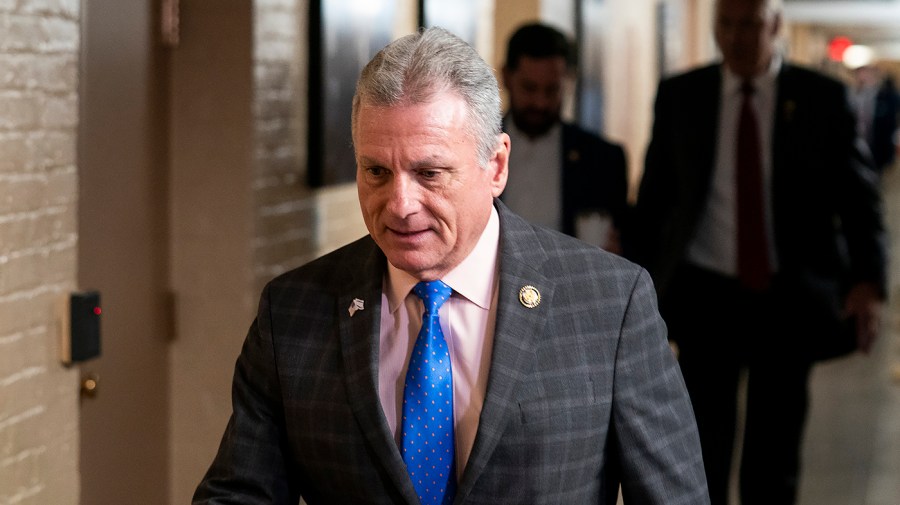
House Republicans confirm that concessions are an unavoidable aspect of ongoing negotiations to restore the Iran nuclear deal. Representative Michael McCaul, a prominent voice on foreign policy, has publicly acknowledged that any successful diplomatic resolution to the Joint Comprehensive Plan of Action (JCPOA) will require compromise from all parties. These discussions, which commenced in April 2021, aim to re-establish the 2015 agreement designed to prevent Iran from developing nuclear weapons in exchange for sanctions relief. The acknowledgement underscores the complex realities of international diplomacy and the political balancing act required to revive the accord.
The Joint Comprehensive Plan of Action (JCPOA)
The Joint Comprehensive Plan of Action (JCPOA), commonly known as the Iran nuclear deal, was initially signed in July 2015. The signatories included Iran and the P5+1 group: China, France, Germany, Russia, the United Kingdom, and the United States. This landmark agreement sought to curtail Iran’s nuclear program through stringent limitations on uranium enrichment, restrictions on centrifuges, and enhanced monitoring by the International Atomic Energy Agency (IAEA). In return, Iran received relief from international sanctions that had significantly impacted its economy.
The deal was predicated on the belief that a diplomatic pathway offered the most effective means to prevent nuclear proliferation in the Middle East. It established a framework for transparency and verification, aiming to provide the international community with confidence regarding the peaceful nature of Iran’s nuclear activities. The agreement represented years of meticulous negotiation and a significant shift in international relations with Iran.
U.S. Withdrawal and Iranian Escalation
The United States unilaterally withdrew from the JCPOA in May 2018 under the administration of then-President Donald Trump. This decision was based on arguments that the deal was insufficient to address Iran’s broader regional activities, its ballistic missile program, and its sunset clauses. The Trump administration subsequently re-imposed and expanded U.S. sanctions on Iran, initiating a policy of “maximum pressure.”
Following the U.S. withdrawal, Iran began to progressively reduce its commitments under the JCPOA. Starting in July 2019, Iran announced a series of steps away from the deal’s restrictions. These actions included exceeding limits on enriched uranium stockpiles, enriching uranium to higher purities, and reducing cooperation with IAEA inspectors. These moves were framed by Tehran as a response to the U.S. sanctions and a means to pressure the remaining parties to uphold their commitments.
The International Atomic Energy Agency (IAEA), the United Nations’ nuclear watchdog, has consistently reported on Iran’s escalating nuclear activities. IAEA Director General Rafael Grossi has repeatedly expressed concern over the diminishing transparency and the significant increase in Iran’s enriched uranium reserves. As of early 2026, IAEA reports confirm Iran’s uranium enrichment levels far exceed the 3.67% limit set by the JCPOA, reaching purities close to weapons-grade levels in some instances.
The Current Diplomatic Endeavor
Negotiations to restore the JCPOA commenced in Vienna, Austria, in April 2021. Representatives from the P4+1 (China, France, Germany, Russia, and the United Kingdom) have engaged directly with Iranian officials. The United States has participated indirectly in these talks, with European diplomats often serving as intermediaries. The primary objective is a mutual return to compliance: the U.S. would lift sanctions, and Iran would revert to the nuclear restrictions outlined in the 2015 agreement.
The talks have been characterized by intermittent progress, significant setbacks, and periods of impasse. Key challenges include disagreements over the scope of sanctions relief, the sequencing of actions, and Iran’s demands for assurances that a future U.S. administration would not again withdraw from the deal. European diplomats have played a crucial role in maintaining momentum and bridging divides between Washington and Tehran.
Core Obstacles in the Negotiations
- Comprehensive Sanctions Relief: Iran insists on the lifting of all sanctions imposed since 2018, including those unrelated to nuclear activities. The U.S. has expressed willingness to lift nuclear-related sanctions but aims to retain others targeting human rights and terrorism.
- Verification and Monitoring: The U.S. and its allies demand robust verification mechanisms to ensure Iran’s sustained compliance and to address the knowledge gap created by reduced IAEA access.
- Guarantees Against Future Withdrawal: Iran seeks legally binding assurances that any future U.S. administration would honor the deal, a demand that U.S. constitutional structures make difficult to meet.
- Regional Activities: While not part of the original JCPOA, some U.S. lawmakers and regional partners, particularly Israel and Saudi Arabia, advocate for addressing Iran’s ballistic missile program and its proxy activities in the Middle East.
Congressional Scrutiny and Acknowledged Concessions
U.S. House Republicans have maintained a critical stance on the Biden administration’s efforts to revive the JCPOA. They have consistently called for greater transparency regarding the details of the negotiations and have expressed concerns about potential concessions. Representative Michael McCaul (R-TX), the ranking member on the House Foreign Affairs Committee, has been a prominent voice in these discussions. In public statements and committee hearings, McCaul has acknowledged that the ongoing diplomatic process inherently involves concessions.
This acknowledgement from a leading Republican indicates a recognition of the diplomatic realities. McCaul has stated that while concessions may be necessary for an agreement, their nature and extent must be carefully scrutinized to ensure U.S. national security interests are protected. He has highlighted the need for any restored deal to be stronger and more comprehensive than the original, addressing perceived shortcomings related to Iran’s missile program and regional destabilization.
Republican Concerns Regarding a Revived Deal
- Weakening Sanctions: Republicans worry that lifting sanctions could provide Iran with significant financial resources, potentially funding its regional proxies and military programs.
- Insufficient Verification: Concerns persist that Iran could conceal aspects of its nuclear program if verification mechanisms are not sufficiently robust.
- Sunset Clauses: Critics argue that the original JCPOA’s sunset clauses, which gradually lift restrictions on Iran’s nuclear program, remain a fundamental flaw.
- Lack of Congressional Approval: Many Republicans argue that any new agreement should be submitted to Congress for approval as a treaty, ensuring legislative oversight.
The dialogue within Congress reflects a broader debate about the efficacy of diplomacy versus sanctions in managing Iran’s nuclear ambitions. While some lawmakers advocate for a diplomatic solution as the most practical path to de-escalation, others warn against any agreement that might be perceived as rewarding Iran’s non-compliance.
The Role of the International Atomic Energy Agency
The International Atomic Energy Agency (IAEA) remains central to monitoring Iran’s nuclear program. Its reports provide independent assessments of Iran’s compliance with its safeguards obligations and any nuclear deal in place. Since the U.S. withdrawal from the JCPOA, the IAEA’s access and monitoring capabilities have been significantly curtailed by Iran.
In February 2021, Iran began restricting some IAEA inspections, leading to a loss of continuity of knowledge regarding certain nuclear activities. This reduction in transparency has complicated international efforts to verify the peaceful nature of Iran’s program and has added urgency to the negotiations. IAEA Director General Grossi has consistently called for the restoration of full monitoring capabilities.
Historical Context of Iran’s Nuclear Program
Iran’s nuclear program has a long and complex history, dating back to the 1950s with initial support from the United States under the Atoms for Peace program. Following the 1979 Islamic Revolution, the program continued, leading to growing international concerns about its potential military dimensions. For decades, global efforts have focused on ensuring Iran’s nuclear program remains exclusively peaceful.
The JCPOA was the culmination of years of diplomatic engagement, aimed at achieving a verifiable and peaceful resolution. Its negotiation involved extensive technical discussions and political maneuvering, reflecting the high stakes involved in preventing nuclear proliferation.
Regional Implications and the Path Forward
The potential restoration of the Iran nuclear deal carries significant implications for stability in the Middle East. Regional rivals, notably Israel and Saudi Arabia, have consistently voiced strong concerns about Iran’s nuclear program and its broader influence. A revived JCPOA could potentially de-escalate regional tensions by bringing Iran’s nuclear program back under international oversight and limiting its capabilities. Conversely, a failure to reach an agreement could lead to further escalation, heightened proliferation risks, and increased instability in an already volatile region.
As of June 2026, negotiations continue, albeit without a clear timeline for conclusion. The U.S. administration maintains that diplomacy remains the preferred path to prevent Iran from acquiring nuclear weapons, while also reiterating that all options remain on the table. The acknowledged concessions by House Republicans highlight the intricate political and diplomatic landscape surrounding the deal. The ultimate outcome hinges on the willingness of all parties to navigate these complexities and find common ground.
Diplomats meet. Leaders deliberate. Experts analyze. The world watches.
Vienna.