Tag: Jcpoa

  • The Architecture of De-Escalation: Trump’s ‘Great Settlement’ with Iran

    The Architecture of De-Escalation: Trump’s ‘Great Settlement’ with Iran

    Former President Donald Trump has repeatedly characterized the de-escalation of military hostilities between the United States and the Islamic Republic of Iran in early 2020 as a “great settlement.” This framing refers specifically to the tense period following the January 3, 2020, targeted assassination of Iranian Major General Qasem Soleimani and Iran’s subsequent retaliatory missile strikes on the Al Asad Airbase in Iraq. Instead of spiraling into a full-scale theater war, both nations stepped back from the brink. The administration positioned this abrupt halt to kinetic military action, combined with a suffocating regime of economic sanctions, as a definitive diplomatic and strategic victory.

    The concept of a settlement in geopolitics usually implies a signed treaty. It implies diplomats sitting across a mahogany table in Geneva or Vienna. The US-Iran dynamic of 2020 featured none of those things. It was a settlement engineered through high-stakes military brinkmanship and severe economic isolation. It was a standoff that ended in silence rather than signatures.

    To understand the architecture of this perceived victory, one must examine the timeline that brought Washington and Tehran to the edge of war. The story does not begin with a drone strike in Baghdad. It begins two years earlier, in the diplomatic corridors of Washington D.C., with the dismantling of a legacy agreement.

    The End of the JCPOA and the Rise of Maximum Pressure

    On May 8, 2018, the United States officially withdrew from the Joint Comprehensive Plan of Action. The JCPOA, negotiated in 2015 under the Obama administration, had lifted key economic sanctions on Iran in exchange for strict limitations on its nuclear program. The Trump administration viewed the deal as fundamentally flawed. They argued it enriched a hostile regime while failing to address Iran’s ballistic missile program or its funding of proxy militias across the Middle East.

    Withdrawal triggered the implementation of the “Maximum Pressure” campaign. The strategy was straightforward. The United States would use its dominance over the global financial system to choke off the Iranian economy. The primary target was Iran’s lifeblood: crude oil exports.

    Before the US withdrawal from the JCPOA, Iran exported approximately 2.5 million barrels of oil per day. By late 2019, under the weight of secondary sanctions that penalized any foreign entity doing business with Tehran, those exports had plummeted. Estimates placed the new export volume at under 300,000 barrels per day. The Iranian rial collapsed in value. Inflation soared. The economic architecture of the Islamic Republic was placed under unprecedented stress.

    This economic vise is the foundation of what Trump refers to as the settlement. The administration believed that bankrupting the regime would force it to the negotiating table on American terms. However, Tehran did not capitulate. Instead, the Iranian government chose a strategy of calculated escalation. If Iran could not export its oil, it would ensure the broader region felt the pain.

    The Summer of Escalation in the Persian Gulf

    The summer of 2019 transformed the Persian Gulf into a flashpoint. The economic pressure from Washington yielded kinetic responses from Tehran. In May and June of 2019, a series of mysterious explosions damaged commercial oil tankers operating near the Strait of Hormuz. The United States military released video footage allegedly showing the Islamic Revolutionary Guard Corps removing unexploded limpet mines from the hull of a Japanese-owned tanker.

    The tension escalated dramatically on June 20, 2019. Iranian forces shot down an American RQ-4A Global Hawk surveillance drone operating over the Strait of Hormuz. The drone, valued at over $130 million, was destroyed by an Iranian surface-to-air missile. The destruction of a high-value American military asset pushed the two nations to the absolute edge of armed conflict.

    Military planners in the Pentagon drafted retaliatory strike options. Targets within Iran were selected. Fighter jets were reportedly readied. Yet, at the last minute, President Trump called off the strikes. He later cited the projected casualty count of 150 Iranians as disproportionate to the loss of an unmanned drone. This decision was the first major indicator of the administration’s broader strategy: apply maximum economic pressure, but avoid a ground war at all costs. It was the precursor to the ultimate “settlement” narrative.

    The Road to the Baghdad Airport

    The avoidance of war in June 2019 did not stabilize the region. The shadow war simply shifted from the waters of the Persian Gulf to the deserts of Iraq. Iranian-backed proxy militias, operating under the umbrella of the Popular Mobilization Forces, began a sustained campaign of rocket attacks against Iraqi military bases housing American personnel.

    On December 27, 2019, the shadow war claimed an American life. A rocket attack on the K-1 Air Base in Kirkuk province killed Nawres Hamid, an Iraqi-American civilian contractor working for the US military. Several American and Iraqi service members were also injured. The red line had been crossed.

    Two days later, the United States retaliated. American forces launched precision airstrikes against five facilities controlled by Kata’ib Hezbollah, an Iranian-backed militia operating in Iraq and Syria. The strikes killed at least 25 militia members. The response from Tehran was immediate. On December 31, thousands of protesters and militia supporters breached the outer perimeter of the United States Embassy in Baghdad. They set fires, smashed security cameras, and trapped American diplomatic personnel inside the compound.

    For the administration in Washington, the images of the besieged embassy evoked the traumatic memory of the 1979 Iran hostage crisis and the 2012 attack in Benghazi, Libya. A decisive, overwhelming response was deemed necessary to re-establish deterrence. The target selected was the architect of Iran’s proxy war strategy.

    The Strike on Qasem Soleimani

    Major General Qasem Soleimani was the commander of the Quds Force, the elite extraterritorial operations branch of the Islamic Revolutionary Guard Corps. He was widely considered the second most powerful man in Iran, answering only to Supreme Leader Ayatollah Ali Khamenei. Soleimani was the mastermind behind Iran’s network of proxy militias across Lebanon, Syria, Iraq, and Yemen. The United States considered him a terrorist responsible for the deaths of hundreds of American troops during the Iraq War.

    On the night of January 3, 2020, Soleimani arrived at Baghdad International Airport. He was met on the tarmac by Abu Mahdi al-Muhandis, the deputy commander of Iraq’s Popular Mobilization Forces. As their two-vehicle convoy departed the airport, an American MQ-9 Reaper drone fired AGM-114 Hellfire missiles. Both vehicles were obliterated. Soleimani and al-Muhandis were killed instantly.

    The assassination of a sovereign nation’s top military commander on foreign soil was an unprecedented escalation. The global community braced for a massive regional war. The Iranian government vowed “severe revenge.” The price of crude oil spiked. American military installations across the Middle East went on high alert. The narrative of a “great settlement” seemed impossible in the face of imminent conflict.

    Operation Martyr Soleimani and the Stand-Down

    The Iranian retaliation came in the early hours of January 8, 2020. Iran launched Operation Martyr Soleimani, firing more than a dozen ballistic missiles from its own territory directly at two Iraqi military bases housing American troops. The primary target was the Al Asad Airbase in western Iraq.

    The missile barrage was massive. The munitions carried warheads weighing up to 2,000 pounds. They destroyed aircraft hangars, living quarters, and maintenance facilities. Yet, when the dust settled and the sun rose over the Iraqi desert, a crucial fact emerged. No American or Iraqi personnel had been killed. Early warning systems had provided enough time for troops to seek shelter in hardened bunkers. While over 100 American service members were later diagnosed with traumatic brain injuries from the concussive blasts, the lack of immediate fatalities provided a narrow window for diplomacy.

    This was the critical juncture. The United States had eliminated Iran’s top general. Iran had demonstrated its capability to strike American bases with precision ballistic missiles. Both sides had satisfied their domestic political requirements for projecting strength. The question was whether the cycle of retaliation would continue.

    It did not. In a televised address from the Grand Foyer of the White House later that morning, President Trump announced that Iran appeared to be “standing down.” He stated that the United States would impose additional punishing economic sanctions on the Iranian regime, but he did not announce further military strikes. The crisis was abruptly defused.

    Defining the Great Settlement

    This mutual step back from the abyss is the foundation of the “great settlement” narrative. From the perspective of the administration, the United States achieved its primary objectives without committing to a protracted, costly war in the Middle East. The top architect of Iranian proxy violence had been eliminated. The Iranian economy remained crushed under the weight of the Maximum Pressure campaign. And, crucially for a political base wary of foreign entanglements, no new ground troops were deployed to fight a regional conflict.

    The settlement was not a document. It was a newly established boundary of deterrence. The United States demonstrated it was willing to target the highest echelons of the Iranian military leadership. Iran demonstrated its ballistic missile capabilities but calibrated its response to avoid forcing an overwhelming American counter-attack.

    This dynamic allowed the administration to claim a definitive victory. The framing of a “great settlement” resonates because it speaks to the dual desires of the American electorate: the projection of undeniable global strength and the avoidance of endless overseas wars. The administration argued that true peace is achieved through strength, and that the economic devastation of Iran combined with the targeted elimination of Soleimani forced Tehran into a de facto submission.

    The Legacy of the Standoff

    The geopolitical reality of the Middle East remains complex. The Islamic Republic of Iran did not collapse under the weight of economic sanctions. The proxy militias in Iraq, Syria, and Yemen continued to operate, albeit without the centralized, charismatic leadership of Qasem Soleimani. Iran’s nuclear program, freed from the constraints of the JCPOA, advanced significantly in the years following the American withdrawal.

    Yet, the specific framing of the 2020 de-escalation as a settlement endures in political discourse. It serves as a stark contrast to previous diplomatic approaches. Where previous administrations utilized pallets of cash and complex multinational treaties to manage Iranian behavior, the Trump administration utilized drone strikes and unilateral financial blockades.

    The events of January 2020 fundamentally altered the rules of engagement between Washington and Tehran. The shadow war came into the light, reached a terrifying crescendo, and then abruptly paused. The term “settlement” may stretch the traditional diplomatic definition, but it accurately describes the sudden, deliberate cessation of kinetic hostilities.

    The architecture of this outcome was built on calculated risk. It relied on the assumption that the Iranian regime valued its own survival above the pursuit of immediate, catastrophic revenge. It relied on the power of the American dollar to isolate a nation state. It relied on the precision of a Hellfire missile to remove a specific battlefield commander without triggering a broader mobilization.

    The rhetoric of victory requires a defined endpoint. In the complex, generational struggle between the United States and Iran, definitive endpoints are rare. The events of early 2020 provided a moment of stark clarity. A line was drawn in the desert. A response was delivered. A pause was initiated.

    Diplomats watched the skies. Generals calculated the payloads. Politicians weighed the polls. Stand-down.
  • The Illusion of Diplomacy – Why Nikki Haley Says Iran Was Never Going to Do a Deal

    The Illusion of Diplomacy – Why Nikki Haley Says Iran Was Never Going to Do a Deal

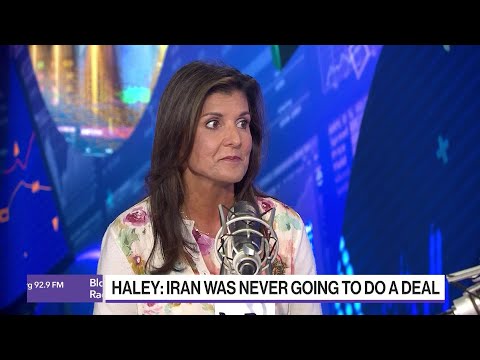
    Former UN Ambassador Nikki Haley stated on Bloomberg Television that Iran never intended to finalize a renewed nuclear deal, using diplomatic negotiations primarily as a stalling tactic to advance uranium enrichment and fund proxy networks. The illusion of a renewed Joint Comprehensive Plan of Action (JCPOA) has anchored Western foreign policy for years. But the reality on the ground tells a different story.

    Haley’s assessment cuts through the diplomatic optimism that characterized the early years of the Biden administration. Negotiations in Vienna stretched on for months. Envoys exchanged drafts. European intermediaries carried messages back and forth. All the while, Tehran’s centrifuges kept spinning.

    The premise of the talks was a return to the 2015 framework. The United States would lift economic sanctions. In exchange, Iran would dismantle advanced centrifuges and ship out enriched uranium. It was a transactional equation. Haley argues the equation was fundamentally flawed because one side was never doing the math.

    The Bloomberg Television Declaration

    Speaking directly to the global markets and political observers on Bloomberg Television, Haley dismissed the notion of Iranian diplomatic sincerity. Her stance reflects a growing consensus among national security hawks and intelligence analysts.

    The regime in Tehran, led by Supreme Leader Ayatollah Ali Khamenei, views the West with fundamental hostility. A diplomatic signature was never the end goal. The end goal was survival, regional hegemony, and nuclear threshold status.

    “They were never going to do a deal. It was always a stalling tactic to get exactly what they wanted., Nikki Haley, speaking on Bloomberg Television.

    This perspective reframes the last three years of international relations. If Iran was never going to sign a deal, the negotiations were not a failure of diplomacy. They were a successful Iranian intelligence operation.

    The Architecture of an Illusion

    To understand Haley’s position, one must look back to the original 2015 Joint Comprehensive Plan of Action. Brokered by the Obama administration alongside the P5+1 nations, the deal offered Tehran billions of dollars in sanctions relief.

    The theory of change in 2015 was straightforward. Economic integration would moderate Iranian behavior. A wealthier Iran would become a more responsible stakeholder in the Middle East. The nuclear threat would be boxed in for a decade or more.

    That theory collapsed almost immediately. The financial windfall from unfrozen assets did not build hospitals or schools in Tehran. It flowed directly to the Islamic Revolutionary Guard Corps (IRGC). It funded the Quds Force. It armed proxy militias across the Levant.

    The Fatal Flaws of the JCPOA

    Critics of the 2015 agreement, including Haley during her tenure at the United Nations, pointed to specific structural failures in the text.

    • Sunset Clauses: Key restrictions on uranium enrichment and centrifuge manufacturing were designed to expire after 10 to 15 years.
    • Ballistic Missiles: The agreement completely ignored Iran’s development of intercontinental ballistic missiles, the exact delivery systems required for a nuclear payload.
    • Inspection Limits: The International Atomic Energy Agency (IAEA) faced significant hurdles in accessing undeclared military sites where illicit nuclear work was suspected.

    These omissions provided Tehran with a legal pathway to a massive nuclear infrastructure, provided they simply waited out the clock.

    The 2018 Pivot and Maximum Pressure

    In May 2018, the Trump administration officially withdrew the United States from the JCPOA. Nikki Haley served as the U.S. Ambassador to the United Nations during this critical pivot.

    The withdrawal initiated the “Maximum Pressure” campaign. The U.S. Treasury Department reimposed crippling secondary sanctions on the Iranian oil and banking sectors. The goal was to force Tehran back to the table for a broader, more comprehensive treaty.

    Iran responded with strategic patience. The regime absorbed the economic blow, betting that a future U.S. administration would reverse course. When the political winds in Washington shifted in 2021, Tehran was ready to play the diplomatic game again.

    Buying Time in Vienna

    When efforts to revive the deal began in early 2021, the venue was the Hotel Coburg in Vienna. U.S. Special Envoy Robert Malley led the American delegation, though Iranian diplomats refused to meet face-to-face with Americans. European diplomats shuttled between rooms.

    The talks dragged on for over eighteen months. Every time a finalized text appeared imminent, Iranian negotiators introduced new, extraneous demands.

    First, they demanded a guarantee that no future U.S. president could withdraw from the deal. Then, they demanded the Biden administration remove the IRGC from the State Department’s Foreign Terrorist Organization (FTO) list. Finally, they demanded the IAEA close its ongoing investigations into unexplained uranium particles found at undeclared sites.

    Haley points to this exact sequence of events. The shifting goalposts were not a sign of tough negotiation. They were a sign of intentional sabotage. Tehran needed time, and Vienna provided the cover.

    The Centrifuges Never Stopped

    While diplomats argued over bracketed text in Austrian hotels, Iranian scientists worked quietly at the Natanz and Fordow nuclear facilities. The diplomatic cover allowed them to breach every limit set by the original 2015 agreement.

    IAEA Director General Rafael Grossi repeatedly warned the international community. Iranian technicians disconnected IAEA surveillance cameras. They denied inspectors access to key facilities. Most alarmingly, they installed cascades of advanced IR-6 centrifuges.

    The 60 Percent Threshold

    By late 2022, the IAEA confirmed that Iran was enriching uranium to 60 percent purity. This is a massive technical leap. In the complex physics of uranium enrichment, reaching 60 percent requires the vast majority of the effort. Going from 60 percent to the 90 percent required for weapons-grade material is a short, rapid step.

    Experts now estimate Iran’s “breakout time”, the time required to produce enough weapons-grade uranium for a single nuclear bomb, has shrunk from a year under the JCPOA to a matter of weeks, if not days.

    This is the reality Haley highlights. The regime achieved nuclear threshold status while the West was distracted by the promise of a signature.

    The Shadow Economy and the Proxy War

    The stalling tactic did more than just protect the nuclear program. It allowed Iran to rebuild its economy through illicit means. The enforcement of U.S. sanctions softened during the negotiation period, as Western powers sought to maintain goodwill with Tehran.

    Iran capitalized on this hesitation. A massive “shadow fleet” of aging oil tankers began transporting millions of barrels of crude oil to independent refineries in China. The revenue from these illicit sales stabilized the regime’s currency and refilled the coffers of the IRGC.

    That money was immediately deployed across the Middle East. The results of this funding became violently apparent in the latter half of 2023 and into 2024.

    • Hamas in Gaza: Tehran provided millions in funding, training, and smuggled weaponry to Hamas, enabling the October 7 attacks against Israel.
    • Hezbollah in Lebanon: The IRGC continued to supply precision-guided munitions to Hezbollah, creating a massive strategic threat on Israel’s northern border.
    • The Houthis in Yemen: Iranian intelligence ships and weapons transfers empowered Houthi militants to effectively shut down commercial shipping in the Red Sea, directly challenging the global economy.

    None of this would have been possible without the financial breathing room afforded by the prolonged, illusory negotiations in Vienna.

    The Death of the Deal and a Strategic Shift

    Today, the prospect of a revived JCPOA is effectively dead. The Biden administration has publicly stated that the deal is no longer on the agenda. The bipartisan consensus in Washington has shifted significantly toward Haley’s stated position.

    The realization that Iran was never going to do a deal forces a total recalculation of Western strategy. Diplomacy, in the traditional sense, has failed. The focus must now shift to deterrence, regional security architecture, and economic containment.

    The Abraham Accords, which normalized relations between Israel and several Arab nations, represent the future of Middle Eastern security. A unified coalition of nations threatened by Iranian expansionism is the only viable counterweight to Tehran’s ambitions.

    The era of trusting the process is over. The international community spent years chasing a mirage in Vienna. The regime in Tehran used that time exactly as they intended. They enriched uranium. They armed their proxies. They sold their oil.

    Diplomats drafted frameworks. Inspectors monitored cameras. Politicians debated terms. The deal was an illusion. Tehran.

  • The Oak Ridge Summit: Inside the Trump Administration’s Quiet Iran Strategy

    The Oak Ridge Summit: Inside the Trump Administration’s Quiet Iran Strategy

    The Meeting in the Mountains

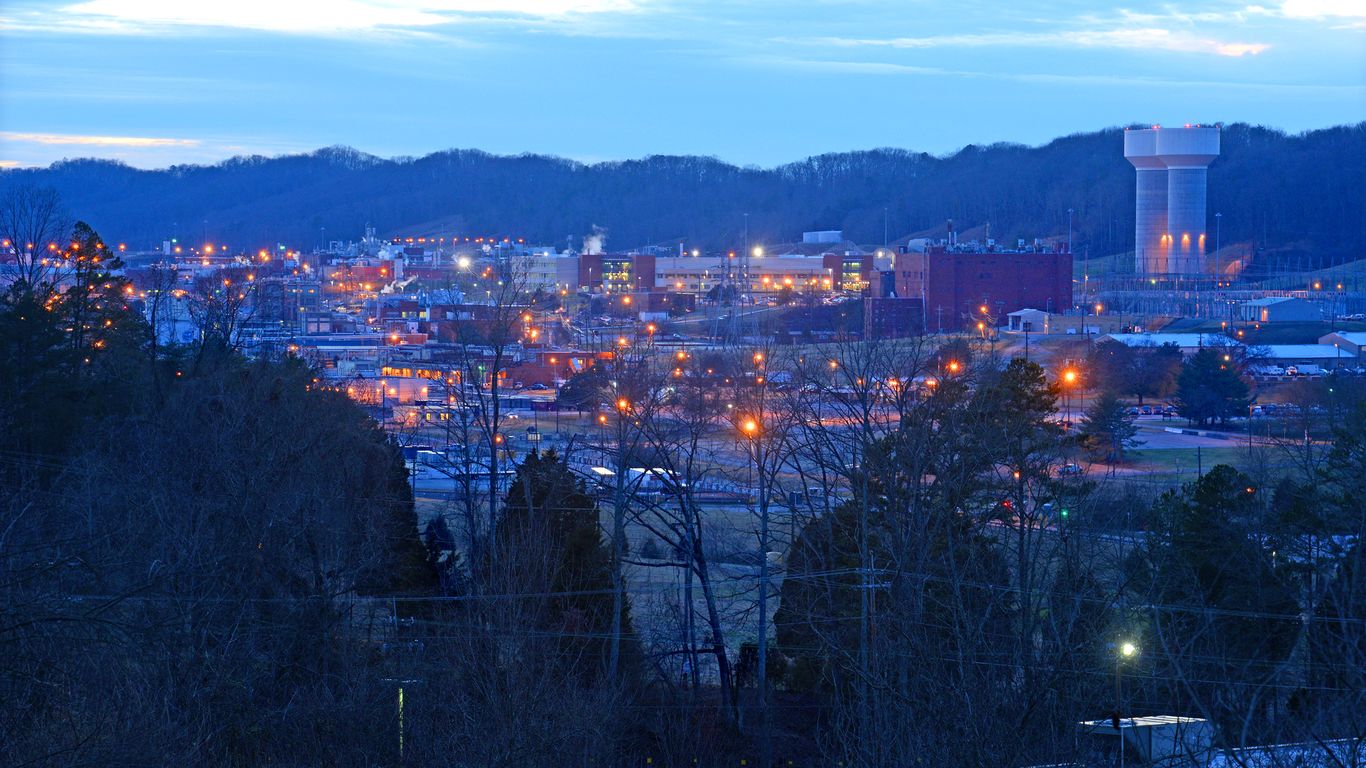
    In early June 2026, Trump administration envoys Jared Kushner and Steven Witkoff quietly convened a summit of America’s top nuclear physicists in Oak Ridge, Tennessee, to assess the exact timeline of Iran’s nuclear weapon breakout capabilities. The meeting did not happen in Washington, D.C. It did not take place in the secure briefing rooms of the Pentagon or the basement of the State Department. It happened in the shadow of the Smoky Mountains.

    The location was deliberate. Oak Ridge National Laboratory and the adjacent Y-12 National Security Complex hold the institutional memory of American atomic power. When policymakers need to understand the physics of destruction, they go to Tennessee.

    Kushner and Witkoff arrived with a specific mandate. The second Trump administration faced a shrinking window in the Middle East. Iran’s uranium enrichment had advanced. The White House needed unvarnished technical truths. They needed to know exactly how long it would take Tehran to bridge the gap between highly enriched uranium and a functional nuclear warhead.

    The physicists provided the math. The envoys took the notes. The geopolitical calculus of the entire Middle East hinged on the numbers discussed in those windowless rooms.

    The Architecture of American Atomic Power

    To understand why the envoys traveled to Tennessee, one must understand the history of the valley. Oak Ridge was built in secret in 1943. It was the engine of the Manhattan Project. The Clinton Engineer Works, as it was known then, was tasked with a single, monumental objective: enriching uranium for the first atomic bomb.

    Today, the Y-12 National Security Complex remains the premier facility for handling highly enriched uranium in the United States. It stores the bulk of the nation’s weapons-grade material. It dismantles old warheads. It evaluates foreign nuclear threats. The scientists working inside its perimeter fences understand the precise engineering required to turn uranium hexafluoride gas into a weapon core.

    They know the challenges of metallurgy. They know the difficulties of explosive lensing. They know exactly what obstacles Iranian scientists face in their underground laboratories.

    Diplomats read intelligence reports. The scientists at Oak Ridge read the physics. The envoys needed the latter to validate the former.

    The Envoys and the Assignment

    Jared Kushner and Steven Witkoff operate outside the traditional foreign policy establishment. They are not career diplomats. They are dealmakers rooted in the world of high-stakes real estate. This background defines their approach to international relations.

    During the first Trump administration, Kushner bypassed traditional State Department channels to broker the Abraham Accords in 2020. That agreement normalized relations between Israel and several Arab nations, fundamentally altering the diplomatic architecture of the Middle East. Witkoff, a trusted confidant of the President, brings a similar transactional pragmatism to the table.

    Their appointment as envoys for the Iran portfolio signals a specific White House strategy. The administration views the Iranian nuclear program not just as a security threat, but as a point of leverage. To negotiate effectively, or to authorize military action confidently, the envoys required an indisputable baseline of facts.

    They needed to know what was a bluff and what was a bomb.

    The Physics of Breakout

    The core of the Oak Ridge briefings centered on a concept known as “breakout time.” This is the duration required for a state to produce enough weapons-grade uranium for one nuclear device.

    Uranium found in nature consists mostly of the isotope U-238. Less than one percent is the fissile isotope U-235. To fuel a commercial nuclear reactor, uranium must be enriched to about 3 to 5 percent U-235. To build a nuclear bomb, it must be enriched to roughly 90 percent.

    The process is exponential, not linear. Enriching uranium from natural levels to 20 percent takes immense time and energy. Going from 20 percent to 60 percent is faster. The jump from 60 percent to 90 percent weapons-grade material requires very little time.

    By 2026, the International Atomic Energy Agency (IAEA) had repeatedly documented Iran enriching uranium to 60 percent purity. The math presented at Oak Ridge was stark. The breakout time was no longer measured in years or months. It was measured in days.

    The Fortresses of Natanz and Fordow

    The envoys reviewed satellite imagery and structural intelligence regarding Iran’s primary enrichment facilities. The geography of the Iranian nuclear program is designed for survival.

    The Natanz facility is the heart of the program. It houses thousands of advanced centrifuges, specifically the IR-6 models, which spin at supersonic speeds to separate uranium isotopes. While parts of Natanz have been vulnerable to sabotage in the past, Iran has continually moved operations deeper underground.

    The Fordow Fuel Enrichment Plant presents a more severe challenge. Fordow is built deep inside a mountain near the holy city of Qom. It is heavily fortified. It is protected by layers of rock, reinforced concrete, and advanced air defense systems.

    The Oak Ridge scientists analyzed the operational capacity of these facilities. They calculated the output of the IR-6 cascades. They mapped the subterranean architecture. The envoys needed to know if these fortresses were impenetrable.

    The Ghost of the JCPOA

    The strategic environment of 2026 is haunted by the Joint Comprehensive Plan of Action (JCPOA). Brokered in 2015, the agreement placed strict limits on Iran’s nuclear program in exchange for sanctions relief. In May 2018, the first Trump administration unilaterally withdrew from the deal, initiating a “maximum pressure” campaign.

    The maximum pressure strategy crippled the Iranian economy. It severely restricted Tehran’s ability to export oil. But it did not stop the centrifuges. In response to the U.S. withdrawal, Iran systematically breached the limits of the JCPOA, installing faster centrifuges and stockpiling highly enriched uranium.

    The Oak Ridge summit was an acknowledgment of this new reality. The old frameworks were dead. The envoys were not looking backward at the JCPOA. They were looking forward at a binary choice: a new, comprehensive diplomatic settlement, or a kinetic military strike.

    The Regional Chessboard

    The intelligence reviewed in Tennessee did not exist in a vacuum. It was directly tied to the security postures of American allies in the Middle East.

    Israel considers a nuclear-armed Iran an existential threat. The leadership in Tel Aviv has consistently maintained that they will not allow Tehran to cross the nuclear threshold. Israeli intelligence agencies, notably the Mossad, conduct continuous covert operations aimed at disrupting the Iranian program.

    Saudi Arabia, a key rival of Iran, watches the enrichment levels closely. Riyadh has signaled that if Iran acquires a nuclear weapon, the Kingdom will seek to develop its own deterrent. The specter of a nuclear arms race in the Middle East loomed over the Oak Ridge briefings.

    Kushner and Witkoff understood that any U.S. policy decision would trigger a cascade of reactions from Tel Aviv to Riyadh. The technical baseline established in Tennessee would dictate the diplomatic messaging to these allies.

    The Military Contingency

    Diplomacy requires the credible threat of force. The envoys were briefed on the military options available to the Commander-in-Chief.

    Striking the Iranian nuclear facilities is a monumental logistical and tactical challenge. Standard munitions cannot penetrate the rock above Fordow. The United States Air Force maintains a specialized weapon for this exact scenario: the GBU-57 Massive Ordnance Penetrator (MOP).

    The MOP is a 30,000-pound precision-guided bunker buster. It is designed to drill through hundreds of feet of earth and reinforced concrete before detonating. It is carried exclusively by the B-2 Spirit stealth bomber.

    The Oak Ridge scientists understand the explosive yield required to collapse a subterranean centrifuge hall. They provided the damage assessments. But the envoys also understood the geopolitical fallout. A military strike would not happen in isolation. It would likely ignite a regional war, drawing in the Islamic Revolutionary Guard Corps (IRGC) and proxy forces like Hezbollah in Lebanon. It would threaten global shipping in the Strait of Hormuz.

    The Diplomatic Backchannel

    The alternative to war is a deal. While public rhetoric remains hostile, the mechanics of international relations often rely on quiet backchannels.

    Nations like Oman and Qatar frequently serve as intermediaries between Washington and Tehran. Messages are passed. Red lines are communicated. The envoys needed the Oak Ridge data to define those red lines with absolute precision.

    You cannot negotiate limits if you do not understand the physics. You cannot demand the removal of specific centrifuge cascades if you do not know their output capacity. The scientists provided the technical vocabulary required for any future backchannel negotiation. They defined what concessions were meaningful and what concessions were merely cosmetic.

    The Weight of the Information

    The briefings concluded. The classified documents were secured. The envoys prepared to return to Washington.

    They left Tennessee with a clear, unambiguous picture of the threat. The ambiguity of intelligence estimates was replaced by the cold, hard mathematics of nuclear physics. The timeline was set. The capabilities were known.

    The decisions that would follow would shape the stability of the Middle East for a generation. The centrifuges in Natanz continued to spin. The diplomats in Vienna continued to talk. The strategists in Washington continued to plan.