Tag: Hollywood

  • Ice Cube and Nia Long Reunite for ‘Are They Gone Yet?’, The 2026 Legacy Sequel

    Ice Cube and Nia Long Reunite for ‘Are They Gone Yet?’, The 2026 Legacy Sequel

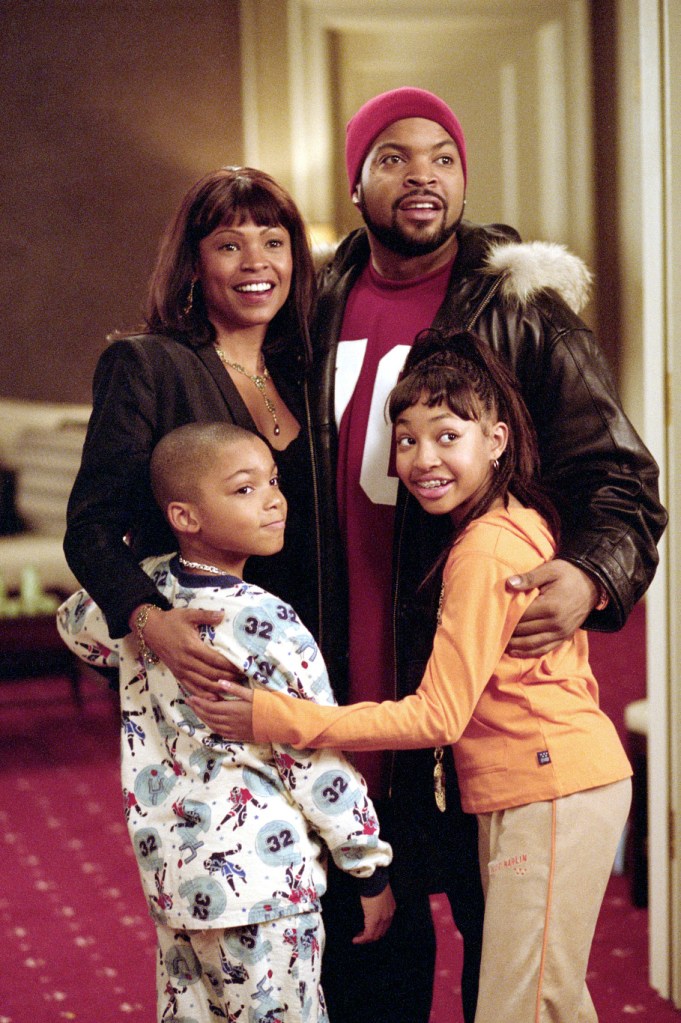
    Ice Cube and Nia Long are officially reuniting for “Are They Gone Yet?”, a legacy sequel to the 2005 family comedy “Are We There Yet?”, currently in development under Skydance Sports in 2026. The project brings the original stars back to the franchise twenty-one years after their characters first survived a disastrous road trip from Portland, Oregon, to Vancouver, British Columbia. The announcement signals a shift in Hollywood’s nostalgia mining, moving beyond action blockbusters to resurrect the mid-2000s family comedy. What looks like a simple casting reunion is actually a calculated play on generational demographics.

    In 2005, the original film asked a simple question about a bachelor surviving a road trip with two hostile children. In 2026, the new title flips the premise. “Are They Gone Yet?” points directly to the modern reality of the boomerang generation. The children have grown. The parents want their house back. The audience that watched the original film in middle school is now dealing with their own housing crises and family dynamics. Hollywood knows exactly who this movie is for.

    The 21-Year Evolution of Nick and Suzanne

    The story of Nick Persons and Suzanne Kingston did not stop in 2005. The franchise has a long, highly monetized history that laid the groundwork for this 2026 revival.

    The 2005 Road Trip That Changed Everything

    Released on January 21, 2005, “Are We There Yet?” was a financial triumph for Revolution Studios and Columbia Pictures. Directed by Brian Levant, the film operated on a modest $32 million budget. It grossed $97.9 million worldwide. The premise was aggressively simple. Nick Persons, a child-hating sports memorabilia dealer played by Ice Cube, buys a brand-new Lincoln Navigator. He falls for Suzanne Kingston, a divorced event planner played by Nia Long. To win her over, he agrees to transport her two children, Lindsey and Kevin (played by Aleisha Allen and Philip Daniel Bolden), up the Pacific Northwest coast.

    The children systematically destroy the SUV. They destroy Nick’s patience. They eventually break down his emotional walls. The film ended with a makeshift family formed in the wreckage of a luxury vehicle. It was a critical punching bag. It was a massive commercial hit.

    The 2007 Suburban Expansion

    Hollywood does not leave money on the table. Two years later, Revolution Studios released “Are We Done Yet?” on April 4, 2007. The sequel abandoned the road trip format entirely. It functioned as a loose remake of the 1948 Cary Grant comedy “Mr. Blandings Builds His Dream House.” Nick and Suzanne were married. Suzanne was pregnant. They moved from the city to a sprawling, decaying suburban fixer-upper.

    The film introduced Chuck Mitchell Jr., an eccentric local contractor played by John C. McGinley, who served as the primary antagonist and eventual friend. The sequel grossed $58 million globally. It proved the characters had legs beyond the confines of a Lincoln Navigator. It established Nick and Suzanne as a permanent fixture in the 2000s comedy landscape.

    The 10/90 Syndication Television Play

    The franchise then made a revolutionary pivot. In 2010, “Are We There Yet?” became a television sitcom on TBS. Ice Cube transitioned to an executive producer role, though he occasionally guest-starred as Suzanne’s brother. Terry Crews took over the role of Nick Persons. Essence Atkins stepped in as Suzanne.

    The show utilized the aggressive 10/90 syndication model pioneered by Debmar-Mercury. If the first 10 episodes hit specific ratings targets, the network was contractually obligated to order 90 more episodes immediately. The gamble worked. The show ran for exactly 100 episodes between 2010 and 2013, securing massive syndication profits. The intellectual property was thoroughly embedded in American living rooms.

    Why Skydance Sports?

    The most revealing detail of the 2026 announcement is the production company. Skydance Sports is backing “Are They Gone Yet?”. This is not a traditional comedy studio.

    Founded in 2021 as a joint venture between David Ellison’s Skydance Media and the NFL, Skydance Sports built its reputation on projects like the 2023 Ben Affleck film “Air” and high-end sports documentaries. Their involvement in a family comedy sequel seems incongruous at first glance. But the original text holds the key.

    “Nick Persons was never just a bachelor. He was a sports memorabilia dealer. His prized possession was a Satchel Paige bobblehead that spoke to him in the voice of Tracy Morgan.”

    Skydance Sports focuses on narratives adjacent to athletics. If Nick Persons still operates in the sports collectible space, an industry that exploded into a multi-billion-dollar alternative asset class during the 2020s, the production company fit makes perfect sense. The sequel will likely anchor its plot in the modern sports memorabilia boom, blending family comedy with the high-stakes world of sports auctions and collectibles.

    Ice Cube’s Masterclass in Audience Retention

    The return of Nick Persons highlights one of the most successful career pivots in Hollywood history. O’Shea Jackson began his career terrifying middle America. As the primary lyricist for N.W.A. on the 1988 album “Straight Outta Compton,” he was the architect of gangsta rap. His early film roles in “Boyz n the Hood” (1991) and “Higher Learning” (1995) cemented him as a serious, dramatic force.

    Then came “Friday” in 1995. Ice Cube proved he could write and anchor a comedy. But it was the early 2000s that defined his financial empire. “Barbershop” (2002) and “Are We There Yet?” (2005) transitioned him from an R-rated cultural provocateur to a PG-rated family staple.

    • He retained his core audience as they aged.
    • He captured their children through family-friendly releases.
    • He built franchises that could be serialized and syndicated.

    By 2026, Ice Cube represents multi-generational nostalgia. He is simultaneously a rap legend to Generation X, a comedy icon to Millennials, and the frustrated dad from cable reruns to Generation Z.

    Nia Long and the Architecture of the Modern Rom-Com

    Nia Long’s return as Suzanne Kingston is equally vital to the project’s viability. Long is a foundational pillar of Black Hollywood. Her run through the 1990s and early 2000s is unmatched in its cultural resonance.

    From “Boyz n the Hood” to “Friday,” from “Love Jones” (1997) to “The Best Man” (1999) and “Big Momma’s House” (2000), Long defined the modern romantic lead. She brought a specific gravity to “Are We There Yet?”. Suzanne Kingston was not just a foil for Nick Persons; she was the emotional anchor that made his transformation believable.

    In 2026, Long’s presence elevates “Are They Gone Yet?” from a simple cash-grab to a genuine cultural event. Audiences have a deeply rooted parasocial relationship with her characters. Seeing Suzanne navigate the complexities of adult children and an aging marriage provides the emotional hook the sequel requires.

    The Economics of the 2026 Legacy Sequel

    Hollywood in 2026 operates on a strict diet of established IP. Original concepts carry immense financial risk. The legacy sequel, bringing back original cast members decades later to pass the torch or confront their age, has become the industry’s safest bet.

    The Boomerang Generation Meets Hollywood

    The genius of “Are They Gone Yet?” lies in its thematic update. The children from the 2005 film, Lindsey and Kevin, would now be in their late twenties or early thirties. The modern economic reality features millions of adults moving back into their childhood homes due to housing costs and inflation.

    A comedy about Nick Persons finally getting his house to himself, only to have his adult stepchildren move back in, writes itself. It mirrors the exact frustrations of the core audience. It allows the film to comment on the modern economy without abandoning its slapstick roots. It gives Ice Cube a new reason to scowl.

    What Happens Next

    Development under Skydance Sports will move quickly. Casting announcements regarding the adult versions of Lindsey and Kevin will dictate the specific comedic tone of the film. The script will need to balance 2005 nostalgia with 2026 sensibilities.

    The original audience is ready. The stars are aligned. The intellectual property is secure. The industry knows the formula.

    The minivan is gone.

    The empty nest is full again.

    The headache returns.

    Hollywood.
  • Aubrey Plaza Confirms ‘Kevin’ Cancellation, Seeks New Network Home in 2026

    Aubrey Plaza Confirms ‘Kevin’ Cancellation, Seeks New Network Home in 2026

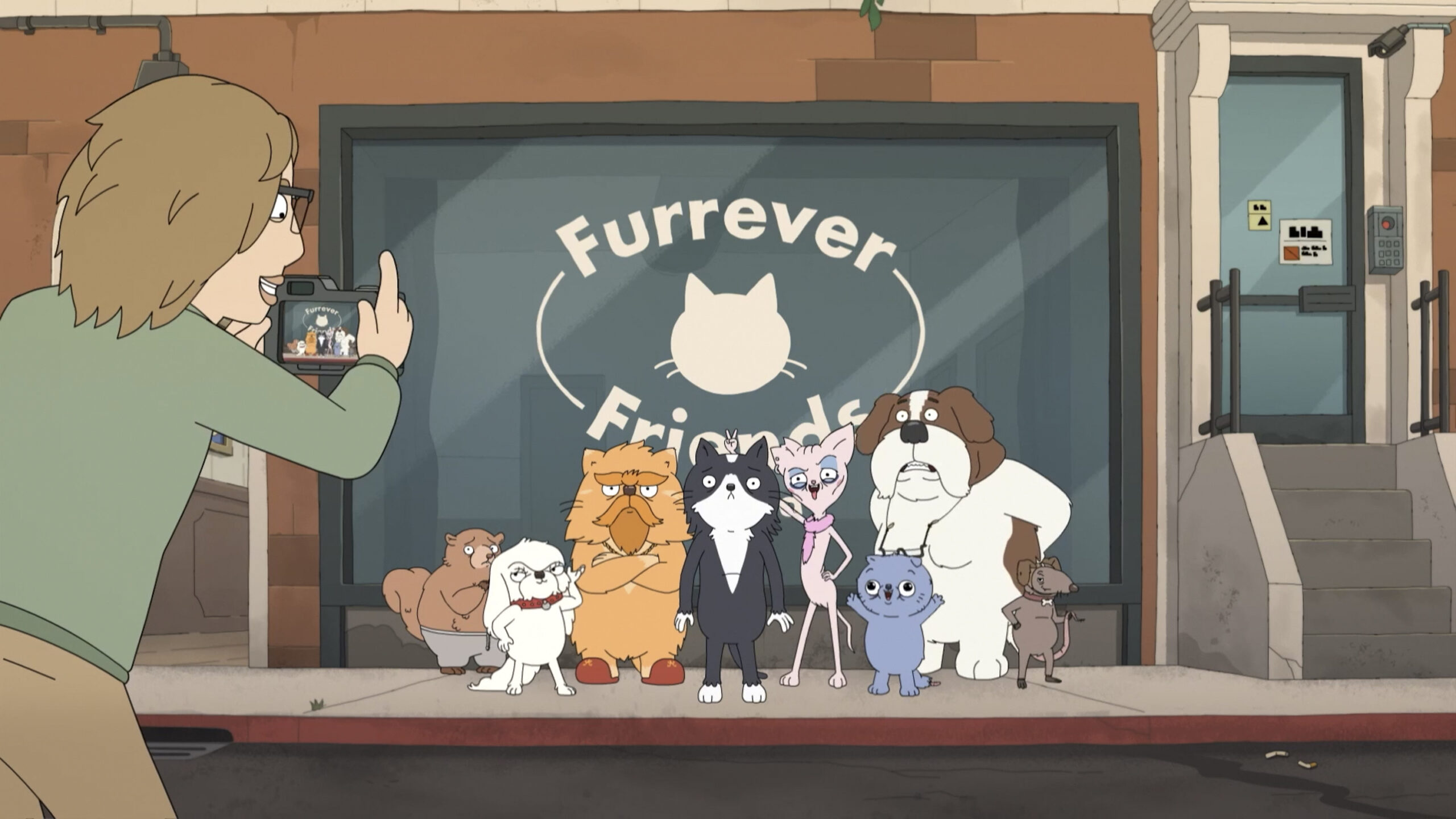
    On June 20, 2026, actress and executive producer Aubrey Plaza announced that her highly anticipated animated series Kevin had been officially canceled by its original streaming network before completing its intended run. The announcement confirmed weeks of industry speculation regarding the project’s fate. Plaza, operating through her production banner Evil Hag Productions, immediately pivoted the narrative from defeat to defiance. She stated publicly that she hopes the show will find a new owner someday. Her team is currently shopping the intellectual property to alternative networks and streaming platforms.

    The cancellation of Kevin is not just an isolated creative setback. It represents the harsh realities of the 2026 streaming ecosystem. What looks like a simple network pass is actually a symptom of a much larger financial contraction happening across Hollywood.

    The Anatomy of a Friday Cancellation

    The news arrived in the traditional Hollywood format. A quiet Friday afternoon press drop. Networks routinely utilize the end of the business week to bury unfavorable news regarding project terminations. Plaza chose to address the situation directly. Her statement cut through the standard corporate public relations language.

    She did not express gratitude for the journey. She expressed a desire for a new buyer. This approach aligns with Plaza’s established public persona. It also signals a shift in how creators handle network rejections in 2026. Silence is no longer the default strategy.

    Evil Hag Productions, founded by Plaza, has built a reputation for fiercely protecting its creative investments. The company successfully navigated the independent film market with Emily the Criminal in 2022 and expanded its footprint with My Old Ass in 2024. Kevin was intended to be the banner’s flagship entry into adult animation. The project had been in various stages of development for over three years. It featured Plaza’s signature deadpan comedic sensibilities mapped onto a surreal, animated landscape.

    Now, the project sits in legal limbo. The hard drives hold completed animatics, voice recordings, and finalized scripts. The network holds the initial broadcasting rights. Untangling that web requires capital, legal maneuvering, and a willing buyer.

    The 2026 Streaming Contraction

    To understand why Kevin was canceled, one must look at the macroeconomics of the entertainment industry in June 2026. The era of Peak TV is officially over. The industry has entered what financial analysts call Trough TV.

    Between 2019 and 2023, streaming platforms operated on a subscriber-growth model. Networks greenlit niche, creator-driven projects to build massive, diverse libraries. Wall Street rewarded subscriber acquisition above all else. That economic model fractured in late 2023 and completely shattered by 2025. Today, Wall Street demands immediate profitability. The focus has shifted from subscriber acquisition to average revenue per user and strict cost containment.

    Animation is particularly vulnerable to this shift. Animated projects require long lead times. They require significant upfront capital for storyboarding, voice talent, and rendering. When a network needs to balance its Q2 2026 earnings report, unreleased or underperforming animated projects become prime targets for the chopping block.

    The Write-Off Contagion

    The precedent was set in 2022 when Warner Bros. Discovery shelved the completed Batgirl film for a tax write-off. At the time, the industry viewed the move as a shocking anomaly. By 2026, it is standard operating procedure.

    Networks across the board, from Amazon MGM Studios to Netflix to Disney+, routinely cancel projects that do not meet strict algorithmic thresholds. If internal metrics project that a show will not drive a specific number of ad-tier impressions or retain subscribers in its first 72 hours, the project is terminated. The sunk costs are written off as tax losses. The creators are left holding the pieces.

    Kevin appears to be a casualty of this exact mathematical equation. It was a quirky, likely mid-budget animated series. It did not fit the four-quadrant, mass-appeal algorithm required by major streamers in 2026. Therefore, it became a line item on a ledger.

    The Reality of Shopping Canceled IP

    Plaza’s hope that Kevin will find a new owner is not without precedent. The industry has seen several high-profile resurrections in recent years. But the process is fraught with financial hurdles.

    When a production company shops a canceled show, they are not just pitching a creative vision. They are pitching a financial restructuring. The new buyer must typically reimburse the original network for the development costs already incurred. If the original network spent $5 million developing the animation assets, the new network must pay that $5 million just to open the door.

    This creates a massive barrier to entry. Independent platforms often lack the capital to buy out major streamers. Major streamers rarely want to buy hand-me-downs from their direct competitors.

    The Tuca & Bertie Precedent

    The most cited roadmap for Kevin is the animated series Tuca & Bertie. Netflix canceled the critically acclaimed adult animation project in 2019 after a single season. The creator, Lisa Hanawalt, and the production team successfully shopped the intellectual property to Adult Swim, which produced two additional seasons before canceling it again in 2022.

    Similarly, the animated feature Nimona was scrapped by Disney following the acquisition of Blue Sky Studios. Annapurna Pictures rescued the project, partnered with Netflix, and secured an Academy Award nomination in 2024.

    Evil Hag Productions will likely target networks with established adult animation blocks. Adult Swim remains the dominant player in this space under Warner Bros. Discovery. Hulu, despite Disney’s recent budget tightening, maintains a strong pipeline of adult animation. Independent distributors like A24 or Neon, both of which have been aggressively expanding their television footprints in 2025 and 2026, could also view Kevin as a prestige acquisition.

    Plaza’s Leverage in the Current Market

    Despite the broader industry headwinds, Plaza possesses significant individual leverage. Her career trajectory over the past five years has elevated her from a cult-comedy favorite to a mainstream, bankable star.

    Her Emmy-nominated performance in the second season of HBO’s The White Lotus proved her dramatic capabilities. Her involvement in Francis Ford Coppola’s Megalopolis and Marvel’s Agatha All Along demonstrated her viability in major franchise and auteur-driven projects. Networks want to be in business with Aubrey Plaza.

    The question is whether they want to be in business with Kevin. Evil Hag Productions will likely use Plaza’s on-screen availability as leverage. A network might agree to pick up the animated series if it also secures a first-look deal for Plaza’s future live-action projects.

    The Algorithmic Divide

    The cancellation of Kevin highlights the growing divide between creators and distributors. Creators want to build unique, challenging worlds. Distributors want predictable, measurable returns.

    Animation historically served as a safe haven for surreal, experimental storytelling. Shows like BoJack Horseman or Rick and Morty required time to find their audiences. In the 2026 streaming environment, that time no longer exists. If a show does not trend on social media and hit its completion-rate targets by its first Sunday on the platform, it is dead on arrival.

    Plaza’s refusal to let Kevin die quietly is a rejection of this new normal. It is a statement that intellectual property has value beyond its immediate algorithmic utility. It is a demand for creative sustainability.

    The coming months will determine if the industry agrees with her. Evil Hag Productions will compile the pitch decks. The agents at CAA will make the calls. The executives in Culver City and Burbank will run the numbers.

    Networks cut costs. Algorithms dictate the slate. The servers wipe the files. But creators keep the receipts. Plaza waits.

  • The Audition Error That Made Comedy History – Jennifer Coolidge’s ‘Legally Blonde’ Revelation

    The Audition Error That Made Comedy History – Jennifer Coolidge’s ‘Legally Blonde’ Revelation

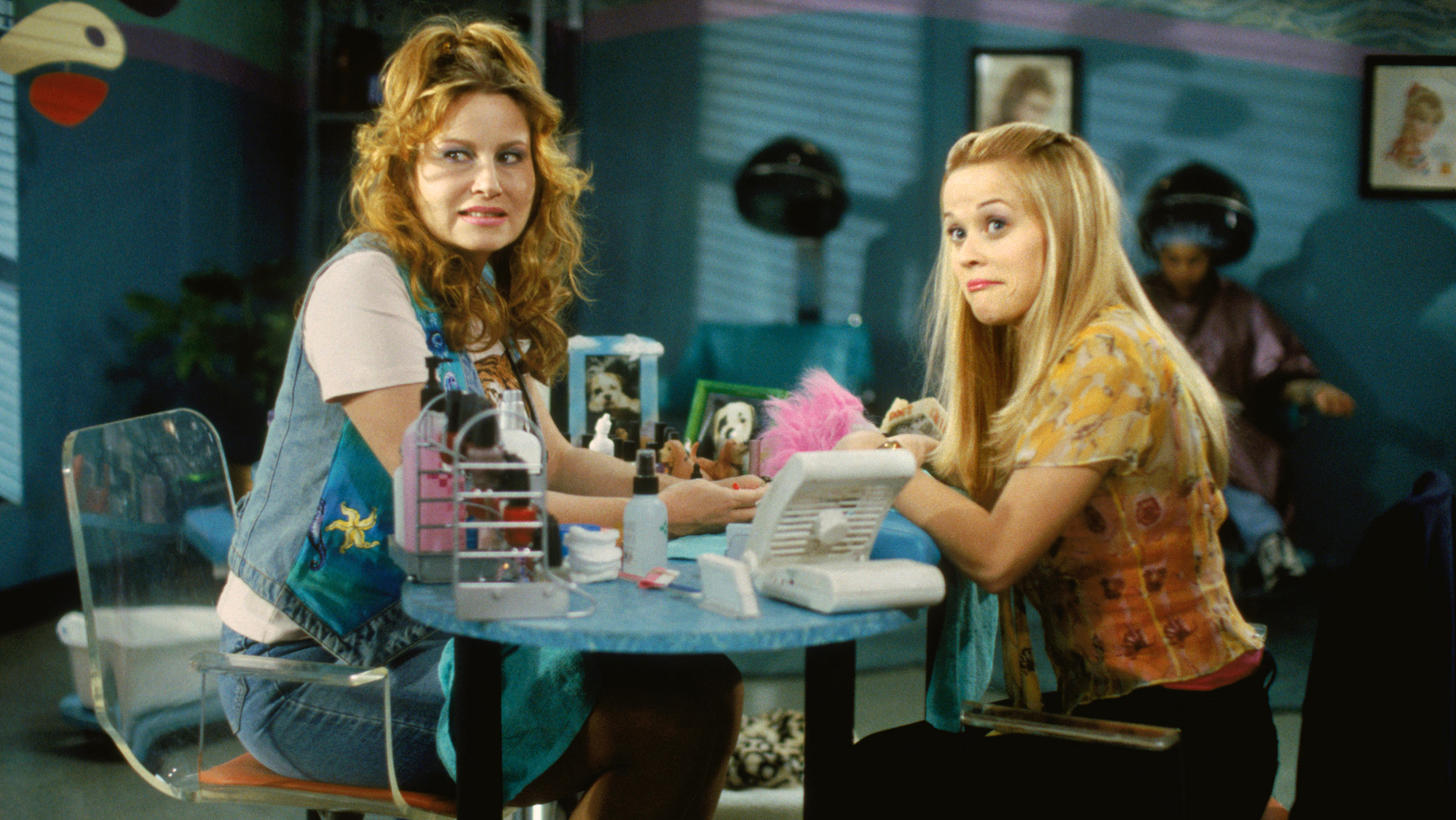
    In June 2026, actress Jennifer Coolidge revealed a decades-old Hollywood secret: she arrived at her audition for the 2001 comedy Legally Blonde believing she was reading for the lead role of Harvard-bound sorority girl Elle Woods. The role ultimately went to Reese Witherspoon. Coolidge instead secured the supporting part of Paulette Bonafonté, the Boston manicurist who became one of her signature characters.

    The admission surfaced in a report by Deadline Hollywood. Coolidge described the misunderstanding as a “stupid” mistake. She walked into the Metro-Goldwyn-Mayer casting room prepared to channel a bubbly, twenty-something fashion merchandising major.

    The reality of Hollywood casting quickly set in. The casting directors steered her toward the quirky, vulnerable salon worker. The misstep altered comedy history. Had Coolidge not walked into that room under false pretenses, the cinematic landscape of the early 2000s would look fundamentally different.

    The Anatomy of a 2000 Casting Room Error

    The year was 2000. Metro-Goldwyn-Mayer was actively assembling the cast for a new comedy based on Amanda Brown’s novel. The script, penned by Karen McCullah and Kirsten Smith, required a precise comedic tone.

    Director Robert Luketic was making his feature film debut. Casting director Joseph Middleton was tasked with finding the perfect ensemble. The search for Elle Woods was exhaustive. The studio needed an actress who could balance high-fashion frivolity with genuine intellectual grit.

    Coolidge received the audition materials. In the pre-digital era of Hollywood, sides were often faxed or couriered by agencies. Miscommunications were common. Coolidge, fresh off her breakout role in the 1999 teen comedy American Pie, read the script and assumed the studio wanted her for the lead.

    She prepared for Elle Woods. She memorized the dialogue intended for a character fourteen years her junior. She walked into the audition room ready to defend a fictional murder suspect using the rules of haircare.

    The casting team quickly realized the error. They did not dismiss her. Instead, they recognized her unique comedic rhythm. They handed her the sides for Paulette Bonafonté. A supporting character was born.

    From Stifler’s Mom to Boston Manicurist

    To understand the audacity of the misunderstanding, one must look at Coolidge’s career in the late nineties. She was a working actor fighting against immediate typecasting.

    In 1999, Universal Pictures released American Pie. Coolidge played Jeanine Stifler, globally recognized as “Stifler’s Mom.” The role was iconic but limiting. It cemented her as a hyper-sexualized comedic caricature.

    Hollywood executives rarely view character actors as leading ladies. The industry relies on established hierarchies. Coolidge wanted to break the mold. Auditioning for Elle Woods, even by mistake, represented a desire to step into the center of the frame.

    The pivot to Paulette proved to be a masterclass in scene-stealing. Paulette was not a caricature. She was a deeply insecure woman recovering from a toxic relationship with her ex-husband, Dewey. She just wanted to keep her dog, Rufus.

    Coolidge grounded the absurdity of the film. When Elle Woods enters the Neptune Beauty Salon, the movie shifts gears. The dynamic between the hyper-confident sorority girl and the defeated manicurist became the emotional anchor of the narrative.

    The Creation of a Cultural Phenomenon

    Legally Blonde hit theaters on July 13, 2001. Metro-Goldwyn-Mayer took a calculated risk on the summer release. The gamble paid off immediately.

    The film grossed $141.7 million worldwide against a modest $18 million production budget. It dominated the cultural conversation. It spawned a cottage industry of pink merchandise, legal parodies, and quotable dialogue.

    Coolidge’s performance generated one of the most recognizable sequences in modern cinema. The “Bend and Snap” routine. Choreographed in the middle of the salon, the move was designed to attract the attention of the UPS delivery man, played by Bruce Thomas.

    The scene is a masterclass in physical comedy. Coolidge executes the move with catastrophic results, breaking the delivery man’s nose. It remains one of the most frequently referenced moments in early 2000s pop culture. It does not exist without her specific comedic timing.

    The Economics of Early 2000s Comedies

    In the early 2000s, the mid-budget studio comedy was a reliable economic engine. Metro-Goldwyn-Mayer needed a summer hit. The film’s $141.7 million theatrical gross was only the beginning.

    The early 2000s marked the golden age of the DVD market. Home video sales and rental revenue from Blockbuster Video frequently doubled a film’s theatrical take. Legally Blonde became a staple of home entertainment.

    This repetition cemented the characters in the public consciousness. Paulette Bonafonté was no longer just a character in a movie theater. She was a fixture in millions of living rooms.

    Reese Witherspoon and the Fight for Elle

    While Coolidge was accidentally auditioning for the lead, Reese Witherspoon was actively fighting for it. Her path to Elle Woods was not guaranteed.

    Witherspoon had recently starred in the 1999 dark comedy Election. She played Tracy Flick, an intensely unlikable, overachieving high school student. Studio executives at Metro-Goldwyn-Mayer conflated the actor with the character. They feared Witherspoon was too abrasive to play the effervescent Elle Woods.

    Producer Marc Platt championed Witherspoon. He understood that Elle required a formidable intelligence hidden beneath a superficial exterior. Witherspoon met with studio head Marcel Sarmiento. She dressed the part. She proved she could carry the picture.

    The contrast between Witherspoon and Coolidge in the audition process highlights the subjective nature of casting. One actor had to prove she wasn’t too serious. The other actor didn’t realize she wasn’t supposed to be the star. Both ended up exactly where the film needed them.

    The Mechanics of Pre-Digital Casting

    In the year 2000, Breakdown Services delivered character descriptions to talent agencies via printed daily packets. Agents scoured these physical pages for opportunities.

    When a match was found, physical scripts were dispatched. There were no secure PDF watermarks. There were no digital audition links. Information passed through assistants, receptionists, and managers.

    A simple miscommunication over the phone could result in an actor preparing for the wrong role. Coolidge’s representation likely submitted her for the project without clarifying the specific character track. The actor received the script, saw a prominent female lead, and made a logical, if incorrect, assumption.

    The Legacy of Amanda Brown’s Source Material

    The foundation of the film rests on the real-life experiences of Amanda Brown. Brown attended Stanford Law School. She compiled letters detailing her experiences surrounded by peers who dismissed her fashion-conscious personality.

    Those letters formed the manuscript for the novel Legally Blonde. The journey from unpublished manuscript to Metro-Goldwyn-Mayer feature film was swift. Producer Marc Platt secured the rights before the book was even published.

    The adaptation process required flattening some of the novel’s sharper edges to fit the Hollywood comedy mold. The character of Paulette in the novel is slightly different from the cinematic version. Coolidge’s interpretation brought a specific working-class Boston energy that contrasted sharply with Elle’s Bel Air background. This class contrast became a central comedic engine for the film.

    The White Lotus Renaissance and Retrospective Truths

    The June 2026 revelation arrives at a specific moment in Coolidge’s career. She is no longer just a supporting player. She is a recognized powerhouse.

    Her collaboration with creator Mike White on the HBO anthology series The White Lotus changed her industry standing. Playing the wealthy, erratic Tanya McQuoid earned Coolidge two Primetime Emmy Awards. It triggered a massive career renaissance.

    This elevated status grants her a new level of candor. Actors rarely share stories of audition failures or misunderstandings early in their careers. It signals vulnerability. It invites mockery from industry gatekeepers.

    But a multi-award-winning actor in 2026 can laugh at a mistake made in 2000. Coolidge framing the audition error as “stupid” is a flex of her current security. She survived the Hollywood machine. She outlasted the executives who typecast her.

    The Enduring Power of the Supporting Character

    The Hollywood ecosystem relies heavily on character actors. While leading stars secure the box office funding, supporting actors provide the texture. Coolidge’s career is a testament to this dynamic.

    For decades, she elevated mediocre material and anchored great material. Her work in Christopher Guest’s mockumentaries, including Best in Show (2000) and A Mighty Wind (2003), proved her improvisational genius. Legally Blonde placed that genius inside a mainstream studio vehicle.

    The impact of the 2001 comedy continues to expand. The film spawned a 2003 sequel, Legally Blonde 2: Red, White & Blonde. It generated a highly successful 2007 Broadway musical, which introduced a new generation to the characters.

    Amazon MGM Studios continues to develop the intellectual property. Discussions of a third film, Legally Blonde 3, have circulated for years. The franchise refuses to fade into obscurity.

    At the center of that endurance is the chemistry of the original cast. The magic of the first film relies on the specific alchemy of its performers. Luke Wilson as Emmett Richmond. Selma Blair as Vivian Kensington. Victor Garber as Professor Callahan.

    And Jennifer Coolidge as Paulette. A role she never intended to read for. A role she only secured after failing to land the lead.

    Hollywood operates on a foundation of planned precision. Budgets are calculated. Demographics are targeted. Marketing campaigns are focus-grouped months in advance.

    Yet the art itself often relies on accidents. A misread fax. A misunderstood phone call. An actor walking into a room with the wrong lines memorized.

    The scripts printed. The actors read. The cameras rolled.

    Hollywood.

  • Why Paget Brewster Apologized for a Viral Media Clash

    Why Paget Brewster Apologized for a Viral Media Clash

    Paget Brewster publicly apologized in June 2026 after telling a television journalist “You suck” during a media interaction, taking full accountability by stating, “Shame on me.” The veteran actress, best known for her long-running role as Emily Prentiss on Criminal Minds, issued the retraction swiftly following reports by industry trades like Deadline. The incident bypassed the usual Hollywood crisis management playbook. There was no deflection. There was no blame-shifting. There was only immediate, unvarnished accountability.

    The modern celebrity apology has become a genre of its own. Audiences are conditioned to expect the “notes app” statement. They expect the phrase, “I am sorry if anyone was offended.” Brewster rejected the template. She owned the outburst. She owned the context. She owned the fallout.

    But the story does not begin with the apology. It begins with the friction of the modern press cycle. It begins with an industry where the lines between promotion, exhaustion, and viral confrontation have completely blurred.

    The Incident: A Breach of Hollywood Protocol

    The machinery of entertainment promotion is relentless. Actors sit in brightly lit hotel rooms. They field the same questions from a rotating cast of global journalists. The schedule is mapped in four-minute increments. The repetition is absolute. The patience required is immense.

    During a recent press cycle, that patience fractured. Brewster, engaging with a television journalist, delivered a blunt, two-word assessment: “You suck.”

    The specific provocation remains secondary to the reaction. In the ecosystem of 2026 media, a celebrity insulting a working journalist is immediate fodder for the content mill. Aggregators pull the quote. Social media platforms dissect the tone. Trade publications like Deadline package the interaction into a headline. The narrative begins to spin before the publicist can even draft a response.

    Historically, an actor in this position retreats. The studio issues a vague statement about “creative differences” or “exhaustion.” The journalist is quietly blacklisted from future junkets. The machine protects the talent. But Brewster, navigating an industry she has survived for nearly three decades, chose a different vector.

    The Immediate Pivot: “Shame On Me”

    The anatomy of Brewster’s apology warrants clinical examination. It was not routed through a crisis firm. It did not read like a document scrubbed by legal counsel. It was direct.

    “I told a TV journalist ‘You suck.’ Shame on me. I am deeply sorry. It was unprofessional and unkind.”

    The phrasing is critical. “Shame on me” is a phrase rarely deployed in modern public relations. It assigns the burden of guilt entirely to the speaker. It removes the environmental factors. It does not blame the journalist for a bad question. It does not blame the lighting, the schedule, or the studio.

    Public relations architects generally advise against the word “shame.” It implies a moral failing rather than a situational error. By embracing the word, Brewster short-circuited the outrage cycle. The internet cannot demand accountability from someone who has already demanded it of themselves.

    Paget Brewster and the Burden of the “Nice” Reputation

    To understand the shock of the incident, one must understand the entity at its center. Paget Brewster has maintained a specific, highly protected reputation in Hollywood. She is known as a stabilizing force.

    Her career spans distinct eras of television history. She entered the cultural lexicon in the late 1990s as Kathy on NBC’s Friends. She anchored the golden age of network procedurals as Emily Prentiss on CBS’s Criminal Minds. She successfully transitioned that character into the streaming era with Paramount+’s Criminal Minds: Evolution.

    Through it all, her industry reputation has been bulletproof. Directors call her a consummate professional. Co-stars cite her as a leader on set. She is frequently deployed by studios as a reliable, charming presence on the press circuit. She understands the assignment.

    This makes the “You suck” comment highly anomalous. It was a glitch in a normally flawless matrix. When a notoriously difficult actor insults a journalist, the public shrugs. It is priced into their brand. When Paget Brewster does it, the friction generates headlines. The contrast between the actor’s history and the specific outburst amplified the story’s reach.

    The Evolution of the Non-Apology

    Brewster’s response stands in stark contrast to the prevailing trends of celebrity damage control. The last decade of public life has been defined by the non-apology.

    Media analysts have categorized the standard Hollywood deflections into three distinct buckets:

    • The Conditional Apology: “I am sorry if anyone was offended by my words.” This shifts the blame to the listener’s sensitivity rather than the speaker’s actions.
    • The Contextual Defense: “My words were taken out of context by the media.” This attacks the distribution method rather than addressing the core behavior.
    • The Mental Health Pivot: “I am stepping away to focus on my well-being.” While often legitimate, this tactic is frequently weaponized to avoid immediate accountability.

    Brewster utilized none of these. She identified the victim (the TV journalist). She identified the action (saying “You suck”). She identified the moral failing (unprofessional and unkind). She assigned the blame (shame on me).

    This structural perfection turned a potential weeks-long scandal into a 24-hour news cycle. By Monday morning, the Deadline article was published. By Monday afternoon, the apology was live. By Tuesday, the internet had moved on to the next outrage. It was a masterclass in fire suppression.

    How Social Media Rewrote the PR Playbook

    The speed of the resolution highlights the reality of operating in 2026. The buffer zone between a public figure and the public no longer exists. Platforms like X, TikTok, and Instagram have dismantled the traditional gatekeepers.

    In 1996, an altercation at a press junket would have been buried. The journalist’s editor might have called the studio’s publicist. An arrangement would have been made. Access would have been traded for silence. The public would never know.

    In 2026, silence is impossible. Every interaction is recorded. Every room has a camera. Every microphone is hot. The assumption of privacy is a liability. Brewster’s swift response acknowledges this reality. She did not wait for a leaked video. She did not wait for the journalist to post a thread. She moved first.

    The Role of Trade Publications in 2026

    The involvement of Deadline in the initial reporting is significant. Trade publications occupy a unique space in the entertainment ecosystem. They are not tabloids. They are the paper of record for the industry.

    When TMZ publishes a story, the studio can dismiss it as gossip. When Deadline publishes a story, the studio must treat it as fact. The trade publication’s validation of the “You suck” comment forced the issue. It elevated the incident from a rumor to an undeniable event.

    This dynamic creates a forced accountability loop. The trades report. The public reacts. The talent responds. The cycle is tight, unforgiving, and entirely public.

    The Aftermath for Criminal Minds: Evolution

    The timing of the incident intersected with the ongoing promotion for Criminal Minds: Evolution. Paramount+ relies heavily on Brewster to anchor the show’s public narrative. She is the veteran presence. She is the bridge between the CBS era and the streaming era.

    A prolonged scandal would have complicated the promotional strategy. It would have dominated the narrative. Every subsequent interview would have focused on the “You suck” comment rather than the show.

    By issuing a definitive, zero-deflection apology, Brewster neutralized the threat. She gave the press nothing left to litigate. The apology was so complete that further questioning felt redundant. The promotional tour continued. The show remained the focus.

    The Future of the Press Junket

    The incident raises broader questions about the sustainability of the modern press junket. The format was designed for a different era. It was designed for print journalists and controlled television segments.

    In 2026, the junket is a content farm. It is designed to generate viral moments. The pressure on the talent is immense. They are expected to be charming, insightful, and endlessly patient for hours on end. The margin for error is zero.

    Brewster’s momentary lapse highlights the inherent fragility of the system. Actors are human. Exhaustion is real. Friction is inevitable. The “You suck” comment was not an aberration. It was a symptom of a pressurized environment.

    The Terminal Drop

    The cameras rolled. The questions repeated. The patience broke. The apology landed. The cycle reset.

    Accountability.

  • Daveigh Chase Dies at 35 – The Complex Legacy of a Child Star’s Dual Masterpieces

    Daveigh Chase Dies at 35 – The Complex Legacy of a Child Star’s Dual Masterpieces

    Daveigh Chase, the American actor who achieved massive global fame in 2002 for her dual breakout roles as the voice of Lilo in Walt Disney’s Lilo & Stitch and the terrifying entity Samara Morgan in DreamWorks Pictures’ The Ring, died in June 2026 at the age of 35. The news of her passing marks the tragic end of a Hollywood trajectory that began with unprecedented early brilliance. She was a performer who anchored two massive commercial franchises before she even entered high school. Her death prompts immediate reflection on the fragility of life and the often unforgiving pipeline of child stardom in Los Angeles.

    Chase was born Daveigh Elizabeth Chase-Schwallier on July 24, 1990, in Las Vegas, Nevada. She was raised in Albany, Oregon, before relocating to Southern California to pursue acting. By the time she was a teenager, she had cemented her place in cinematic history.

    Few actors define a cultural moment. Fewer still define two entirely opposite cultural moments in the exact same year. In 2002, Chase became the voice of familial healing for millions of children. Months later, she became the face of localized terror for millions of adults.

    What looks like a simple Hollywood success story actually reveals a complex narrative about the burdens of early fame. The industry demanded everything from her. She delivered. But the story does not end in the recording booths of Burbank or the soundstages of Hollywood.

    The Unprecedented Year: 2002

    Hollywood operates on momentum. For child actors, that momentum is usually tied to a specific archetype. The industry likes to categorize young performers as either the comedic relief, the dramatic prodigy, or the horror victim. Daveigh Chase shattered that categorization in 2002.

    On June 21, 2002, Walt Disney Feature Animation released Lilo & Stitch. The film was a massive critical and commercial success, grossing $273 million at the global box office. Chase provided the voice of Lilo Pelekai, a lonely, eccentric Hawaiian girl navigating life with her older sister following the death of their parents.

    On October 18, 2002, DreamWorks Pictures released The Ring. Directed by Gore Verbinski, the film was an English-language remake of Hideo Nakata’s 1998 Japanese horror film Ringu. The film grossed $249 million worldwide. Chase provided the physical performance of Samara Morgan, the vengeful spirit who crawls out of television screens to claim her victims.

    In the span of four months, a twelve-year-old girl anchored a half-billion dollars in box office revenue across two entirely disparate genres. It was a feat of versatility rarely seen in seasoned veterans, let alone a pre-teen.

    The Voice of Lilo: A Masterclass in Emotional Resonance

    Animation requires a specific type of acting. The performer is stripped of their physical tools. They cannot rely on facial expressions or body language to convey emotion to the audience. Everything must exist in the voice.

    Directors Chris Sanders and Dean DeBlois cast Chase as Lilo because she possessed a rare authenticity. The character of Lilo was not a standard Disney princess. She was an outcast. She listened to Elvis Presley. She practiced voodoo on her friends. She acted out violently due to unprocessed grief.

    Chase grounded the character. She delivered lines with a flat, realistic cadence that contrasted sharply with the heightened, cartoonish world around her. When Lilo explains the concept of “‘ohana”, the Hawaiian term for family, it resonated because Chase delivered the line without theatricality.

    Her performance earned her the Annie Award for Outstanding Voice Acting in an Animated Feature Production in 2003. She beat out veteran voice actors and adult celebrities. She would go on to reprise the role in the direct-to-video sequel Stitch! The Movie (2003) and the Disney Channel television series Lilo & Stitch: The Series from 2003 to 2006.

    Seven Days: Becoming Samara Morgan

    If Lilo & Stitch proved her vocal capabilities, The Ring proved her physical dedication. The character of Samara Morgan required intense prosthetic makeup and grueling physical contortions.

    Director Gore Verbinski needed a child who could project menace through stillness. Samara’s backstory was tragic. She was a misunderstood child with supernatural abilities, ultimately drowned in a well by her adoptive mother. Chase had to convey both the innocence of a victim and the relentless malice of a monster.

    The film’s climax features Samara crawling out of a television set. The sequence became instantly iconic. It embedded itself into the cultural consciousness of the early 2000s. The image of Chase, her face obscured by long, wet black hair, became the defining horror visual of the decade.

    At the 2003 MTV Movie Awards, Chase won the award for Best Villain. The victory was a cultural statement. The other nominees in the category included Daniel Day-Lewis for Gangs of New York, Colin Farrell for Daredevil, and Mike Myers for Austin Powers in Goldmember. A thirteen-year-old girl took the stage to accept the golden popcorn trophy, cementing her status in the pop culture pantheon.

    The Darko Universe and the HBO Years

    Chase’s career extended beyond the blockbusters of 2002. She possessed a keen eye for independent cinema and prestige television.

    In 2001, she appeared in Richard Kelly’s cult classic Donnie Darko. She played Samantha Darko, the younger sister of Jake Gyllenhaal’s titular character. Her involvement with the fictional “Sparkle Motion” dance troupe provided moments of dark comedic relief in an otherwise dense, philosophical film. She later reprised the role as the lead in the 2009 sequel S. Darko.

    Her transition into more mature roles was anchored by her work on HBO’s acclaimed drama series Big Love. The series, which ran from 2006 to 2011, explored the lives of a fundamentalist Mormon polygamist family in Utah.

    Chase played Rhonda Volmer, a manipulative, sociopathic teenager living on the Juniper Creek compound. The role was complex. Rhonda was simultaneously a victim of systemic abuse and a ruthless perpetrator of emotional violence against others. Chase acted alongside industry veterans like Bill Paxton, Jeanne Tripplehorn, and Harry Dean Stanton. She held her own. She turned Rhonda into one of the most compelling, unpredictable characters on premium cable television.

    The Burden of Early Fame and Later Struggles

    The transition from child star to adult working actor is historically fraught. The Hollywood system extracts immense value from young performers, often leaving them without the structural support necessary to navigate adulthood in the public eye.

    Following the conclusion of Big Love in 2011, Chase’s on-screen appearances became sporadic. She starred in independent thrillers like Little Red Wagon (2012) and Jack Goes Home (2016). But her focus seemingly shifted away from the rigorous demands of studio filmmaking.

    In the late 2010s, Chase became the subject of intense media scrutiny regarding her personal life. The headlines shifted from box office triumphs to legal troubles.

    In February 2017, Chase was questioned by Los Angeles Police after leaving a dying man outside the emergency room of a hospital. Authorities determined she had been spending time with the man in the hours leading up to his death. Police officially cleared her of any involvement in his death, which was ruled a suspected overdose. However, the incident cast a shadow over her public persona.

    Later that year, in November 2017, she was arrested in Los Angeles for riding in a stolen vehicle. In 2018, she faced misdemeanor charges for drug possession in Hollywood. These incidents painted a picture of a former child star battling severe personal demons. The Hollywood apparatus that once celebrated her had long since moved on, leaving her to navigate her struggles in the harsh glare of tabloid journalism.

    The Reality of Celebrity Accountability

    The discourse surrounding Chase’s later years often fell into the familiar, reductive tropes of the “troubled child star.” But this framing ignores the systemic realities of the entertainment industry.

    Child actors are placed into high-pressure corporate environments before their brains are fully developed. They are expected to carry multi-million dollar investments on their shoulders. They are praised for their compliance and their ability to access deep, often traumatic emotions on cue. When the industry inevitably transitions to a new generation of talent, the former stars are left to manage the psychological fallout alone.

    Chase’s legal issues were matters of public record. She faced the consequences of her actions within the justice system. But the public’s appetite for watching the downfall of young celebrities speaks to a broader cultural failing. The accountability rarely extends to the studios, the management teams, or the economic structures that profit off children.

    Her struggles do not erase her contributions to cinema. They contextualize them. They remind the audience that the people on screen are flesh and blood, vulnerable to the same frailties as anyone else, but amplified by the unnatural conditions of fame.

    A Legacy of Duality in American Cinema

    Daveigh Chase leaves behind a filmography that will outlast the tabloid headlines. Her work remains embedded in the cultural lexicon.

    Every Halloween, thousands of people still dress as Samara Morgan. The visual shorthand of the long black hair and the white gown requires no explanation. It is universally recognized terror.

    Every day, visitors to Disney theme parks purchase merchandise bearing the image of Lilo Pelekai. The character remains a symbol of resilience, of finding family in unconventional places, and of embracing one’s own eccentricities.

    These two characters exist on opposite ends of the emotional spectrum. Yet both required the exact same thing from the actor: absolute, unwavering commitment. Chase gave them that commitment. She immortalized them.

    The public will remember the triumphs. The public will reflect on the tragedies. The industry will continue its relentless churn.

    Audiences watched her crawl from a television screen. Audiences listened to her explain the concept of ‘ohana. Hollywood gave her its highest early praises. Hollywood moved on. The legacy remains.

    Daveigh Chase.

  • The Disproportionate Pummeling, How Pamela Anderson Guided Olivia Wilde Through the ‘Don’t Worry Darling’ Backlash

    The Disproportionate Pummeling, How Pamela Anderson Guided Olivia Wilde Through the ‘Don’t Worry Darling’ Backlash

    Olivia Wilde found her survival guide in an unlikely place. Speaking to Variety in June 2026, the director revealed that Pamela Anderson served as a vital mentor during the chaotic 2022 rollout of her sophomore film, Don’t Worry Darling. When the internet turned a psychological thriller into a daily soap opera, Anderson offered a blueprint for enduring the fire. The scrutiny, Wilde noted, was not just intense. It was “insanely disproportionate.”

    The revelation bridges two eras of Hollywood media cycles. It connects the tabloid cruelty of the 1990s with the algorithmic outrage of the 2020s. Both women experienced the sensation of having their professional work eclipsed by manufactured public narratives. Both women watched as audiences consumed their personal lives as entertainment.

    But the story of this mentorship does not begin in 2026. It begins four years earlier. It begins on a stage in Las Vegas, peaks on a red carpet in Italy, and ends with a quiet realization about the mechanics of fame.

    The Anatomy of a Public Pummeling

    The timeline of the Don’t Worry Darling drama remains a case study in modern media combustion. The spark ignited on April 26, 2022. Wilde was standing on stage at CinemaCon inside Caesars Palace in Las Vegas. She was presenting the first footage of her highly anticipated follow-up to the 2019 hit Booksmart.

    An unidentified person approached the stage. They slid a manila envelope marked “Personal and Confidential” across the floor. Inside were custody papers from her former partner, actor Jason Sudeikis.

    The moment went viral instantly. It shattered the traditional boundaries between professional promotion and private turmoil. Warner Bros. executives scrambled. Security protocols at the annual theater convention were permanently rewritten. But for Wilde, the envelope was merely the opening act of a relentless months-long siege.

    By August 2022, the narrative had spiraled entirely out of the studio’s control. Rumors of a rift between Wilde and the film’s lead actress, Florence Pugh, began to dominate social media. Pugh notably limited her promotional duties for the film, citing scheduling conflicts with the production of Dune: Part Two. The internet rejected the logistical explanation. The internet wanted a feud.

    The Video Leak and the Venice Boiling Point

    The situation escalated when Shia LaBeouf, who was originally cast in the lead role before being replaced by Harry Styles, contacted the press. In late August 2022, LaBeouf forwarded emails and a video to Variety. The video showed Wilde driving a car, asking LaBeouf to reconsider leaving the project, and referring to Pugh as “Miss Flo.”

    The leak was catastrophic for the film’s press tour. It provided raw, out-of-context video evidence for the internet to analyze, dissect, and weaponize. The conversation was no longer about a $35 million psychological thriller set in a 1950s utopian community. The conversation was entirely about interpersonal friction.

    Then came September 5, 2022. The Venice Film Festival.

    The world premiere of Don’t Worry Darling at the Sala Grande was arguably the most intensely scrutinized red carpet event of the decade. Every glance, every seating arrangement, and every absence was treated like forensic evidence. Pugh arrived late, walking the carpet but skipping the official press conference. Wilde faced reporters alone, attempting to steer the conversation back to the cinematography, the production design, and the work.

    “The pummeling that I took was so insanely disproportionate. You look around and realize the rules of engagement are entirely different depending on who is standing at the center of the room.”

    The internet ignored the work. Instead, social media users spent days analyzing a brief video clip of Harry Styles taking his seat next to co-star Chris Pine. A bizarre optical illusion convinced millions of people that Styles had spat on Pine. The phenomenon, dubbed “Spitgate,” forced representatives for both actors to issue formal denials. It was a mass digital hallucination. It was the peak of the frenzy.

    Enter Pamela Anderson: The Architect of Resilience

    Surviving a media cycle of that magnitude requires a specific kind of endurance. Very few people in Hollywood understand the sheer weight of global, sustained, and gendered mockery. Pamela Anderson is one of them.

    Throughout the 1990s, Anderson was reduced to a punchline. Her image was commodified. Her private life, most notably the theft and illegal distribution of her private tape with Tommy Lee, was consumed by the public with zero regard for her humanity. She was pummeled by late-night hosts, tabloid magazines, and paparazzi.

    But by 2023, Anderson had engineered one of the most remarkable narrative reclamations in modern pop culture. She released a bestselling memoir, Love, Pamela. She partnered with Netflix for the documentary Pamela, a love story. She attended Paris Fashion Week completely bare-faced, stripping away the glamorous armor the public had come to expect. She stopped fighting the noise and simply transcended it.

    This was the blueprint Wilde needed. The connection between the two women makes profound sense in hindsight. Both were forced to navigate a public square that demanded their humiliation. Both were expected to apologize for surviving.

    The “Insanely Disproportionate” Standard

    Wilde’s specific phrasing to Variety in 2026 is critical. She called the pummeling “insanely disproportionate.” The data supports her claim.

    Historically, male directors have presided over chaotic sets, massive budget overruns, and actual physical altercations without facing a fraction of the character assassination Wilde endured. Directors like Francis Ford Coppola and James Cameron are often praised as visionary auteurs when their productions spiral into madness. Their chaotic methods are romanticized as the price of genius.

    Wilde, a female director transitioning from a beloved indie comedy to a mid-budget studio thriller, was afforded no such grace. The friction on her set was not framed as the byproduct of a passionate artistic endeavor. It was framed as petty drama. It was reduced to a catfight. It was weaponized to undermine her authority as a filmmaker.

    Anderson understood this double standard intimately. For decades, her intelligence was actively ignored by a media apparatus that preferred her as a two-dimensional caricature. Anderson’s advice to Wilde likely centered on the futility of trying to correct a narrative that the public enjoys consuming.

    The Financial Reality Behind the Fiction

    The ultimate irony of the Don’t Worry Darling saga is that the internet’s perception did not match the financial reality. The digital echo chamber declared the film a disaster. The box office receipts told a different story.

    • Production Budget: $35 million
    • Opening Weekend (Domestic): $19.3 million
    • Final Global Box Office: $87.7 million

    By any traditional Hollywood metric, the film was a commercial success. Warner Bros. turned a profit. The core demographic turned out to theaters. But the financial victory was entirely eclipsed by the cultural noise. The film’s legacy was cemented not by its ticket sales, but by TikTok explainers and Twitter threads.

    Wilde stepped back from the public eye following the film’s release. She focused on her children. she quietly developed new projects. She let the outrage cycle burn itself out. This, too, echoes the Anderson playbook. Silence, when deployed strategically, is a highly effective shield.

    The Hollywood Renaissance Playbook

    By June 2026, the dust has long settled. Florence Pugh is a massive blockbuster star. Harry Styles continues to sell out stadiums. Jason Sudeikis concluded his run on Ted Lasso. And Olivia Wilde is ready to speak about the experience on her own terms.

    The revelation of Anderson’s mentorship highlights a quiet network of support among women in Hollywood. When the industry apparatus fails to protect its creators from the mob, the creators must protect each other. The advice is passed down. The survival strategies are shared.

    Anderson survived the analog tabloids. Wilde survived the digital algorithms. The medium changed, but the mechanics of the public square remained identical. The crowd demands a spectacle. The crowd demands a villain.

    Wilde refused to play the part permanently. She took the hit. She absorbed the disproportionate pummeling. And then, guided by a woman who had walked through the exact same fire two decades earlier, she simply walked out the other side.

    The cameras flashed. The internet typed. The timeline refreshed.

    Survival.

  • The Four-Year Silence, Why Elisha Cuthbert Walked Away Before ‘Every Year After’

    The Four-Year Silence, Why Elisha Cuthbert Walked Away Before ‘Every Year After’

    Elisha Cuthbert stepped away from Hollywood in 2022 because she reached a point of absolute professional exhaustion, telling representatives and producers that she simply “didn’t want to be on set.” For four years, the actress who defined early 2000s television on Fox’s 24 and found a second life in cult-classic comedy on ABC’s Happy Endings refused all incoming scripts. She retreated to her home in Canada to raise her children alongside her husband, former NHL star Dion Phaneuf. Now, in June 2026, Cuthbert is breaking her silence on the hiatus as she promotes her return to the screen in the upcoming film Every Year After.

    The entertainment industry rarely forgives absence. Hollywood operates on a principle of constant visibility. Actors who step away often find their seats filled by the time they decide to return. Cuthbert understood the risk. She took the break anyway.

    What looks like a sudden disappearance was actually decades in the making. The modern celebrity ecosystem demands relentless output. Cuthbert chose a different metric for success: the ability to say no.

    The 2022 Breaking Point

    By the time 2022 arrived, Elisha Cuthbert had been working in front of cameras for twenty-five years. She began as a child model in Montreal before landing a co-hosting gig on Popular Mechanics for Kids in 1997. She moved to Los Angeles at seventeen. She was cast as Kim Bauer on 24 alongside Kiefer Sutherland in 2001. From that moment, the machine never stopped.

    The tail end of her recent run was grueling. She spent four years shooting the Netflix multi-cam comedy The Ranch, which wrapped in 2020. She immediately rolled into pandemic-era productions. She shot the horror film The Cellar in Ireland. She filmed the crime thriller Bandit alongside Josh Duhamel and Mel Gibson in Georgia. Both films were released in 2022.

    Then, the engine cut out.

    “I didn’t want to be on set. I looked at the call sheets, I looked at the travel schedules, and I realized the joy was entirely gone. I was operating on muscle memory.”

    Burnout in Hollywood is rarely discussed with clinical honesty. The industry prefers narratives of gratitude. Actors are expected to express constant enthusiasm for the privilege of working. Cuthbert’s blunt admission shatters that expectation. She did not frame her departure as a “creative pivot” or a “search for new challenges.” She framed it as exhaustion.

    A film set is a factory. It requires fourteen-hour days. It demands early morning makeup calls, night shoots in freezing rain, and weeks spent in sterile hotel rooms away from family. For a twenty-year-old trying to build a name, the sacrifice feels necessary. For a forty-year-old mother with millions in the bank, the math changes.

    The Economics of Walking Away

    The ability to take a four-year hiatus is a luxury. Most working actors cannot afford to miss a pilot season. Cuthbert’s situation was fundamentally different, insulated by two massive financial moats.

    First, her own career residuals. 24 was a global phenomenon that sold into international syndication and streaming. Happy Endings, despite lasting only three seasons on ABC, became a streaming staple on Hulu, generating consistent residual income. The Ranch spanned 80 episodes on Netflix, a highly lucrative contract for a series regular.

    Second, her marital estate. In 2013, Cuthbert married Dion Phaneuf. Phaneuf was a premier NHL defenseman who served as the captain of the Toronto Maple Leafs. During his hockey career, Phaneuf signed multiple massive contracts, including a seven-year, $49 million extension in 2014. He officially retired from professional hockey in 2021.

    When Phaneuf retired, the couple faced a choice. They could continue living the split-city lifestyle, juggling Los Angeles casting calls with Canadian summers. Or they could consolidate their lives.

    They chose consolidation. The financial leverage allowed Cuthbert to look at incoming offers, guest spots on streaming dramas, leads in basic cable thrillers, supporting roles in studio comedies, and pass. She did not need the paycheck. She did not need the fame. The leverage of “no” is the most powerful currency in the entertainment business.

    A Life Built in Canada

    Los Angeles is a company town. Every conversation at every dinner party eventually turns to box office returns, agency packaging, and streaming data. To truly escape the industry, an actor must physically leave the blast radius of Hollywood.

    Cuthbert and Phaneuf established their primary base in Canada, splitting time between Toronto and their sprawling summer estate in Prince Edward Island. The PEI property, situated on the waterfront, became a sanctuary. It is a place where paparazzi do not exist. It is a place where industry status holds no weight.

    During the 2022 to 2026 window, Cuthbert lived the life of a private citizen. She raised her two children. She managed the logistics of a post-NHL family life. She allowed her nervous system to reset after a quarter-century of hitting marks and learning dialogue.

    This geographical distance provided psychological distance. When an actor lives in Los Angeles, a hiatus feels like a failure. When an actor lives in Prince Edward Island, a hiatus feels like a vacation.

    The Legacy of the Early 2000s “It Girl”

    To understand the weight of Cuthbert’s burnout, one must look at the specific era in which she became famous. The early 2000s were a notoriously toxic time for young actresses. The tabloid culture was vicious. The male gaze in cinema was absolute.

    Cuthbert was thrust into the center of this maelstrom. After the breakout success of 24, she was cast in The Girl Next Door (2004) and House of Wax (2005). She was a fixture on the covers of Maxim and FHM. The media treated her less as an artist and more as a commodity. The pressure to maintain a specific physical standard was immense.

    The Comedy Pivot

    Cuthbert survived the “It Girl” era by actively dismantling it. In 2011, she accepted the role of Alex Kerkovich on Happy Endings. The character was a revelation. Alex was messy, dim-witted, fiercely loyal, and aggressively uncool. Cuthbert threw herself into the physical comedy, eating ribs obsessively, wearing ridiculous costumes, and proving she had elite comedic timing.

    The pivot saved her career. It transitioned her from a pin-up to a respected comedic actress. But the effort required to make that pivot, to constantly prove her worth to executives who only remembered her from 2004 magazine covers, took a toll. By the time 2022 arrived, she had fought the battle for reinvention. She had won. And she was tired.

    The Catalyst for Return: Every Year After

    A hiatus only ends when a script demands it. For four years, the answer was an automatic no. In late 2025, the answer finally became yes.

    Every Year After broke the stalemate. The specifics of the 2026 project offered exactly what Cuthbert required to return to a set. It was not a grueling 24-episode network grind. It was not a physically punishing action thriller. It was a contained narrative that respected her time and utilized her specific dramatic and comedic skill sets.

    Furthermore, the industry itself had shifted during her absence. The 2023 WGA and SAG-AFTRA strikes fundamentally altered the landscape of Hollywood production. Sets in 2025 and 2026 operate under new guidelines. The era of the unchecked, abusive showrunner has largely ended. Production hours are more strictly monitored. The environment Cuthbert returned to was inherently healthier than the one she left.

    She also returned with a different mindset. She was no longer acting to build a career. She was acting because she found a piece of art she wanted to help create. The desperation was gone. The obligation was gone.

    She walked onto the set of Every Year After not as a Hollywood employee, but as an independent contractor who chose to be there.

    The Reality of the Modern Career Arc

    The traditional Hollywood narrative demands constant escalation. An actor must move from television to film, from supporting to lead, from actor to producer, until they either win an Oscar or fade into obscurity. Elisha Cuthbert rejected the premise.

    She proved that an actor can simply stop. She proved that a career does not have to be a straight line. It can have gaps. It can have silence. It can be paused for four years while a person lives a quiet life on the Canadian coast.

    The industry demands everything. The smartest players know when to stop giving.

    Scripts arrived. Agents called. Offers expired. The industry moved forward.

    Cuthbert stayed home.

  • The Guardian of the Crawford Legacy – Casey LaLonde Dies at 54

    The Guardian of the Crawford Legacy – Casey LaLonde Dies at 54

    Casey LaLonde, the grandson of Academy Award-winning actress Joan Crawford and a dedicated archivist of her Hollywood legacy, has died at the age of 54. His passing severs one of the last direct, public-facing ties to the Golden Age of cinema and the complex, deeply fractured Crawford family tree. LaLonde was the son of Cathy Crawford, one of the twin daughters adopted by the screen legend in 1947.

    For decades, the Crawford name was synonymous with scandal. The 1978 publication of Mommie Dearest cast a long, dark shadow over the actress. The public remembered the wire hangers. They remembered the screaming. They remembered the theatrical cruelty.

    But the story does not end with Christina Crawford’s allegations. LaLonde spent his adult life building a counter-narrative. He offered the public a different version of the silver screen legend. He became the guardian of a different truth.

    The Lineage of Hollywood Royalty

    To understand Casey LaLonde, one must understand the unique structure of the Crawford family. Joan Crawford was a powerhouse at Metro-Goldwyn-Mayer. She controlled her image with an iron grip. That control extended to her personal life.

    Crawford adopted four children. Christina was adopted in 1939. Christopher was adopted in 1943. The family dynamic was notoriously strained. In 1947, Crawford adopted twin girls, Cathy and Cynthia. This second generation of adoptions created a distinct dividing line within the household.

    Cathy and Cynthia experienced a different mother. They did not share the harrowing memories detailed by their older siblings. They grew up in a strict but loving environment. They attended boarding schools. They moved to New York when Joan married Pepsi-Cola executive Alfred Steele in 1955.

    Cathy eventually settled in Pennsylvania. She married and had children, including Casey in the early 1970s. Casey grew up far removed from the glaring lights of Los Angeles. He knew his grandmother simply as “Jojo.” He remembered visits to her Manhattan apartment. He remembered a woman who was fastidious, elegant, and deeply affectionate toward her grandchildren.

    The 1977 Will and the Financial Aftermath

    The fracture in the Crawford family became permanent in May 1977. Joan Crawford died of a heart attack in her New York apartment. Her will was read shortly after. The document was a final, undeniable statement of her familial allegiances.

    Christina and Christopher were explicitly disinherited. The will stated this was done “for reasons which are well known to them.” The bulk of the $2 million estate went to charity. Cathy and Cynthia, however, were provided for. They each received $77,500 from the estate.

    This financial and emotional division set the stage for a decades-long war over the Crawford legacy. Christina struck back immediately. She had already been drafting a memoir. The disinheritance poured gasoline on the fire. The battle lines were drawn. Cathy and Cynthia stood on one side. Christina stood on the other. Christopher remained largely silent.

    Casey LaLonde was a young child when his grandmother died. He was shielded from the immediate fallout. But he would grow up in the shadow of the explosion that followed.

    The 1978 Cultural Earthquake of Mommie Dearest

    In 1978, William Morrow and Company published Mommie Dearest. The book was a cultural earthquake. It shattered the carefully cultivated image of the Hollywood studio system. It was the first major celebrity tell-all of its kind.

    The book detailed horrific allegations of physical and emotional abuse. It painted Joan Crawford as an alcoholic, narcissistic monster. The public devoured the narrative. The book spent 42 weeks on the New York Times Best Seller list. It sold millions of copies.

    In 1981, Paramount Pictures released the film adaptation. Faye Dunaway delivered a manic, campy performance as Joan. The film grossed $39 million. It cemented the “wire hangers” caricature in the global consciousness. Joan Crawford the actress was erased. Joan Crawford the monster was born.

    Cathy and Cynthia were devastated. They publicly denied the allegations. They sued Christina for defamation, though the legal avenues were limited because Joan was deceased. They stated they never witnessed any of the abuse described in the book. They maintained that their mother was strict but loving.

    This was the environment Casey LaLonde inherited. He watched his mother fight a losing battle against a Hollywood blockbuster. The truth of the twins was drowned out by the spectacle of Faye Dunaway.

    Casey LaLonde Steps Forward

    As LaLonde entered adulthood, he recognized the historical injustice facing his grandmother’s legacy. The public perception was entirely one-sided. The 1990s brought a wave of classic film retrospectives. The internet began to connect film historians and fans. LaLonde saw an opportunity.

    He decided to step into the public arena. He did not yell. He did not engage in bitter mudslinging. He adopted a strategy of factual, calm refutation. He became the family spokesperson.

    LaLonde began granting interviews to classic film historians. He attended screenings of his grandmother’s greatest hits, like Mildred Pierce and Whatever Happened to Baby Jane?. He spoke directly to the audiences. He shared personal anecdotes of “Jojo.” He humanized the caricature.

    His message was consistent. He acknowledged that Joan Crawford was a demanding perfectionist. He acknowledged the pressures of the studio system. But he firmly rejected the narrative of monstrous abuse. He pointed to the experiences of his mother, Cathy, as proof that Christina’s account was not the absolute truth of the household.

    The Archivist of the Golden Age

    LaLonde’s most significant contribution was his archival work. When Cathy Crawford died, LaLonde inherited an extensive collection of Joan Crawford’s personal effects. This was not just family memorabilia. This was Hollywood history.

    The archive included thousands of unseen photographs. It included personal letters spanning decades. It included original studio contracts from Metro-Goldwyn-Mayer and Warner Bros. It included wardrobe pieces and customized jewelry.

    LaLonde did not hoard these items. He recognized their historical value. He worked closely with biographers and documentarians. He provided primary source materials that contradicted the Mommie Dearest narrative. He showed the meticulous, professional, and deeply human side of the actress.

    In 2008, he contributed heavily to the centennial celebrations of Joan Crawford’s birth. He provided rare home movies for the documentary Joan Crawford: The Ultimate Movie Star. These films showed a relaxed, smiling woman playing with her children in the pool. They were a stark contrast to the Faye Dunaway portrayal. LaLonde let the footage speak for itself.

    Feud and the Modern Resurgence

    The cultural conversation around Joan Crawford shifted again in 2017. Ryan Murphy created the FX series Feud: Bette and Joan. The series chronicled the legendary rivalry between Crawford and Bette Davis during the filming of Whatever Happened to Baby Jane?.

    Jessica Lange portrayed Crawford. The performance was nuanced, empathetic, and deeply tragic. It explored the rampant sexism and ageism of the Hollywood studio system. It framed Crawford not as a monster, but as a survivor fighting for her career in a brutal industry.

    LaLonde praised the series. He noted that it finally offered a three-dimensional view of his grandmother. He appreciated that the narrative shifted away from Christina’s book and focused on Joan’s professional struggles. He used the renewed public interest to further share his archival materials.

    The modern era of celebrity accountability also played a role in the re-evaluation of Crawford. Audiences began to question the media narratives of the past. They recognized how the press historically vilified ambitious women. LaLonde capitalized on this cultural shift. He positioned his grandmother as a pioneer who controlled her own business empire long before it was acceptable for women to do so.

    The Final Years in Pennsylvania

    In his later years, LaLonde remained in Pennsylvania. He continued to manage the archive. He maintained a quiet, private life outside of his duties to the Crawford legacy. He worked in local business. He raised his own family.

    He remained active in online classic film communities. He frequently answered questions from fans. He debunked persistent internet rumors. He was a reliable, grounded source of truth in a landscape often dominated by sensationalism.

    His death at 54 marks the end of an era. The direct, living connection to the Crawford household is now almost entirely gone. The responsibility of maintaining the legacy now falls to historians and film preservationists.

    LaLonde succeeded in his primary mission. He did not erase Mommie Dearest from the cultural lexicon. That was an impossible task. But he ensured that it was no longer the only narrative. He forced the public to look at the other side of the coin. He restored a measure of dignity to a woman who had been systematically stripped of it.

    The Weight of Memory

    The history of Hollywood is written by the survivors. It is shaped by those who control the narrative. For decades, Christina Crawford held the pen. Casey LaLonde spent his life wrestling it back.

    He used facts. He used photographs. He used the quiet dignity of his mother’s memory. He built a fortress of evidence against a tidal wave of camp and cruelty.

    Biographers gathered the letters. Fans watched the retrospectives. A grandson guarded the truth. Silence.

  • The Trojan Horse on Hollywood Boulevard – Rosie O’Donnell and Matt Damon Take Over Jimmy Kimmel Live!

    The Trojan Horse on Hollywood Boulevard – Rosie O’Donnell and Matt Damon Take Over Jimmy Kimmel Live!

    Jimmy Kimmel begins his 2026 summer hiatus from ABC’s Jimmy Kimmel Live! by handing the desk to a roster of guest hosts, including television veteran Rosie O’Donnell. The transition featured a massive wooden Trojan Horse wheeled onto the Hollywood stage. Actor Matt Damon emerged from the structure, continuing a faux feud that has defined the late-night program for two decades. The broadcast marks a shift in the summer television landscape.

    The announcement arrived in late June. The network finalized the roster. The studio audience at the El Capitan Entertainment Centre expected a standard monologue. They received a theatrical stunt.

    Late-night television relies on routine. The summer break disrupts it. ABC uses this disruption to test new talent and honor television veterans. O’Donnell represents the latter. Damon represents pure chaos.

    The Summer Exodus on Hollywood Boulevard

    The tradition began in 2020. Jimmy Kimmel negotiated a summer hiatus into his contract extension with Walt Disney Television. The move mirrored the European approach to broadcasting. It allowed the host to rest. It allowed the network to experiment.

    Every June, the primary host vacates the desk. A rotating cast of comedians, actors, and broadcasters takes the microphone. Previous summers featured Brie Larson, Martin Short, and Chelsea Handler. The 2026 season continues this operational strategy.

    The El Capitan Entertainment Centre sits on Hollywood Boulevard. The marquee changes weekly during the summer. The production crew remains the same. Bandleader Cleto Escobedo III provides the musical continuity. Sidekick Guillermo Rodriguez provides the comedic anchor.

    Guest hosts change the rhythm of the show. They bring their own writers. They bring their own comedic timing. The format remains a monologue, a comedy bit, two interviews, and a musical guest. The execution shifts entirely.

    Network executives rely on this format to prevent summer ratings slumps. Reruns drive audiences away. Original episodes with fresh faces keep the advertising revenue flowing. The Walt Disney Company prioritizes this continuity for its late-night flagship.

    Rosie O’Donnell Returns to the Desk

    Rosie O’Donnell understands the mechanics of a television studio. She dominated daytime television from 1996 to 2002. The Rosie O’Donnell Show redefined the celebrity interview. It earned multiple Daytime Emmy Awards. It established her as a central figure in American media.

    Her return to a major network hosting chair carries historical weight. O’Donnell shifted to panel formats in her later career. She joined The View in 2006. She returned to The View in 2014. The solo hosting format requires a different skill set.

    Late-night television operates in a different tonal register than daytime television. The audience skews older. The humor skews sharper. O’Donnell began her career in stand-up comedy clubs in the 1980s. She possesses the timing required for a midnight broadcast.

    ABC executives view O’Donnell as a stabilizing force for the summer roster. She brings a built-in audience. She possesses deep relationships with Hollywood publicists. Booking A-list guests becomes easier when the host is a known entity.

    Her presence on the 2026 schedule signals a nod to television nostalgia. The industry frequently recycles its most successful formats. O’Donnell sitting behind a desk, interviewing actors, provides a direct link to the late 1990s television boom. The audience remembers her dominant run. The network capitalizes on that memory.

    A Wooden Horse and a Twenty-Year Feud

    The guest host announcement required a spectacle. The production team delivered a massive wooden horse. The prop rolled onto the stage under the guise of a gift. The studio audience recognized the mythological reference. They waited for the reveal.

    Matt Damon breached the wooden doors. The crowd erupted. The actor stepped onto the stage, effectively crashing the broadcast. The stunt added another chapter to the longest-running inside joke in modern television history.

    The Kimmel-Damon feud began on December 14, 2006. Kimmel ended a lackluster broadcast with a throwaway line. He looked at the camera and said, “Apologies to Matt Damon, we ran out of time.” The joke landed. Kimmel repeated it the next night. He repeated it for years.

    The narrative escalated in 2008. Sarah Silverman, Kimmel’s girlfriend at the time, produced a viral music video featuring Damon. Kimmel retaliated with a video featuring Ben Affleck. The feud moved from a closing tagline to high-production comedy sketches.

    Over two decades, Damon has hijacked the show multiple times. He tied Kimmel to a chair and hosted the program himself in 2013. He sneaked onto the set hidden inside Tom Brady’s coat. He attended the Emmy Awards just to eat an apple while Kimmel lost a category.

    The Trojan Horse stunt in June 2026 fits perfectly into this established lore. It requires elaborate planning. It requires significant prop budget. It results in immediate viral distribution across social media platforms.

    The Economics of Late-Night Viral Moments

    Late-night television no longer survives solely on linear broadcast ratings. The 11:35 PM timeslot serves as a content factory for the next morning. The real audience watches on YouTube, TikTok, and Hulu.

    Disney understands this pipeline. A clip of Matt Damon emerging from a Trojan Horse generates millions of views within hours. These views translate to digital advertising revenue. The stunt pays for itself before the sun rises on the East Coast.

    Guest hosts serve the same economic purpose. A new host generates curiosity. Curiosity generates clicks. When Rosie O’Donnell delivers her first monologue of the summer, entertainment blogs will aggregate the quotes. The ecosystem feeds itself.

    The traditional late-night model faces existential threats from streaming and changing viewing habits. Programs must adapt or face cancellation. The summer rotation keeps the Jimmy Kimmel Live! brand active for twelve months a year. It prevents audience attrition during the warmest months.

    Advertisers pay premium rates for live event viewing. Comedy stunts provide that urgency. A viewer must watch the clip immediately to participate in the cultural conversation. ABC monetizes that urgency.

    The Mechanics of the Setup

    Constructing a Trojan Horse for a three-minute television segment requires union labor. Carpenters at the ABC studio built the prop over several days. The dimensions had to fit through the loading dock doors on the alley side of the El Capitan Entertainment Centre.

    Damon had to wait inside the structure. The timing of the reveal required precision. Live-to-tape broadcasting leaves little room for error. The camera operators hit their marks. The lighting director cued the spotlights.

    Guillermo Rodriguez played his part. The security guard turned sidekick acts as the perpetual foil to Damon. Their interactions fuel the secondary layer of the feud. The 2026 iteration maintained this dynamic perfectly.

    The segment concluded with the traditional rapid exit. Damon was escorted off the premises. The joke relies on his perpetual banishment from the studio. The audience accepts the premise completely.

    The Broader Late-Night Landscape in 2026

    The late-night wars have cooled since the Jay Leno and David Letterman era. The current hosts operate with a sense of collegiality. Stephen Colbert dominates the total viewership on CBS. Jimmy Fallon commands the digital landscape on NBC.

    Kimmel occupies a unique space. He operates from Los Angeles. His show leans heavily into Hollywood celebrity culture. The proximity to movie studios allows for constant cameos. The Damon feud exemplifies this geographic advantage.

    The summer months usually feature reruns across the major networks. ABC’s decision to produce original episodes with guest hosts provides a competitive edge. Advertisers prefer original programming. Affiliates prefer fresh content leading into their local midnight newscasts.

    Rosie O’Donnell steps into this machinery. She does not have to build a show from scratch. She simply has to drive a very expensive, well-maintained vehicle for a few nights. The band is already there. The writers have already prepped the topical jokes.

    This plug-and-play format protects the network’s investment. The infrastructure of Jimmy Kimmel Live! remains intact regardless of who sits behind the desk. The brand is bigger than the individual host during the summer months.

    The Legacy of the Faux Feud

    The Kimmel-Damon rivalry will eventually enter the television hall of fame. It represents a masterclass in long-term storytelling. Most television bits burn out within a season. This one has survived multiple presidential administrations.

    It works because Matt Damon is a genuine movie star. He holds an Academy Award. He anchors blockbuster franchises like Jason Bourne and Ocean’s Eleven. His willingness to play the desperate, rejected guest creates massive comedic friction.

    The Trojan Horse is just the latest vehicle for this friction. It is a visual punchline. It requires no explanation for the dedicated viewer. For the uninitiated, the sheer absurdity of an A-list actor hiding in a wooden horse carries the segment.

    As June turns to July, the guest hosts will rotate. Comedians will test new material. Actors will promote summer blockbusters. The machine will keep humming on Hollywood Boulevard.

    Jimmy Kimmel will return in September. He will reclaim his desk. He will likely apologize to Matt Damon for running out of time. The cycle will begin again.

    Scripts are written. Sets are built. Cameras roll. Hollywood.

  • Anne Hathaway Announces Pregnancy, Expecting Third Child With Adam Shulman

    Anne Hathaway Announces Pregnancy, Expecting Third Child With Adam Shulman

    Anne Hathaway is pregnant with her third child. The Academy Award-winning actress and her husband, jewelry designer Adam Shulman, are expanding their family, adding to a household that already includes two young sons. The announcement marks a new chapter for the couple, who have been married since September 2012. Hathaway, 41, has historically maintained a strict boundary between her public persona and her private life. This news, however, offers a rare glimpse into the personal world of one of Hollywood’s most enduring leading women.

    The couple currently shares two sons. Jonathan Rosebanks was born in March 2016. Jack arrived in late 2019. The impending arrival of a third child shifts the dynamic of the Hathaway-Shulman household. It also highlights Hathaway’s ongoing navigation of the intense scrutiny that accompanies high-profile motherhood. The actress has consistently prioritized her family’s privacy. She rarely discusses her children in interviews. She never posts their faces on social media. The announcement of a third pregnancy is a calculated disclosure. It is a necessary public acknowledgment of a visible physical change.

    Hathaway’s approach to motherhood has been defined by a quiet, fierce protection. She operates in an industry that often demands total access. She has refused to grant it. This latest news arrives amid a particularly active period in her career. She continues to secure leading roles in major studio productions and independent films alike. Balancing the demands of a global press tour with the realities of raising young children requires a carefully calibrated infrastructure. A third child will undoubtedly necessitate further adjustments to that structure.

    The Journey to a Family of Five

    The path to expanding their family has not always been straightforward. When announcing her second pregnancy in July 2019, Hathaway utilized Instagram to share the news. She posted a black-and-white mirror selfie. The caption, however, carried significant weight. It was not merely a celebratory announcement. It was an acknowledgment of a difficult reality.

    Hathaway wrote, “It’s not for a movie… #2. All kidding aside, for everyone going through infertility and conception hell, please know it was not a straight line to either of my pregnancies. Sending you extra love.” This statement resonated deeply. It fractured the illusion of effortless celebrity reproduction. It provided a moment of solidarity for individuals navigating similar struggles. By acknowledging the “hell” of infertility, Hathaway transformed a standard PR announcement into a moment of genuine connection.

    Her transparency regarding fertility struggles marked a significant departure from the typical celebrity narrative. It demonstrated a willingness to leverage her platform to destigmatize a deeply personal issue. The medical realities of conception are rarely discussed openly by figures of her stature. Hathaway’s decision to name the struggle was a deliberate choice. It offered comfort to those quietly facing the same obstacles. It remains to be seen if she will share similar details regarding this third pregnancy.

    Balancing the A-List and the Domestic

    Hathaway’s career trajectory has been defined by versatility. From The Princess Diaries (2001) to her Oscar-winning turn in Les Misérables (2012), she has navigated various genres with consistent success. Her recent work, including the critically acclaimed Eileen (2023) and the romantic drama The Idea of You (2024), demonstrates a continued commitment to complex roles. The integration of a third child into this demanding schedule requires logistical precision.

    Adam Shulman, a jewelry designer and actor, has been a stabilizing force. The couple began dating in 2008. They married in a private ceremony in Big Sur, California, in 2012. Shulman’s presence provides a crucial counterbalance to the chaotic nature of Hathaway’s profession. They have established a life primarily based in New York and California. The expansion of their family will likely solidify their commitment to maintaining a grounded environment for their children.

    The financial realities of raising a family in the public eye are substantial. Security, travel, and the maintenance of privacy require significant resources. Hathaway’s consistent box office success and lucrative endorsement deals provide the necessary capital. However, the emotional cost of constant public observation is harder to quantify. The couple’s strategy of strict compartmentalization appears to be their primary defense mechanism.

    The Evolution of Anne Hathaway’s Public Persona

    Hathaway’s relationship with the public has been complex. She experienced a period of intense internet backlash, often referred to as “Hathahate,” following her 2013 Academy Award win. The scrutiny was relentless. It focused on perceived earnestness and a lack of relatability. Hathaway navigated this period with remarkable resilience. She retreated briefly, then returned with a series of strong performances.

    Motherhood appears to have shifted her perspective. She has spoken about how having children forced her to prioritize. It clarified what truly mattered. The noise of public opinion became less significant. The focus narrowed to the immediate needs of her family. This evolution is evident in her recent interviews. She is more guarded, yet seemingly more at peace. She controls the narrative.

    The announcement of her third pregnancy is a testament to this control. It is a joyous occasion, shared on her terms. It is a reminder that behind the glamorous premieres and the carefully curated magazine covers, a real life is unfolding. It is a life marked by the same milestones, anxieties, and triumphs experienced by many.

    The Mechanics of Celebrity Pregnancy Announcements

    The modern celebrity pregnancy announcement is a highly choreographed event. It is rarely accidental. The timing, the medium, and the message are all carefully considered. In the past, publicists would issue formal statements to news outlets. Today, platforms like Instagram allow for direct communication with the audience. This bypasses the traditional media filter. It allows the celebrity to control the initial framing of the narrative.

    Hathaway’s approach has evolved. Her first pregnancy was confirmed via a bikini photo on Instagram in January 2016. She posted the image after noticing paparazzi taking photos of her on the beach. She chose to release her own photo, on her own terms, rather than allow the paparazzi to profit from the image. It was a strategic move. It reclaimed agency over her own image.

    Her second announcement, as previously noted, was utilized to address infertility. The strategy for this third announcement remains to be fully analyzed. However, the underlying principle remains constant: control. The Hathaway-Shulman family dictates the flow of information. They decide what is shared and what is withheld. This is the reality of modern celebrity management.

    The expectation of access is a constant pressure. The public feels a sense of ownership over figures they have watched for decades. Hathaway has spent over twenty years in the public eye. The audience feels invested in her journey. The pregnancy announcement satisfies that curiosity. It provides a brief window into the private sphere. Then, the curtain closes again.

    A New Chapter Begins

    The arrival of a third child will undoubtedly alter the rhythm of the Hathaway-Shulman household. It will require new routines. It will demand new levels of patience and endurance. It will also bring new joy. The couple has demonstrated a strong commitment to their family unit. They have built a life that prioritizes stability amidst the inherent instability of the entertainment industry.

    Hathaway continues to work. Shulman continues his design work. The children continue to grow, shielded from the glare of the spotlight. The addition of a new baby is a significant milestone. It is a reaffirmation of their commitment to each other and to the family they are building.

    The public will watch from a distance. They will consume the carefully curated glimpses provided by the couple. They will celebrate the news. But the reality of the experience, the sleepless nights, the quiet moments, the profound shifts in identity, will remain fiercely protected. The actress prepares. The designer prepares. The family prepares.

    Expansion.