Tag: Comedy

  • Is Austin Powers 4 Happening? Mike Myers Confirms the Legacy Sequel

    Is Austin Powers 4 Happening? Mike Myers Confirms the Legacy Sequel

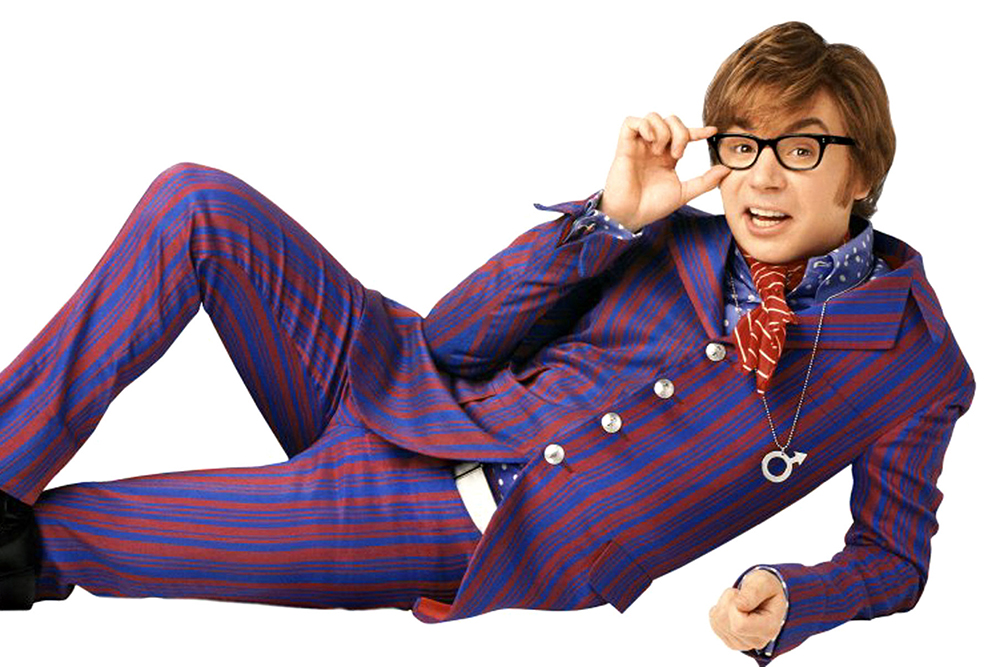
    Mike Myers has officially confirmed that Austin Powers 4 is in development, answering “yes” when asked about the sequel during a 2026 interview with Variety. The comedian declined to provide further details regarding a production timeline, a script, or returning cast members. The confirmation ends twenty-four years of speculation surrounding the return of the International Man of Mystery to the big screen.

    The silence surrounding the franchise has been absolute since 2002. Myers has spent two decades dodging the question on red carpets and late-night talk shows. He offered vague hopes. He offered non-committal smiles. Now, the definitive answer shifts the conversation from a hypothetical reunion to an active Hollywood production.

    But a single word does not make a movie. The mechanics of bringing a 1990s comedy icon into the modern cinematic landscape require heavy lifting. The cultural landscape has shifted. The original cast has aged. Key players have passed away. Yet, the financial incentive for Warner Bros. Discovery to revive a dormant, billion-dollar intellectual property remains immense.

    The Long Road to a Single Word

    The confirmation arrived without fanfare. Variety posed the question during a broader retrospective on Myers’ career. The reporter asked if a fourth Austin Powers film was happening. Myers looked up. He said, “Yes.” He then immediately shut down any follow-up inquiries.

    This brevity is intentional. Myers operates with strict secrecy regarding his creative projects. He spent years quietly developing The Pentaverate for Netflix before its 2022 release. He operates outside the traditional Hollywood press cycle. When he speaks, the industry listens.

    Rumors of a fourth film actually began before the third film left theaters. In 2005, reports circulated that Myers was co-writing a script with Michael McCullers. That script reportedly shifted the focus entirely to Dr. Evil. It framed the narrative from the villain’s perspective. The project stalled.

    In 2018, Myers hinted at the Dr. Evil spin-off concept again. He appeared on The Tonight Show Starring Jimmy Fallon in character as Dr. Evil. He appeared in a General Motors Super Bowl commercial in 2022, reuniting with Seth Green, Mindy Sterling, and Rob Lowe. The commercial served as a proof of concept. The audience still recognized the characters. The audience still laughed.

    The Billion-Dollar Spy Parody

    To understand the weight of Myers’ confirmation, one must look at the financial history of the franchise. Austin Powers is not a cult classic. It is a box office leviathan.

    The first film, Austin Powers: International Man of Mystery, arrived in May 1997. New Line Cinema took a modest risk on the $16 million production. It grossed $67 million globally. The numbers were respectable, but the true explosion happened on home video. VHS and DVD rentals turned the character into a cultural phenomenon. Catchphrases infiltrated schools, offices, and television.

    The sequel capitalized on that momentum. Austin Powers: The Spy Who Shagged Me opened in June 1999. It shattered expectations. The film grossed $312 million worldwide. It introduced Verne Troyer as Mini-Me. It featured a chart-topping soundtrack led by Madonna. It became the definitive comedy of the late 1990s.

    Austin Powers in Goldmember followed in July 2002. The third installment added Beyoncé Knowles and Michael Caine to the roster. It grossed $296 million globally. Over five years, Myers generated over $675 million in ticket sales alone. Merchandise, syndication rights, and physical media sales pushed the franchise value past the billion-dollar mark.

    The Verne Troyer Factor

    Any discussion of Austin Powers 4 must address a profound absence. Verne Troyer, the actor who portrayed Dr. Evil’s clone, Mini-Me, died in April 2018. He was 49 years old.

    Troyer was not just a supporting player. He was the emotional anchor of the Dr. Evil storyline. The dynamic between Myers and Troyer provided the franchise with its most memorable physical comedy. His death left a massive void in the ensemble.

    Director Jay Roach addressed this hurdle directly in 2019. Roach stated that making a fourth film without Troyer felt nearly impossible. He noted that Myers would have to write a script that explicitly honored Troyer’s legacy. The story would have to acknowledge the loss. It could not simply recast the role or ignore the character’s absence.

    Hollywood legacy sequels often struggle with the deaths of original cast members. Ghostbusters: Afterlife dedicated its entire narrative to the passing of Harold Ramis. Black Panther: Wakanda Forever rebuilt its foundation around the loss of Chadwick Boseman. Myers faces a similar narrative challenge. Dr. Evil without Mini-Me requires a fundamental shift in the villain’s psychological makeup.

    Who Will Return to the Evil Empire?

    A legacy sequel relies on familiar faces. If Myers is writing the script, the calls to the original ensemble have likely already begun.

    • Seth Green: Green played Scott Evil, Dr. Evil’s rebellious son. In the final moments of Goldmember, Scott embraced his dark side. He began losing his hair. He declared his intention to take over the evil empire. Green has expressed absolute willingness to return to the role.
    • Mindy Sterling: Sterling played Frau Farbissina, the terrifying enforcer and mother to Scott Evil. She reunited with Myers for the 2022 Super Bowl commercial. Her return is highly probable.
    • Robert Wagner: Wagner portrayed Number Two, Dr. Evil’s cycloptic financial mastermind. Wagner is currently in his nineties. His participation would likely be limited, potentially opening the door for Rob Lowe to reprise his role as the younger version of the character permanently.
    • Michael York: York played Basil Exposition, Austin’s intelligence handler. York has publicly battled amyloidosis in recent years, which affects his mobility and speech. His involvement remains uncertain.

    The female leads present another question mark. Elizabeth Hurley, Heather Graham, and Beyoncé Knowles each anchored one film. The franchise traditionally rotates its “Bond Girl” parody with every installment. A fourth film could bring back a previous star or introduce an entirely new counterpart.

    Jay Roach and the Directorial Chair

    Jay Roach directed all three original films. His visual style defined the franchise. He embraced the bright colors, the split screens, and the kinetic editing of the 1960s. Since 2002, Roach’s career has taken a dramatic turn.

    He pivoted away from broad comedy. He directed tense political dramas. He helmed Recount in 2008. He directed Game Change in 2012. He directed the Fox News sexual harassment drama Bombshell in 2019. He became a prestige filmmaker.

    Yet, Roach has never closed the door on Austin Powers. He has repeatedly stated that he and Myers brainstorm concepts every few years. If Myers has officially committed to the project, Roach is the most logical choice to direct. Bringing in a new director risks losing the specific, chaotic tone that made the original trilogy successful.

    The Changing Landscape of Comedy

    The comedy genre has evolved drastically since 2002. The broad, theatrical studio comedy is nearly extinct. Audiences now look to television and streaming for comedic storytelling. Theatrical releases are dominated by action blockbusters and horror films.

    Furthermore, the specific target of Myers’ parody has changed. The original films skewered the Sean Connery and Roger Moore eras of James Bond. They mocked the sexism, the ridiculous gadgets, and the megalomaniacal villains of the Cold War era.

    But James Bond changed. Daniel Craig took over the role in 2006. The 007 franchise became gritty, realistic, and emotionally devastating. The villains became cyber-terrorists and shadow-organization bureaucrats. Parodying the modern Bond requires a different comedic toolkit. Myers cannot simply recycle jokes about lasers and sharks. He must address the modern spy thriller.

    The Legacy Sequel Era

    Warner Bros. Discovery is heavily invested in legacy intellectual property. The studio recognizes that nostalgia is a powerful financial driver. Audiences are willing to return to theaters for characters they loved decades ago.

    Tom Cruise proved this with Top Gun: Maverick. Eddie Murphy proved this with Beverly Hills Cop: Axel F. Michael Keaton proved this with Beetlejuice Beetlejuice. The formula is established. Bring back the original star. Blend practical effects with modern technology. Hit the familiar emotional beats while introducing a younger generation to carry the torch.

    Myers is currently 62 years old. He is no longer the energetic thirty-something who danced through the streets of London in a velvet suit. A modern Austin Powers film must acknowledge the passage of time. It must lean into the joke of an aging swinger trying to navigate a world that has completely passed him by.

    The confirmation is real. The machinery of Hollywood is moving. The scripts are being drafted. The contracts are being negotiated. The fans are waiting.

    The rumors stopped. The studio waited. The comedian spoke. Yes.
  • The Death of Late Night: Jay Leno on Joe Rogan, John Oliver, and the 11:30 Collapse

    The Death of Late Night: Jay Leno on Joe Rogan, John Oliver, and the 11:30 Collapse

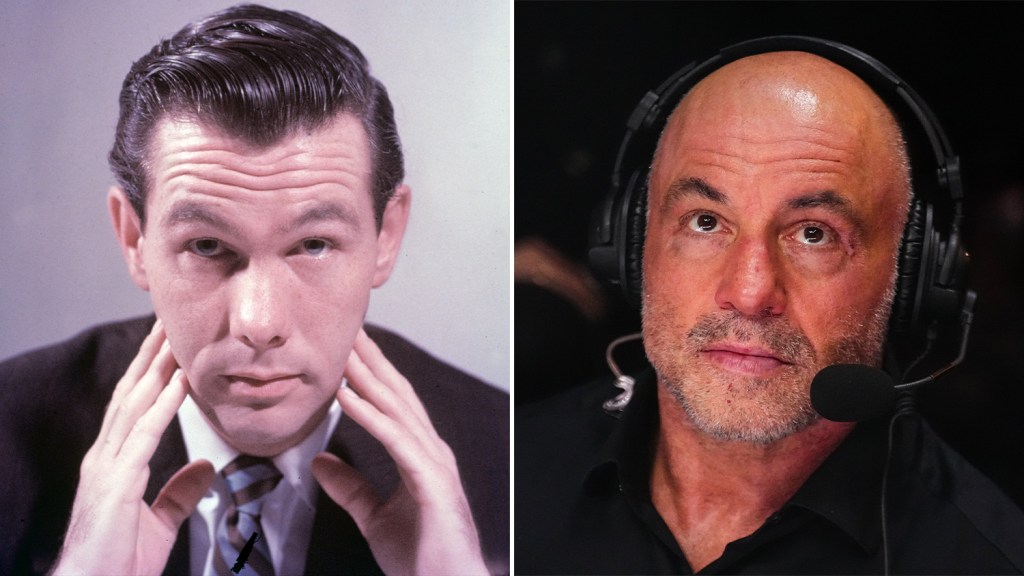
    Jay Leno declared traditional late-night television dead in a June 2026 interview, pointing to fractured audiences, the rise of long-form podcasting, and the partisan shift in modern comedy. Leno named Joe Rogan as the modern equivalent of Johnny Carson for his ability to unite massive, diverse audiences, while criticizing HBO’s John Oliver for prioritizing political lectures over universal humor. The former host of NBC’s The Tonight Show offered a blunt post-mortem on the 11:30 PM time slot he dominated for over two decades. The cultural gravity that once held the American viewing public together at the end of the day has evaporated. The audience did not simply change channels. The audience changed mediums entirely.

    The End of the 11:30 Consensus

    For half a century, the late-night monologue served as a national thermometer. At 11:30 PM, millions of Americans tuned in to see how the day’s events would be processed, packaged, and mocked. Johnny Carson perfected the format. Jay Leno industrialized it. During Leno’s peak in the late 1990s and early 2000s, The Tonight Show routinely pulled in over eight million viewers a night. Major cultural moments pushed that number past 15 million. The broadcast originated from Studio 3 in Burbank, California. It was the center of the entertainment universe.

    That center no longer holds. Leno’s assessment of the current late-night landscape is devoid of nostalgia. He views the collapse as a simple mathematical reality. The modern iterations of late-night television, currently helmed by Jimmy Fallon, Stephen Colbert, and Jimmy Kimmel, operate in a fundamentally different ecosystem. They are no longer broadcasting to a unified nation. They are narrowcasting to specific political and cultural demographics. The monologue was designed to be a broad, unifying force. It relied on a shared set of facts and a shared cultural baseline. When the baseline fractured, the format broke.

    Leno argues that the modern late-night hosts made a fatal tactical error. They abandoned the middle. By leaning heavily into specific political ideologies, the hosts secured a dedicated core audience but alienated half the country. The broad appeal that defined Carson’s 30-year run and Leno’s 22-year tenure was sacrificed for viral moments. The result is a shrinking pie. Network television ratings have plummeted. Advertising revenue has followed suit. The 11:30 PM time slot is now a legacy property, propped up by YouTube clips and social media engagement rather than live, appointment viewing.

    Why Joe Rogan is the New Johnny Carson

    The most striking revelation in Leno’s interview is his direct comparison between Joe Rogan and Johnny Carson. On the surface, the two men share little in common. Carson was a meticulously polished broadcaster who operated behind a desk in Burbank. Rogan is a former stand-up comedian and UFC commentator who hosts three-hour, unscripted conversations in a warehouse in Austin, Texas. But Leno looks past the aesthetics. He focuses on the cultural footprint.

    Carson was the ultimate kingmaker. A successful appearance on his couch could launch a career overnight. Rogan holds that exact same power today. The Joe Rogan Experience commands an audience of tens of millions of listeners per episode. It is the most valuable property in the audio landscape, backed by a massive licensing deal with Spotify reportedly worth $250 million. When Rogan speaks, the culture listens. When a comedian, author, or politician sits across from Rogan, their trajectory changes.

    Leno points out that Rogan achieved this by doing exactly what Carson did: he remains curious, he listens, and he refuses to talk down to his audience. Rogan does not deliver a monologue. He engages in a dialogue. In an era of tightly scripted, heavily edited media, Rogan’s unpolished, long-form format feels authentic. The audience trusts him. They do not view him as an elite broadcaster lecturing from a coastal studio. They view him as a proxy for their own curiosity. Carson possessed that same everyman quality. He was the Nebraska boy who made it to Hollywood but never lost his midwestern sensibilities. Rogan is the modern manifestation of that archetype.

    The Critique of John Oliver and Modern Political Comedy

    Leno reserved his sharpest criticism for John Oliver. The host of HBO’s Last Week Tonight has won numerous Emmy Awards for his deep-dive, investigative comedy. Oliver’s format involves a 30-minute, highly researched monologue focusing on a specific political or social issue. It is dense, fact-heavy, and unapologetically partisan. Leno views this approach as the antithesis of comedy.

    According to Leno, Oliver does not know what he is talking about when it comes to the daily realities of middle America. Leno argues that Oliver’s show is an exercise in validation rather than entertainment. The audience tunes in not to laugh, but to have their existing worldview confirmed. This phenomenon, often referred to in comedy circles as clapter, prioritizes applause over genuine laughter. The comedian makes a political statement, and the audience claps in agreement.

    Leno sees this as a fundamental betrayal of the comedian’s job. The comedian is supposed to observe the absurdity of life and present it in a way that unites the room. When a host turns the desk into a pulpit, the magic is lost. Oliver’s success on HBO, a premium cable network that relies on subscriptions rather than broad advertising, allows him to cater to a niche, highly educated, politically active demographic. But Leno argues that this niche approach has poisoned the broader comedy landscape. It has created an environment where comedians are expected to be political pundits first and entertainers second.

    The Economics of the Shift

    The death of late night is not just a cultural phenomenon. It is an economic reality. The broadcast networks, NBC, CBS, and ABC, built massive financial empires on the back of the 11:30 PM time slot. Madison Avenue paid premium rates to reach the millions of viewers winding down their day. That financial model is currently collapsing.

    The audience has migrated to digital platforms. YouTube, TikTok, and Spotify command the attention that once belonged to the networks. The economics of these digital platforms heavily favor long-form, on-demand content. A three-hour episode of The Joe Rogan Experience generates significantly more engagement, and therefore more ad revenue, than a six-minute late-night monologue chopped up for YouTube. The networks are trapped in a legacy cost structure. They maintain massive studios, large writing staffs, and union crews to produce a daily show that fewer and fewer people are watching live.

    Leno understands this transition intimately. He lived through the peak of the broadcast era. When he handed The Tonight Show over to Jimmy Fallon in 2014, the cracks in the foundation were already visible. The 2009 scheduling debacle, which saw Conan O’Brien briefly take over the 11:30 PM slot before Leno returned, was a desperate attempt by NBC to navigate a changing media landscape. By 2026, the transition is complete. The money has moved. The cultural relevance has moved. The center of gravity has shifted from the television set to the smartphone.

    The Legacy of The Tonight Show

    The Tonight Show will likely continue to exist. It is a legacy brand with over 70 years of history. But its role in American life has been permanently downgraded. It is no longer the national campfire. It is just another option in an infinite sea of content. Fallon, Colbert, and Kimmel are talented broadcasters, but they are playing a game that is mathematically impossible to win on the scale of their predecessors.

    Leno’s commentary is a stark reminder of how quickly cultural institutions can fade. The power of the 11:30 PM desk seemed absolute in 1992. It seemed unshakeable in 2002. Today, it is a relic. The audience demands authenticity over polish. They demand long-form conversation over scripted jokes. They demand to be spoken with, not spoken to.

    The architecture of comedy has fundamentally changed. The stand-up clubs like the Comedy Store in Los Angeles are thriving. Podcasting is booming. But the traditional late-night format is running on fumes. Leno’s willingness to state this plainly, without the usual industry diplomacy, underscores the finality of the shift. He is not predicting the death of late night. He is reporting it.

    The Terminal Drop

    The cameras still roll in New York. The cameras still roll in Los Angeles. The bands still play their opening numbers. The hosts still wear their tailored suits. The monologues are still written, rehearsed, and delivered into the lens. But the national audience is gone. The cultural conversation moved to Austin. The internet swallowed the broadcast. Silence.

  • Druski’s Whiteface BET Awards Promo: The Anatomy of a Viral Controversy

    Druski’s Whiteface BET Awards Promo: The Anatomy of a Viral Controversy

    In June 2026, comedian Drew Desbordes, known professionally as Druski, sparked widespread cultural debate by wearing whiteface in a promotional video for the upcoming BET Awards. The promo, released by Black Entertainment Television (a subsidiary of Paramount Global), featured the comedian donning light prosthetic makeup, a blonde wig, and stereotypical attire to satirize white cultural tropes. The campaign immediately ignited a fierce online discourse regarding double standards in comedy, historical power dynamics, and the boundaries of modern satire. What began as a brief marketing asset quickly transformed into a proxy war over cultural defense and corporate media strategy.

    The mechanics of the internet demand friction. The BET Awards promo provided it instantly. Within minutes of the video going live on platforms like X (formerly Twitter), TikTok, and Instagram, the digital ecosystem fractured into predictable, highly engaged camps. Outrage drove the algorithm. Defense drove the algorithm. The result was a massive, decentralized marketing campaign that cost the network nothing beyond the initial production budget.

    But the story of Druski’s prosthetic stunt does not begin in 2026. It is the latest chapter in a long, complex history of racial satire in American entertainment. It is a story about who holds the power to mock, who holds the power to be offended, and how multinational conglomerates monetize the space in between.

    The Anatomy of the BET Awards Promo

    The promotional video itself was brief, tightly edited, and engineered for vertical consumption. Druski, a comedian who built his empire on hyper-specific character work, stepped into the frame entirely transformed. The prosthetics altered his jawline and brow. The styling relied heavily on suburban, middle-American visual cues, a stark contrast to the urban, hip-hop-adjacent aesthetic that typically defines the BET Awards.

    In the clip, Druski’s character delivers lines that play on well-worn stereotypes of white American culture, reacting with exaggerated awkwardness to the concept of the BET Awards. The punchline relies on the juxtaposition between the character’s stiff, culturally isolated demeanor and the vibrant, culturally dominant reality of Black entertainment.

    Paramount Global, the parent company of BET, understood the payload they were dropping. In the modern media landscape, live award shows face a persistent existential threat. Viewership for traditional broadcasts has plummeted over the last decade. To capture an audience in 2026, a network must dominate the second screen before the first screen even turns on.

    • The Objective: Generate immediate, unavoidable awareness for the June 2026 broadcast date.
    • The Method: Deploy a highly visible internet celebrity engaging in a historically provocative comedic trope.
    • The Metric: Social media impressions, quote-tweets, and algorithmic velocity.

    The strategy worked. The video crossed ten million cumulative views across platforms within the first forty-eight hours. But the attention came with a specific, highly polarized flavor of backlash.

    The Mechanics of the Backlash

    The reaction to Druski’s whiteface was swift and bifurcated. On one side stood a coalition of cultural commentators, conservative pundits, and casual internet users who immediately raised the banner of the double standard. Their argument was structural and absolute: if a white comedian were to wear blackface to promote an award show, their career would end immediately, and the network would face unprecedented boycotts.

    This faction viewed the promo not as comedy, but as a symptom of a cultural hierarchy that permits the mockery of one demographic while fiercely protecting another. On platforms like X, the hashtag associated with the controversy trended alongside terms like “hypocrisy” and “cancel culture.”

    “The rules of engagement in modern comedy are entirely asymmetrical. We are told that race is a protected category, yet major corporations routinely fund and promote the racial mockery of white Americans under the guise of ‘satire.’ It is a blatant double standard.”

    On the other side of the digital divide stood comedy purists, progressive cultural critics, and Druski’s massive fanbase. Their defense was rooted in sociological theory and historical context. The core counter-argument rests on the concept of “punching up” versus “punching down.”

    Sociologists and historians routinely point out that blackface and whiteface are not historically equivalent. Blackface is deeply rooted in 19th-century minstrel shows. Performers like Thomas Dartmouth Rice created characters like “Jim Crow” to dehumanize enslaved Black Americans, portraying them as lazy, ignorant, and subhuman. This form of entertainment was a tool of systemic oppression, used to justify segregation and racial violence for over a century.

    Whiteface, defenders argue, carries no such historical weight. It has never been used to disenfranchise white Americans, deny them housing, or justify systemic violence. Therefore, when a Black comedian like Druski dons white prosthetics, it is categorized as a marginalized group satirizing the dominant cultural majority. It is viewed as a subversion of power, rather than an enforcement of it.

    A Century of Satire and Prosthetics

    Druski is walking a path paved by some of the most influential figures in American comedy. The use of whiteface by Black performers to expose racial absurdities is a well-established comedic tradition.

    Eddie Murphy and “White Like Me”

    In 1984, Eddie Murphy starred in a legendary Saturday Night Live sketch titled “White Like Me.” With the help of extensive makeup, Murphy went undercover in New York City as a white man named “Mr. White.” The sketch revealed a secret, utopian world where white people give each other free newspapers and celebrate when no minorities are around. It was a massive critical success, using the visual shock of whiteface to comment sharply on hidden societal privileges.

    The Wayans Brothers and White Chicks

    Two decades later, in 2004, Shawn and Marlon Wayans pushed the concept to feature-length extremes with the film White Chicks. Produced by Revolution Studios, the film followed two Black FBI agents who go undercover as wealthy, blonde white heiresses. Despite mixed reviews from traditional critics, the film grossed $113 million worldwide and became a massive cult classic. The Wayans brothers used the prosthetics not just for racial commentary, but to skewer early-2000s elite socialite culture.

    Dave Chappelle’s Chuck Taylor

    During the run of Chappelle’s Show on Comedy Central in the early 2000s, Dave Chappelle frequently utilized whiteface. His recurring character, Chuck Taylor, was a stiff, awkwardly upbeat white news anchor. Chappelle used the character to highlight the racial biases inherent in mainstream news broadcasting, delivering devastating critiques of the media landscape from behind a mask of pale makeup and a rigid blonde wig.

    Druski’s 2026 BET Awards promo is a direct descendant of these performances. The shock value is the point. The absurdity is the point. The discomfort of the viewer is part of the comedic transaction.

    Druski’s Ascent in Modern Comedy

    To understand why BET chose Druski for this specific campaign, one must understand his unique position in the 2026 entertainment ecosystem. Born Drew Desbordes in Maryland and raised in Georgia, Druski did not climb the traditional stand-up comedy ladder. He did not spend a decade grinding in dark comedy clubs.

    He is a product of the internet. He built his audience on Instagram and TikTok, mastering the art of the short-form character sketch. He founded Coulda Been Records, a satirical record label that allowed him to interact with real fans and massive celebrities on Instagram Live, blurring the lines between reality and comedy.

    Druski’s brand is rooted in observational humor. He mocks frat boys, overly aggressive club promoters, and out-of-touch executives. His comedy is universally accessible but hyper-specific in its execution. By 2026, he had transitioned from a phone-screen viral star to a mainstream commodity, embarking on sold-out arena tours and securing major brand partnerships.

    For BET, Druski represents the bridge between the legacy television audience and the elusive Gen Z digital native. He commands attention. When he posts, millions watch. Putting him in whiteface was a calculated risk by Paramount Global, but it was a risk underwritten by Druski’s undeniable track record of virality.

    The Economics of Live Television Outrage

    The controversy surrounding the promo cannot be separated from the economic realities of the television industry. In 2026, attention is scarce. The BET Awards, like the Oscars, the Grammys, and the Emmys, must fight for relevance in a world where audiences are infinitely distracted by algorithmic feeds.

    Traditional marketing, billboards, banner ads, standard television commercials, yields diminishing returns. A standard promo featuring a celebrity telling the audience to “tune in on Sunday at 8 PM” is ignored. It is scrolled past. It vanishes into the digital ether.

    Outrage, however, lingers. Outrage demands a response. When a user on X quote-tweets the Druski promo to condemn it, they are broadcasting the BET Awards to their entire following. When a TikTok creator stitches the video to defend the historical context of satire, they are doing free promotional work for Paramount Global.

    Every angry comment, every defensive essay, every think-piece published by digital media outlets serves the same corporate master: awareness. The cultural defense debate is merely the fuel for the marketing engine.

    The Future of the Cultural Defense Debate

    The Druski whiteface controversy will eventually fade, replaced by the next digital flashpoint. But the underlying tensions it exposed remain unresolved. The internet continues to collapse context, forcing different generational, racial, and political demographics into the same digital room.

    In this room, the rules of comedy are constantly being litigated. What is acceptable? Who gets to decide? Is context still relevant, or is the visual alone enough to condemn a performance?

    The cultural defense argument, the insistence that all racial mockery must be judged by a single, context-blind standard, will continue to gain traction in certain political spheres. Meanwhile, artists and comedians will continue to push back, arguing that satire requires the freedom to exploit power dynamics and historical absurdities.

    For now, the strategy remains intact. The network wanted eyes. The comedian wanted a moment. The internet wanted a fight. Everyone played their part perfectly.

    The servers hummed. The timelines flooded. The algorithms fed. Entertainment.