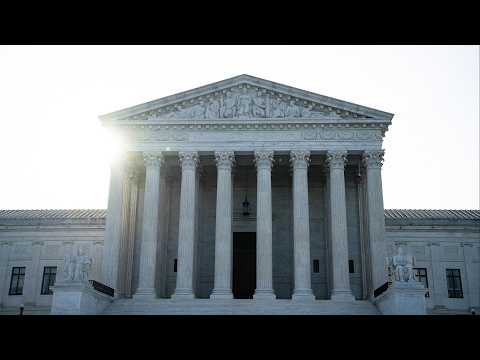
The current Supreme Court term reflects judicial philosophies rooted in the Reagan era, emphasizing originalism and limited government intervention, rather than priorities associated with more recent administrations. This ideological consistency is a product of decades of judicial appointments and the enduring influence of conservative legal thought that began to coalesce in the 1980s.
This philosophical grounding shapes the Court’s approach to a wide array of cases, from regulatory challenges to constitutional interpretation. The decisions handed down often demonstrate a commitment to principles articulated by legal scholars and jurists who rose to prominence during the administration of President Ronald Reagan.
The Reagan Revolution and Judicial Philosophy
President Ronald Reagan, who served from 1981 to 1989, sought to reshape the federal judiciary. His administration appointed judges who adhered to a judicial philosophy emphasizing original intent and strict constructionism. This approach contrasted sharply with what many conservatives viewed as judicial activism prevalent in earlier eras.
Reagan’s appointments included Justice Antonin Scalia, confirmed in 1986. Scalia became a leading proponent of originalism, arguing that the Constitution should be interpreted according to its meaning at the time it was adopted. His influence extended far beyond his tenure on the Court, shaping generations of legal thinkers and future judicial nominees.
The Federalist Society, founded in 1982, emerged during this period as a significant force. It provided a platform for conservative and libertarian legal scholars to discuss and promote these judicial philosophies. This organization has since played a crucial role in identifying and promoting judicial candidates who align with these principles.
Originalism and Textualism in Practice
Originalism, a cornerstone of Reagan-era judicial thought, posits that the Constitution’s meaning is fixed at the time of its adoption. Judges, under this philosophy, should not interpret the Constitution as a ‘living document’ that evolves with societal changes. Instead, their role is to apply the original understanding of the text.
Textualism is a related interpretive theory, primarily applied to statutes. It holds that the law should be interpreted based on the ordinary meaning of the legal text, rather than considering legislative intent or societal consequences. Justice Scalia was also a prominent advocate for textualism.
These methodologies often lead to conclusions that limit federal power. They tend to favor states’ rights and restrict the scope of federal agencies. This aligns with a broader conservative political agenda seeking to reduce government intervention in various aspects of life.
Key Appointments and Their Lasting Impact
The long-term impact of presidential appointments on the Supreme Court is profound. Justices serve for life, meaning their judicial philosophies can influence American law for decades. President Reagan appointed four justices during his two terms: Sandra Day O’Connor (1981), Antonin Scalia (1986), William Rehnquist (elevated to Chief Justice in 1986), and Anthony Kennedy (1988).
While not all of Reagan’s appointees strictly adhered to the most rigid forms of originalism or textualism throughout their careers, their appointments signaled a clear shift. They began to tilt the Court’s ideological balance towards a more conservative interpretation of the law. This trend continued with subsequent Republican administrations.
Presidents George H.W. Bush, George W. Bush, and Donald Trump all made appointments that largely reinforced this conservative judicial trajectory. These appointments built upon the foundation laid during the Reagan years, solidifying a majority on the Court that often prioritizes these interpretive methodologies.
The Evolution of Conservative Legal Thought
Conservative legal thought did not remain static after the Reagan administration. It continued to develop and refine its arguments. Scholars like Robert Bork, who was nominated to the Supreme Court by Reagan in 1987 but not confirmed, significantly contributed to the intellectual framework of originalism.
The emphasis on judicial restraint, a concept that urges judges to defer to elected branches of government, also gained prominence. This principle suggests that courts should avoid striking down laws unless they are clearly unconstitutional, rather than using judicial power to advance policy goals.
These ideas were disseminated through legal journals, academic conferences, and law school curricula. They influenced a generation of lawyers and judges, many of whom now sit on federal courts across the country, including the Supreme Court.
Current Court’s Decisions and Reagan-Era Echoes
The recently concluded Supreme Court term, in 2026, has seen several decisions that illustrate these Reagan-era judicial priorities. Rulings related to administrative law, for instance, frequently scrutinize the power of federal agencies. The ‘Chevron deference,’ a doctrine that previously gave federal agencies broad latitude in interpreting ambiguous statutes, has been significantly curtailed or questioned.
Decisions concerning environmental regulations, property rights, and commercial law often reflect a skepticism towards expansive federal authority. The Court frequently emphasizes the Tenth Amendment, which reserves powers not delegated to the federal government to the states or the people.
In cases involving individual liberties, the Court often focuses on historical understandings of rights. This approach can lead to different outcomes than an interpretation that considers evolving societal norms or international legal standards. The emphasis is on what the framers of the Constitution intended or understood.
The Role of Stare Decisis
The principle of stare decisis, which means to stand by things decided, is central to legal stability. It dictates that courts should generally adhere to precedent. However, conservative legal thought, while respecting precedent, also allows for the re-evaluation of past decisions deemed inconsistent with originalist principles.
This nuanced approach to stare decisis means that while the Court generally respects established law, it is not entirely bound by precedents that it believes were wrongly decided or departed from the Constitution’s original meaning. This can lead to significant shifts in legal interpretation over time.
The ability to revisit and potentially overturn long-standing precedents is a powerful tool. It allows a Court with a consistent philosophical outlook to gradually realign American jurisprudence with its preferred interpretive methodologies.
Broader Political and Cultural Context
The alignment of the Supreme Court with Reagan-era priorities is not merely a legal phenomenon; it is deeply intertwined with broader political and cultural shifts in the United States. The conservative movement that gained momentum in the 1980s sought to reverse what it perceived as an overreach of government and a decline in traditional values.
Judicial appointments became a critical battleground in this broader ideological struggle. Presidents understood that lifetime appointments offered a way to leave a lasting legacy that could endure long after their time in office. This understanding has intensified in recent decades, making Supreme Court nominations highly contentious.
Public discourse surrounding the Court often reflects these ideological divisions. Those who champion the Court’s current direction see it as a return to constitutional principles. Others view it with concern, arguing that it undermines established rights or fails to address modern societal challenges.
The concept of judicial philosophy itself has become a central point of debate. Voters and politicians alike now pay close attention to a nominee’s interpretive approach to the Constitution. This scrutiny ensures that the Court’s composition remains a reflection of these deeply held, and often competing, visions for American law.
The Court’s current term stands as a testament to the enduring influence of a specific judicial philosophy. It is a philosophy forged in the late 20th century, championed by a conservative political movement, and meticulously advanced through successive judicial appointments.
Legal scholars analyze the decisions. Journalists report on the implications. Citizens debate the outcomes. The legacy of a judicial revolution continues to unfold.