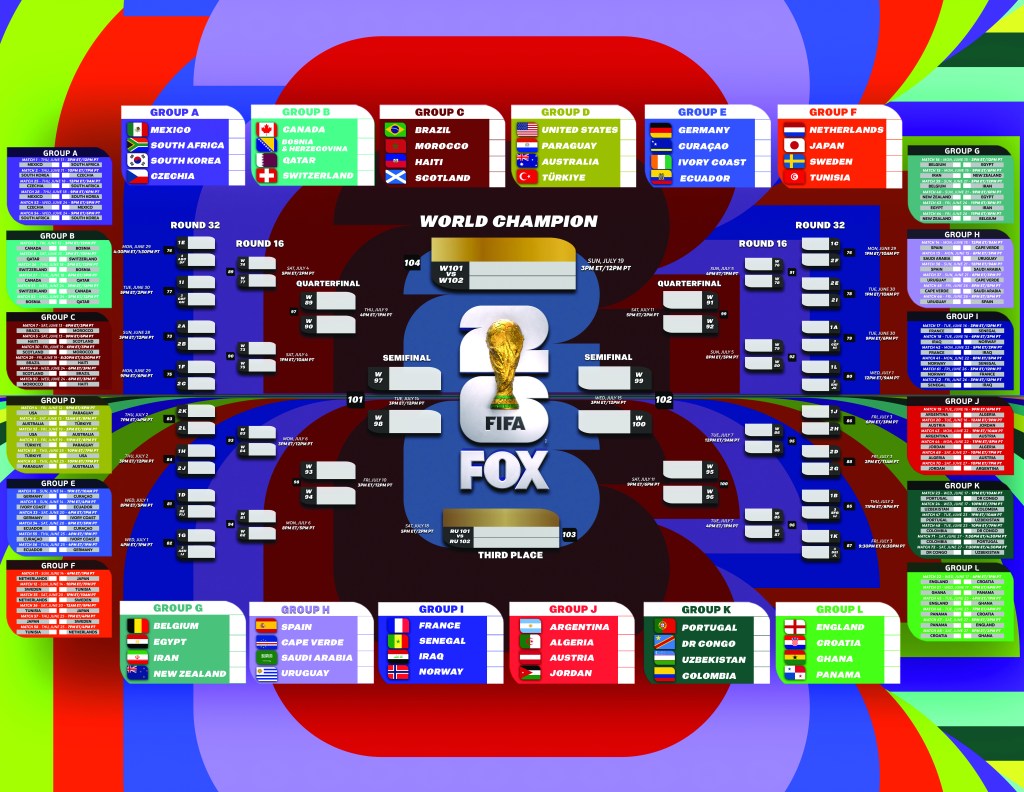
The 2026 FIFA World Cup officially opens with Fox Sports anchor Rebecca Lowe at the helm of an unprecedented 104-match broadcast. The tournament spans three nations, 16 cities, and 48 teams, marking the largest logistical undertaking in the history of global sports. Lowe steps into the anchor chair to narrate America’s definitive soccer awakening. She balances the spectacle of the Estadio Azteca opener with the complex controversies trailing FIFA’s $11 billion revenue projections.
For a month, North America becomes the center of the sporting universe. The broadcast requires a steady hand. Fox Sports chose Lowe.
The Anchor at the Center of the Pitch
Rebecca Lowe spent over a decade as the face of the Premier League for NBC Sports. Her transition to Fox Sports for the 2026 World Cup represents a monumental shift in American soccer broadcasting. Fox secured the English-language rights back in 2015. The network paid $425 million for the 2018 and 2022 cycles, later receiving a no-bid extension for 2026 to avoid lawsuits over the Qatar winter shift. Now, that investment matures.
Lowe commands the desk from a sprawling studio complex in Los Angeles. The authority she brings is absolute. There is no manufactured hype. There is only football.
The broadcast war is intense. Telemundo holds the Spanish-language rights, leaning on the legendary voice of Andres Cantor. Fox relies on Lowe to anchor the English-language desk. She is flanked by a rotating cast of former international players and tactical analysts. The coverage must satisfy the tactical purist. It must simultaneously educate the casual American viewer tuning in for the first time since Qatar 2022. It is a tightrope walk. Lowe excels here. She paces the conversation. She cuts through studio banter with sharp, declarative questions.
Estadio Azteca and the 48-Team Reality
June 11, 2026. The whistle blows at Estadio Azteca in Mexico City. The venue holds 83,000 people. It is hallowed ground. Pelé won the World Cup here in 1970. Diego Maradona lifted the trophy here in 1986. Now, it becomes the first stadium in history to host three World Cup openers.
But the tournament looks vastly different than it did in the twentieth century. FIFA expanded the field. Thirty-two teams became forty-eight. Sixty-four matches became one hundred and four. The sheer volume changes the rhythm of the global game.
The group stage now features twelve groups of four. Eight third-place teams advance. The margin for error increases, but the physical toll multiplies. Lowe points out the logistical nightmare on the broadcast. Teams must traverse four time zones. They fly from Vancouver to Miami. They cross international borders. The carbon footprint is massive. The travel fatigue is real.
The expansion dilutes the opening rounds. It guarantees a chaotic knockout phase. The newly introduced Round of 32 brings sudden-death elimination earlier than ever before.
The American Soccer Awakening
In 1994, the United States hosted the World Cup. It was an introduction. In 2026, it is a coronation.
The cultural landscape has shifted entirely. Major League Soccer (MLS) franchise valuations now average $579 million. Lionel Messi wears the pink of Inter Miami, driving Apple TV subscriptions into the millions. European giants like Real Madrid and Manchester United routinely sell out 80,000-seat American stadiums for summer friendlies. The American soccer fan is no longer a niche demographic. They are the target market.
Lowe notes this shift as the tournament begins. The US Men’s National Team (USMNT) carries the weight of a generation. The 1994 squad relied on grit and college players. The 2026 squad features athletes plying their trade in Europe’s top leagues. Players like Christian Pulisic, Weston McKennie, and Tyler Adams return home not as underdogs, but as expected contenders.
The expectation is no longer participation. The expectation is progression. The American public demands a deep run on home soil.
Group stage survival is no longer the ceiling. It is the floor. The pressure on the USMNT is unprecedented. Every tactical decision is dissected. Every substitution is debated. Lowe orchestrates this national conversation from the Fox Sports desk, treating the American squad with the same critical eye applied to England or Brazil.
Grass, Greed, and the Shadows Over the Tournament
Spectacle requires capital. Capital breeds friction. The 2026 tournament arrives shadowed by deep logistical and political controversies.
The primary battleground is the playing surface. FIFA mandates natural grass for all World Cup matches. Eight of the eleven American host stadiums feature artificial turf designed for the NFL. The conversion process is brutal and expensive.
- MetLife Stadium: The New Jersey venue hosting the final is spending millions to install a temporary grass pitch over its synthetic surface.
- Mercedes-Benz Stadium: The Atlanta stadium must engineer a natural grass solution inside a dome that limits sunlight.
- AT&T Stadium: The Dallas venue requires a massive structural lift to raise the pitch level and sustain natural grass for a month.
The seams matter. The root depth matters. Player safety is the cited concern, but the underlying tension is control. FIFA demands perfection. Stadium operators scramble to comply.
Beyond the grass, ticketing presents a massive barrier. The secondary market has already priced out the working-class fan. Average group-stage tickets clear $400. Matches featuring high-profile teams command thousands of dollars per seat. The corporate gentrification of the world’s game is complete. VIP suites sell for millions. The average fan is pushed to the fan zones outside the stadiums.
Lowe addresses these realities on air. She does not editorialize. She reports the friction. The broadcast acknowledges the pristine pitches while noting the millions spent to temporarily build them.
Predicting the Big Winner
Who wins the tournament? The predictions dominate the pre-match coverage.
France brings unmatched depth. Brazil brings historical pedigree. Argentina arrives as defending champions, looking to defend the crown Messi secured in Doha. The European powers seek to conquer North American soil.
But the true “big winner” extends beyond the pitch. The host nations win. The sport itself wins the American market permanently. FIFA President Gianni Infantino projects $11 billion in revenue for the 2026 cycle. That number will likely be shattered. Corporate sponsorships are at an all-time high. Broadcast advertising rates are staggering.
The infrastructure left behind will serve domestic leagues for decades. Training facilities built for visiting national teams will be handed over to local municipalities and MLS academies. The 2026 World Cup is an economic engine disguised as a sporting event.
Fox Sports wins as well. The network captures a captive audience for a month. Advertisers pay premium rates for live sports, the last remaining monoculture in modern media. Lowe guides the viewer through this massive commercial and cultural enterprise. She keeps the focus on the ball, even as billions of dollars swirl around it.
The Global Convergence
The scale of the event cannot be overstated. It is a logistical miracle that the tournament functions at all. Moving 48 teams, their staffs, the global media, and millions of fans across three massive countries requires military-level precision.
Security forces coordinate across international borders. Transportation grids in cities like Los Angeles, New York, and Toronto are pushed to their absolute limits. The World Cup is a stress test for North American infrastructure.
Yet, when the whistle blows, the logistics fade. The controversies take a backseat to the drama on the pitch. The tactical battles emerge. The underdog stories unfold. A nation that once ignored the sport now stops to watch it.
The cameras roll. The stadiums fill. The anchor speaks. The whistle blows. Kickoff.