Tag: Usmnt

  • Balogun Brouhaha – How Trump’s World Cup Call Sparked European Division

    Balogun Brouhaha – How Trump’s World Cup Call Sparked European Division

    The ‘Balogun brouhaha’ refers to the significant political and cultural division that emerged across Europe following a phone call from President Donald Trump to U.S. World Cup player Folarin Balogun. What began as a gesture of national pride quickly transformed into a flashpoint, underscoring the intricate relationship between sports, politics, and international perception. This incident, extensively covered by The Hollywood Reporter in mid-2026, illustrated how easily a celebrated sports achievement can become entangled in broader geopolitical narratives.

    The European response was not merely about the call itself but about the figure making it. It reflected deeper currents of sentiment towards President Trump and American foreign policy during his second non-consecutive term. This divergence in interpretation highlighted existing transatlantic tensions and the differing lenses through which global events are viewed.

    The Presidential Call to Folarin Balogun

    The U.S. Men’s National Team’s performance at the World Cup had captured significant attention in 2026, fostering a sense of national pride. Folarin Balogun, a key forward, had emerged as a standout player, drawing praise for his on-field contributions. Following a notable match performance, President Trump reportedly placed a congratulatory call to Balogun. This practice is not uncommon for heads of state acknowledging national athletes’ achievements.

    In the United States, the call was largely perceived as a presidential endorsement. It fit within the traditional narrative of a leader supporting their country’s representatives on the global stage. Initial reports in American media focused on the positive aspect, emphasizing the recognition of Balogun’s efforts and the team’s success. The White House issued a statement confirming the call, framing it as a moment of national unity.

    European Reactions: A Shift in Narrative

    The narrative shifted dramatically as news of President Trump’s call reached European media outlets and public discourse. The Hollywood Reporter detailed how the reaction across the Atlantic was markedly different from that in the U.S. Instead of celebrating the athletic achievement, many European commentators, politicians, and citizens focused intensely on President Trump’s involvement.

    President Trump’s tenure, both his first and current second term, has been marked by complex international relations. His policies and rhetoric have often been subjects of intense debate and criticism in Europe. Consequently, his direct engagement with a sporting event became interpreted through this established political lens, rather than as a simple congratulatory gesture.

    Media Framing Across Continents

    The disparity in media framing was stark. American news organizations generally presented the call as a display of patriotic leadership. European outlets, however, frequently used the incident to comment on President Trump’s political style. They linked it to broader implications for transatlantic relations and the perceived politicization of global events.

    Social media platforms amplified these divergent viewpoints. Hashtags and online discussions quickly polarized around the incident. Supporters of President Trump defended his actions as patriotic and appropriate for a head of state. Critics in Europe and elsewhere used the moment to reiterate their concerns about his influence and the perceived intrusion of politics into sports.

    Politicization of Sports: A Recurring Theme

    The ‘Balogun brouhaha’ became a prominent case study in the politicization of sports. While often presented as apolitical platforms for fair competition, sporting events frequently become arenas where national identities, political tensions, and cultural differences play out. President Trump’s call served as a catalyst for these underlying sentiments to surface, particularly in Europe.

    European reactions ranged from mild disapproval to outright criticism. Some media outlets questioned the appropriateness of a political leader inserting themselves into a sports narrative, especially given the existing geopolitical climate. Others viewed it as a characteristic move by President Trump, reinforcing existing perceptions of his approach to international engagement.

    Historical Context of Political Intervention

    The intervention of political figures in sports is not unprecedented. Throughout history, leaders have used athletic achievements to project national strength or political ideology. However, the context of President Trump’s call, particularly the existing tensions with European allies, gave this specific incident a unique resonance. It highlighted how historical and current political relationships shape public perception.

    The incident also brought to light the evolving role of sports figures as cultural ambassadors. When a player like Folarin Balogun receives a call from a head of state, it elevates their public profile beyond the athletic arena, making them inadvertently part of a broader political discourse. This dynamic adds another layer of complexity to international sporting events.

    Impact on Transatlantic Relations

    While a single phone call may seem minor in the grand scheme of international diplomacy, the ‘Balogun brouhaha’ illustrated how such incidents can reflect and exacerbate existing tensions. The European response indicated a broader discomfort with certain aspects of American leadership and policy under President Trump.

    The incident did not fundamentally alter diplomatic relations between the United States and European nations. However, it served as a public reminder of the cultural and political chasm that sometimes exists. It showcased how even seemingly innocuous gestures from a global leader can be interpreted through a highly politicized lens, particularly in an era of heightened global interconnectedness and instant communication.

    Cultural Defense and Identity in Europe

    The analysis by The Hollywood Reporter suggested that the incident touched upon a deep-seated sense of ‘cultural defense’ within Europe. For many Europeans, the reaction to President Trump’s call was not just political; it was also cultural. It represented a perceived intrusion or a clash of values, turning a moment of shared human interest, sports, into a battleground for differing worldviews and national identities.

    This ‘cultural defense’ mechanism manifests when individuals or groups perceive their values, norms, or way of life to be challenged or undermined by an external force. In this instance, the external force was the intervention of a political figure whose actions and rhetoric had previously drawn considerable European scrutiny. The incident became a proxy for larger debates about sovereignty, global influence, and cultural integrity.

    Lessons from the Balogun Brouhaha of 2026

    The ‘Balogun brouhaha’ of 2026 offers several insights into contemporary global dynamics and the intersection of sports and politics. It demonstrates that:

    • Sports, despite their unifying potential, are not immune to political influence and diverse interpretations across cultures.
    • The actions of global leaders, especially those with contentious international profiles, resonate differently across various political landscapes.
    • Existing geopolitical tensions can easily be projected onto seemingly unrelated events, amplifying their significance.
    • Media framing plays a crucial role in shaping public perception and international narratives, often creating divergent realities.
    • Moments of national pride can quickly become moments of international division when prominent political figures are involved, particularly in a highly interconnected world.

    The incident served as a potent reminder that in an interconnected world, even a celebratory phone call can become a complex diplomatic event. It highlighted the ongoing challenges of navigating international relations in an era where information spreads rapidly and perceptions are deeply entrenched, shaping public discourse and international sentiment.

    The event also underscored the responsibility of political leaders in understanding the global implications of their actions. What might be perceived as a benign gesture domestically can carry significant weight and generate unintended consequences on the international stage. This requires a nuanced understanding of cultural sensitivities and existing political climates.

    The Ongoing Interplay of Sports and Politics

    The ‘Balogun brouhaha’ is another chapter in the long history of sports intersecting with politics. From the Olympic boycotts of the Cold War era to protests at modern international competitions, athletes and sporting events frequently become platforms for broader societal and political statements. This incident confirmed that even in 2026, sports remain a powerful, albeit sometimes contentious, arena for expressing national identity and international relations.

    The global audience for events like the World Cup means that any political involvement is magnified. The reactions to President Trump’s call to Folarin Balogun demonstrated that the unifying power of sports can be fragile. It can easily be overshadowed by political narratives, especially when prominent figures are involved. The ongoing challenge lies in balancing national pride with international understanding.

    Journalists reported. Pundits debated. Citizens reacted. Division.
  • Balogun USMNT Eligibility Upheld – Trump Intervenes in FIFA Decision

    Balogun USMNT Eligibility Upheld – Trump Intervenes in FIFA Decision

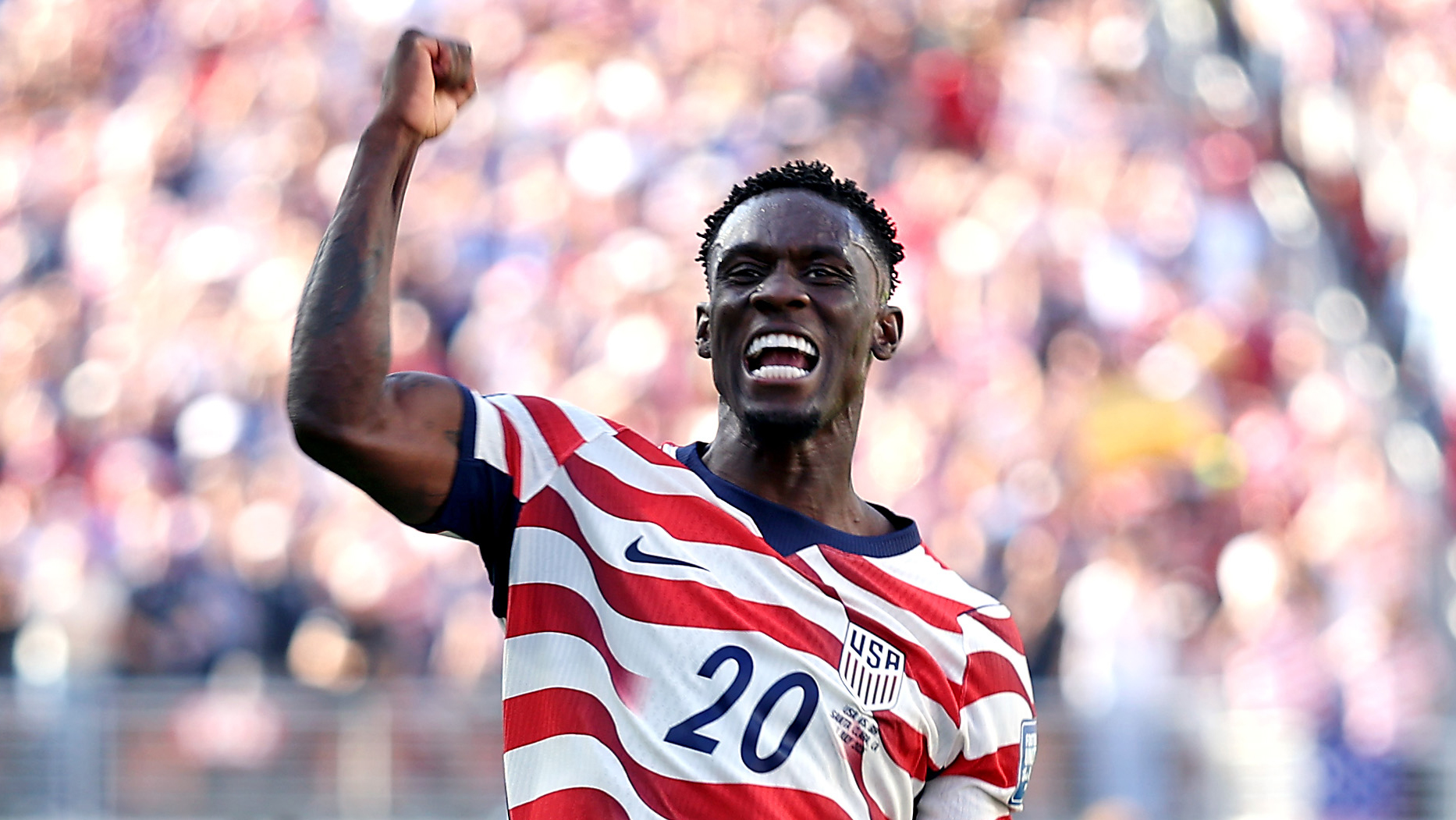
    Folarin Balogun’s eligibility to represent the United States Men’s National Team (USMNT) has been definitively upheld. FIFA, the international governing body for football, denied an appeal filed by Belgium, which had sought to challenge Balogun’s status. This ruling confirms Balogun’s continued role as a key player for the USMNT and resolves a significant dispute for international football.

    The controversy stemmed from a red card incident involving Balogun during a match against Bosnia and Herzegovina. Belgium’s appeal contended that the circumstances surrounding this red card should have impacted Balogun’s eligibility or the validity of previous match outcomes. President Donald Trump unexpectedly weighed in on the matter, confirming a direct phone call with FIFA leadership to express his views on the incident.

    The Appeal and Its Basis

    Belgium initiated the appeal process following a specific match where Folarin Balogun received a red card. The precise details of this match, including the date and the specific foul committed, were central to Belgium’s case. Their argument posited that the nature of the infraction and the subsequent disciplinary action should have broader implications for Balogun’s international eligibility.

    International football regulations are intricate, particularly concerning player conduct, disciplinary measures, and the criteria for national team representation. Belgium’s legal team likely scrutinized these rules to identify any potential procedural irregularities or interpretations that could favor their position. The appeal highlighted the complexities inherent in adjudicating disputes within global sports.

    The appeal questioned not only Balogun’s future availability but potentially the outcomes of past matches where he participated. Such challenges are rare but can arise when a national federation perceives a significant competitive disadvantage or a breach of established protocols. FIFA’s denial means these arguments were ultimately unconvincing to the review panel.

    President Trump’s Direct Intervention

    President Donald Trump confirmed his direct involvement in the Folarin Balogun eligibility dispute. He stated that he personally engaged in a phone call with FIFA, the international governing body of association football. President Trump’s public statement was, “Thank you to FIFA for doing what was right, and reversing a great injustice!” indicated his personal assessment of the controversial red card incident at the heart of the appeal.

    Presidential intervention in international sports matters is an infrequent occurrence. However, President Trump has a documented history of engaging directly on issues perceived to be of national interest, including those with cultural or sporting significance. His remarks underscored a perceived national pride in the USMNT and its players, signaling the importance the United States places on its athletic representation on the global stage.

    The confirmation of a direct phone call with FIFA leadership suggests a high-level diplomatic engagement. While such calls do not typically overturn judicial decisions made by independent sporting bodies, they can carry significant political weight. They serve to communicate a nation’s interest and concern regarding specific international sporting outcomes.

    The Scope of Presidential Involvement

    President Trump’s administration has shown a willingness to engage with international organizations across various sectors, including sports. This approach reflects a broader foreign policy strategy that often prioritizes direct communication and personal diplomacy. The Balogun case serves as another example of this pattern.

    The President’s statement, delivered publicly, aimed to influence the perception of the incident and potentially the broader decision-making process. While FIFA maintains its independence, the direct commentary from a head of state adds an unusual layer of political scrutiny to a sporting judgment. It elevates the profile of the dispute beyond typical footballing circles.

    FIFA’s Adjudication Process

    FIFA functions as the ultimate authority for international football, overseeing everything from player transfers and disciplinary actions to the resolution of disputes between national federations. The appeal process, particularly for decisions originating from continental confederations like UEFA, ultimately falls under FIFA’s direct purview.

    Upon receiving an appeal, a specialized committee within FIFA undertakes a comprehensive review. This review involves scrutinizing all relevant documentation. This includes official match reports from the game in question, any available video evidence of the incident, and detailed legal arguments presented by the appealing party, in this case, Belgium.

    The primary objective of this rigorous process is to ensure fairness, adherence to established football regulations, and consistency in the application of disciplinary codes. The committee assesses whether the initial ruling was made correctly and if there are sufficient grounds to overturn or modify it based on the evidence provided.

    Why Appeals Are Denied

    The denial of Belgium’s appeal signifies that FIFA’s review committee found insufficient grounds to overturn the original decision concerning Balogun’s eligibility or the specific red card incident. This outcome reinforces the authority and independence of FIFA’s internal judicial mechanisms. It demonstrates that these bodies operate based on their statutes and evidence, even in the presence of external pressure or high-profile commentary from political figures.

    Appeals are often denied when the appealing party fails to present new, compelling evidence that was not considered in the initial ruling. They can also be denied if the arguments presented are deemed to misinterpret existing regulations or if the original decision is found to be consistent with established disciplinary guidelines. In Balogun’s case, FIFA evidently determined that the initial judgments regarding his red card and subsequent eligibility were sound.

    Implications for the USMNT and Balogun

    For the United States Men’s National Team, the denial of Belgium’s appeal is a significantly positive development. Folarin Balogun is considered a vital component of the team’s attacking strategy and overall roster. His confirmed eligibility means he will be available for all upcoming international fixtures, including critical tournaments and qualification matches.

    Balogun’s talent, goal-scoring ability, and on-field contributions have been a source of considerable optimism for USMNT fans and coaching staff. His continued presence strengthens the team’s competitive standing on the global stage, allowing them to field their strongest possible squad. The resolution of this eligibility dispute removes a significant off-field distraction, enabling the team to focus entirely on sporting performance and tactical preparation.

    Balogun’s Future with the National Team

    This ruling solidifies Folarin Balogun’s position within the USMNT program for the foreseeable future. It provides clarity for both the player and the national team management regarding his availability. This certainty is crucial for long-term planning, including roster selections for major competitions like the FIFA World Cup.

    The case also inadvertently highlights the growing international profile of American soccer players. As more USMNT athletes compete at elite levels globally, similar eligibility questions, nationality switches, and disciplinary disputes may become more frequent. The precedent set by this case could influence how future disagreements are handled by international sporting bodies, particularly when high-profile players are involved.

    The Broader Context of Sporting Diplomacy

    The intersection of sports, politics, and international relations is a recurring and increasingly prominent theme in global affairs. Major sporting events and the careers of high-profile athletes often serve as platforms for national identity, soft power, and diplomatic engagement. The involvement of a head of state, such as President Trump, in a player eligibility dispute, explicitly underscores this deep connection.

    Sporting diplomacy encompasses a wide range of interactions, from official state visits tied to major tournaments to informal discussions between leaders on sporting matters. These engagements, while not always directly impacting on-field results, contribute to the broader narrative of international cooperation or competition between nations.

    The significant attention garnered by Balogun’s case, amplified by presidential commentary, demonstrates how individual athletic careers can become intertwined with national pride, political discourse, and international relations. It reflects the immense cultural and political impact of football on a global scale, where even seemingly minor disputes can attract high-level attention.

    The Role of National Interest in Sports

    Governments often view success in international sports as a reflection of national strength and prestige. Therefore, protecting the interests of national athletes and teams can become a matter of state policy. President Trump’s intervention, regardless of its direct impact on FIFA’s decision, communicated the United States’ keen interest in the matter to an international audience.

    This incident also illustrates the evolving landscape of international sports governance. While sporting bodies like FIFA strive for autonomy, they operate within a complex ecosystem that includes national governments, powerful federations, and global media. The interplay between these entities shapes the outcomes of disputes and the broader direction of international sports.

    The resolution of the Balogun case reinforces the integrity of FIFA’s decision-making process while simultaneously showcasing the enduring influence of political figures on public discourse surrounding international athletic competition.

    Players gathered. Coaches gathered. Fans gathered. Officials gathered. The President gathered. The world gathered.

    Football.

  • The 2026 World Cup Kickoff: Rebecca Lowe on America’s Soccer Awakening and the Controversies Ahead

    The 2026 World Cup Kickoff: Rebecca Lowe on America’s Soccer Awakening and the Controversies Ahead

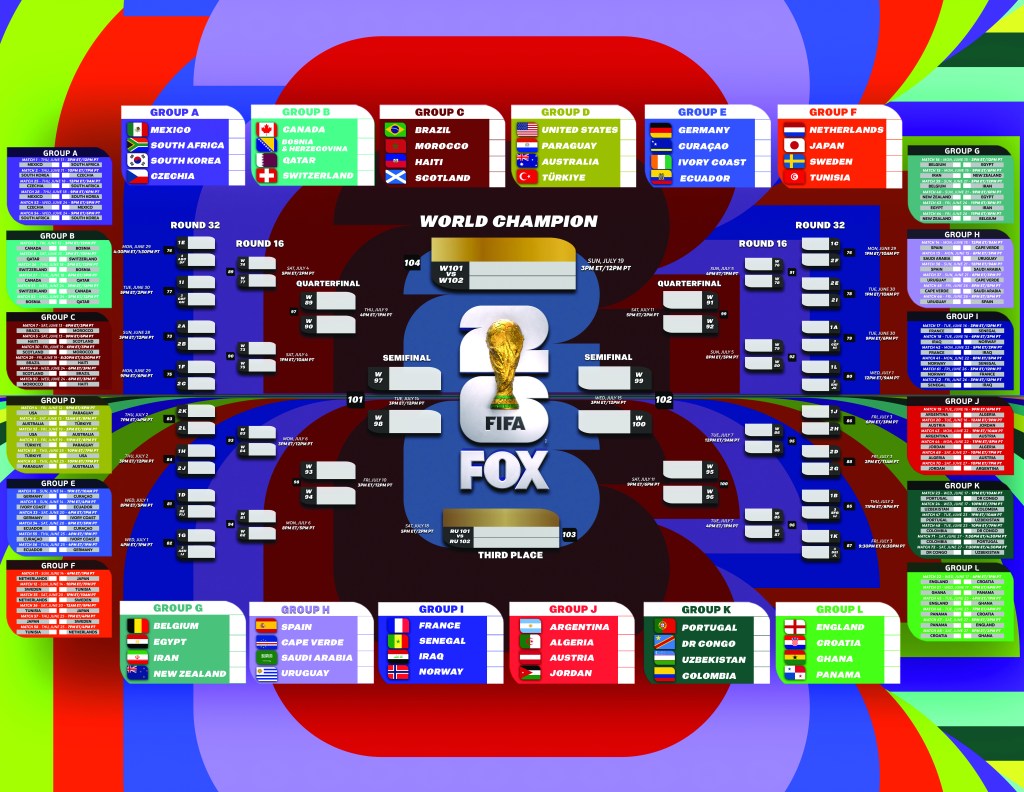
    The 2026 FIFA World Cup officially opens with Fox Sports anchor Rebecca Lowe at the helm of an unprecedented 104-match broadcast. The tournament spans three nations, 16 cities, and 48 teams, marking the largest logistical undertaking in the history of global sports. Lowe steps into the anchor chair to narrate America’s definitive soccer awakening. She balances the spectacle of the Estadio Azteca opener with the complex controversies trailing FIFA’s $11 billion revenue projections.

    For a month, North America becomes the center of the sporting universe. The broadcast requires a steady hand. Fox Sports chose Lowe.

    The Anchor at the Center of the Pitch

    Rebecca Lowe spent over a decade as the face of the Premier League for NBC Sports. Her transition to Fox Sports for the 2026 World Cup represents a monumental shift in American soccer broadcasting. Fox secured the English-language rights back in 2015. The network paid $425 million for the 2018 and 2022 cycles, later receiving a no-bid extension for 2026 to avoid lawsuits over the Qatar winter shift. Now, that investment matures.

    Lowe commands the desk from a sprawling studio complex in Los Angeles. The authority she brings is absolute. There is no manufactured hype. There is only football.

    The broadcast war is intense. Telemundo holds the Spanish-language rights, leaning on the legendary voice of Andres Cantor. Fox relies on Lowe to anchor the English-language desk. She is flanked by a rotating cast of former international players and tactical analysts. The coverage must satisfy the tactical purist. It must simultaneously educate the casual American viewer tuning in for the first time since Qatar 2022. It is a tightrope walk. Lowe excels here. She paces the conversation. She cuts through studio banter with sharp, declarative questions.

    Estadio Azteca and the 48-Team Reality

    June 11, 2026. The whistle blows at Estadio Azteca in Mexico City. The venue holds 83,000 people. It is hallowed ground. Pelé won the World Cup here in 1970. Diego Maradona lifted the trophy here in 1986. Now, it becomes the first stadium in history to host three World Cup openers.

    But the tournament looks vastly different than it did in the twentieth century. FIFA expanded the field. Thirty-two teams became forty-eight. Sixty-four matches became one hundred and four. The sheer volume changes the rhythm of the global game.

    The group stage now features twelve groups of four. Eight third-place teams advance. The margin for error increases, but the physical toll multiplies. Lowe points out the logistical nightmare on the broadcast. Teams must traverse four time zones. They fly from Vancouver to Miami. They cross international borders. The carbon footprint is massive. The travel fatigue is real.

    The expansion dilutes the opening rounds. It guarantees a chaotic knockout phase. The newly introduced Round of 32 brings sudden-death elimination earlier than ever before.

    The American Soccer Awakening

    In 1994, the United States hosted the World Cup. It was an introduction. In 2026, it is a coronation.

    The cultural landscape has shifted entirely. Major League Soccer (MLS) franchise valuations now average $579 million. Lionel Messi wears the pink of Inter Miami, driving Apple TV subscriptions into the millions. European giants like Real Madrid and Manchester United routinely sell out 80,000-seat American stadiums for summer friendlies. The American soccer fan is no longer a niche demographic. They are the target market.

    Lowe notes this shift as the tournament begins. The US Men’s National Team (USMNT) carries the weight of a generation. The 1994 squad relied on grit and college players. The 2026 squad features athletes plying their trade in Europe’s top leagues. Players like Christian Pulisic, Weston McKennie, and Tyler Adams return home not as underdogs, but as expected contenders.

    The expectation is no longer participation. The expectation is progression. The American public demands a deep run on home soil.

    Group stage survival is no longer the ceiling. It is the floor. The pressure on the USMNT is unprecedented. Every tactical decision is dissected. Every substitution is debated. Lowe orchestrates this national conversation from the Fox Sports desk, treating the American squad with the same critical eye applied to England or Brazil.

    Grass, Greed, and the Shadows Over the Tournament

    Spectacle requires capital. Capital breeds friction. The 2026 tournament arrives shadowed by deep logistical and political controversies.

    The primary battleground is the playing surface. FIFA mandates natural grass for all World Cup matches. Eight of the eleven American host stadiums feature artificial turf designed for the NFL. The conversion process is brutal and expensive.

    • MetLife Stadium: The New Jersey venue hosting the final is spending millions to install a temporary grass pitch over its synthetic surface.
    • Mercedes-Benz Stadium: The Atlanta stadium must engineer a natural grass solution inside a dome that limits sunlight.
    • AT&T Stadium: The Dallas venue requires a massive structural lift to raise the pitch level and sustain natural grass for a month.

    The seams matter. The root depth matters. Player safety is the cited concern, but the underlying tension is control. FIFA demands perfection. Stadium operators scramble to comply.

    Beyond the grass, ticketing presents a massive barrier. The secondary market has already priced out the working-class fan. Average group-stage tickets clear $400. Matches featuring high-profile teams command thousands of dollars per seat. The corporate gentrification of the world’s game is complete. VIP suites sell for millions. The average fan is pushed to the fan zones outside the stadiums.

    Lowe addresses these realities on air. She does not editorialize. She reports the friction. The broadcast acknowledges the pristine pitches while noting the millions spent to temporarily build them.

    Predicting the Big Winner

    Who wins the tournament? The predictions dominate the pre-match coverage.

    France brings unmatched depth. Brazil brings historical pedigree. Argentina arrives as defending champions, looking to defend the crown Messi secured in Doha. The European powers seek to conquer North American soil.

    But the true “big winner” extends beyond the pitch. The host nations win. The sport itself wins the American market permanently. FIFA President Gianni Infantino projects $11 billion in revenue for the 2026 cycle. That number will likely be shattered. Corporate sponsorships are at an all-time high. Broadcast advertising rates are staggering.

    The infrastructure left behind will serve domestic leagues for decades. Training facilities built for visiting national teams will be handed over to local municipalities and MLS academies. The 2026 World Cup is an economic engine disguised as a sporting event.

    Fox Sports wins as well. The network captures a captive audience for a month. Advertisers pay premium rates for live sports, the last remaining monoculture in modern media. Lowe guides the viewer through this massive commercial and cultural enterprise. She keeps the focus on the ball, even as billions of dollars swirl around it.

    The Global Convergence

    The scale of the event cannot be overstated. It is a logistical miracle that the tournament functions at all. Moving 48 teams, their staffs, the global media, and millions of fans across three massive countries requires military-level precision.

    Security forces coordinate across international borders. Transportation grids in cities like Los Angeles, New York, and Toronto are pushed to their absolute limits. The World Cup is a stress test for North American infrastructure.

    Yet, when the whistle blows, the logistics fade. The controversies take a backseat to the drama on the pitch. The tactical battles emerge. The underdog stories unfold. A nation that once ignored the sport now stops to watch it.

    The cameras roll. The stadiums fill. The anchor speaks. The whistle blows. Kickoff.