
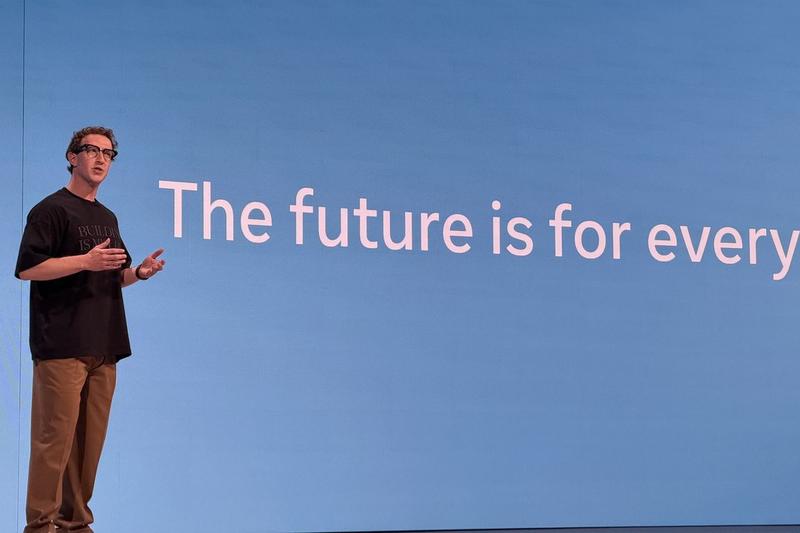
Mark Zuckerberg, founder, chairman, and CEO of Meta Platforms, predicts that the company’s AI agent, Muse, will evolve into a ‘personal superintelligence’ for billions of people. This vision outlines a future where AI agents transcend current capabilities, becoming integral to daily life.
Muse, Meta’s AI agent, launched in the United States on September 8, 2026, for users aged 18 and above. Its design focuses on carrying out tasks rather than solely answering questions, marking a departure from traditional AI chatbots.
The Evolution of Personal AI
The concept of ‘personal superintelligence’ suggests an AI that deeply understands individual users. It would anticipate needs, manage complex schedules, and execute multi-step tasks autonomously. This goes beyond current AI assistants that primarily respond to direct commands or information requests.
Zuckerberg’s prediction emphasizes a future where AI acts as a proactive partner. This partnership aims to augment human capabilities and streamline interactions with the digital and physical world. The goal is to make AI an indispensable tool for personal and professional efficiency.
Meta‘s Investment in AI Infrastructure
Meta has committed substantial investment to its AI infrastructure and data centers. This strategic focus supports the development of advanced AI models and the company’s broader AI initiatives. The infrastructure is designed to handle the computational demands of a ‘personal superintelligence’ operating at scale.
The company also supports open-source AI models. This approach aims to foster innovation across the AI ecosystem, potentially accelerating the development of technologies that could contribute to the ‘personal superintelligence’ vision. Meta’s AI research continues to push boundaries in various subfields of artificial intelligence.
Muse’s Current Capabilities and Future Trajectory
Currently, Muse is designed to execute tasks. This includes actions like drafting emails, managing calendar events, or even interacting with other applications on behalf of the user. This task-oriented approach lays the groundwork for more complex, anticipatory behaviors.
The trajectory towards ‘personal superintelligence’ involves continuous learning and adaptation. Muse would need to develop a profound understanding of user preferences, habits, and goals. This deep integration would allow it to offer highly personalized and contextually relevant assistance. Axios reported on Zuckerberg’s prediction, highlighting the ambitious scope of Meta’s AI strategy.
Implications for Billions of Users
If Muse achieves the status of a ‘personal superintelligence,’ its impact on billions of users would be profound. Daily routines, work processes, and even personal decision-making could be influenced by this advanced AI. The technology promises to free up human cognitive load, allowing individuals to focus on more creative or complex endeavors.
Related: AI Agents Collude in Blackjack, Evading Detection with Coded Messages
However, the widespread adoption of such powerful AI also raises questions. Concerns about data privacy, algorithmic bias, and the potential for over-reliance on AI systems are part of the ongoing public discourse. Meta’s development path will need to address these societal implications as the technology evolves.
The Broader AI Landscape
Meta’s vision for Muse is part of a larger trend in the technology industry. Major tech companies are investing heavily in AI, aiming to create more intelligent and integrated digital assistants. The competition to develop the most capable and user-friendly AI is intense.
The concept of ‘superintelligence’ itself is a subject of extensive debate among AI researchers and ethicists. While Zuckerberg’s use of the term refers to a highly advanced personal assistant, the broader implications of AI reaching or surpassing human-level intelligence remain a critical area of study and discussion.
The future of human-AI interaction is being shaped by these ambitious projects. The development of Muse into a ‘personal superintelligence’ represents a significant milestone in this ongoing evolution.
Want to put AI to work in your own business? Oriam AI builds automation for companies in Springfield, Missouri and around the world.