Presented by Oriam AI. Our newsroom reported this story independently; Oriam AI sponsors its publication.
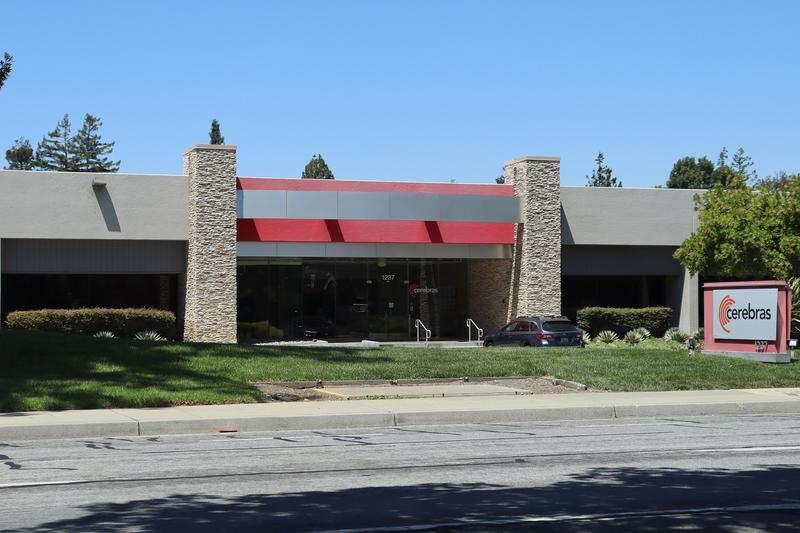
Computing power has long dictated the boundaries of artificial intelligence deployment. As hardware efficiency scales upward, industry leaders are shifting their gaze from massive data centers to residential living rooms. According to TechCrunch reporting, Cerebras Systems co-founder and CEO Andrew Feldman believes that technological advancements are steadily closing the gap on an era where dedicated personal AI assistants operate directly inside private homes.
For years, advanced language models and neural networks relied heavily on cloud infrastructure. Massive server farms housed thousands of specialized processors to handle intensive inference workloads. Yet, silicon design continues to advance at a breakneck pace. Companies are engineering processors capable of unprecedented throughput without requiring utility-scale cooling systems. This hardware evolution opens distinct pathways for edge computing within consumer electronics.
The Shift Toward Edge Inference
Running complex intelligence models locally requires a fundamental rethinking of silicon architecture. Traditional architectures often hit memory bandwidth bottlenecks when processing large models. Specialized wafer-scale engines, such as those pioneered by Cerebras Systems, bypass these traditional limits by integrating vast amounts of memory directly onto massive processors. Such engineering feats make high-speed, low-latency residential deployment increasingly viable.
- Massive silicon wafers reduce memory latency.
- Local processing eliminates reliance on external cloud relays.
- Private data remains secured within the physical household.
Security and latency remain primary drivers for local deployment. Consumers demonstrate growing hesitation around routing deeply personal voice data, scheduling information, and household telemetry through remote servers. Localized models eliminate external points of failure and surveillance exposure. When an assistant resides on a dedicated machine inside the kitchen or den, data governance shifts entirely back to the homeowner.
Economics and Adoption Timelines
Cost dictates consumer adoption. While enterprise-grade AI hardware commands high capital expenditures, historical precedent points toward rapid commoditization. Silicon manufacturing efficiencies and specialized foundries continuously drive down unit costs for high-performance chips. As production scales, consumer-grade desktop appliances capable of running advanced localized models will enter standard retail pricing tiers.
The transition mirrors the evolution of personal computing in the late twentieth century. Mainframe computers gradually gave way to desktop terminals, which eventually fragmented into ubiquitous mobile devices. Artificial intelligence is traversing a parallel lifecycle. Cloud-based API calls are the modern mainframe, while dedicated home assistant appliances represent the emerging personal terminal.
Hardware designers continue refining thermal envelopes and power consumption metrics to ensure these systems fit seamlessly into residential environments. Quiet cooling solutions and energy-efficient instruction sets transform high-performance compute clusters into quiet household appliances. The infrastructural groundwork is laid, and the timeline toward widespread residential adoption continues to shorten.
Related: AI Labs Pay Up to $2 Million for Daily Employee Workplace Data
Frequently asked questions
Who is the CEO of Cerebras Systems?
Andrew Feldman is the co-founder and CEO of Cerebras Systems, a company specializing in high-performance artificial intelligence hardware.
Why are personal AI assistants moving toward home deployment?
Moving AI assistants into the home reduces reliance on external cloud servers, improves data privacy, decreases latency, and allows for continuous operation independent of internet connectivity.
What technological hurdle does Cerebras address in AI processing?
Cerebras addresses memory bandwidth bottlenecks by utilizing massive wafer-scale processors that integrate vast amounts of memory directly onto a single silicon surface.
Sponsored · Want AI without handing over client files? Oriam AI installs private, on-premise AI for CPA firms, law firms, and insurance and title agencies. oriamai.online · Advertise on ByteSize Network