Author: bsn_admin

  • Beyond Resignations – The Mechanics of Sexual Misconduct Reform in Congress

    Beyond Resignations – The Mechanics of Sexual Misconduct Reform in Congress

    Genuine sexual misconduct reform in the United States Congress requires dismantling the legal and procedural architecture that shields elected officials from personal liability, rather than simply relying on political resignations. When examining how Capitol Hill handles workplace abuse, the true measure of reform is not found in public apologies or sudden retirements. It is found in the elimination of taxpayer-funded settlements. It is found in the abolition of mandatory non-disclosure agreements. It is found in the strict enforcement of personal financial liability for Members of Congress. For decades, the legislative branch operated under a shadow system. It was designed to protect the institution. It was designed to exhaust the accuser. A resignation removes a single offender. Structural reform removes the shield.

    The Architecture of Silence

    The modern framework for congressional workplace rules began in 1995. Congress passed the Congressional Accountability Act (CAA). Prior to this legislation, the legislative branch exempted itself from many of the federal workplace laws it imposed on the private sector. The CAA changed that. It applied the Civil Rights Act of 1964, the Americans with Disabilities Act, and the Family and Medical Leave Act to Capitol Hill. It created the Office of Compliance (OOC) to oversee these protections. On paper, it was a triumph of accountability. In practice, it became an architecture of silence.

    The 1995 law established a labyrinthine reporting process. It was heavily weighted in favor of the accused. If a junior staffer experienced sexual harassment, they could not simply file a lawsuit. They could not immediately request an administrative hearing. They were forced into a mandatory 30-day counseling period. This was followed by a mandatory 30-day mediation period. Finally, they faced a mandatory 30-day cooling-off period. This 90-day gauntlet was designed to encourage quiet settlements. It was designed to keep disputes out of the public record.

    During this mandatory mediation, staffers often faced intense pressure to sign strict non-disclosure agreements (NDAs). The accused Member of Congress was provided with free legal representation by the House or Senate Employment Counsel. The accuser, often a staff assistant making less than $35,000 a year, had to pay for their own attorney. The power imbalance was total. The system worked exactly as it was designed to work. It protected the powerful. It silenced the vulnerable. It kept the inner workings of Capitol Hill hidden from the American public.

    The Taxpayer Slush Fund

    The most controversial element of the 1995 framework was the funding mechanism for settlements. When a staffer successfully navigated the 90-day process and secured a settlement, the Member of Congress did not pay the bill. The American taxpayer paid the bill. The CAA established a special Treasury fund to cover workplace dispute settlements. The payouts were completely confidential. The identities of the lawmakers involved were kept secret.

    The numbers eventually surfaced. Between 1997 and 2017, the Office of Compliance paid out more than $17 million in taxpayer funds. This money covered 264 workplace disputes. Not all of these disputes involved sexual harassment. Some involved age discrimination. Some involved overtime pay violations. But the exact breakdown remained hidden. The public had no way of knowing which elected officials were using public money to quietly settle misconduct claims.

    This financial shield eliminated any personal consequence for the abuser. A Member of Congress could harass a subordinate, rely on government lawyers to negotiate a settlement, force the victim to sign an NDA, and use taxpayer money to pay the damages. Their political career remained untouched. Their personal bank account remained untouched. The institution absorbed the damage. The taxpayer absorbed the cost.

    The 2017 Reckoning

    The breaking point arrived in the fall of 2017. The #MeToo movement swept through the entertainment industry, the media, and corporate America. It inevitably reached the steps of the Capitol. Female lawmakers, current staffers, and former staffers began speaking out about the toxic environment in Washington. Representative Jackie Speier, a Democrat from California, became the leading voice for reform. She shared her own experiences of harassment as a young congressional staffer. She introduced the Member and Employee Training and Oversight On Congress (ME TOO Congress) Act.

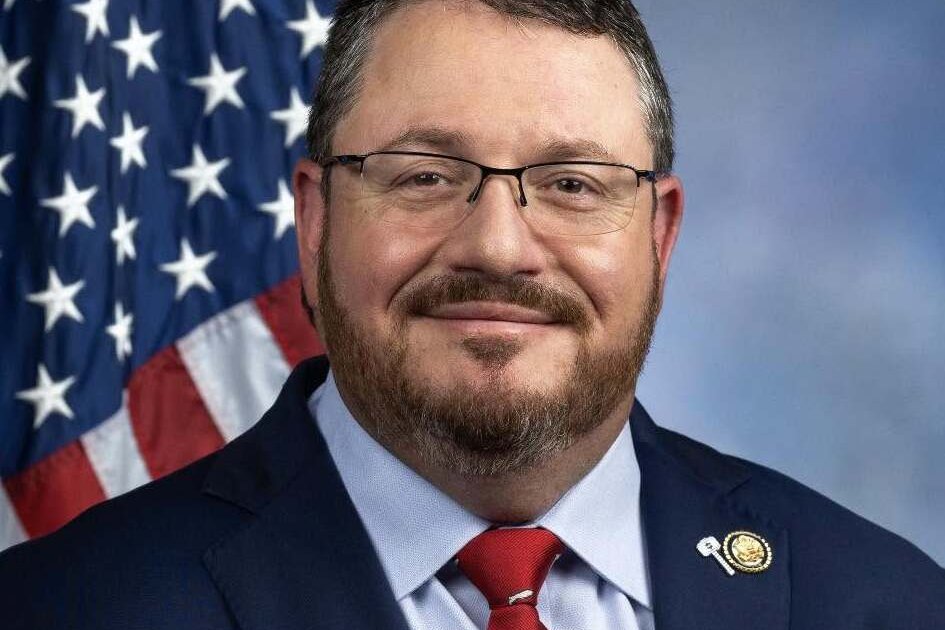
    As pressure mounted, the secrets of the Treasury fund began to leak. In November 2017, reports revealed that Representative John Conyers, a Democrat from Michigan, had settled a sexual harassment claim for $27,000. He paid the settlement out of his office budget, disguising it as severance pay. Shortly after, it was revealed that Representative Blake Farenthold, a Republican from Texas, had used $84,000 from the OOC Treasury fund to settle a sexual harassment lawsuit filed by his former communications director. The public outrage was immediate. The bipartisan anger was palpable.

    The era of quiet resignations began. John Conyers resigned in December 2017. Senator Al Franken, a Democrat from Minnesota, resigned in January 2018 following multiple allegations of inappropriate touching. Blake Farenthold resigned in April 2018. But the resignations were not enough. The public demanded structural changes. Lawmakers realized the 1995 framework was politically indefensible. The system itself had to be dismantled.

    What the CAA Reform Act Actually Did

    In December 2018, Congress passed the Congressional Accountability Act of 1995 Reform Act. President Donald Trump signed it into law. It was a rare moment of unanimous, bipartisan agreement. The legislation fundamentally altered the mechanics of accountability on Capitol Hill. It transformed the Office of Compliance into the Office of Congressional Workplace Rights (OCWR). It overhauled the reporting process. It shifted the financial burden from the taxpayer to the abuser.

    The mandatory 90-day gauntlet was abolished. Under the new law, staffers are no longer required to undergo mandatory counseling. They are no longer required to endure mandatory mediation. They can immediately request an administrative hearing. They can immediately file a lawsuit in federal court. The procedural barriers designed to exhaust accusers were torn down.

    The financial shield was destroyed. The 2018 Reform Act requires Members of Congress to pay for sexual harassment and retaliation settlements out of their own pockets. If a settlement is initially paid from the Treasury fund to ensure the victim receives timely compensation, the lawmaker must reimburse the government within 90 days. If they fail to do so, the government can garnish their wages. The government can seize their federal retirement account. The era of the taxpayer slush fund was officially over.

    Transparency was codified. The OCWR is now required to publish an annual public report. This report must detail the number of settlements, the amounts paid, and the specific offices involved. The veil of absolute secrecy was lifted. The American public finally gained a window into the workplace culture of their elected representatives.

    The Limits of Resignation

    Despite these sweeping legislative changes, the demand for resignations often dominates the public discourse. When a new scandal breaks, the immediate media cycle focuses on the political survival of the accused. Will they step down? Will party leadership force them out? Will the House Ethics Committee intervene? This focus on individual survival misses the broader point of institutional reform.

    A resignation is a political pressure valve. It relieves the immediate tension. It removes the distraction from the party’s legislative agenda. It satisfies the immediate demand for justice. But a resignation does not change the underlying environment. It does not alter the fundamental power dynamics that allowed the abuse to occur in the first place.

    When a lawmaker resigns, the investigation often stops. The House Ethics Committee and the Senate Select Committee on Ethics generally lose jurisdiction over members once they leave office. The full scope of the misconduct may never be uncovered. The enablers within the office, the Chiefs of Staff who looked the other way, the senior aides who retaliated against the accuser, often remain employed on Capitol Hill. They simply move to another office. The culture survives the resignation.

    The Cultural Defense of Capitol Hill

    True reform requires confronting the unique workplace culture of the United States Congress. Capitol Hill is not a single, unified corporation. It is a collection of 535 independent fiefdoms. Each Representative and Senator operates as a small business owner. They hire their own staff. They set their own office policies. They establish their own office culture. There is no centralized human resources department with the power to intervene in daily operations.

    This decentralized structure breeds extreme loyalty. Staffers are deeply dependent on their Member of Congress for career advancement. A recommendation from a powerful Senator can open doors in lobbying, consulting, and the executive branch. Crossing a powerful Senator can end a career before it begins. This creates a culture of silence. It creates a powerful disincentive to report misconduct.

    The 2018 reforms addressed the legal mechanics of this dynamic. They provided staffers with an independent advocate. They provided free legal representation for employees navigating the OCWR process. They expanded protections to unpaid interns and fellows, who are often the most vulnerable individuals on Capitol Hill. But legislation cannot instantly rewrite culture. The fear of retaliation remains a powerful force. The insular nature of Washington politics remains intact.

    The Ongoing Battle for Accountability

    The passage of the CAA Reform Act was a watershed moment. It proved that the institution could be forced to police itself. But the work of cultural defense is never finished. The OCWR must remain vigilant. The annual reports must be scrutinized by the press. The Ethics Committees must be willing to aggressively investigate their own colleagues, even when it is politically inconvenient.

    The focus must remain on the vulnerable. The 22-year-old staff assistant answering phones in the Rayburn House Office Building. The unpaid intern navigating the basement corridors of the Russell Senate Office Building. They are the ones who bear the brunt of a toxic workplace. They are the ones who rely on the structural integrity of the reporting process.

    Resignations will continue. Scandals will inevitably surface. The true test of the modern Congress is not whether misconduct occurs, but how the institution responds when the doors are closed and the cameras are turned off. The legal framework is now in place. The financial penalties are clear. The procedural barriers have been removed.

    The laws changed. The rules shifted. The architecture of silence cracked. But the true measure of reform is not found in the text of a statute. It is found in the hallways of the Capitol. When a staffer faces the powerful. When the doors close. When the choice is made. Accountability.

  • The Return to the Dance Floor: Madonna’s ‘Confessions II’ Premieres at Tribeca

    The Return to the Dance Floor: Madonna’s ‘Confessions II’ Premieres at Tribeca

    Madonna premiered the short film “Confessions II” at the Tribeca Festival in Manhattan, revealing a highly provocative visual project starring actors Julia Garner and Benedict Cumberbatch. The film, defined by extreme aesthetic choices including lasers emitting from bodily orifices, serves as a direct cinematic follow-up to her 2005 Grammy-winning album “Confessions on a Dance Floor.” The screening immediately dominated festival conversations. It forced a public reckoning with the boundaries of celebrity artistry. It proved the pop icon has no intention of quietly fading into legacy status.

    For four decades, the mechanics of pop culture have relied on a predictable cycle. An artist shocks the public. The public recoils. The artist becomes an institution. The institution eventually prioritizes comfort over confrontation. Madonna has continually rejected this final step. The debut of “Confessions II” is not merely a film screening. It is a calculated stress test of modern audience sensibilities.

    The Tribeca Stage

    The Tribeca Festival was founded in 2002 by Robert De Niro, Jane Rosenthal, and Craig Hatkoff. It was designed to revitalize lower Manhattan after the September 11 attacks. Over two decades, it evolved into a premier destination for independent film, documentaries, and experimental media. It is a venue that respects legacy but craves innovation. Madonna chose this specific platform for a reason. It bridges the gap between raw underground art and high-society cinema.

    When the lights dimmed in the New York theater, expectations were fractured. The audience understood Madonna’s history with cinema. Her directorial efforts, such as “W.E.” in 2011 and “Filth and Wisdom” in 2008, received mixed critical reception. Her acting career features both triumphs like 1996’s “Evita” and highly criticized projects like 2002’s “Swept Away.” But “Confessions II” does not operate as traditional narrative cinema. It functions as a visual album. It is a sensory assault. It is an extension of the music video medium that she helped invent in the early 1980s.

    The reaction was immediate. The imagery was jarring. The deliberate pacing forced viewers to confront the uncomfortable. The festival setting provided a veneer of high art to a project that actively weaponized low-brow shock tactics. This friction is exactly where Madonna operates best.

    Casting the Successor: Julia Garner

    The inclusion of Julia Garner carries immense industry weight. In 2022, Garner survived a grueling, months-long audition process, dubbed “Madonna Bootcamp” by the Hollywood press, to win the lead role in a planned Universal Pictures biopic about the singer. The project was ultimately paused when Madonna chose to embark on her global Celebration Tour instead. The industry assumed the collaboration was dead.

    “Confessions II” revives that creative partnership. Garner, holding three Emmy Awards for her defining role as Ruth Langmore on Netflix’s “Ozark,” brings a ferocious intensity to the screen. She does not merely mimic the pop star. She channels the aggressive, unapologetic energy that defined Madonna’s early career. Her presence in the short film acts as a bridge. It connects the 60-something icon behind the camera with the twenty-something avatar on the screen.

    Garner’s performance in the visual piece requires immense physical discipline. She navigates the chaotic, laser-drenched environments with the precision of a trained dancer. It validates the grueling preparation she underwent for the suspended biopic. It also signals Madonna’s ultimate approval of Garner as a creative surrogate.

    The Unexpected Establishment: Benedict Cumberbatch

    If Julia Garner represents the raw, untamed energy of youth, Benedict Cumberbatch represents the rigid British establishment. The casting of the two-time Academy Award nominee is the film’s most jarring juxtaposition. Cumberbatch is globally recognized for cerebral roles. He is Sherlock Holmes. He is Doctor Strange in the Marvel Cinematic Universe. He is Alan Turing in “The Imitation Game.”

    Placing Cumberbatch inside a neon-soaked, hyper-sexualized Madonna project is a deliberate subversion of his brand. He does not appear in his typical tweed or superhero cloaks. He is subjected to the same aggressive visual treatment as the rest of the cast. His inclusion forces the audience to reconcile traditional prestige acting with avant-garde pop art.

    This is a classic Madonna tactic. Throughout her career, she has consistently pulled established, serious figures into her orbit to legitimize and contrast her provocations. In the 1990s, she brought Warren Beatty and Al Pacino into “Dick Tracy.” Now, she brings the quintessential English gentleman into a room filled with lasers and techno beats. The contrast creates the necessary friction to make the art memorable.

    The Aesthetics of Extreme Provocation

    The visual signature of “Confessions II” is already infamous. The Hollywood Reporter highlighted the film’s defining aesthetic: “lasers coming out of every orifice.” It is a phrase designed to generate headlines. It is a visual designed to generate discomfort.

    To understand the lasers, one must understand the history of the artist’s visual language. In 1989, she burned crosses in the “Like a Prayer” video. In 1990, she simulated masturbation on the Blond Ambition tour. In 1992, she published “Sex,” a coffee table book of explicit erotica. By 2003, she was kissing Britney Spears on the MTV Video Music Awards stage. Every decade requires a new mechanism for shock.

    In the 2020s, physical nudity and simulated sex have lost their transgressive power. The internet made the explicit mundane. To shock a modern audience, an artist must move beyond the biological and into the surreal. The lasers represent a technological invasion of the human body. It is aggressive. It is dehumanizing. It is visually spectacular. It forces the viewer to look away, and then forces them to look back.

    Critics debated the necessity of the imagery. Some labeled it a desperate attempt to maintain relevance. Others recognized it as a sharp commentary on how modern media consumes and projects celebrity bodies. The intent matters less than the result. The result was total attention.

    The 2005 Anchor: Confessions on a Dance Floor

    The title “Confessions II” is not arbitrary. It anchors the chaotic visuals to a specific moment of triumph. Released in November 2005, “Confessions on a Dance Floor” was a massive critical and commercial success. Produced largely by Stuart Price, the album sold an estimated 12 million copies worldwide. It reached number one in 40 countries. It single-handedly resurrected the disco genre for the 21st century.

    The 2005 album was defined by continuous, unmixed transitions. It felt like a single, unbroken night in a subterranean club. The lead single, “Hung Up,” famously sampled ABBA’s “Gimme! Gimme! Gimme! (A Man After Midnight),” securing its place as an inescapable global anthem. It was a project defined by its pristine, polished aesthetic. Madonna wore a pink leotard. She danced in a mirrored studio. It was safe, universally beloved pop perfection.

    Returning to the “Confessions” title nearly two decades later is a deliberate act of legacy manipulation. By attaching this new, highly abrasive visual film to her most universally beloved 21st-century album, she forces a confrontation. She invites the audience back to the dance floor, but the floor has changed. The pink leotards are gone. The lasers have arrived. It is a rejection of nostalgia. She refuses to let the audience enjoy the memory without confronting the present.

    Celebrity Accountability in the Modern Era

    The release of “Confessions II” taps directly into an ongoing cultural debate regarding celebrity boundaries and accountability. How is an aging pop icon supposed to behave? The general public often demands that older female artists transition into a state of graceful, quiet legacy. They are expected to sing the hits, collect the lifetime achievement awards, and avoid making anyone uncomfortable.

    Madonna actively antagonizes this expectation. When she alters her physical appearance, the internet erupts in outrage. When she posts provocative images on Instagram, commentators demand she act her age. The public feels a sense of ownership over her legacy, and they demand accountability when she deviates from their approved script.

    “Confessions II” is her response to that demand. The film does not apologize. It escalates. By projecting lasers from bodily orifices on a massive screen at a prestigious film festival, she reclaims her agency. She reminds the public that she built her empire on making them uncomfortable. The outrage is not an accidental byproduct of the art. The outrage is the medium itself.

    The Visual Album as the New Frontier

    The short film format allows musicians to bypass the traditional constraints of the music industry. MTV no longer dictates visual culture. YouTube algorithms favor short, easily digestible content. To make a true visual impact, artists must pivot to long-form, cinematic events.

    Beyoncé redefined this space with “Lemonade” in 2016. Taylor Swift utilized the format for “All Too Well: The Short Film” in 2021, which premiered at the Tribeca Festival in 2022. “Confessions II” enters this arena, but with a distinctly different objective. Where Swift sought cinematic legitimacy and emotional resonance, Madonna seeks disruption.

    The visual album format provides the necessary budget, scale, and captive audience for this level of provocation. A standard three-minute music video can be scrolled past. A seated premiere at the Tribeca Festival demands attention. It forces critics to write reviews. It forces the entertainment industry to acknowledge the work.

    The Final Frame

    The premiere concluded. The theater lights returned. The immediate reactions flooded social media, splintering into factions of disgust, awe, and confusion. The debate over boundaries, aging, and artistic merit ignited exactly as planned.

    The industry analyzed the casting. The critics debated the lasers. The festival prepared for the next screening.

    Madonna remained.

  • Jennifer Lopez Sparks Debate: Must You Be Born in New York to Be a New Yorker?

    Jennifer Lopez Sparks Debate: Must You Be Born in New York to Be a New Yorker?

    Jennifer Lopez recently declared that to be a true New Yorker, an individual must be born within the five boroughs. The Bronx-born entertainer made the assertion during an appearance on the popular social media series Subway Takes, hosted by comedian Kareem Rahma. When asked for her “hot take,” Lopez stated unequivocally that moving to the city does not grant the title. The comment immediately went viral, fracturing the internet into camps of fierce agreement and immediate defense. It touched a nerve that runs deep beneath the concrete of the city.

    The question of who gets to claim New York is as old as the city itself. It is a debate about authenticity. It is a debate about ownership. Lopez, who built a global empire partly on the foundation of her “Jenny from the Block” persona, anchored her claim in birthplace. For her, the identity is inherited, not acquired. But for the millions who arrive at Penn Station or JFK Airport with a dream and a depleted savings account, the identity is something earned through survival and assimilation.

    The viral moment did not occur in a vacuum. It arrived at a time when cities are increasingly protective of their cultural borders. The cost of living is high. Displacement is a constant threat. In this environment, claiming native status is a form of cultural defense.

    The Bronx Foundation

    Jennifer Lopez was born on July 24, 1969, in the Castle Hill neighborhood of the Bronx. Her parents, David Lopez and Guadalupe Rodríguez, were born in Puerto Rico and moved to the United States mainland as children. Her upbringing in a working-class environment heavily influenced her early career and public image.

    Her 2002 hit single, “Jenny from the Block,” was an explicit manifesto of her roots. The song, and its accompanying music video featuring then-fiancé Ben Affleck, was a strategic move to maintain relatability despite her skyrocketing fame and wealth. She was asserting that the Bronx remained her core identity, regardless of her Hollywood address.

    When Lopez sat down for the Subway Takes interview in early 2024, she was returning to that well. The format of the show, short, rapid-fire opinions filmed on the New York City subway, demands strong, often polarizing statements. Lopez delivered.

    “You have to be born in New York to be a New Yorker,” Lopez stated. “You can’t just move here and say you’re a New Yorker.”

    The reaction was swift. Native New Yorkers flooded the comments sections, validating her stance. They pointed to the shared experiences of growing up in the city: the public school system, the specific cadence of the accent, the localized knowledge of neighborhoods before they were gentrified. For this group, being a New Yorker is a bloodright.

    The Migrant Counter-Argument

    The backlash was equally intense. The counter-argument relies on the fundamental mythology of New York as a beacon for the ambitious and the displaced. From the Irish and Italian immigrants of the 19th and early 20th centuries to the artists and writers who flocked to Greenwich Village and Harlem, the city has always been defined by those who chose it.

    Critics of Lopez’s stance argue that surviving the crucible of the city, paying exorbitant rent, navigating the MTA, enduring the grueling pace, earns one the title. They cite the famous essay by E.B. White, Here Is New York, published in 1949. White categorized the city into three distinct groups: the native, the commuter, and the person born elsewhere who came in quest of something.

    White argued that it was the third group, the settlers, who gave the city its passion. “The city is always full of young worshipful beginners,” White wrote. “To an out-of-towner the city is not a hometown, it is a destination.”

    For those who align with White’s view, Lopez’s definition is exclusionary and ignores the vital energy brought by transplants. They argue that a New Yorker is not determined by a birth certificate, but by a state of mind and a commitment to the city’s unique ecosystem.

    The Economics of Authenticity

    Beneath the cultural debate lies an economic reality. New York City is an expensive brand. The “New Yorker” identity is commodified and sold globally. Lopez herself has leveraged this brand throughout her career, from her music and film roles to her fashion lines and fragrance empires.

    When a native New Yorker claims exclusive rights to the title, it is often a reaction against the perceived dilution of that brand by wealthy transplants. The gentrification of neighborhoods like Williamsburg, Brooklyn, and Astoria, Queens, has displaced many native residents. The influx of tech workers and finance professionals has altered the cultural landscape.

    In this context, Lopez’s “hot take” can be seen as a defense of the working-class, native-born population. It is a line drawn in the sand against the homogenization of the city. It asserts that there is a lived experience that cannot be purchased with a luxury apartment lease in Tribeca.

    The Role of the Boroughs

    The debate also highlights the internal hierarchy of the city. Manhattan is often the focal point for transplants, the glittering center of commerce and media. The outer boroughs, the Bronx, Brooklyn, Queens, and Staten Island, are traditionally viewed as the strongholds of native New Yorkers.

    Lopez’s emphasis on her Bronx roots is a specific type of New York flex. It signals a gritty, unvarnished authenticity that contrasts with the polished image of Manhattan. When she dictates the terms of who gets to be a New Yorker, she is doing so from the perspective of the outer boroughs, claiming authority over the entire city’s identity.

    The Evolution of a Persona

    Jennifer Lopez’s relationship with her New York identity has been complex and occasionally contradictory. While she frequently references the Bronx, she has spent the majority of her adult life living in Los Angeles, Miami, and other enclaves of wealth. Her recent purchase of a $60 million mansion in Beverly Hills with Ben Affleck stands in stark contrast to the Castle Hill apartment of her youth.

    This duality is common among highly successful individuals from modest backgrounds. The origin story remains a crucial part of their narrative, even as their current reality bears no resemblance to it. For Lopez, the New York identity is both a foundational truth and a carefully maintained brand asset.

    When she makes a definitive statement on Subway Takes, she is performing that identity for an audience. She is reminding the public of her roots, reinforcing the narrative that despite the diamonds and the private jets, she remains fundamentally unchanged. The debate it sparked only serves to amplify that message.

    The Verdict of the Streets

    The question of who is a real New Yorker will never be definitively settled. It is a subjective measure, constantly negotiated and renegotiated. It depends on who is asking and who is answering.

    For the native-born, the distinction is clear. It is about shared history, family ties, and a deep, intuitive understanding of the city’s rhythms. For the transplant, the distinction is earned through endurance, contribution, and a conscious choice to embrace the chaos.

    Jennifer Lopez threw a match into a powder keg of civic pride and cultural anxiety. She articulated a feeling held by many native residents who feel their city slipping away. She also alienated those who poured their lives into the five boroughs, only to be told they are merely guests.

    The debate raged on X, formerly Twitter, and TikTok. Essays were written. Podcasts were recorded. The city, as always, absorbed the noise and kept moving.

    The trains ran. The bodegas opened. The tourists stared up at the skyline. The natives navigated the crowds. The transplants hustled for their piece of the pie.

  • The Oak Ridge Summit: Inside the Trump Administration’s Quiet Iran Strategy

    The Oak Ridge Summit: Inside the Trump Administration’s Quiet Iran Strategy

    The Meeting in the Mountains

    In early June 2026, Trump administration envoys Jared Kushner and Steven Witkoff quietly convened a summit of America’s top nuclear physicists in Oak Ridge, Tennessee, to assess the exact timeline of Iran’s nuclear weapon breakout capabilities. The meeting did not happen in Washington, D.C. It did not take place in the secure briefing rooms of the Pentagon or the basement of the State Department. It happened in the shadow of the Smoky Mountains.

    The location was deliberate. Oak Ridge National Laboratory and the adjacent Y-12 National Security Complex hold the institutional memory of American atomic power. When policymakers need to understand the physics of destruction, they go to Tennessee.

    Kushner and Witkoff arrived with a specific mandate. The second Trump administration faced a shrinking window in the Middle East. Iran’s uranium enrichment had advanced. The White House needed unvarnished technical truths. They needed to know exactly how long it would take Tehran to bridge the gap between highly enriched uranium and a functional nuclear warhead.

    The physicists provided the math. The envoys took the notes. The geopolitical calculus of the entire Middle East hinged on the numbers discussed in those windowless rooms.

    The Architecture of American Atomic Power

    To understand why the envoys traveled to Tennessee, one must understand the history of the valley. Oak Ridge was built in secret in 1943. It was the engine of the Manhattan Project. The Clinton Engineer Works, as it was known then, was tasked with a single, monumental objective: enriching uranium for the first atomic bomb.

    Today, the Y-12 National Security Complex remains the premier facility for handling highly enriched uranium in the United States. It stores the bulk of the nation’s weapons-grade material. It dismantles old warheads. It evaluates foreign nuclear threats. The scientists working inside its perimeter fences understand the precise engineering required to turn uranium hexafluoride gas into a weapon core.

    They know the challenges of metallurgy. They know the difficulties of explosive lensing. They know exactly what obstacles Iranian scientists face in their underground laboratories.

    Diplomats read intelligence reports. The scientists at Oak Ridge read the physics. The envoys needed the latter to validate the former.

    The Envoys and the Assignment

    Jared Kushner and Steven Witkoff operate outside the traditional foreign policy establishment. They are not career diplomats. They are dealmakers rooted in the world of high-stakes real estate. This background defines their approach to international relations.

    During the first Trump administration, Kushner bypassed traditional State Department channels to broker the Abraham Accords in 2020. That agreement normalized relations between Israel and several Arab nations, fundamentally altering the diplomatic architecture of the Middle East. Witkoff, a trusted confidant of the President, brings a similar transactional pragmatism to the table.

    Their appointment as envoys for the Iran portfolio signals a specific White House strategy. The administration views the Iranian nuclear program not just as a security threat, but as a point of leverage. To negotiate effectively, or to authorize military action confidently, the envoys required an indisputable baseline of facts.

    They needed to know what was a bluff and what was a bomb.

    The Physics of Breakout

    The core of the Oak Ridge briefings centered on a concept known as “breakout time.” This is the duration required for a state to produce enough weapons-grade uranium for one nuclear device.

    Uranium found in nature consists mostly of the isotope U-238. Less than one percent is the fissile isotope U-235. To fuel a commercial nuclear reactor, uranium must be enriched to about 3 to 5 percent U-235. To build a nuclear bomb, it must be enriched to roughly 90 percent.

    The process is exponential, not linear. Enriching uranium from natural levels to 20 percent takes immense time and energy. Going from 20 percent to 60 percent is faster. The jump from 60 percent to 90 percent weapons-grade material requires very little time.

    By 2026, the International Atomic Energy Agency (IAEA) had repeatedly documented Iran enriching uranium to 60 percent purity. The math presented at Oak Ridge was stark. The breakout time was no longer measured in years or months. It was measured in days.

    The Fortresses of Natanz and Fordow

    The envoys reviewed satellite imagery and structural intelligence regarding Iran’s primary enrichment facilities. The geography of the Iranian nuclear program is designed for survival.

    The Natanz facility is the heart of the program. It houses thousands of advanced centrifuges, specifically the IR-6 models, which spin at supersonic speeds to separate uranium isotopes. While parts of Natanz have been vulnerable to sabotage in the past, Iran has continually moved operations deeper underground.

    The Fordow Fuel Enrichment Plant presents a more severe challenge. Fordow is built deep inside a mountain near the holy city of Qom. It is heavily fortified. It is protected by layers of rock, reinforced concrete, and advanced air defense systems.

    The Oak Ridge scientists analyzed the operational capacity of these facilities. They calculated the output of the IR-6 cascades. They mapped the subterranean architecture. The envoys needed to know if these fortresses were impenetrable.

    The Ghost of the JCPOA

    The strategic environment of 2026 is haunted by the Joint Comprehensive Plan of Action (JCPOA). Brokered in 2015, the agreement placed strict limits on Iran’s nuclear program in exchange for sanctions relief. In May 2018, the first Trump administration unilaterally withdrew from the deal, initiating a “maximum pressure” campaign.

    The maximum pressure strategy crippled the Iranian economy. It severely restricted Tehran’s ability to export oil. But it did not stop the centrifuges. In response to the U.S. withdrawal, Iran systematically breached the limits of the JCPOA, installing faster centrifuges and stockpiling highly enriched uranium.

    The Oak Ridge summit was an acknowledgment of this new reality. The old frameworks were dead. The envoys were not looking backward at the JCPOA. They were looking forward at a binary choice: a new, comprehensive diplomatic settlement, or a kinetic military strike.

    The Regional Chessboard

    The intelligence reviewed in Tennessee did not exist in a vacuum. It was directly tied to the security postures of American allies in the Middle East.

    Israel considers a nuclear-armed Iran an existential threat. The leadership in Tel Aviv has consistently maintained that they will not allow Tehran to cross the nuclear threshold. Israeli intelligence agencies, notably the Mossad, conduct continuous covert operations aimed at disrupting the Iranian program.

    Saudi Arabia, a key rival of Iran, watches the enrichment levels closely. Riyadh has signaled that if Iran acquires a nuclear weapon, the Kingdom will seek to develop its own deterrent. The specter of a nuclear arms race in the Middle East loomed over the Oak Ridge briefings.

    Kushner and Witkoff understood that any U.S. policy decision would trigger a cascade of reactions from Tel Aviv to Riyadh. The technical baseline established in Tennessee would dictate the diplomatic messaging to these allies.

    The Military Contingency

    Diplomacy requires the credible threat of force. The envoys were briefed on the military options available to the Commander-in-Chief.

    Striking the Iranian nuclear facilities is a monumental logistical and tactical challenge. Standard munitions cannot penetrate the rock above Fordow. The United States Air Force maintains a specialized weapon for this exact scenario: the GBU-57 Massive Ordnance Penetrator (MOP).

    The MOP is a 30,000-pound precision-guided bunker buster. It is designed to drill through hundreds of feet of earth and reinforced concrete before detonating. It is carried exclusively by the B-2 Spirit stealth bomber.

    The Oak Ridge scientists understand the explosive yield required to collapse a subterranean centrifuge hall. They provided the damage assessments. But the envoys also understood the geopolitical fallout. A military strike would not happen in isolation. It would likely ignite a regional war, drawing in the Islamic Revolutionary Guard Corps (IRGC) and proxy forces like Hezbollah in Lebanon. It would threaten global shipping in the Strait of Hormuz.

    The Diplomatic Backchannel

    The alternative to war is a deal. While public rhetoric remains hostile, the mechanics of international relations often rely on quiet backchannels.

    Nations like Oman and Qatar frequently serve as intermediaries between Washington and Tehran. Messages are passed. Red lines are communicated. The envoys needed the Oak Ridge data to define those red lines with absolute precision.

    You cannot negotiate limits if you do not understand the physics. You cannot demand the removal of specific centrifuge cascades if you do not know their output capacity. The scientists provided the technical vocabulary required for any future backchannel negotiation. They defined what concessions were meaningful and what concessions were merely cosmetic.

    The Weight of the Information

    The briefings concluded. The classified documents were secured. The envoys prepared to return to Washington.

    They left Tennessee with a clear, unambiguous picture of the threat. The ambiguity of intelligence estimates was replaced by the cold, hard mathematics of nuclear physics. The timeline was set. The capabilities were known.

    The decisions that would follow would shape the stability of the Middle East for a generation. The centrifuges in Natanz continued to spin. The diplomats in Vienna continued to talk. The strategists in Washington continued to plan.

  • How a Visa Crackdown Triggered a Texas Housing Bust

    How a Visa Crackdown Triggered a Texas Housing Bust

    The Texas housing bust in specific tech-heavy suburbs was triggered when the Trump administration’s 2017 Buy American and Hire American executive order drastically increased H-1B visa denials, cutting off the flow of high-earning foreign tech workers who fueled real estate demand in markets like Austin and Collin County. What began as a federal immigration directive quickly materialized as a localized real estate crisis. Houses sat empty. Contracts were canceled. The pipeline of buyers vanished.

    In many ways, the American real estate market is a mirror of federal policy. But the story does not begin with homebuilders or mortgage rates. It begins with the precise mechanics of the global talent supply chain. For years, the Texas economic miracle relied on a steady influx of highly skilled, highly paid workers from overseas. When that pipeline was choked at the federal level, the local economic engine stalled.

    The Texas Corporate Migration of the 2010s

    To understand the bust, one must first measure the boom. Following the 2008 financial crisis, Texas positioned itself as the ultimate destination for corporate relocation. State officials offered massive tax incentives. Land was cheap. Regulations were light. The pitch worked.

    Major corporations flooded into the state. Toyota Motor North America moved its headquarters from California to Plano, Texas. State Farm built a massive regional hub in Richardson. Liberty Mutual followed suit. Apple expanded its campus in Austin, cementing the city’s reputation as Silicon Hills. The Dallas-Fort Worth metroplex became a magnet for Fortune 500 companies.

    These companies required specialized talent. They needed software engineers, data scientists, and systems architects. The domestic talent pool was insufficient to meet the sudden, explosive demand. Corporations turned to the H-1B visa program to import the necessary workforce. Tens of thousands of foreign professionals, primarily from India and China, relocated to Texas.

    The Real Estate Engine

    This demographic shift created a highly specific real estate micro-economy. The typical H-1B worker arriving in Texas to work for a major tech or financial firm earned a six-figure salary. They required housing. They preferred new construction. They valued highly rated public school districts.

    Developers responded with staggering speed. In Collin County, suburbs like Frisco, Plano, Prosper, and Celina transformed almost overnight. Master-planned communities sprouted across former pastureland. Builders like Toll Brothers and Lennar constructed thousands of single-family homes priced between $400,000 and $800,000. Luxury apartment complexes were built specifically to house these workers while they saved for down payments.

    The local economy reoriented itself around this influx. Property values soared. School districts expanded, funded by the surging property tax revenue. Retail centers like Legacy West in Plano thrived on the disposable income of this new, highly educated workforce. The ecosystem was perfectly balanced, provided the influx of talent remained constant.

    April 2017 and the Policy Shift

    The balance broke on April 18, 2017. President Donald Trump signed the Buy American and Hire American executive order. The directive instructed federal agencies to propose new rules and guidance to protect the interests of United States workers in the administration of the immigration system.

    The order specifically targeted the H-1B visa program. For years, the H-1B had been a standard operational tool for tech companies. It allowed employers to temporarily employ foreign workers in specialty occupations. The new administration viewed the program as a mechanism that undercut American wages.

    The executive order did not immediately change the law. It changed the enforcement mechanisms. The U.S. Citizenship and Immigration Services (USCIS) altered its internal guidance. The agency began subjecting visa applications to unprecedented levels of scrutiny. The era of routine visa approvals ended.

    The Bureaucratic Wall: RFEs and Denials

    The shift was bureaucratic, but the impact was absolute. USCIS dramatically increased the issuance of Requests for Evidence (RFEs). An RFE pauses the visa application process, requiring the employer to submit extensive additional documentation to prove the worker qualifies for the visa.

    Before the executive order, RFEs were issued in roughly 20 percent of cases. By the end of 2017, the RFE rate spiked to nearly 70 percent. The process became grueling. Applications were delayed for months. Legal costs for employers skyrocketed.

    More importantly, the outright denial rate surged. In 2015, the H-1B denial rate was a mere 6 percent. By 2018, under the new enforcement directives, the denial rate hit 24 percent. For workers employed by IT services companies, the denial rates were even higher, sometimes exceeding 40 percent.

    The Human Element

    Behind the statistics were individuals holding real estate contracts. High-earning professionals who had lived in Texas for years on temporary visas suddenly found their extensions denied. They were forced to leave the country. Others, who had accepted job offers in Austin or Dallas, had their initial visas rejected. They never arrived.

    The psychological impact was equally severe. Even workers who maintained their visa status became hesitant to make long-term financial commitments. The uncertainty of the immigration environment paralyzed decision-making. A worker unsure if they will be forced to leave the country in six months does not sign a 30-year mortgage. They do not buy a $600,000 house in Frisco.

    The Immediate Freeze in the Suburbs

    The real estate market felt the impact almost immediately. The pipeline of buyers simply vanished. Builders who had aggressively acquired land and pulled permits based on the 2015 and 2016 growth trajectories suddenly found themselves with excess inventory.

    In Collin County, the signs were visible by late 2018. Newly completed homes sat empty. Builders began offering significant incentives, a sharp reversal from the bidding wars of the previous years. Price reductions became common in ZIP codes that had previously seen double-digit annual appreciation.

    The luxury rental market was hit first. Apartment complexes in West Plano and North Austin, designed specifically to capture the incoming tech demographic, struggled with occupancy rates. Property managers offered months of free rent to secure tenants. The absorption rate, a key metric of real estate health, plummeted.

    Canceled Contracts

    The most acute pain was felt in the new construction sector. Foreign workers who had put down earnest money on unbuilt homes suddenly faced visa denials. They were forced to walk away from their deposits. Builders were left holding custom-designed homes that they now had to sell on the open market in a cooling environment.

    Real estate agents specializing in relocation services watched their business evaporate. The steady stream of corporate transferees arriving from India via the H-1B and L-1 visa programs slowed to a trickle. The micro-economy built around importing global talent was unraveling.

    The Ripple Effect on Local Texas Economies

    A housing bust does not remain confined to homebuilders. Real estate is the bedrock of local municipal finance in Texas. The state has no income tax. It relies heavily on property taxes to fund local governments and public schools.

    When housing demand stalled, property value assessments leveled off. School districts like Frisco ISD and Plano ISD, which had planned massive infrastructure expansions based on projected property tax revenue growth, were forced to recalibrate. The rapid expansion of school facilities slowed.

    Small businesses felt the secondary shockwaves. The restaurants, retail stores, and service providers that had opened to cater to the affluent immigrant demographic saw foot traffic decline. The multiplier effect of a six-figure salary disappearing from a local economy is profound. When hundreds of those salaries disappear simultaneously, the economic damage is highly concentrated and highly visible.

    The Bloomberg Analysis and Macro Implications

    The situation drew national attention. Reporting by Bloomberg Television highlighted the direct correlation between the Trump administration’s visa crackdown and the localized economic stagnation in Texas. The narrative shifted from a debate about immigration policy to a stark examination of economic cause and effect.

    The data revealed a fundamental vulnerability in the Texas economic model. The state had successfully attracted major corporations, but those corporations were reliant on a global talent pool. By restricting access to that talent, federal policy inadvertently undermined the state’s economic development strategy.

    The Texas housing bust served as a warning sign for other Sunbelt markets. Cities like Phoenix, Raleigh, and Atlanta, which were attempting to replicate the Austin and Dallas growth models, watched closely. The realization dawned that municipal growth was inextricably linked to federal immigration quotas.

    The Long-Term Shift

    The market eventually adapted, but the structural damage was done. Tech companies began altering their expansion strategies. Rather than fighting the bureaucratic wall of the USCIS, some corporations opted to open engineering hubs in Canada, where immigration policies were more accommodating to highly skilled workers. Toronto and Vancouver absorbed the talent that would have otherwise purchased homes in Texas.

    The Texas real estate market survived the localized bust, eventually propped up by domestic migration during the subsequent pandemic era. But the specific micro-market built around the H-1B visa never fully returned to its 2016 peak. The trust in the system was broken. The certainty was gone.

    The episode remains a textbook case study in economic interconnectedness. A policy drafted in Washington to protect American workers resulted in empty houses in Texas. The intent was to secure the labor market. The result was a sudden, sharp contraction in local real estate.

    Policies shifted. Visas expired. Contracts canceled. Bust.

  • The Frontier Lives On: Why MoMA Is Revisiting Hollywood’s Greatest Westerns

    The Frontier Lives On: Why MoMA Is Revisiting Hollywood’s Greatest Westerns

    In June 2026, the Museum of Modern Art (MoMA) in New York City launched a major film retrospective dedicated to the history of the Hollywood Western, focusing heavily on the archives of Universal Pictures and the defining works of directors like John Ford and Clint Eastwood. The exhibition bridges a long-standing gap between high-art curation and frontier pulp. For decades, the Western was dismissed by coastal elites as Saturday matinee fodder. Now, the cultural establishment recognizes it as the foundational text of American cinema. The genre is not dead. It is simply being recontextualized.

    The Museum of Modern Art established its film library in 1935. Iris Barry, the first curator, fought aggressively to include Hollywood entertainment alongside European avant-garde cinema. Ninety-one years later, the institution is doubling down on that exact legacy. The 2026 exhibition spans over seven decades of filmmaking. It requires three distinct theaters inside the Manhattan complex. Curators sourced pristine 35mm and 70mm prints. Some were pulled from climate-controlled vaults in Culpeper, Virginia. Others came directly from the Universal Studios lot in Universal City, California. The physical medium matters. Digital streaming compresses the landscape. Celluloid lets the desert breathe.

    The Universal Pictures Archive

    Universal Pictures built its postwar fortune on the dirt and grit of the frontier. The studio understood that audiences returning from World War II no longer wanted pristine, singing cowboys. They wanted conflict. They wanted moral ambiguity. In 1950, Universal released Winchester ’73. It was directed by Anthony Mann. It starred James Stewart. The film cost $1.2 million to produce. It changed the economics of Hollywood overnight. Stewart took a percentage of the profits instead of a flat salary. He walked away with over $600,000. But the artistic shift was just as significant as the financial one.

    Mann and Stewart stripped the polish off the cowboy hero. Their protagonist was bitter. He was violent. He was driven entirely by revenge. This cycle of Universal Westerns laid the groundwork for the psychological complexity that MoMA is now analyzing. Films like Bend of the River (1952) and The Naked Spur (1953) pushed the boundaries of what audiences would accept from a leading man. Stewart was no longer the affable everyman from It’s a Wonderful Life. He was a killer. He was desperate. The landscapes in these films were not just backdrops. They were psychological prisons. The jagged peaks of the Rocky Mountains mirrored the fractured minds of the men navigating them.

    The Economics of the B-Movie

    Universal did not just produce prestige Westerns. The studio churned out hundreds of B-movies. These films were shot in weeks, sometimes days. They utilized standing sets on the backlot. They recycled costumes. They reused scripts. Yet, these low-budget productions were the training ground for the next generation of American filmmakers. Directors learned how to block action. Cinematographers learned how to light daytime exteriors without expensive rigging. The MoMA retrospective dedicates an entire weekend to these forgotten programmers. It argues that the DNA of modern action cinema was forged in the cheap, dusty backlots of Universal City during the late 1940s.

    John Ford and the Architecture of Myth

    No examination of the Western exists without John Ford. He did not invent the genre. He simply perfected its architecture. In 1939, Ford directed Stagecoach. He took a young prop-boy-turned-B-movie-actor named Marion Morrison and turned him into John Wayne. The film introduced audiences to Monument Valley. The sprawling red-sand desert on the Arizona-Utah border became Ford’s personal soundstage. The MoMA retrospective highlights Ford’s spatial genius. The camera looks up at the mesas. It looks up at the men. It shrinks the individual against the vastness of the American continent. The environment is always the dominant character.

    Ford won four Academy Awards for Best Director during his career. None were for Westerns. Yet, his frontier films remain his definitive legacy. By 1956, with the release of The Searchers, Ford was actively questioning the very myth he helped build. John Wayne’s character, Ethan Edwards, was no longer a pure hero. He was a racist, violent relic. He was a man capable of surviving the frontier, but incapable of living in the civilization that followed. The final shot of the film frames Wayne outside a doorway, grasping his arm, before turning back into the desert. The door closes. The frontier is sealed off. MoMA curators highlight this specific moment as the turning point in American cinema. Innocence was gone.

    The Role of the Cavalry

    Ford’s “Cavalry Trilogy”, Fort Apache (1948), She Wore a Yellow Ribbon (1949), and Rio Grande (1950), receives special attention in the 2026 exhibition. These films explore duty, honor, and the cost of military command. They are deeply nostalgic for a unified America. Yet, they also depict the brutal reality of the Indian Wars. The retrospective does not shy away from the problematic aspects of these narratives. Panel discussions at MoMA feature Indigenous scholars analyzing how Ford’s films shaped a century of Native American representation. The myth of the West was built on erasure. The retrospective forces audiences to confront what was left out of the frame.

    The Eastwood Pivot: Blood in the Dust

    If Ford built the myth, Clint Eastwood dismantled it. The MoMA series dedicates an entire wing to Eastwood’s evolution. He began as the Man with No Name in Sergio Leone’s 1964 film A Fistful of Dollars. Shot in the Tabernas Desert of Spain, the film cost just $200,000. It grossed $14.5 million. It birthed the Spaghetti Western. The Italian production stripped away the romance of the American West. It replaced it with sweat, greed, and extreme close-ups. Eastwood brought that cynical, dust-bitten aesthetic back to America.

    In 1973, Eastwood directed and starred in High Plains Drifter for Universal Pictures. The morality was entirely gray. The town of Lago was painted literally red. The hero was essentially a ghost exacting vengeance on a cowardly populace. The MoMA exhibition traces how Eastwood systematically deconstructed the John Wayne archetype. Wayne famously hated Eastwood’s approach. He wrote Eastwood a letter complaining that High Plains Drifter did not represent the true spirit of the American pioneer. Eastwood ignored the criticism. He knew the pioneer spirit was largely a fabrication.

    The Final Word: Unforgiven

    The retrospective culminates with Eastwood’s 1992 masterpiece, Unforgiven. The film cost $14.4 million to make. It grossed $159 million worldwide. It won four Academy Awards, including Best Picture and Best Director. Unforgiven serves as the closing argument for the traditional Western. It strips away the romance of gun violence. It leaves only the trauma. When William Munny, played by Eastwood, tells a young gunfighter, “It’s a hell of a thing, killing a man. Take away all he’s got and all he’s ever gonna have,” the genre reaches its terminal point. The MoMA screening of Unforgiven is presented on a newly struck 70mm print. The darkness of the rain-soaked climax is absolute. The violence is ugly. The myth is finally dead.

    Preserving the Celluloid Frontier

    The 2026 retrospective is also a masterclass in film preservation. The Department of Film at MoMA operates one of the most sophisticated archival facilities in the world. Early Westerns were shot on nitrate film stock. Nitrate is highly flammable. It degrades rapidly. It turns to dust if not stored in strictly controlled environments at 39 degrees Fahrenheit and 30 percent humidity. Thousands of silent Westerns are lost forever. They burned in studio vault fires or simply dissolved in their cans.

    The curators spent three years tracking down the best surviving elements for this exhibition. They partnered with The Film Foundation, established by Martin Scorsese in 1990, to fund new 4K digital restorations of decaying prints. However, the MoMA mandate for this specific event is physical projection. Whenever possible, light is being pushed through actual celluloid. The mechanical whir of a 35mm projector is part of the intended experience. It reminds the audience that cinema is an industrial art form. It requires gears, motors, and physical material. It is a tangible artifact of a bygone century.

    Why the Western Endures in 2026

    Why is MoMA looking backward in 2026? The answer lies in the current cultural landscape. The digital age is infinite and formless. The modern world is defined by algorithms, synthetic media, and constant connectivity. The Western is the exact opposite. It is tactile. It is bounded. It operates on clear rules. A man. A horse. A landscape. A moral choice. Audiences are experiencing severe nostalgia for physical reality. The frontier represents a time when survival required tangible action.

    Furthermore, the Western explores the tension between civilization and savagery. It asks what happens when the law is insufficient. It measures the cost of building a nation. These are not dead questions. They are the exact questions defining modern political discourse in the 2020s. The debate over gun control, border security, and vigilante justice are all themes baked into the DNA of the Western. By revisiting these films, MoMA is not just offering an escape into the past. It is providing a mirror for the present. The clothes have changed. The conflicts have not.

    “The Western is not a historical document. It is a psychological landscape. It is where America goes to argue with itself.”

    The retrospective proves that the genre is infinitely elastic. It can accommodate the soaring optimism of a post-war nation. It can absorb the cynical dread of the Vietnam era. It can reflect the fractured reality of the modern day. The frontier is not a place on a map. It is a state of mind.

    Projectors thread the film. Carbon arcs ignite. The silver screen catches the light. Dust rises in Monument Valley. Wind howls through high plains towns. Curators watch. Critics watch. Audiences watch.

  • Jelly Roll at CMA Fest: Breaking a Family’s Generational Curse

    Jelly Roll at CMA Fest: Breaking a Family’s Generational Curse

    Jason “Jelly Roll” DeFord made an unannounced appearance at the Country Music Association (CMA) Fest in Nashville, Tennessee, using the platform to publicly credit his teenage daughter, Bailee Ann, with breaking a decades-long family cycle of incarceration and addiction. The Antioch-born artist stepped onto the stage to a deafening roar from the crowd. He did not just sing. He delivered a testimony. What began as a routine surprise set at a summer music festival quickly transformed into a public declaration of family survival. In many ways, the performance was a victory lap. But the story does not begin under the stadium lights. What looks like a sudden modern country music phenomenon actually started eighteen years ago inside a Nashville jail cell.

    The Geography of Two Nashvilles

    Nashville operates as two distinct cities. One is the glittering expanse of Music Row. It is a world of publishing houses, platinum records, and carefully manicured public images. The other is Antioch. Located just a dozen miles southeast of the neon lights of Lower Broadway, Antioch represents working-class Davidson County. This is where Jason DeFord was born in 1984.

    The DeFord family knew the second Nashville. They knew the struggles of blue-collar survival. They knew the revolving door of the justice system. For generations, a pattern held tight. Addiction led to desperation. Desperation led to crime. Crime led to incarceration. The cycle repeated. It was a statistical trap that ensnared fathers, sons, and brothers.

    Jelly Roll entered the system early. At age 14, he was arrested. For the next decade, his life became a series of booking photos and court dates. He spent time in the Metro Davidson County Detention Facility. He sat in juvenile detention centers. He faced felony charges for aggravated robbery and drug possession. The state of Tennessee labeled him a violent offender. By his early twenties, the generational curse was not just a concept. It was his daily reality.

    The 2008 Pivot Point

    A curse does not break quietly. It requires a hard collision with reality. For Jelly Roll, that collision occurred in 2008.

    He was sitting in a jail cell. A guard approached the bars. The guard delivered a piece of news that altered the trajectory of the DeFord family line. Jelly Roll was a father. A daughter had been born. Her name was Bailee Ann.

    The artist has frequently cited this exact moment as the dividing line of his life. Before May 2008, he was a participant in the family cycle. After May 2008, he became an active resistor. He realized that if he did not change his behavior, Bailee Ann would inherit the exact same legacy of absence and institutionalization that he had inherited.

    He served his time. He walked out of the Davidson County facility with a felony record. He could not vote. He could not legally own a firearm. He faced a housing market and a job market that actively discriminated against former convicts. The statistical probability of his return to a cell was overwhelmingly high. The Bureau of Justice Statistics notes that over two-thirds of released prisoners are rearrested within three years. Jelly Roll had to beat the math.

    Building an Independent Empire

    The traditional Nashville music machine had no use for a heavily tattooed, overweight ex-felon from Antioch. Music Row executives were looking for clean-cut cowboys. They were not looking for a rapper who sold mixtapes out of the trunk of his car.

    So, Jelly Roll bypassed the system. He utilized YouTube. He utilized independent distribution. He built a grassroots following by speaking directly to people who shared his pain. He sang about addiction. He sang about depression. He sang about the specific, suffocating weight of poverty.

    He released projects like Year of the Dog and Waylon & Willie. He collaborated with independent artists like Struggle Jennings and Upchurch. The music was a hybrid of Southern hip-hop, hard rock, and traditional country storytelling. It lacked polish. It possessed absolute authenticity.

    The Role of Bunnie XO in the Family Ecosystem

    No discussion of the DeFord family’s stabilization is complete without acknowledging Alyssa DeFord. Known professionally as Bunnie XO, she married Jason in 2016. She brought an essential structure to a chaotic environment.

    Bunnie XO is a successful entrepreneur and the host of the widely popular Dumb Blonde podcast. More importantly, she became the foundational maternal figure for Bailee Ann. Securing full custody of a child as a convicted felon with a history of substance abuse requires immense legal and personal maneuvering. Bunnie provided the financial and emotional infrastructure necessary to win that battle.

    Together, Jason and Alyssa created a secure environment. They replaced the unpredictability of addiction with the routine of a functional household. This stability is the exact mechanism that breaks a generational curse. A child cannot heal in the same environment that caused the trauma. The DeFords built a new environment entirely.

    The Whitsitt Chapel Era

    Mainstream acceptance finally arrived in the 2020s. The release of the album Ballads of the Broken in 2021 featured the track “Save Me.” The song was a raw, acoustic plea for redemption. It resonated massively during the aftermath of the global pandemic. A population struggling with isolation and substance abuse found an anthem.

    He signed with BMG. He released Whitsitt Chapel in June 2023. The album was named after the actual Antioch church he attended as a child. It debuted at number three on the Billboard 200. It produced massive radio hits like “Need a Favor.”

    • Unprecedented Chart Crossover: “Need a Favor” simultaneously entered the top 10 on the Billboard Country Airplay chart and the Mainstream Rock Airplay chart.
    • Industry Recognition: At the 2023 CMA Awards, Jelly Roll won New Artist of the Year.
    • Cultural Shift: A 39-year-old former inmate stood on the stage of the Bridgestone Arena and delivered a fiery speech about the windshield being bigger than the rearview mirror.

    Taking the Message to Washington

    The redemption arc extended beyond the music industry. In January 2024, Jason DeFord traveled to Washington, D.C. He sat before the United States Senate Committee on Banking, Housing, and Urban Affairs.

    He was not there for a photo opportunity. He was there to testify about the fentanyl crisis.

    “I was a part of the problem. I am here now to be a man that wants to be a part of the solution.”

    He spoke about the victims of the drug trade. He spoke about his own past as a dealer. He urged lawmakers to pass the FEND Off Fentanyl Act. The moment was surreal. A man who once sat in a county jail cell in a bright orange jumpsuit was now advising federal lawmakers on national policy. The distance between Antioch and Capitol Hill had been bridged.

    The CMA Fest Declaration

    This brings the timeline back to the CMA Fest surprise appearance. When Jelly Roll took the stage, he was not just an entertainer. He was a survivor presenting his evidence.

    He brought the focus entirely to Bailee Ann. He spoke into the microphone. He told tens of thousands of country music fans that his daughter was the true cycle-breaker. He acknowledged that while he had made the initial pivot, she was the one living the new reality. She was growing up outside the system. She was making choices rooted in stability rather than desperation.

    By praising her publicly, he achieved two things. First, he validated her individual journey. Growing up as the child of a recovering addict in the public eye carries its own distinct gravity. Second, he provided a real-time example to his audience. He showed them what breaking a generational curse actually looks like.

    It does not look like a sudden miracle. It looks like daily, grinding effort. It looks like choosing custody battles over street corners. It looks like showing up.

    The Sociology of Generational Curses

    The phrase “generational curse” is often used in a spiritual or colloquial context. However, it describes a very real sociological phenomenon known as intergenerational trauma.

    Studies by the National Institute of Justice show that children of incarcerated parents are significantly more likely to end up in the justice system themselves. They face higher rates of poverty, lower educational attainment, and increased risk of substance abuse. The trauma of separation alters childhood development. The stigma of a parent’s criminal record limits economic mobility.

    When Jelly Roll speaks about a generational curse, he is referring to these exact statistics. His family lived the data. Breaking the curse means actively defying the statistical probability of failure. It requires immense psychological rewiring. It requires a conscious, daily decision to not react to stress with the coping mechanisms learned in childhood.

    The Next Chapter for Bailee Ann

    Bailee Ann is now a teenager. She has her own voice. She has co-written songs with her father, including the deeply personal track “Tears Could Talk.” She has appeared on stage with him to perform it.

    She is not a prop in his redemption story. She is an active participant. The trauma of the past has been transmuted into art. The DeFord family name, once associated with police reports in Davidson County, is now associated with Billboard charts and Senate testimonies.

    The generational curse was a heavy chain. It took decades to forge. It took a jail cell revelation to crack it. It took eighteen years of relentless work to shatter it completely.

    The music industry changes. The charts fluctuate. The festival lights power down. But the bloodline remains. A father sat in a cell. A daughter stood on a stage. A family stepped into the light. The cycle stopped. The curse broke.

  • CMA Touring Awards 2026: Lainey Wilson’s Crew Sweeps as Halsey and Urban Honored

    CMA Touring Awards 2026: Lainey Wilson’s Crew Sweeps as Halsey and Urban Honored

    At the 2026 CMA Touring Awards in Nashville, Lainey Wilson’s road crew swept the major production categories, marking a definitive industry shift toward traditional, live-instrumentation arena tours. The Country Music Association also honored legendary booking agent Jim Halsey and touring veteran Keith Urban for their decades of live music innovation. The evening served as a clear mandate from the industry. The era of the pop-country track show is fading. The era of the working country band has returned.

    The CMA Touring Awards exist outside the televised glamour of the November CMA Awards. There are no red-carpet fashion breakdowns. There are no prime-time commercial breaks. This event belongs to the road warriors. The riggers. The front-of-house engineers. The tour managers. The lighting directors. These are the professionals who move millions of dollars of steel, sound, and light down the interstate every night. They build temporary cities in empty arenas by 8:00 AM and tear them down by midnight.

    In 2026, the industry recognized that no crew built a better city than Lainey Wilson’s.

    The Sweep of the Bell Bottom Crew

    Lainey Wilson spent the last five years climbing from a camper trailer to stadium headliner status. That ascent required a massive scaling of production. But unlike many of her contemporaries who scaled up by adding LED video walls and digital backing tracks, Wilson’s team scaled up the analog way. They amplified the band. They built a touring infrastructure that supported a sprawling, 1970s-style country-rock show.

    The CMA Touring Awards voters rewarded this approach. Wilson’s team took home hardware across the most competitive categories. Front of House (FOH) Engineer of the Year. Tour Manager of the Year. Lighting Director of the Year (won by Zac Coren for Morgan Wallen). Production Manager of the Year (won by Chad Guy for Morgan Wallen). The sweep was absolute.

    This dominance is not an accident. It represents a philosophical choice. Wilson’s production team deliberately designed a show that feels tactile. The lighting rigs utilize warm tungsten tones rather than cold, hyper-kinetic lasers. The audio mix prioritizes the steel guitar and live drum kit, rejecting the polished, quantized sound of modern pop. Delivering this raw, unpolished sound in a cavernous, concrete arena requires immense technical skill. The acoustic challenges of a 15,000-cap hockey arena are notoriously unforgiving to live acoustic instruments.

    The Mechanics of the Modern Traditional Tour

    Moving a tour of this magnitude is a logistical marvel. A modern arena tour requires upwards of fifteen semi-trucks and eight sleeper buses. The daily burn rate for a tour of this size can exceed $150,000 before a single ticket is scanned. The crew manages fuel logistics, union venue labor, catering for a hundred people, and the physical safety of a massive suspended lighting rig.

    Wilson’s Tour Manager and Production Manager were specifically recognized for executing this massive operation flawlessly throughout the 2025 and 2026 touring cycles. They managed routing through secondary and tertiary markets. They navigated the complex economics of post-pandemic touring, where diesel prices and venue cuts have squeezed profit margins tight. Through it all, the crew delivered a consistent, high-fidelity experience to the fans.

    The industry took notes. Wilson’s crew proved that a rising traditionalist can move tickets and execute production at a scale previously reserved for pop-crossover acts.

    Jim Halsey and the Blueprint of Country Touring

    While Wilson’s crew represents the present and future of country touring, the CMA Touring Awards also paused to honor the architect of its past. Jim Halsey received a career honor that underscored his foundational role in making country music a global touring enterprise.

    Before Jim Halsey, country music touring was largely a regional affair. Artists played state fairs, high school gymnasiums, and local honky-tonks. The infrastructure was primitive. The money was small. Halsey changed the math.

    Operating out of Tulsa, Oklahoma, far from the Nashville establishment, The Jim Halsey Company became the largest and most powerful country music booking agency in the world. At his peak, Halsey represented a staggering roster. The Oak Ridge Boys. Roy Clark. Waylon Jennings. The Judds. Reba McEntire. He demanded that country artists be treated with the same respect, and paid the same guarantees, as rock and roll stars.

    Halsey pushed country music into performing arts centers. He booked country acts into the main rooms of Las Vegas casinos, breaking the monopoly of the Rat Pack and traditional crooners. He even pushed the genre across the Iron Curtain. In 1976, Halsey booked Roy Clark and the Oak Ridge Boys for a historic tour of the Soviet Union. It was a logistical and diplomatic triumph that proved country music’s appeal was not limited to the American South.

    Honoring Halsey in 2026 serves as a reminder to the modern industry. The multi-million dollar arena tours of today were built on the grueling, groundbreaking work of agents who refused to let country music be marginalized.

    Keith Urban’s Enduring Road Legacy

    The evening’s third major narrative belonged to Keith Urban. The Australian guitar virtuoso was honored for his decades of live performance innovation and his enduring commitment to his road family.

    Urban bridges the gap between Halsey’s era and Wilson’s era. When Urban broke out in the late 1990s and early 2000s, he fundamentally altered the expectations for a country music live show. He brought stadium-rock energy, extended guitar solos, and a dynamic stage presence that demanded larger, more sophisticated production.

    But Urban was honored at the 2026 CMA Touring Awards for more than just his stagecraft. He was recognized for how he runs his organization. In an industry notorious for high turnover and burnout, Urban’s crew is famous for its longevity. Many of his guitar techs, monitor engineers, and production staff have been with him for over fifteen years.

    Urban treats his touring operation like a family business. He has historically paid above-market rates, provided superior road accommodations, and fostered a culture of respect. During the industry shutdowns of 2020, Urban was among the most vocal advocates for out-of-work road crews, quietly supporting his own team when the trucks were parked.

    His recognition at the CMA Touring Awards is a nod to the human element of touring. Production requires gear, but it runs on people. Urban has spent a quarter-century proving that taking care of the people is the best way to ensure the gear works.

    The Economics of the 2026 Country Tour

    The backdrop to the 2026 CMA Touring Awards is a rapidly shifting live music economy. The cost of touring has never been higher. Independent promoters are being squeezed by massive conglomerates. Ticketmaster controversies continue to frustrate fans. The barrier to entry for a new artist trying to mount a national tour is staggeringly high.

    This economic reality makes the achievements of Wilson’s crew, Halsey’s legacy, and Urban’s longevity even more significant.

    For a rising traditionalist like Lainey Wilson, the decision to carry a full, live band rather than relying on a laptop is an expensive one. It means more hotel rooms. It means more per diems. It means a larger bus lease. Every additional musician on stage cuts into the bottom line. But the 2026 CMA Touring Awards validated that investment. The fans are demanding authenticity. They are willing to pay premium ticket prices, but they expect a premium, live musical experience in return. The laptop-driven track shows of the 2010s are no longer sufficient for an arena crowd.

    Halsey’s legacy reminds the industry that breaking into new markets requires risk. When Halsey booked Roy Clark in Vegas, the casinos were skeptical. When Wilson’s team booked her first arena headline tour, the financial risk was entirely on their shoulders. The agents and promoters who take these risks are the ones who move the genre forward.

    The Vanguard of the New Traditionalists

    Lainey Wilson does not exist in a vacuum. She is the vanguard of a broader movement. Artists like Zach Bryan, Tyler Childers, and Cody Johnson have also built massive touring empires based on live instrumentation and raw performance. They have bypassed the traditional pop-country playbook.

    The CMA Touring Awards are a lagging indicator of industry trends. The voters are the people actually doing the work. When the crews vote to sweep Lainey Wilson’s team, they are casting a vote for the type of tour they want to work on. They want to mix real drums. They want to light real musicians. They want the unpredictability of a live band.

    The 2026 awards ceremony was a celebration of this return to form. It acknowledged that the heart of country music still beats on the highway. It beats in the diesel engines of the Peterbilts. It beats in the callouses of the guitar techs. It beats in the meticulous spreadsheets of the tour managers.

    The awards have been handed out. The speeches have been made. The bar tabs have been closed. The industry takes a brief moment to breathe.

    Then the radios crackle. The riggers clip in. The cases get pushed up the ramp. The trucks get loaded. The buses fire their engines. The drivers check the routes. Tomorrow, the arena will be empty. But tonight belongs to the crew.

    Nashville.

  • The Record-Breaking Rock ‘N Jock Event – How Riley Green and Jordan Davis Packed Nashville’s First Horizon Park

    The Record-Breaking Rock ‘N Jock Event – How Riley Green and Jordan Davis Packed Nashville’s First Horizon Park

    On a humid Nashville evening, over 9,000 fans packed First Horizon Park to watch country music stars Riley Green and Jordan Davis lead the record-breaking Rock ‘N Jock celebrity event. The gathering merged the rising traditionalist movement of modern country music with local philanthropy, setting a new high-water mark for attendance at the minor league stadium. The sheer volume of tickets sold signaled something larger than a simple charity game. It demonstrated the massive, mobilized fan bases of a new generation of Nashville artists.

    For decades, Music Row has relied on the intersection of celebrity and charity to build artist profiles. But the scale has changed. A crowd of 9,000 people in a minor league baseball stadium for an amateur softball game requires a specific kind of cultural gravity. Green and Davis provided it. Both men represent a distinct pivot in the country music industry, a move away from the hyper-produced pop-country of the 2010s and back toward acoustic-driven, lyrically grounded storytelling.

    The event was not just a game. It was a metric. It proved that the artists currently dominating country radio can pull arena-sized crowds even when they are not holding guitars.

    The Record-Breaking Night at First Horizon Park

    The gates at First Horizon Park opened to a line that stretched deep into the Germantown neighborhood. The stadium, built to hold exactly 10,000 fans for a standard baseball game, swelled to near capacity. Over 9,000 tickets were scanned. The concourses filled with fans wearing tour merchandise, cowboy hats, and baseball gloves.

    The Rock ‘N Jock format is a known entity. It pairs professional athletes, local media personalities, and musicians on a diamond. The draw, however, is almost entirely musical. Fans do not buy tickets to watch a platinum-selling recording artist field a ground ball. They buy tickets for proximity. They buy tickets for the unscripted moments.

    When Riley Green stepped to the plate, the roar rivaled a Saturday night at Nissan Stadium. When Jordan Davis took the field, the reaction was identical. These are not legacy acts resting on their laurels. These are artists at the absolute apex of their commercial viability.

    The logistics of moving 9,000 people into a stadium located north of the Tennessee State Capitol require immense coordination. Traffic choked Rosa L. Parks Boulevard. Parking lots around Bicentennial Capitol Mall State Park filled hours before the first pitch. The economic footprint of the evening extended far beyond the ticket revenue. Local bars and restaurants in Germantown, from Von Elrod’s to Sonny’s Patio Pub, reported massive surges in foot traffic.

    Riley Green, Jordan Davis, and the Traditionalist Pull

    The success of the evening rested on the shoulders of its two biggest stars. Riley Green and Jordan Davis are not musical clones, but they occupy a similar space in the modern country ecosystem. They are the rising traditionalists. They anchor the genre.

    Riley Green’s Brand of Authenticity

    Riley Green built his career in Jacksonville, Alabama. He did not come through the traditional Nashville publishing machine. He built a regional following in the Southeast, playing college bars and small theaters before major labels took notice. His music leans heavily into the tropes of rural southern life, duck hunting, old trucks, and generational respect.

    His breakout single, “I Wish Grandpas Never Died,” achieved platinum status precisely because it rejected the polished, synthetic sound dominating radio at the time. Green’s appeal is rooted in his perceived authenticity. To his fans, he is not playing a character. When he steps onto a softball field in Nashville, he carries that same unpretentious energy. He is the guy from the duck blind who happens to play arenas.

    Jordan Davis and the Crossover Anchor

    Jordan Davis arrived in Nashville from Shreveport, Louisiana. His trajectory was slightly different, marked by a blend of traditional country instrumentation and modern, conversational lyricism. His collaboration with Luke Bryan on “Buy Dirt” became a cultural phenomenon, winning Song of the Year at the CMA Awards. The song is a mandate on prioritizing land, family, and faith over material wealth.

    Davis brings a thoughtful, grounded presence to his public appearances. His fan base is broad, capturing both the traditionalists who appreciate his acoustic sensibilities and the mainstream listeners who connect with his melodic hooks. Together, Green and Davis represent the two pillars of modern country success: rural authenticity and undeniable songwriting craft.

    Sulphur Dell to First Horizon: A Century of Nashville Baseball

    The location of the Rock ‘N Jock event is as important to Nashville’s history as the music itself. First Horizon Park is not just a modern concrete structure. It sits on sacred ground for the city’s sports history.

    The stadium is located at the site of the original Sulphur Dell ballpark. Baseball has been played on this exact patch of land since 1870. In the early 20th century, the Nashville Vols played in the Southern Association at Sulphur Dell, dealing with a uniquely asymmetrical outfield and a notorious right-field dump that rose sharply toward the fence.

    For decades, Sulphur Dell was a cornerstone of Nashville culture. It hosted Babe Ruth. It hosted minor league legends. But the stadium fell into disrepair and was eventually demolished in 1969. For nearly fifty years, the site sat empty, serving as a state-owned parking lot for capitol employees.

    In 2015, the city of Nashville reclaimed the history. First Horizon Park opened as the new home of the Nashville Sounds, then the Triple-A affiliate of the Oakland Athletics. The stadium brought baseball back to its original home in Germantown. When 9,000 fans packed the stands for the Rock ‘N Jock event, they were sitting on the same geographic coordinates where Nashvillians have gathered to watch baseball for over 150 years.

    The Legacy of Nashville Celebrity Softball

    The concept of country music stars playing softball for charity is deeply embedded in the DNA of Music Row. The Rock ‘N Jock event is part of a long lineage of philanthropic sports gatherings in Middle Tennessee.

    In the 1980s and 1990s, the undisputed queen of the celebrity softball game was Barbara Mandrell. Her annual tournaments brought the biggest names in entertainment to Nashville. It was a staple of the summer calendar, drawing massive crowds and raising millions of dollars for various charities. Mandrell understood that fans wanted to see their idols out of uniform. They wanted to see them drop fly balls. They wanted to see them laugh.

    Following Mandrell’s era, the City of Hope Celebrity Softball Game became the anchor event of the CMA Music Festival week. Held at Greer Stadium, the former home of the Nashville Sounds, and later at First Horizon Park, the City of Hope game featured everyone from Vince Gill to Carrie Underwood. It was a reliable, high-profile fundraiser for cancer research.

    The Rock ‘N Jock event carries this torch forward. It updates the format for a new generation. The faces change. The venues upgrade. But the underlying mechanics remain identical. Leverage celebrity visibility to generate charitable revenue, while giving fans an accessible, low-stakes environment to interact with the genre’s biggest stars.

    The Economics of a 9,000-Ticket Night

    A crowd of 9,000 people generates a massive economic ripple. The Rock ‘N Jock event is not just a feel-good story; it is a significant financial engine.

    Ticket sales alone represent a massive influx of capital for the designated charities. But the secondary spending is where the true impact is felt. Inside First Horizon Park, concession stands operate at peak capacity. Merchandise tents sell out of limited-edition jerseys and event-specific apparel. The Nashville Sounds organization benefits from the rental fee and the exposure, introducing thousands of potential new fans to the stadium experience.

    Outside the gates, the Germantown neighborhood absorbs the impact. Germantown is one of Nashville’s oldest and most historically significant residential neighborhoods. Over the past two decades, it has transformed into a culinary destination. On the night of the event, restaurants along 5th Avenue North and Jefferson Street see their dining rooms fill by 4:00 PM. Valet stands overflow. The economic velocity of a single 9,000-person event sustains local businesses through the slower summer months.

    The Changing Face of Music Row

    The success of the Rock ‘N Jock event also highlights a structural shift in how country music operates. Historically, artists relied on radio airplay to build an audience, and then hoped that audience would translate into ticket sales.

    Today, the model is inverted. Artists like Riley Green build massive, highly engaged audiences through direct-to-consumer platforms, streaming services, and relentless touring. Radio airplay is often the final piece of the puzzle, rather than the first. This creates a fan base that is deeply loyal and highly mobilized.

    When an artist with a direct-to-consumer fan base announces an appearance at a charity softball game, the tickets move instantly. There is no need for a massive traditional marketing campaign. A single post on Instagram or a brief mention on a podcast is enough to fill a 10,000-seat stadium. The 9,000 fans at First Horizon Park were not there by accident. They were deployed.

    The Future of the Nashville Gathering

    As Nashville continues to grow, the infrastructure required to host these events will evolve. Nissan Stadium is slated for replacement. Bridgestone Arena remains booked year-round. Mid-sized venues like First Horizon Park are becoming increasingly vital to the city’s cultural ecosystem.

    They provide the perfect scale. They are large enough to generate significant revenue and accommodate massive crowds, but intimate enough to maintain the connection between the artist and the audience. The minor league baseball stadium is the ideal vessel for the modern country music charity event.

    The Terminal Drop

    The lights reflected off the Cumberland River. The crowds funneled out into the humid Germantown night. The bases were pulled from the dirt. The bats were packed away. The charities counted the receipts. The rising traditionalists proved their pull. The city absorbed the impact. Nashville.

  • The Escapist Anthem: How ‘It’s Five O’Clock Somewhere’ Gave Jimmy Buffett His First No. 1

    The Escapist Anthem: How ‘It’s Five O’Clock Somewhere’ Gave Jimmy Buffett His First No. 1

    In the summer of 2003, Alan Jackson released “It’s Five O’Clock Somewhere,” a duet with Jimmy Buffett that spent eight weeks at No. 1 on the Billboard Hot Country Songs chart. The track cemented a permanent place in the American cultural lexicon. It defined the modern country summer anthem. It also delivered Jimmy Buffett the first No. 1 country hit of his legendary, three-decade career.

    The story of the modern summer anthem does not begin on a beach. It begins in a windowless writing room in Nashville, Tennessee. It begins with a rejected pitch. It ends with a Gulf Coast icon finally conquering Music Row.

    In 2003, country music was in a transitional phase. The genre was slowly moving away from the heavy, traditionalist ballads of the 1990s. Artists were looking for crossover appeal. They were looking for escapism. Alan Jackson, a stalwart of traditional country, needed a palate cleanser. Jimmy Buffett, a touring juggernaut with a billionaire lifestyle empire, needed a radio hit. A single song brought them together.

    The Anatomy of a Summer Anthem

    The phrase “it’s five o’clock somewhere” was not invented by songwriters. It existed in the cultural ether. It was a common excuse for day drinking, a blue-collar justification for clocking out early.

    Songwriter Don Rollins brought the phrase to Music Row. Rollins was a former high school band director. He had heard a colleague use the phrase during a rough day at school. He recognized the inherent musicality of the words. Rollins took the concept to his frequent co-writer, Jim “Moose” Brown. Brown was an established session musician and writer in Nashville.

    They sat down to write. They did not aim for profound storytelling. They aimed for a mood. The lyrics detailed a worker deciding to abandon his shift, head to a bar, and order a hurricane. The protagonist acknowledges the early hour but justifies the decision with the titular phrase.

    The writing process was fast. The melody was simple, leaning heavily on a traditional country shuffle mixed with a slight Caribbean lilt. Brown and Rollins knew they had a catchy hook. They needed an artist capable of selling the carefree narrative.

    The Pitch to Kenny Chesney

    In the early 2000s, Kenny Chesney was the undisputed king of island-themed country music. He had successfully branded himself as the genre’s beach bum. Hits like “No Shoes, No Shirt, No Problems” dominated the airwaves. Chesney was the obvious target for a song about drinking hurricanes in the middle of the day.

    Brown and Rollins pitched the demo to Chesney’s team. The response was a polite decline. Chesney reportedly felt the song did not quite fit his current project, or perhaps he felt he had already saturated the market with beach-themed anthems. The rejection sent the song back into the Nashville publishing machine.

    The Arista Nashville Connection

    Alan Jackson was not known for beach music. The Newnan, Georgia native built his career on honky-tonk shuffles, working-class anthems, and deeply traditional country instrumentation. He wore a white Stetson. He sang about pickup trucks, small towns, and the Chattahoochee River.

    But by 2003, Jackson was carrying a heavy artistic weight. Following the September 11 attacks, he wrote and released “Where Were You (When the World Stopped Turning).” The song was a massive cultural phenomenon. It won a Grammy. It defined the national mood. However, it also boxed Jackson into a corner of solemnity. He needed to remind his audience that he could still deliver a good time.

    Jackson was promoting his tenth studio album, Drive (released in 2002), and looking ahead to his next compilation, Greatest Hits Volume II. He told his producer, Keith Stegall, that he wanted something light. He wanted something that sounded like a Jimmy Buffett song.

    When Stegall heard the demo for “It’s Five O’Clock Somewhere,” he immediately took it to Jackson. The fit was unexpected but perfect. Jackson’s deadpan, traditional delivery grounded the song. It prevented the track from becoming a novelty act. It sounded like a tired worker making a rational decision to quit for the day.

    Bringing in the Mayor of Margaritaville

    Jackson recorded the lead vocals. The track sounded solid, but it lacked a final spark. The song’s bridge featured the protagonist asking himself a rhetorical question: “What would Jimmy Buffett do?”

    Jackson had an idea. Instead of just referencing Buffett, he wanted Buffett on the record. Jackson and Buffett had crossed paths before. They shared a mutual respect for songwriting and coastal living. Jackson reached out. He asked Buffett if he would be willing to record a guest vocal and engage in a bit of spoken-word banter at the end of the track.

    Buffett agreed. He recorded his parts, answering Jackson’s rhetorical question with his signature laid-back drawl. The banter at the end of the song, where Jackson asks Buffett what time it is, and Buffett confirms the hour, was improvised and natural. It elevated the song from a standard country track into a major musical event.

    A Legend Finally Hits Number One

    Jimmy Buffett was a cultural titan. He released “Margaritaville” in 1977. The song peaked at No. 8 on the Billboard Hot 100 and No. 13 on the Hot Country Singles chart. It launched a lifestyle brand that included restaurants, casinos, resorts, and merchandise. Buffett’s dedicated fanbase, the Parrotheads, ensured his summer tours were among the highest-grossing in the world year after year.

    Despite this massive success, Buffett had a complicated relationship with country radio. Nashville largely ignored him throughout the 1980s and 1990s. His music was considered too pop, too folk, or too coastal for mainstream country formatting. He had charted numerous times, but the No. 1 spot always eluded him.

    That changed on August 9, 2003.

    “It’s Five O’Clock Somewhere” reached No. 1 on the Billboard Hot Country Songs chart. It did not just touch the top spot; it dominated it. The song spent eight non-consecutive weeks at No. 1. It became the soundtrack of the summer. It crossed over to the pop charts, reaching No. 17 on the Billboard Hot 100, making it Jackson’s biggest pop hit and Buffett’s highest-charting pop hit since the 1970s.

    The Cultural Phenomenon and Awards Season

    The success of the single was staggering. Arista Nashville pushed the track hard, but organic fan demand drove the longevity. Bars across the country adopted the phrase. T-shirt sales skyrocketed. The song became a staple on both Jackson’s and Buffett’s tours.

    The Nashville establishment recognized the impact. On November 5, 2003, the Country Music Association (CMA) held its annual awards ceremony at the Grand Ole Opry House. Jackson and Buffett opened the show with a live performance of the song. Later that evening, “It’s Five O’Clock Somewhere” won the CMA Award for Vocal Event of the Year. It did not secure a nomination for Song of the Year.

    The following year, the track won a Grammy Award for Best Country Song (for its songwriters) and was not nominated for Best Country Collaboration with Vocals. It won the Academy of Country Music (ACM) Award for Single Record of the Year and Vocal Event of the Year.

    The Legacy of the Gulf and Western Movement

    The success of the Jackson-Buffett collaboration had lasting effects on the country music industry. It proved that beach-themed escapism was a highly lucrative subgenre. The “Gulf and Western” sound, pioneered by Buffett in the 1970s, was suddenly mainstream country doctrine.

    Artists like Zac Brown Band, Jake Owen, and eventually a new generation of “bro-country” stars would lean heavily into the aesthetic established by this single. The template was set: acoustic guitars, references to tropical drinks, and a rejection of the traditional 9-to-5 workweek. Kenny Chesney, who originally passed on the song, would go on to build an entire stadium-touring empire on this exact ethos.

    For Jim “Moose” Brown and Don Rollins, the song was a lottery ticket. The publishing royalties from an eight-week No. 1 hit that crosses over into pop culture are life-changing. Brown continued his successful career as a session keyboardist and producer. Rollins solidified his reputation as a premier Nashville writer.

    The Enduring Power of the Phrase

    Decades after its release, “It’s Five O’Clock Somewhere” remains in heavy rotation on country radio, satellite stations, and streaming playlists. It is a mandatory inclusion on any summer-themed compilation. It plays in dive bars in the Midwest and beach clubs in the Florida Keys.

    Alan Jackson continued his run as one of the most successful traditional country artists in history. He was inducted into the Country Music Hall of Fame in 2017. Jimmy Buffett continued to expand his Margaritaville empire, touring relentlessly until his passing in 2023. His legacy as a songwriter and cultural architect remains unmatched.

    The song stands as a testament to the power of a simple idea executed perfectly. It required no complex metaphors. It required no deep emotional vulnerability. It only required a universal feeling of exhaustion, a catchy melody, and the voices of two men who knew exactly how to sell the fantasy.

    The writers cashed their checks. Jackson added a permanent staple to his setlist. Buffett finally conquered Nashville. Five o’clock.