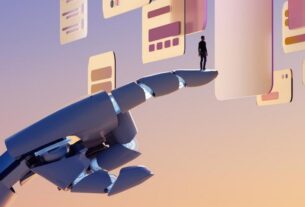
Artificial General Intelligence does not necessarily arrive with a flashing alarm or a sentient awakening in a government lab. It may have already slipped quietly into the architecture of modern digital infrastructure. Engineers, researchers, and enterprise leaders often look for a singular, cinematic moment of machine consciousness. Instead, the transition is happening through a slow, systemic embedding into the global workflow.
When software handles complex logistical routing, autonomous code generation, and real-time financial modeling simultaneously, the functional definition of AGI begins to blur. Analysts at outlets like Fast Company argue that humanity has become so thoroughly entangled with machine assistance that the baseline has shifted. People no longer view algorithms as external tools. They view them as foundational ambient layers of reality.
The Illusion of the Threshold
Popular culture expects AGI to announce itself. The traditional benchmark relies on Turing test variations or dramatic displays of autonomous reasoning across unrelated domains. Yet, modern large-scale networks already cross these boundaries daily. They translate languages, diagnose medical scans, write legal briefs, and compose music without human intervention.
The barrier is psychological rather than technical. Because humans integrate every new capability into daily routines instantly, the milestone loses its impact the moment it is crossed. When an entire workforce relies on automated systems to draft emails, manage schedules, and optimize supply chains, the boundary separating tool from peer dissolves. Researchers monitoring global compute clusters note that the sheer volume of automated processing creates a blind spot for the general public.
Dependency Masks the Milestone
Consider the modern corporate office or software development house. A single human operator orchestrates dozens of autonomous agents that write, test, deploy, and monitor software code. The human acts more as a supervisor than a direct creator. This division of labor mirrors the exact scenario predicted by futurists discussing artificial general intelligence.
Organizations cannot function without these integrated networks for even a single business day. According to data tracked by industry monitors at Reuters Technology, corporate reliance on automated decision-making engines has surged by over two hundred percent since 2023. When dependence reaches saturation, distinguishing between a smart tool and a general intelligence ceases to matter in practical terms. The system governs outcomes regardless of what label society applies to its internal mechanics.
Related: CoreWeave Stock Slumps as AI Spending Worries Rattles Markets
Redefining General Intelligence
The debate over whether AGI has arrived often bogs down in semantics. If a system can perform any intellectual task that a human worker can do, often faster and at a massive scale, the philosophical distinction becomes irrelevant to the economy. Markets respond to utility, not consciousness.
This systemic integration means society is no longer preparing for AGI. Society is managing the aftermath of its quiet deployment. Automated systems now maintain the electrical grids, route global shipping containers, and filter the information diet of billions of people. Humans did not miss the arrival of AGI because it failed to show up. They missed it because they were already standing inside it.
Servers hummed. Networks pulsed. Algorithms executed. Integration.
Sponsored · Want AI without handing over client files? Oriam AI installs private, on-premise AI for CPA firms, law firms, and insurance and title agencies. oriamai.online · Advertise on ByteSize Network