The Supreme Court Takes Up Home Distilling
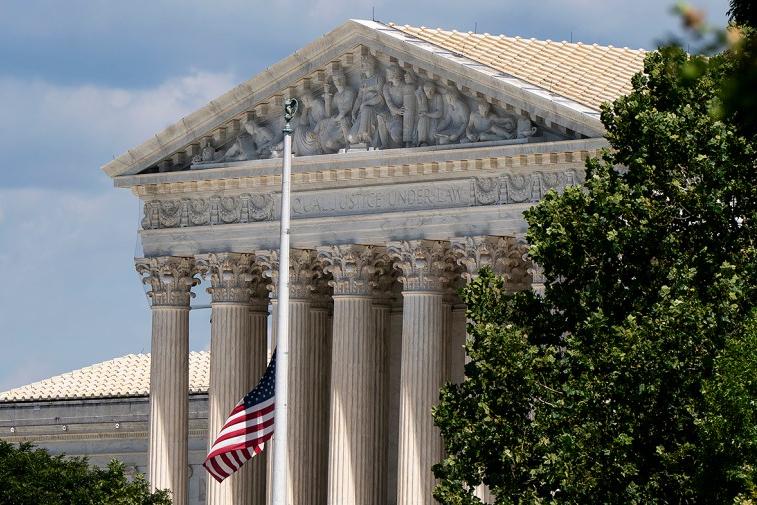
The Supreme Court of the United States announced on Monday, October 19, 2020, its decision to review a challenge to a 160-year-old federal ban on home distilling. This action sets the stage for a significant legal battle concerning individual rights and the extent of federal regulatory authority.
The federal prohibition, codified under 26 U.S.C. § 5178, has been in effect since 1868. It criminalizes the distillation of spirits for personal use, carrying penalties of up to five years in prison and a $10,000 fine. The Court’s intervention comes after divergent rulings from federal appeals courts, creating a circuit split that necessitates a definitive resolution.
Conflicting Appeals Court Decisions
The impetus for the Supreme Court’s review stems from two contradictory decisions issued by federal appeals courts in April 2020. These rulings highlight the legal complexities surrounding the long-standing ban.
On April 10, 2020, the U.S. Court of Appeals for the Fifth Circuit declared the federal ban on home distilling unconstitutional. In the case of Hobby Distillers Association v. U.S. Department of Justice, the court argued that the prohibition exceeded Congress’s legitimate taxing power. This ruling specifically applies to the states within the Fifth Circuit’s jurisdiction: Texas, Louisiana, and Mississippi.
Conversely, just eleven days later, on April 21, 2020, the U.S. Court of Appeals for the Sixth Circuit upheld the ban. In Ream v. U.S. Department of the Treasury, the Sixth Circuit affirmed the legality of the federal prohibition. This decision created a direct conflict with the Fifth Circuit’s ruling, making Supreme Court intervention necessary to ensure uniform application of federal law across the nation.
Historical Context of the Ban
The federal ban on home distilling dates back to the post-Civil War era. Its origins are deeply intertwined with the government’s need to generate revenue and control the production of alcohol.
The 1868 legislation aimed to centralize alcohol production and taxation, a critical source of income for the federal government at the time. This historical context will likely be a central point of discussion as the Supreme Court examines the ban’s constitutionality in the modern era. More information on the history of alcohol regulation can be found on the Wikipedia page for Alcohol Law in the United States.
The Supreme Court Justices and the Case
The nine justices of the Supreme Court will now consider the arguments presented by both sides. Chief Justice John G. Roberts, Jr. presides over the Court. The Associate Justices include Clarence Thomas, Samuel A. Alito, Jr., Sonia Sotomayor, Elena Kagan, Neil M. Gorsuch, Brett M. Kavanaugh, Amy Coney Barrett, and Ketanji Brown Jackson.
Related: Ukraine Conducts First Drone Evacuation of Wounded Soldier on Kupiansk Axis
The Court’s decision will have implications beyond the immediate question of home distilling. It could redefine the boundaries of federal power, particularly Congress’s authority to regulate activities traditionally viewed as personal or cultural. The case will be closely watched by legal scholars, home distilling enthusiasts, and those concerned with the balance between individual liberty and government control.
The arguments will likely focus on the Commerce Clause, the Tenth Amendment, and the historical interpretation of Congress’s taxing power. The outcome could set a precedent for other long-standing federal regulations. Details on the Supreme Court’s current docket can be found on its official website.
The Path Ahead
The Supreme Court’s agreement to hear the case signals the national importance of the issue. Oral arguments will be scheduled, followed by deliberations among the justices. A final decision is expected by the end of the Court’s term in June 2027.
The ruling will either affirm the federal government’s long-held power to prohibit home distilling or establish a new precedent for personal freedom in the production of spirits. The decision will impact individuals across the United States, clarifying the legal landscape for a practice with deep historical and cultural roots.
Sources
Sponsored · Put your business in front of ByteSize Network's readers, with every click measured. See advertising packages · Advertise on ByteSize Network