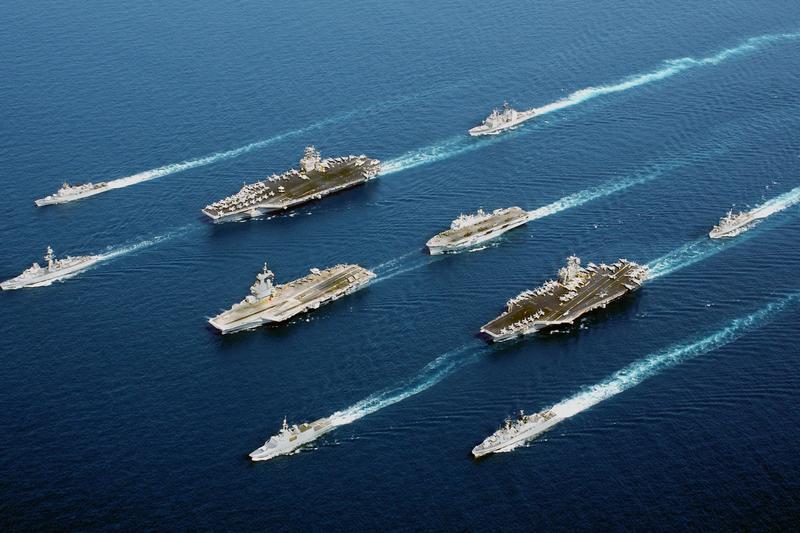
The United States is deploying a third aircraft carrier strike group and approximately 10,000 additional troops to the Middle East. This action significantly escalates the American military presence in the region. The deployment is a direct response to rising tensions with Iran.
The USS Theodore Roosevelt carrier strike group and the USS Makin Island Amphibious Ready Group are part of this reinforcement. These units departed from US shores in late September 2026. Their arrival will bring the total US naval presence to over 20,000 sailors and Marines.
A Growing Naval Presence
The USS Theodore Roosevelt departed San Diego on Sunday, September 27, 2026. It began a scheduled deployment towards the Middle East. The USS Makin Island Amphibious Ready Group followed, departing on Tuesday, September 29, 2026.
These deployments will augment existing US forces. The USS George H.W. Bush and USS George Washington are currently operating in the Arabian Sea, which is part of the Middle East. This brings the potential for three US aircraft carriers to be in the region simultaneously.
Officials anticipate the ships, fighter jets, Marines, and sailors will arrive by the end of November 2026. Some projections suggest all three aircraft carriers could be in the area as early as the end of October 2026. This rapid buildup underscores the urgency of the situation.
Strategic Reinforcement
The additional deployment will add between 9,000 and 10,000 troops to the Middle East. This brings the total US naval personnel to over 20,000. The increased presence aims to deter further escalation and protect American interests.
US Secretary of War Pete Hegseth has not issued a public statement regarding the specifics of this deployment. However, the move aligns with the current administration’s foreign policy objectives. President Donald Trump has emphasized a strong military posture globally.
The deployment of multiple carrier strike groups is a significant show of force. Each group represents a formidable array of air power, naval defense, and logistical capabilities. This concentration of assets provides both offensive and defensive options.
Historical Context of Deployments
Aircraft carrier deployments to the Middle East are not uncommon. They have historically served as a cornerstone of US foreign policy in the region. These deployments often coincide with periods of heightened geopolitical tension.
The current situation with Iran has seen a steady increase in military posturing. Both sides have engaged in rhetoric that suggests a readiness for confrontation. The US has consistently maintained a naval presence in critical waterways like the Strait of Hormuz.
Related: Bernie Sanders Donates $250,000 to Florida Democrats Amidst Ideological Divide
The Strait of Hormuz is a vital chokepoint for global oil shipments. Any disruption there could have significant international economic repercussions. The presence of US naval power aims to ensure freedom of navigation.
International Reactions and Regional Stability
The deployment is likely to draw reactions from various international actors. Regional allies of the United States will likely view the move as a reassurance of American commitment. Adversaries may interpret it as an aggressive posture.
The long-term implications for regional stability remain uncertain. The increased military presence could either de-escalate tensions through deterrence or inadvertently provoke further confrontation. Diplomacy often accompanies such military maneuvers, though details are not always public.
The US Department of Defense maintains that these deployments are defensive in nature. They are intended to protect US personnel and interests in the region. The ultimate goal is to prevent conflict while maintaining strategic advantage.
Sailors prepared. Marines prepared. Aircraft prepared. Deployment.
Sources
Sponsored · Put your business in front of ByteSize Network's readers, with every click measured. See advertising packages · Advertise on ByteSize Network