
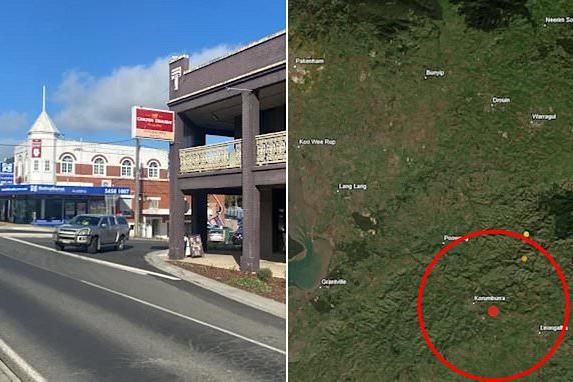
Magnitude 4.8 Earthquake Strikes Near MelbourneAftershocks Continue
A magnitude 4.8 earthquake struck near Leongatha, Victoria, Australia, on Friday, October 3, 2026, at 2:01 AM, shaking Melbourne and the surrounding region. The earthquake’s epicenter was approximately 130 km south-east of Melbourne, at a shallow depth of 10 km. Thousands of people reported feeling the earthquake, with Geoscience Australia receiving over 20,000 reports following the initial tremor. The event has prompted ongoing seismic activity in the area.
An aftershock of magnitude 3.1 was recorded 55 minutes after the initial earthquake. A magnitude 3.3 earthquake was also recorded on Thursday morning near Yarramindicating continued seismic unrest. As of October 17, 2026, no damage or injuries have been reported as a direct result of these seismic events. Authorities continue to monitor the situation and advise residents to remain vigilant for further aftershocks. The Daily Mail Online reported on the initial widespread impact.
Official Statements and Verified Reaction
Mark Quigley, Professor of Earthquake Science at the University of Melbournestated that aftershocks could be felt for weeks in the region. His assessment shows the potential for continued seismic activity following a significant earthquake. Geoscience Australia, the national agency responsible for earthquake monitoring, confirmed the details of the initial quake and subsequent aftershocks, processing thousands of public reports. The agency’s data provides critical information for understanding the seismic events in Victoria.
Local emergency services have confirmed that no calls for assistance related to damage or injuries have been received. This indicates that while the earthquake was widely felt, its impact on infrastructure and public safety has been minimal. Residents are encouraged to review earthquake preparedness guidelines, which can be found on the Victoria State Emergency Service website. The ongoing seismic activity highlights the importance of public awareness and readiness in earthquake-prone areas.
Auto-Enriched Background Context
Victoria, Australia, is not typically known for frequent large-magnitude earthquakes, making the October 3, 2026, event a notable occurrence. While smaller tremors are common, a magnitude 4.8 earthquake is significant enough to be widely felt and cause concern among residents. The region’s seismic activity is generally attributed to intraplate tectonics, where stresses build up within the Australian continental plate rather than at plate boundaries.
Historically, Australia has experienced several significant earthquakes. One of the most notable was the 1989 Newcastle earthquake, a magnitude 5.6 event that caused considerable damage and fatalities. More recently, in September 2021, a magnitude 5.9 earthquake struck eastern Victoria, causing damage to buildings in Melbourne and surrounding areas. That event, centered near Mansfield, was the largest onshore earthquake in Victoria in over 50 years. The current series of tremors near Leongatha and Yarram follows this pattern of infrequent but impactful seismic events.
The shallow depth of the recent earthquake, at 10 km, contributed to its widespread perception. Shallow earthquakes tend to be felt more intensely over a larger area compared to deeper quakes of similar magnitude. The geological structure of the Gippsland region, where Leongatha is located, includes various fault lines that can become active under tectonic stress. Understanding these geological features is crucial for assessing seismic risk in the area.
Geoscience Australia plays a vital role in monitoring and reporting seismic activity across the continent. Their network of seismographs provides real-time data, allowing for rapid assessment and public notification of earthquakes. Public reports, submitted through their website and app, also contribute valuable information about the felt intensity and distribution of tremors. This collaborative approach between scientific agencies and the public helps to build a comprehensive picture of seismic events.
The ongoing aftershocks, as predicted by experts like Associate Professor Mark Quigley, are a natural consequence of a larger earthquake. These smaller tremors occur as the Earth’s crust adjusts to the new stress distribution created by the main shock. While most aftershocks are minor, they can continue for days, weeks, or even months, gradually decreasing in frequency and magnitude. Residents in affected areas are advised to stay informed through official channels and follow any safety recommendations issued by emergency services.
Related: Measles Outbreak Reaches Grim Milestone as Sixth Death Reported in One State
Frequently asked questions
When and where did the main earthquake occur?
A magnitude 4.8 earthquake struck near Leongatha, Victoria, Australia, at 2:01 AM on Friday, October 3, 2026. Its epicenter was approximately 130 km south-east of Melbourne, at a shallow depth of 10 km.
How many people reported feeling the earthquake?
Geoscience Australia received over 20,000 reports from people who felt the earthquake.
Have there been any aftershocks?
Yes, a magnitude 3.1 aftershock occurred 55 minutes after the initial earthquake, and a magnitude 3.3 earthquake was recorded near Yarram on Thursday morning.
Have there been any reports of damage or injuries?
As of October 17, 2026, no damage or injuries have been reported as a result of the earthquake or its aftershocks.
How long might aftershocks continue?
Mark Quigley, Professor of Earthquake Science at the University of Melbourne, stated that aftershocks could be felt for weeks in the region.
Sponsored · Want AI without handing over client files? Oriam AI installs private, on-premise AI for CPA firms, law firms, and insurance and title agencies. oriamai.online · Advertise on ByteSize Network