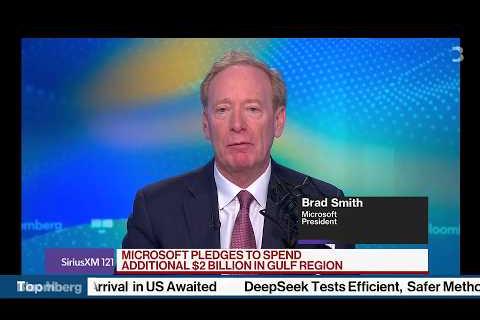
- Microsoft plans to invest over $10 billion in capital and operating expenses in the Middle East through 2030.
- The investment focuses on expanding cloud and AI infrastructure in Kuwait, Qatar, Saudi Arabia, and the United Arab Emirates.
- Approximately $2 billion of the total investment represents new commitments, building on previous pledges.
- Microsoft will also invest over $400 million in subsea and terrestrial connectivity across the region.
- Strategic partnerships with governments and national AI organizations like HUMAIN, G42, and QAI are central to the initiative.
Microsoft is channeling significant resources into the Middle East, with plans to invest more than $10 billion by 2030. This substantial financial commitment aims to bolster the region’s digital backbone. The focus is on expanding critical cloud and artificial intelligence infrastructure.
This initiative targets four key Gulf nations: Kuwait, Qatar, Saudi Arabia, and the United Arab Emirates. The investment reflects a strategic move to meet the growing demand for advanced digital services. It also supports the broader digital transformation agendas of these countries.
In many ways, this investment signals a deepening of Microsoft’s engagement in a strategically vital global region. It positions the company as a central player in the Middle East’s technological future.
Expanding Digital Horizons in the Gulf
The total investment package exceeds $10 billion, encompassing both capital and operating expenses. This financial outlay is projected to extend through the year 2030. The primary objective is to enhance the availability and capability of Microsoft’s cloud and AI services.
A significant portion of this investment, approximately $2 billion, represents new funding. This new commitment builds upon previous pledges, including a substantial $7.9 billion allocated for the UAE last year. The phased approach allows for continuous adaptation to regional needs and technological advancements.
Brad Smith, Vice Chair and President of Microsoft, has highlighted the strategic importance of this expansion. The company aims to provide robust digital foundations for businesses and governments across the Gulf. This includes supporting initiatives in various sectors, from finance to healthcare.
Connectivity and Resilience
Beyond cloud and AI infrastructure, Microsoft is also dedicating resources to improve regional connectivity. More than $400 million is earmarked for investments in subsea and terrestrial connectivity. These projects are scheduled for completion by 2030.
The goal is to expand network capacity and establish alternative routes for data traffic. This enhances the resilience of digital communications, particularly during potential disruptions. Improved connectivity is crucial for the seamless operation of cloud services and AI applications.
These infrastructure upgrades are designed to create a more robust and interconnected digital ecosystem. They will benefit a wide array of users, from large enterprises to individual consumers. The investment in physical infrastructure complements the expansion of digital services.
Strategic Partnerships and AI Development
Microsoft’s strategy in the Middle East involves deepening strategic partnerships. The company is collaborating with various governments and national AI organizations. These collaborations are essential for tailoring technology solutions to local contexts.
Key partners include HUMAIN, G42, and QAI. These organizations play vital roles in advancing AI research and deployment within the region. Such partnerships facilitate knowledge transfer and foster local talent development in technology fields.
The collaborations aim to accelerate the adoption of AI across different industries. They also support national visions for economic diversification and technological leadership. Microsoft’s involvement provides access to cutting-edge tools and expertise.
The Future of Digital Transformation
The investment reflects a global trend towards increased digitalization and AI integration. The Middle East is emerging as a significant hub for these developments. Microsoft’s commitment positions it at the forefront of this transformation.
The expansion of cloud regions and AI capabilities will enable local businesses to innovate more rapidly. It will also empower governments to deliver more efficient public services. The long-term impact is expected to be significant, fostering economic growth and job creation.
Related: Jamie Dimon Predicts AI Spending Will Hit $1 Trillion by 2027
This strategic move by Microsoft underscores the company’s belief in the Middle East’s potential as a digital economy leader. The investments are designed to create a sustainable and advanced technological landscape for decades to come. Microsoft News provides further details on global initiatives.
Governments planned. Businesses invested. Data flowed. The future arrived.
The Gulf.
What is Microsoft investing in the Middle East?
Microsoft is investing over $10 billion in the Middle East through 2030, primarily to expand its cloud and AI infrastructure across Kuwait, Qatar, Saudi Arabia, and the United Arab Emirates. This includes new capital commitments and operating expenses.
Which countries are included in Microsoft’s Middle East investment?
The investment targets Kuwait, Qatar, Saudi Arabia, and the United Arab Emirates. These nations are key to Microsoft’s strategy for expanding its digital footprint and supporting technological advancement in the region.
What is the focus of Microsoft’s $10 billion investment?
The primary focus is on expanding cloud computing and artificial intelligence infrastructure. Additionally, Microsoft plans to invest over $400 million in subsea and terrestrial connectivity to enhance network capacity and resilience.
Who is Brad Smith and what is his role in this investment?
Brad Smith is the Vice Chair and President of Microsoft. He plays a key role in guiding Microsoft’s strategic investments and partnerships globally, including this significant expansion in the Middle East.
What kind of partnerships is Microsoft forming in the Gulf?
Microsoft is deepening strategic partnerships with governments and national AI organizations in the region, such as HUMAIN, G42, and QAI. These collaborations aim to accelerate AI adoption and support local digital transformation initiatives. More information on Microsoft’s global impact can be found on their Corporate Responsibility page.
Sources
Sponsored · Plain-English guides on AI and client-data rules for CPA firms, law firms, and insurance and title agencies. institute.oriamai.online · Advertise on ByteSize Network