
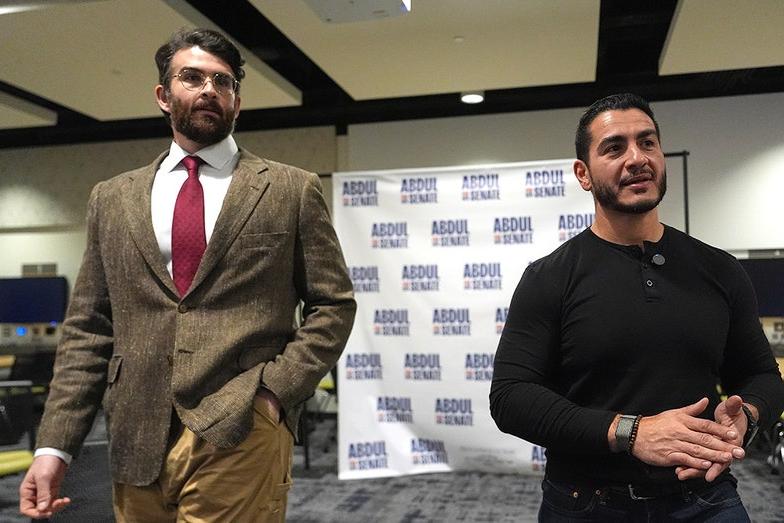
The Resurgence of Past Remarks
Abdul El-Sayed, the Democratic nominee for Michigan’s open U.S. Senate seat, faces renewed scrutiny over past social media comments regarding the September 11, 2001, terrorist attacks. These remarks have ignited a firestorm, drawing criticism as the November 2026 general election approaches. The controversy centers on statements made by El-Sayed that compared the death toll of 9/11 to COVID-19 and analyzed the U.S. response to the attacks.
El-Sayed is currently campaigning against Republican Mike Rogers. The re-emergence of these comments has become a focal point in the political discourse surrounding his candidacy. Political campaigns frequently see past statements scrutinized, especially during high-stakes elections.
El-Sayed’s Background and Political Trajectory
Abdul El-Sayed is a physician, epidemiologist, and host of the podcast “America Dissected.” His professional background includes serving as the director and health officer for Wayne County‘s Department of Health, Human & Veterans Services from March 2023 to April 2025. This experience provided him with a platform to discuss public health issues, including the COVID-19 pandemic.
His current nomination for the U.S. Senate marks a significant step in his political career. El-Sayed’s campaign has emphasized his public health expertise and progressive policy stances. However, his past social media activity has presented challenges to his public image.
The Content of the Controversial Posts
The specific social media posts in question involved El-Sayed’s commentary on the 9/11 attacks. One aspect of the controversy includes his comparison of the 9/11 death toll to that of the COVID-19 pandemic. Such comparisons often draw strong reactions, particularly when discussing events with significant emotional and historical weight.
Additionally, El-Sayed discussed the U.S. response to the 9/11 attacks in his past comments. These discussions have been interpreted differently by various audiences, leading to the current political firestorm. The context and intent behind such statements are frequently debated in the public sphere.
El-Sayed’s Response and Clarifications
In response to the controversy, Abdul El-Sayed has issued clarifications regarding his stance on terrorism and the 9/11 attacks. He has unequivocally condemned terrorism and the attacks of September 11, 2001. This condemnation aims to address concerns raised by his critics.
El-Sayed also publicly addressed a past comment made by streamer Hasan Piker, who stated, “America deserved 9/11.” El-Sayed characterized Piker’s remark as a “dumb statement.” This distancing from extreme views is a common strategy for political candidates facing scrutiny over controversial associations or past statements. Fox News has reported on these developments.
The Impact on the 2026 Senate Election
The controversy surrounding Abdul El-Sayed’s 9/11 comments has the potential to significantly impact the upcoming November 3, 2026, general election. He is set to face Republican Mike Rogers, a former U.S. Representative and intelligence committee chairman. Rogers’ campaign is likely to leverage these past statements to question El-Sayed’s judgment and suitability for office.
Public perception of a candidate can be heavily influenced by how they address past controversies. The ability to navigate such challenges effectively is crucial for electoral success. The Michigan Senate race is expected to be closely watched, with these issues playing a role in voter considerations. Ballotpedia provides further details on El-Sayed’s political career.
The Broader Context of 9/11 in American Politics
The September 11, 2001, attacks remain a highly sensitive and defining event in American history. Discussions surrounding 9/11 often evoke strong emotions and patriotic sentiments. Political figures who comment on the attacks face intense scrutiny, particularly when their remarks deviate from widely accepted narratives.
The memory of 9/11 continues to shape political discourse, foreign policy, and domestic security measures. Candidates are often expected to demonstrate reverence for the victims and a clear condemnation of the perpetrators. Any perceived misstep in this area can lead to significant political backlash.
The Role of Social Media in Political Campaigns
Social media platforms have become integral to modern political campaigns, serving as both a tool for communication and a repository of past statements. Comments made years prior can be easily unearthed and amplified, regardless of their original context. This digital permanence presents unique challenges for public figures.
Campaigns must manage a candidate’s entire digital footprint, anticipating potential controversies. The rapid spread of information on social media means that a single post can quickly become a national headline. This dynamic underscores the importance of careful communication in the digital age.
The Path to November 2026
As the November 2026 election draws nearer, Abdul El-Sayed’s campaign will continue to address the fallout from his past 9/11 comments. His ability to articulate his position clearly and reassure voters will be critical. The race against Mike Rogers is expected to be competitive, with both candidates vying for Michigan’s Class II Senate seat.
The political landscape of 2026 will test El-Sayed’s resilience and communication strategy. Voters will weigh his policy proposals, professional background, and how he handles the ongoing controversy. The outcome will reflect the electorate’s priorities and their assessment of the candidates’ fitness for office.
Automate Your Business Operations
Productized 7-day fixed-rate multi-agent AI automation for Springfield and Ozarks businesses. Eliminate software bloat and streamline media & operations.