
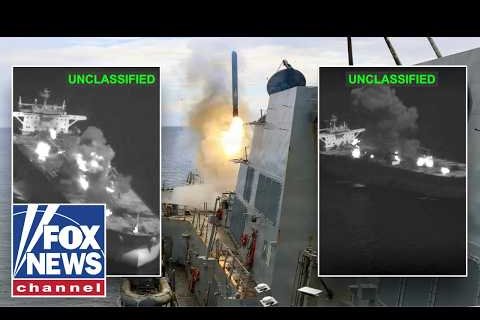
On September 5, 2026, the United States military executed strikes against three Iranian oil tankers. This action followed ballistic missile attacks launched by the Islamic Revolutionary Guard Corps (IRGC) toward two US Navy warships.
US Central Command (CENTCOM) confirmed that the American vessels successfully evaded the incoming missiles. No US personnel sustained injuries during the IRGC’s assault.
US Retaliation and Tanker Strikes
The US strikes targeted specific Iranian oil tankers. The M/T Downy was permanently disabled off Kharg Island. The M/T Stark 1 suffered a similar fate near Jask.
The M/T Kylo, also known as the “Noxen,” was completely destroyed in the Gulf of Oman. These actions represent a significant escalation in the ongoing maritime dispute.
“The US is in control of the Strait of Hormuz and US forces are clearing the strait,” stated US President Donald J. Trump following the strikes. This declaration underscores the US commitment to maintaining freedom of navigation in the critical waterway.
Iran’s Foreign Ministry quickly condemned the US strikes. They labeled the actions a “war crime” and issued warnings of potential consequences. This rhetoric indicates a deepening of the diplomatic crisis.
IRGC Claims and Regional Impact
The IRGC, for its part, claimed to have retaliated against the US actions. They reported targeting three oil tankers and three US-affiliated ships within the Strait of Hormuz. Details regarding these alleged IRGC strikes remain unconfirmed by US sources.
The Strait of Hormuz is a vital chokepoint for global oil shipments. Increased military exchanges between the US and Iran have significantly impacted vessel traffic. As of September 5, 2026, traffic levels had fallen to their lowest point in months.
Historical Context of Tensions
Tensions between the United States and Iran have been persistent. A conflict initiated in February 2026 led to a ceasefire and a Memorandum of Understanding in June 2026. These agreements aimed to de-escalate the situation, but recent events indicate a breakdown of that fragile peace.
The current confrontation highlights the strategic importance of the Strait of Hormuz. Both nations assert their interests in the region, leading to direct military engagements. The international community watches for further developments.
The Future of Maritime Security
The recent strikes underscore the volatile nature of the Persian Gulf region. The US maintains a significant naval presence to protect its interests and ensure the free flow of commerce. Iran views these waters as critical to its national security.
The destruction of the M/T Kylo and the disabling of other tankers represent a direct economic blow to Iran. These actions also signal a firm US response to perceived aggression. The situation remains highly fluid.
Diplomatic efforts continue to seek a resolution. However, military actions on both sides complicate these endeavors. The global energy market remains sensitive to these developments.
The Strait of Hormuz. A critical waterway. A geopolitical flashpoint. A theater of escalating conflict.
Uncertainty.
Enterprise Data as a Service
Premium insights and data pipelines for businesses. Secure a competitive edge with high-fidelity market intelligence and automated data flows.