The Core of the Critique: No Exit Strategy Identified
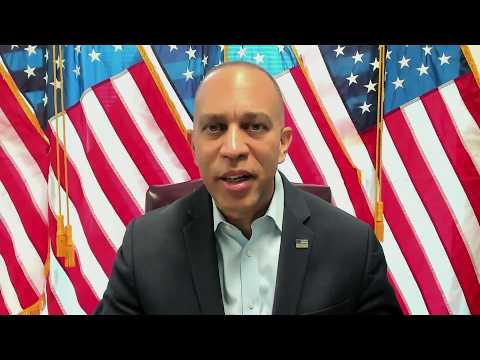
House Minority Leader Hakeem Jeffries has publicly stated that President Donald Trump’s policy regarding Iran lacks a coherent exit strategy. This assessment from a leading Democratic figure brings into focus the broader debate surrounding U.S. engagement in the Middle East. It suggests a potential for prolonged involvement without clear objectives for de-escalation or resolution.
Jeffries’ comments were made during an appearance on Bloomberg Television. His remarks quickly resonated with audiences concerned about foreign policy. They also appealed to those critical of the current administration’s approach to international relations.
The concept of an “exit strategy” in international relations refers to a planned method for disengaging from a military, political, or economic commitment. Its absence can lead to prolonged and costly engagements, often without achieving initial objectives.
Understanding the Context of U.S.-Iran Relations
Relations between the United States and Iran have been historically complex. They are marked by periods of both cooperation and intense animosity. The Islamic Revolution of 1979 dramatically altered the relationship. It led to decades of diplomatic estrangement and proxy conflicts.
The Joint Comprehensive Plan of Action (JCPOA)
The Joint Comprehensive Plan of Action (JCPOA), signed in 2015, represented a significant attempt at de-escalation. This agreement aimed to limit Iran’s nuclear program in exchange for sanctions relief. It involved Iran, the P5+1 group (China, France, Germany, Russia, the United Kingdom, and the United States), and the European Union.
President Trump withdrew the U.S. from the JCPOA in 2018. This action reimposed sanctions and heightened tensions. The withdrawal was a cornerstone of his foreign policy agenda. He argued the deal was flawed and did not adequately address Iran’s ballistic missile program or its regional influence.
Since the U.S. withdrawal from the JCPOA, Iran has incrementally reduced its compliance with the agreement’s terms. This has led to international concern about its nuclear ambitions. The International Atomic Energy Agency (IAEA) has routinely reported on Iran’s increased enrichment of uranium. These reports intensify fears among global powers.
The “Maximum Pressure” Campaign and Its Impact
The Trump administration has maintained a policy of “maximum pressure” on Iran. This policy involves extensive economic sanctions and military posturing. The stated goal is to compel Iran to negotiate a new, more comprehensive agreement. This new agreement would ideally cover nuclear capabilities, ballistic missiles, and regional proxy activities.
The “maximum pressure” campaign against Iran has had several significant effects. Economically, Iran’s oil exports have been severely curtailed. Its currency has depreciated significantly. The nation’s economy has faced substantial challenges. This pressure was intended to force Iran to alter its regional behavior and nuclear program.
Regional Military Escalations
Militarily, the region has seen increased deployments of U.S. forces. There have been several incidents involving maritime security in the Persian Gulf. Drone strikes and missile attacks have also occurred. These events have raised fears of a broader conflict. Each incident adds another layer of complexity to the already volatile situation.
A notable event was the 2020 U.S. drone strike that killed Iranian General Qasem Soleimani. This action significantly escalated tensions. It prompted retaliatory missile strikes from Iran against U.S. bases in Iraq. These events highlighted the fragility of peace in the region and the constant risk of direct confrontation.
Diplomatic Divisions Among Allies
Diplomatically, the policy has isolated Iran from many international partners. However, it has also created divisions among U.S. allies. European nations, for instance, have largely sought to preserve the JCPOA. They have expressed concerns about the unilateral U.S. approach. This has complicated efforts to present a united front against Iran.
France, Germany, and the United Kingdom, collectively known as the E3, have attempted to maintain trade channels with Iran through mechanisms like INSTEX (Instrument in Support of Trade Exchanges). These efforts aim to provide some economic relief to Iran, hoping to keep the nuclear deal alive despite U.S. sanctions.
Hakeem Jeffries’ Role in Congressional Oversight
Hakeem Jeffries currently serves as the House Minority Leader. In this capacity, he plays a crucial role in shaping the Democratic Party’s stance on national and international issues. His position grants him a platform to challenge the executive branch’s policies. He often articulates alternative approaches.
As Minority Leader, Jeffries is involved in congressional oversight. This includes scrutinizing foreign policy decisions. He represents a significant voice within Congress. His statements often reflect the broader concerns of his party. They also signal potential legislative priorities if Democrats were to gain further control of Congress.
Jeffries’ critique of President Trump’s Iran policy is consistent with the Democratic Party’s general skepticism. Many Democrats opposed the withdrawal from the JCPOA. They have advocated for a return to diplomacy. They also seek a multilateral approach to Iran. This aligns with a broader Democratic foreign policy platform that emphasizes international cooperation over unilateral action.
Historical Parallels: The Importance of Exit Strategies
The concept of an “exit strategy” is a recurring theme in foreign policy discussions. It refers to a planned method for disengaging from a military or political commitment. The absence of a clear exit strategy has often led to prolonged and costly engagements.
Lessons from Vietnam
The Vietnam War serves as a historical example of the challenges posed by a lack of an exit strategy. U.S. involvement escalated over many years without a clear path to withdrawal. The conflict resulted in significant human and economic costs. It also left a lasting impact on American foreign policy doctrine. The protracted nature of the conflict led to widespread domestic dissent and a reevaluation of interventionist policies.
Challenges in Afghanistan and Iraq
More recently, the wars in Afghanistan and Iraq have also highlighted these difficulties. The initial objectives of these conflicts were clear. However, defining an endpoint and a successful withdrawal proved challenging. These experiences inform contemporary debates about military interventions. They emphasize the importance of foresight in strategic planning. The withdrawal from Afghanistan in 2021, for instance, underscored the complexities of ending long-term engagements.
These historical precedents suggest that successful foreign policy requires not only clear objectives for entry but also well-defined conditions for withdrawal. Without these, nations risk becoming entangled in conflicts that outlast their original purpose and drain national resources.
The Geopolitical Landscape of the Middle East
The Middle East remains a region of immense geopolitical importance. Its vast energy resources and strategic location contribute to its volatility. Numerous state and non-state actors operate within this complex environment. Each pursues its own interests. This often leads to interlocking conflicts.
Iran’s Regional Influence
Iran’s influence extends across several key areas. It supports various proxy groups in Iraq, Syria, Lebanon, and Yemen. These activities are viewed by the U.S. and its allies as destabilizing. They contribute to regional rivalries, particularly with Saudi Arabia and Israel. Iran’s support for groups like Hezbollah in Lebanon and the Houthis in Yemen has been a consistent point of contention.
Ongoing Regional Conflicts
The ongoing conflicts in Syria and Yemen further complicate the regional dynamic. These wars involve multiple international powers. They create humanitarian crises. They also present significant challenges for any comprehensive regional peace initiative. Any U.S. policy towards Iran must consider these broader interconnections. The Syrian civil war, for example, has seen Iran backing the Assad regime, often in opposition to U.S.-supported groups.
The Saudi-Iranian rivalry also plays a significant role. Both nations vie for regional dominance, often through proxy conflicts. This dynamic adds another layer of complexity to any U.S. strategy in the region. Maintaining a balance of power while pursuing U.S. interests is a delicate diplomatic act.
Economic Sanctions: A Tool Without an End Game?
Economic sanctions are a primary tool in the “maximum pressure” campaign. They are designed to exert financial pain. The goal is to force a change in behavior. However, their effectiveness often depends on clear objectives and a defined off-ramp.
Debates on Sanctions Effectiveness
Critics of sanctions often argue that they disproportionately harm civilian populations. They may also strengthen hardline elements within targeted regimes. Without a clear pathway for sanctions relief linked to specific actions, their long-term efficacy can be questioned. This is a central point of Jeffries’ critique. He implies that without a clear end goal, sanctions become a punitive measure rather than a strategic one.
Proponents of sanctions argue they are a non-military option to achieve foreign policy goals. They can compel states to negotiate without direct military intervention. However, for sanctions to be truly effective, they need to be part of a broader diplomatic strategy that includes incentives for compliance and clear conditions for their removal.
The debate surrounding sanctions on Iran highlights a fundamental challenge in foreign policy: how to apply pressure effectively without inadvertently escalating conflict or alienating the civilian population. Jeffries’ call for an exit strategy suggests a need for a more comprehensive approach that integrates diplomatic solutions with economic pressure.
The Path Forward: Diplomacy or Continued Pressure?
The question of an exit strategy for U.S. policy on Iran remains central. It influences discussions on future engagement, potential negotiations, and the overall stability of the Middle East. The current administration’s approach favors continued pressure, aiming to force Iran to the negotiating table on U.S. terms.
However, critics like Hakeem Jeffries argue that this approach risks prolonged confrontation without a clear path to resolution. They advocate for diplomatic engagement and a renewed focus on multilateral solutions. This includes exploring pathways for the U.S. to potentially re-enter a revised nuclear agreement.
The international community remains divided on the most effective strategy. Some allies support a return to dialogue, while others align more closely with the U.S. “maximum pressure” stance. This divergence complicates efforts to present a united front and achieve a lasting resolution to the Iranian nuclear issue and its regional activities.
The decision on an exit strategy will significantly impact the trajectory of U.S.-Iran relations. It will shape the geopolitical landscape for years to come. It will determine the balance between confrontation and cooperation. It will define the future of stability in the Middle East.
Lawmakers debate. Diplomats confer. Analysts speculate. The world watches.
Uncertainty.