
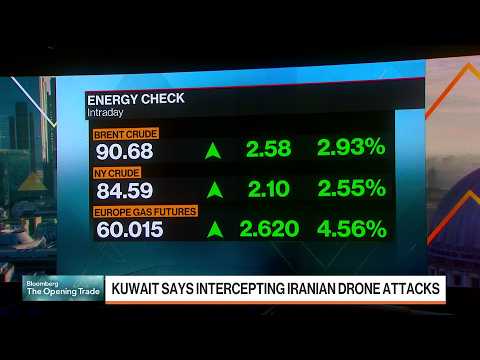
Oil Prices Climb Amid Middle East Tensions
Brent crude oil prices have surged past the $90 per barrel mark as of July 21, 2026, a direct consequence of the escalating military actions and retaliatory attacks between the United States and Iran. This significant price hike reflects heightened geopolitical risks in the Middle East, a region critical to global energy supplies, and signals potential disruptions to the international oil market.
The market reaction underscores deep concerns about the stability of oil production and transit routes in the Persian Gulf. Investors and analysts are closely monitoring the situation, anticipating broader economic ramifications globally.
The Escalation of US-Iran Confrontation
The current spike in oil prices is firmly rooted in a series of intensifying confrontations between the United States and Iran. These actions have moved beyond diplomatic friction, involving direct military engagements and reciprocal strikes that have destabilized the region.
Initial reports of skirmishes in the Strait of Hormuz in late 2025 were followed by more significant incidents. Naval patrols increased, leading to several close encounters. By early 2026, these had escalated into direct exchanges of fire.
The United States has cited the protection of international shipping lanes and its regional allies as justification for its increased military presence. Iran, conversely, views the American presence as an infringement on its sovereignty and a threat to its national security interests.
Key Incidents Fueling the Rise
Several specific events have contributed to the current climate of apprehension. In May 2026, an Iranian Revolutionary Guard Corps (IRGC) vessel was reportedly struck in the Persian Gulf, an incident attributed by Tehran to American forces. Washington maintained it was an act of self-defense following aggressive maneuvers.
A retaliatory drone strike, claimed by Iran, targeted a US-allied oil tanker navigating near the coast of Oman in June 2026. While no casualties were reported, the incident highlighted the vulnerability of commercial shipping.
More recently, in early July 2026, a US military installation in a neighboring country came under missile attack. While the specific perpetrators were not immediately identified, US intelligence pointed towards Iranian-backed militias, further hardening Washington’s stance.
Economic Repercussions and Market Volatility
The immediate impact of these escalations is evident in the global oil markets. Brent crude, a key international benchmark, traded below $89, reaching around $88.43 to $88.87 on July 21, 2026.
This sustained high price contrasts sharply with previous periods of relative stability. Analysts at major financial institutions, including Goldman Sachs and JPMorgan Chase, have revised their oil price forecasts upwards for the remainder of 2026.
The cost of crude oil directly influences gasoline prices, transportation costs, and manufacturing expenses. Consumers are likely to face higher costs at the pump and for various goods and services, contributing to inflationary pressures already present in the global economy.
The Role of Supply and Demand Dynamics
Beyond geopolitical risk, underlying supply and demand dynamics also play a role. Global oil demand has shown resilience, particularly from emerging economies. Production levels, while recovering from past disruptions, have not kept pace with this demand growth, creating a tighter market.
OPEC+ nations, a coalition of major oil producers, have maintained a cautious approach to increasing output. Their decisions are influenced by a desire to stabilize prices, but also by internal production capacities and geopolitical considerations.
The threat of supply disruptions from the Middle East, a region that collectively accounts for a significant portion of global oil exports, amplifies the impact of any geopolitical friction. The Strait of Hormuz, a narrow chokepoint through which a substantial percentage of the world’s seaborne oil passes, remains a critical flashpoint.
Global Economic Stability at Risk
The trajectory of oil prices has direct implications for global economic stability. Sustained high energy costs can stifle economic growth by increasing operational expenses for businesses and reducing consumer purchasing power.
Central banks worldwide, including the Federal Reserve and the European Central Bank, are monitoring the situation closely. Higher oil prices could complicate their efforts to manage inflation and maintain economic equilibrium, potentially leading to difficult policy decisions.
Developing nations, often more reliant on imported oil, face particularly acute challenges. The increased cost of energy can exacerbate balance of payments issues and hinder development efforts, potentially sparking social unrest.
International Response and Diplomatic Efforts
International bodies and individual nations are attempting to de-escalate the situation. The United Nations Security Council convened an emergency session in mid-July 2026 to discuss the rising tensions, though no concrete resolutions emerged immediately.
European Union leaders have called for restraint from both Washington and Tehran, emphasizing the need for diplomatic solutions. China and Russia, while maintaining their own complex relationships with both parties, have also urged dialogue to prevent further escalation.
However, direct diplomatic channels between the United States and Iran remain largely strained. Decades of mistrust and differing strategic objectives complicate any immediate breakthroughs, making the current situation particularly intractable.
The Geopolitical Landscape of the Middle East
The current US-Iran standoff is set against a complex backdrop of regional rivalries and alliances. The broader Middle East remains a mosaic of competing interests, proxy conflicts, and fragile peace agreements.
Saudi Arabia, a major oil producer and regional rival of Iran, is closely watching the developments. Any significant disruption to oil supplies could have ripple effects across the entire Gulf Cooperation Council (GCC) bloc.
Israel, another key US ally, views Iran’s nuclear program and regional influence as a direct threat. Its security concerns often intersect with American policy in the region, adding another layer of complexity to the geopolitical equation.
Impact on US Domestic Policy
Domestically, in the United States, the rising oil prices are becoming a significant political issue. President Trump’s administration faces pressure to address the economic fallout, particularly ahead of the upcoming midterm elections in November 2026.
The administration has reiterated its commitment to protecting American interests and ensuring global energy security. However, options for immediate intervention in the oil market are limited, beyond strategic petroleum reserve releases, which offer only temporary relief.
Discussions are underway in Congress regarding potential legislative responses, including measures to encourage domestic oil production or provide relief to consumers. However, these are long-term solutions and offer little solace in the immediate crisis.
Looking Ahead: Potential Scenarios
The future trajectory of Brent oil prices and US-Iran relations is uncertain, with several potential scenarios emerging. A rapid de-escalation through diplomatic breakthroughs could see prices stabilize or even decline.
Conversely, a further intensification of military actions, particularly those directly impacting oil infrastructure or major shipping routes, could push prices significantly higher, potentially towards $100 or even $120 per barrel. Such a scenario would trigger a global economic recession.
A prolonged stalemate, characterized by continued low-level hostilities and high tensions, would likely keep oil prices elevated, maintaining economic uncertainty and inflationary pressures for an extended period.
The global energy market remains on edge. Political leaders deliberate. Economists forecast. Consumers brace. The world watches.
Oil.