
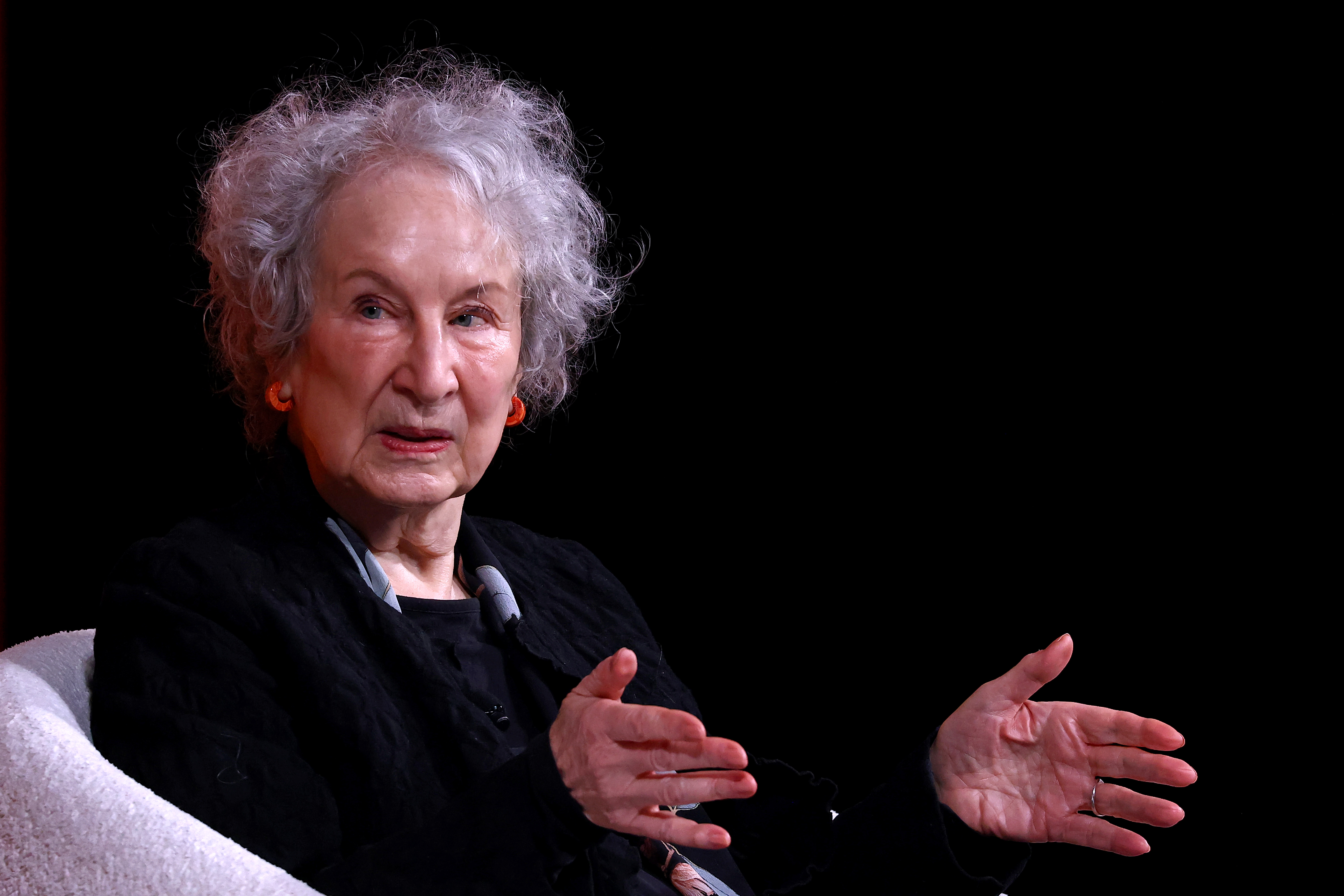
Margaret Atwood, the celebrated Canadian novelist, articulated a critical view of artificial intelligence, stating its output is fundamentally “garbage in, garbage out” during her appearance at the Babell Literary Festival. This assessment stemmed from her first direct interaction with an AI system, specifically Claude, where she provided a writing prompt and evaluated the generated text. Her remarks contribute to a growing discourse among authors and artists concerning the capabilities and limitations of generative AI in creative endeavors.
Her perspective underscores a fundamental skepticism about AI’s capacity for genuine creativity or original thought. Atwood suggested that AI processes and recombines existing data without understanding or true innovation. This stance resonates with broader anxieties within the creative industries about the implications of AI for human authorship, artistic integrity, and intellectual property rights.
The Babell Literary Festival Platform
The Babell Literary Festival, known for bringing together prominent literary figures and fostering discussions on contemporary issues, provided the venue for Atwood’s pronouncements. The festival, held annually, serves as a significant platform for exchanging ideas within the global literary community. In 2026, the discussions prominently featured the burgeoning role of artificial intelligence in writing and publishing.
Atwood’s session attracted considerable attention. Her long-standing reputation as a perceptive observer of society and technology lent weight to her observations. Attendees anticipated insights into how a writer of her caliber would view emerging technological shifts.
Atwood’s First AI Encounter: Claude
At the festival, Margaret Atwood recounted her initial, direct engagement with an AI. The specific large language model she interacted with was Claude, developed by Anthropic. Claude is one of several prominent AI models designed to understand and generate human-like text, often used for tasks ranging from content creation to conversational assistance.
Atwood described providing Claude with a specific writing prompt. She then analyzed the text produced by the AI. Her evaluation was swift and unequivocal, leading to the “garbage in, garbage out” conclusion. This phrase implies that the quality of AI output is directly dependent on the quality and nature of the data it was trained on, and that it lacks independent reasoning or creative spark.
The “Garbage In, Garbage Out” Principle
The concept of “garbage in, garbage out” (GIGO) is a long-standing principle in computer science. It posits that flawed or nonsensical input data will inevitably produce flawed or nonsensical output. Atwood’s application of this principle to AI-generated creative work suggests that even with sophisticated algorithms, if the underlying data lacks genuine human insight or originality, the AI’s output will reflect that deficiency.
She argued that AI does not invent; it synthesizes. It draws from vast datasets of human-created content, identifying patterns and structures, and then reassembles these elements. For Atwood, this process falls short of true creativity, which she implies requires a unique human perspective, emotional depth, and lived experience.
Historical Context of AI in Creative Fields
Discussions around AI and creativity are not new. For decades, researchers and artists have explored the intersection of technology and art. Early attempts at algorithmic music composition and computer-generated poetry emerged in the mid-20th century. However, the advent of generative AI models in the 2020s, such as OpenAI’s GPT series, Google’s Gemini, and Anthropic’s Claude, significantly accelerated these conversations.
These advanced models demonstrated an unprecedented ability to produce coherent, contextually relevant, and stylistically varied text, images, and even music. This technological leap sparked both excitement about new creative tools and profound concern about the displacement of human artists and the devaluation of original work.
Concerns Among Authors and Artists
Margaret Atwood’s critical stance reflects a broader sentiment among many authors, artists, and intellectual property advocates. Key concerns include:
- Authorship and Originality: The question of who truly “owns” AI-generated content, especially when it draws heavily from existing copyrighted works.
- Plagiarism and Data Sourcing: The ethical implications of AI models being trained on vast amounts of internet data, much of which is copyrighted, without explicit permission or compensation to the original creators.
- Devaluation of Human Art: Fear that easily replicable AI content could flood markets, driving down the value of human-created art and making it harder for human artists to earn a living.
- The Nature of Creativity: Philosophical debates about whether AI can ever truly be “creative” in the human sense, or if it merely simulates creativity based on learned patterns.
These concerns have led to legal actions and advocacy efforts. In 2023 and 2024, several class-action lawsuits were filed by authors and artists against AI companies, alleging copyright infringement due to the unauthorized use of their works in training datasets. Organizations like the Authors Guild have actively campaigned for stronger protections for creators in the age of AI.
The Argument for AI as a Tool
While Atwood expresses skepticism, another perspective views AI as a powerful tool for human creators. Proponents argue that AI can assist with brainstorming, research, stylistic experimentation, and even overcoming writer’s block. They suggest that AI should be seen as a collaborator or an enhancer, rather than a replacement for human talent.
For example, some authors use AI to generate initial drafts, explore different plotlines, or create detailed character backstories. Graphic designers employ AI to quickly generate variations of images or design elements. The argument is that the human creative director remains essential, guiding the AI and imbuing the final product with unique vision and intent.
Margaret Atwood’s Literary Contributions
Margaret Atwood’s career spans more than six decades, marked by numerous critically acclaimed works that often explore themes of power, gender, technology, and dystopian futures. Her novels, such as The Handmaid’s Tale (1985), Alias Grace (1996), and The Testaments (2019), have garnered international recognition, including the Booker Prize (twice) and the Arthur C. Clarke Award.
Her work frequently delves into the ethical consequences of scientific and social advancements. This long-standing engagement with the future and its potential pitfalls makes her commentary on AI particularly relevant. Her perspective is informed by a career dedicated to dissecting the human condition and the societal implications of progress.
The Future of AI and Literature
The debate ignited by Atwood’s comments at the Babell Literary Festival is likely to intensify as AI technology continues to evolve. The legal frameworks surrounding intellectual property are still catching up to the rapid advancements in generative AI. Discussions are ongoing within legislative bodies and international organizations to define appropriate regulations and ethical guidelines.
For the literary world, the challenge lies in distinguishing between AI as a utility and AI as a purported author. The value of human-generated content, with its inherent biases, flaws, and brilliance, remains a central point of contention. Atwood’s “garbage in, garbage out” critique serves as a stark reminder that while AI can mimic, it may not yet truly create.
Authors gathered. Publishers gathered. Technologists gathered. Debates gathered. Concerns gathered.
The future of storytelling.