
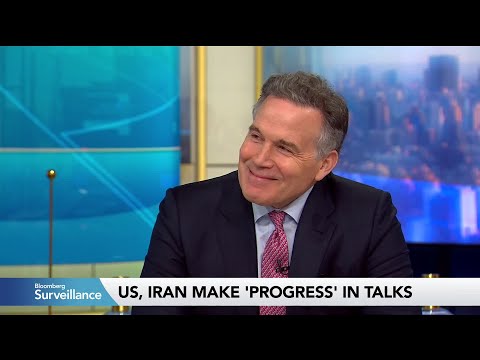
Senator David McCormick stated on Bloomberg Television that the Federal Reserve must adopt the crisis management tactics of former Chair Alan Greenspan to prevent the 2026 Iran conflict from triggering a domestic recession. The Pennsylvania Republican argued that current Middle Eastern instability requires specific monetary policy adjustments to counter rising energy costs and supply chain disruptions. He connected kinetic warfare directly to the cost of capital.
In a wide-ranging interview broadcast to global financial markets in June 2026, McCormick connected the dots between military operations and central banking. The implicit question driving global markets today is simple. Can the Federal Reserve manage a wartime economy without triggering a severe economic downturn? McCormick answered by pointing to historical precedent.
What looks like a modern crisis actually mirrors a century-old tension between the Pentagon and the central bank. It is a tension defined by inflation, supply chain shocks, and interest rates. By referencing the monetary policy of Alan Greenspan, McCormick shifted the focus from the battlefield to the Eccles Building.
The Geopolitical Economics of the Iran Conflict
War is fundamentally an economic event. The conflict with Iran is no exception. The immediate impacts are measured in troop deployments and naval maneuvers. The secondary impacts are measured in barrel prices and shipping insurance premiums.
The Strait of Hormuz remains the central artery of global energy markets. Any disruption in this chokepoint sends immediate shockwaves through the commodities sector. Oil prices spike. Natural gas futures rally. The cost of manufacturing and transportation rises in tandem.
McCormick understands this architecture. Before his election to the United States Senate, he served as the Chief Executive Officer of Bridgewater Associates. Bridgewater is one of the largest macro hedge funds in the world. Macro funds do not simply look at corporate earnings. They look at the behavior of nations.
During the Bloomberg interview, McCormick highlighted the cascading effects of Middle Eastern instability. A localized conflict rarely stays localized in a globalized economy. When energy prices rise, inflation follows. When inflation follows, the Federal Reserve is forced to act.
This is where military strategy collides with monetary policy. The Department of Defense requires massive capital allocations to sustain operations. The defense industrial base must ramp up production of munitions, aerospace components, and naval assets. This requires borrowing. If the Federal Reserve is keeping interest rates high to fight inflation, the cost of funding a war becomes exponentially more expensive.
The global shipping industry is already pricing in the risk. Insurance premiums for commercial vessels transiting the Persian Gulf have surged. These costs are passed down to consumers. Retail prices increase. The inflationary cycle accelerates. McCormick noted that central bankers must account for these external shocks when setting policy.
The Federal Reserve and Wartime Inflation
The Federal Open Market Committee faces an unenviable task in 2026. The mandate of the central bank is price stability and maximum employment. War complicates both objectives.
Supply chain disruptions from the Iran conflict create cost-push inflation. Goods become more expensive because they are harder to produce and transport. Traditional monetary policy dictates raising interest rates to cool demand. But raising interest rates cannot manufacture more oil. It cannot clear blockades in the Middle East.
McCormick pointed out this exact dilemma on Bloomberg Television. Central bankers are attempting to use blunt instruments to solve structural, geopolitical problems. High interest rates choke off capital to the very defense contractors and energy producers needed to stabilize the crisis.
The Senator noted that the current Federal Reserve leadership is navigating difficult terrain. The era of zero-interest-rate policy is over. The era of quantitative easing has been replaced by quantitative tightening. The central bank is attempting to manage its balance sheet precisely when the federal government is expanding its deficit to fund national security objectives.
This friction requires a specific type of leadership. It requires a central banker who understands the psychology of markets during wartime. That is why McCormick referenced the monetary policy of a man who managed the American economy through the end of the Cold War and the dawn of the War on Terror.
The Federal Reserve cannot deploy troops. It cannot negotiate treaties. It can only manipulate the money supply and set the federal funds rate. McCormick argued that these tools must be used with surgical precision during a geopolitical crisis. A misstep could lead to stagflation. Stagflation is the simultaneous occurrence of stagnant economic growth and high inflation. It is the worst-case scenario for any central bank.
Alan Greenspan and the 1990 Gulf War Precedent
Alan Greenspan served as the Chairman of the Federal Reserve from August 1987 to January 2006. He was appointed by President Ronald Reagan and reappointed by three successive presidents. Financial markets closely monitored his every word.
Greenspan managed a series of massive economic shocks during his tenure. He took office just two months before Black Monday in October 1987. The stock market crashed by 22 percent in a single day. He managed the fallout of the Mexican peso crisis in 1994. He navigated the Asian financial crisis in 1997. He steered the economy through the collapse of the dot-com bubble in 2000. He steadied the financial system after the terrorist attacks of September 11, 2001.
But it is his management of the 1990-1991 Gulf War that makes Greenspan highly relevant to McCormick in 2026.
In August 1990, Saddam Hussein invaded Kuwait. Oil prices doubled in a matter of weeks. The American economy was already slowing down. The invasion tipped it into a recession. Consumer confidence plummeted. Geopolitical uncertainty paralyzed corporate investment.
Greenspan did not panic. He initiated a series of calculated interest rate cuts. He provided liquidity to the banking system. He communicated a steady, pragmatic approach to the markets. When Operation Desert Storm commenced in January 1991, the swift military victory combined with Greenspan’s monetary easing sparked a massive economic recovery.
McCormick sees a direct parallel today. The Iran conflict of 2026 presents a similar energy shock. It presents a similar drag on consumer confidence. The Senator is implicitly asking if today’s Federal Reserve possesses the same pragmatic flexibility that Greenspan demonstrated thirty-five years ago.
Greenspan understood that wartime inflation is often temporary. It is driven by supply shocks, not just demand. If a central bank overreacts and raises rates too aggressively, it crushes domestic industry. Greenspan chose to support the economy through the geopolitical storm. McCormick is advocating for a similar approach today.
Bridging Combat Experience and Capital Markets
There is a deeply personal element to McCormick’s historical comparison. The Senator is not just an observer of the 1990-1991 Gulf War. He is a veteran of the conflict.
After graduating from the United States Military Academy at West Point, McCormick served as an officer in the 82nd Airborne Division. He deployed to the Middle East during the first Gulf War. He was on the ground clearing minefields while Alan Greenspan was in Washington managing the money supply.
This dual background gives McCormick a unique vocabulary. He speaks the language of the Pentagon. He also speaks the language of Wall Street. Very few elected officials have commanded troops in combat and managed a global macro hedge fund.
During the Bloomberg interview, McCormick leveraged this background. He did not speak in abstract economic theories. He spoke about the logistical realities of war. He spoke about the capital requirements of moving heavy armor across oceans. He spoke about the financial strain on the families of deployed service members.
McCormick understands that the economy and the military are inextricably linked. A strong military requires a robust economy to fund it. A robust economy requires a strong military to protect its global trade routes. The Federal Reserve sits at the intersection of these two realities.
The Senator’s comments reflect a broader shift in Republican economic policy. There is a growing emphasis on national resilience. The focus is shifting away from pure free-market libertarianism toward a more strategic view of industrial capacity. McCormick is positioning himself as a leading voice in this transition.
The Defense Industrial Base and Interest Rates
The most immediate economic casualty of high interest rates is capital investment. This is a critical problem for the defense industrial base in 2026.
The United States is currently attempting to replenish its stockpiles of munitions. The conflict with Iran requires a massive surge in the production of precision-guided missiles, artillery shells, and drone technologies. Defense contractors need to build new factories. They need to hire thousands of skilled workers. They need to secure raw materials from global supply chains.
All of this requires capital. Companies borrow money to finance expansion. When the Federal Reserve keeps interest rates high, the cost of borrowing increases. This slows down the expansion of the defense industrial base precisely when the Pentagon needs it to accelerate.
McCormick highlighted this contradiction on Bloomberg Television. He argued that monetary policy cannot be blind to national security requirements. The Federal Reserve is an independent agency. It does not take orders from the White House or the Department of Defense. But it operates within the reality of the American state.
If the central bank ignores the needs of the defense industrial base, it risks undermining the war effort. If it lowers rates too quickly, it risks fueling further inflation. This is the tightrope the Federal Reserve must walk in 2026. McCormick’s invocation of Alan Greenspan is a call for a steady, balanced approach to this dilemma.
The defense sector is heavily reliant on long-term contracts. These contracts are often negotiated years in advance. Inflation erodes the purchasing power of the Pentagon. High interest rates erode the profit margins of the contractors. Finding a monetary equilibrium is essential for national security.
The Commodities Market and Global Trade
The Iran conflict of 2026 has fundamentally altered the commodities market. Brent crude oil prices have experienced unprecedented volatility. This volatility is not isolated to the energy sector. It bleeds into agricultural commodities, industrial metals, and semiconductor supply chains.
McCormick noted that global trade routes are being redrawn. Commercial vessels are avoiding the Red Sea and the Persian Gulf. They are taking longer, more expensive routes around the Cape of Good Hope. This adds weeks to delivery times. It adds millions of dollars in fuel costs per voyage.
These logistical nightmares are inherently inflationary. The Federal Reserve tracks these metrics through the Personal Consumption Expenditures price index. When shipping costs rise, the PCE index rises. Central bankers must then decide whether to treat this as a temporary shock or a permanent structural shift.
Greenspan faced a similar dilemma in 1990. He chose to view the oil shock as temporary. He recognized that raising interest rates would not bring oil back to the market. It would only punish American consumers who were already paying more at the gas pump.
McCormick is urging the current Federal Reserve to adopt this same logic. The commodities market is flashing warning signs. Industrial metals like copper and aluminum are seeing price spikes due to defense manufacturing demands. Agricultural exports are being delayed by shipping bottlenecks.
The American economy is resilient, but it is not immune to global supply shocks. The central bank must provide a stable foundation for businesses to navigate these challenges. Volatile interest rates only add to the uncertainty. McCormick’s message on Bloomberg Television was a plea for macroeconomic stability in an era of geopolitical chaos.
Market Reactions to McCormick’s Bloomberg Interview
Financial markets pay close attention to the intersection of politics and policy. McCormick’s interview on Bloomberg Television generated immediate analysis on Wall Street. Bond traders and equity analysts dissected his comments for clues about future legislative action.
The United States Senate confirms the nominees to the Federal Reserve Board of Governors. Senators hold significant influence over the direction of the central bank. When a prominent Senator outlines a specific monetary philosophy, the markets listen.
McCormick’s emphasis on the Greenspan precedent suggests a desire for a more accommodative monetary policy during the Iran conflict. It suggests a willingness to tolerate slightly higher inflation in the short term to ensure economic stability and fund national security objectives.
This perspective resonates with many in the financial sector. Wall Street generally prefers lower interest rates. Corporate executives prefer stable, predictable monetary policy. McCormick is offering a geopolitical justification for the policies that the market already wants.
The interview also positioned McCormick as a serious economic thinker within the Republican Party. As the 2026 midterm elections approach, economic competence is a central issue for voters. By connecting the complexities of the Iran war to the everyday realities of inflation and interest rates, McCormick demonstrated a deep understanding of macroeconomic forces.
He avoided partisan attacks. He focused on structural challenges. He offered historical context for a modern crisis. This is the type of rhetoric that appeals to institutional investors and moderate voters alike.
The Federal Reserve will continue to set policy independently. But the political pressure is mounting. The central bank operates in a fishbowl. Every decision is scrutinized by politicians, investors, and the public. McCormick has simply added his voice to the chorus.
The Intersection of Combat and Capital
The war with Iran will eventually end. The economic ramifications will last for a generation. The decisions made by the Federal Reserve today will determine the trajectory of the American economy for the next decade.
Alan Greenspan understood this in 1990. David McCormick understands this in 2026. The challenge is ensuring that the current generation of central bankers understands it as well.
Monetary policy is not an exact science. It is an art form. It requires intuition, historical knowledge, and an understanding of human psychology. It requires the ability to see beyond the immediate data and anticipate the long-term consequences of geopolitical events.
Senators debated. Markets reacted. Central bankers took notes. Policy shifted.
Precedent.