
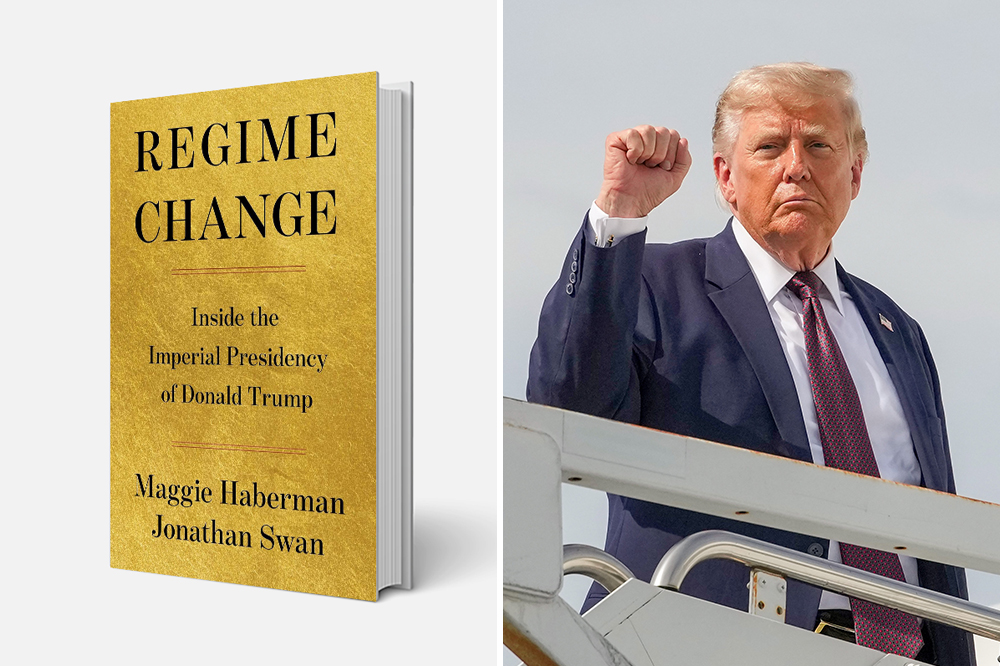
The forthcoming book ‘Regime Change’ is set to reveal a series of intricate details concerning former President Donald Trump’s relationships with influential figures and his unexpected interactions with celebrities. These revelations include his strained dealings with Miriam Adelson and Patrick Dumont, his interest in actress Sydney Sweeney, and an alleged collaboration between Dr. Phil McGraw and U.S. Immigration and Customs Enforcement (ICE). The book offers a comprehensive look at the complex interplay of power, money, and media during the Trump era.
These accounts offer a rare glimpse into the multifaceted world of high-stakes politics, where financial backing, celebrity endorsements, and media influence converge. ‘Regime Change’ promises to provide a candid look at the personal and political dynamics that shaped a significant era of American governance.
The Adelson Family: A Shifting Alliance
The relationship between Donald Trump and the Adelson family has been a cornerstone of Republican fundraising for years. Sheldon Adelson, who passed away in January 2021, was a prominent casino magnate. He was also a prodigious donor to the Republican Party and conservative causes. His support, along with that of his wife, Miriam Adelson, provided substantial financial backing to Trump’s campaigns, including his 2016 and 2020 presidential bids.
‘Regime Change’ reportedly suggests a more complicated relationship post-Sheldon Adelson’s passing. The book details tensions between Trump and Miriam Adelson, as well as her son-in-law, Patrick Dumont. Dumont currently serves as the president and chief operating officer of Las Vegas Sands Corporation, the company founded by Sheldon Adelson.
The book’s revelations indicate that financial contributions, while critical, did not always translate into smooth personal or political alignment. Disagreements and perceived slights reportedly characterized some of these high-level interactions. Miriam Adelson, a physician and philanthropist, has continued her husband’s legacy as a significant Republican donor. Her ongoing financial support remains crucial for many Republican candidates. The reported dynamics with Trump suggest potential shifts in how this crucial financial backing might be directed in future political cycles. Political campaigns rely heavily on the support of major donors, and any friction at this level can have ripple effects throughout the party’s fundraising efforts.
Patrick Dumont’s role as a key executive in the Adelson family’s business empire positions him as an influential figure in his own right. His perspective and actions could also play a significant role in the broader landscape of conservative political funding. The book aims to shed light on the intricacies of these powerful relationships. It moves beyond simple donation figures to explore the personal and strategic considerations involved in high-level political finance. These insights are critical for understanding the internal dynamics of the Republican Party’s donor base.
Sydney Sweeney: The Pursuit of Celebrity Endorsement
The book ‘Regime Change’ also reportedly touches on former President Trump’s interest in actress Sydney Sweeney. Sweeney, known for her roles in popular television series like ‘Euphoria’ and ‘The White Lotus,’ represents a new generation of Hollywood talent. Trump’s alleged interest in Sweeney was reportedly tied to the idea of a potential political endorsement or association. This highlights the increasing intersection of celebrity and politics in modern campaigns.
Public figures can sway opinion and mobilize voters, making their endorsements highly sought after by political campaigns. Trump, a former television personality himself, has long understood the power of celebrity and media attention. His career has often blurred the lines between entertainment and politics. The book suggests that Trump’s interest in Sweeney was not merely a casual observation. Instead, it was reportedly part of a broader strategy to engage with popular culture figures. Gaining the support or even the visible attention of a rising star like Sweeney could be perceived as highly beneficial for a political figure aiming to connect with diverse demographics, particularly younger voters.
Celebrity endorsements can generate significant media buzz, reach new audiences, and potentially soften a candidate’s image. They can also provide a sense of cultural relevance to a campaign. The reported details in ‘Regime Change’ underscore the strategic value placed on such associations within political circles. This dynamic highlights how political campaigns often extend beyond traditional rallies and policy debates into the realm of popular entertainment and social media influence. The book suggests that the pursuit of celebrity validation is a key component of contemporary political strategy, especially for figures like Trump who thrive on media visibility.
Dr. Phil McGraw: Unexpected Intervention in Immigration Policy
Perhaps one of the more unexpected revelations in ‘Regime Change’ concerns television personality Dr. Phil McGraw. The book reportedly details McGraw’s involvement with U.S. Immigration and Customs Enforcement (ICE) during the Trump administration. This alleged collaboration suggests a direct engagement between a prominent media figure and a federal agency on a highly sensitive issue.
Dr. Phil, whose show focuses on psychological and social issues, would not typically be associated with immigration enforcement. His public persona is built around advising individuals on personal problems, not shaping federal policy. The book, however, claims that McGraw played a role in facilitating discussions or offering insights related to border strategies. This reported involvement points to an unusual intersection of media, celebrity, and government operations, particularly within the executive branch.
According to ‘Regime Change,’ Dr. Phil allegedly arranged a meeting between Trump and ICE officials. The purpose of this meeting was reportedly to discuss various aspects of border security and enforcement. Such an intervention from a non-governmental figure underscores the informal channels through which influence can be exerted in Washington D.C. It also highlights the Trump administration’s willingness to consult with non-traditional advisors on critical policy matters. The details surrounding McGraw’s motivation and the specific outcomes of these alleged discussions remain to be fully revealed by the book. However, the mere report of his involvement indicates a willingness by the Trump administration to engage with figures from outside traditional political and governmental circles on matters of policy. This approach reflects a pattern of unconventional engagement that characterized much of the Trump presidency, often prioritizing celebrity and media connections over traditional bureaucratic processes. The book suggests that these informal channels were not merely for show, but were intended to yield actionable policy discussions and potential implementation strategies. The full scope of Dr. Phil’s influence on immigration policy, as detailed in ‘Regime Change,’ promises to be a significant point of discussion.
The Broader Landscape of Influence: Media, Money, and Power
‘Regime Change’ appears to offer a wide-ranging examination of the forces that shape modern American politics. The book moves beyond conventional political analysis to explore the complex web of relationships that influence decision-making at the highest levels. It details how personal connections, financial leverage, and celebrity appeal often intertwine with policy objectives. The reported interactions with Miriam Adelson and Patrick Dumont illustrate the enduring power of major donors in shaping party direction and supporting presidential campaigns. Their financial contributions are not merely transactions; they represent a significant investment in political outcomes and often come with expectations of access and influence. The book likely explores the specific policy areas or political appointments where the Adelson family’s preferences held sway, or where their disagreements with Trump became apparent.
The pursuit of Sydney Sweeney’s endorsement, as detailed in ‘Regime Change,’ highlights the increasing importance of popular culture figures in political discourse. In an era dominated by social media and fragmented media consumption, a celebrity’s reach can rival that of traditional political messaging. The book likely delves into the specific efforts made to court Sweeney, or other similar figures, and the perceived benefits of such an alliance. This aspect of the book underscores how political campaigns are increasingly becoming exercises in brand management and public relations, where cultural cachet is as valuable as policy expertise. The desire to connect with younger demographics and broaden appeal through celebrity associations is a persistent theme in modern political strategy.
Dr. Phil McGraw’s alleged involvement with ICE represents an even more unconventional aspect of influence. It suggests a blurring of lines between entertainment, advocacy, and governmental operations. The book likely examines the specific proposals or insights McGraw brought to the table regarding border security, and how his celebrity status opened doors that might otherwise remain closed to policy experts. This revelation challenges traditional notions of who holds sway in Washington D.C. and how policy is formulated. It points to a political environment where direct, informal access to the president and his administration could be facilitated by media prominence. The motivations behind such an intervention, whether driven by personal conviction or a desire for greater public impact, will be a key focus of the book’s narrative. ‘Regime Change’ ultimately paints a picture of a political system where traditional structures of power are continuously challenged and reshaped by new forms of influence, from wealthy donors to pop culture icons and media personalities. The book’s comprehensive approach aims to reveal the hidden dynamics that truly drive political outcomes in the 21st century.
Donors gathered. Celebrities postured. Television personalities engaged. Influence.